
Key Takeaways
Greener car-part choices usually come down to materials, useful life, responsible sourcing, and safe end-of-life handling.
- Choose recycled, remanufactured, renewable, or durable components where they genuinely fit your vehicle.
- Verify fitment, safety standards, warranties, and environmental claims before buying.
- Compare total value rather than focusing only on the initial price.
- Use qualified installers for safety-critical work and maintain parts carefully.
- Return batteries, tires, fluids, and other hazardous components through approved programs.
What makes car parts eco friendly
Eco friendly car parts are not defined by a green label alone. They can reduce the need for newly mined or manufactured materials, remain useful for longer, or be easier to recover at the end of their service life. The most sensible choice depends on the component, the vehicle, and the evidence behind the claim.
Recycled and remanufactured materials
Recycled parts contain material recovered from manufacturing scrap or used components and processed for another purpose. Remanufactured parts, by contrast, typically use a previously used core that is inspected, cleaned, rebuilt, and tested. Both approaches can preserve useful material, but the quality of the process matters as much as the label.
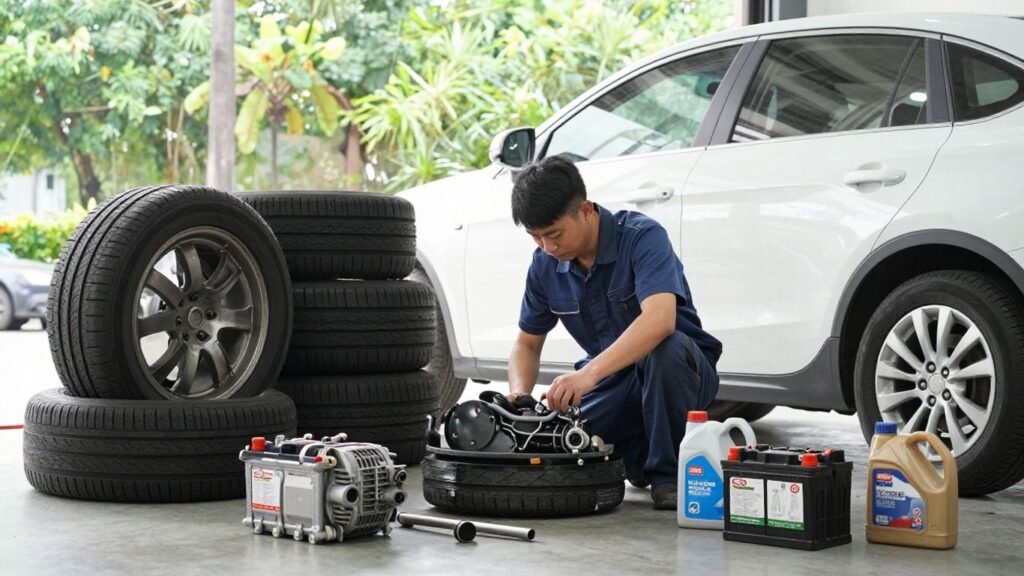
An engine, alternator, body panel, or wheel may be a practical candidate for reuse when its condition and specifications are clear. Ask whether the part has been tested and whether its warranty matches the intended use. A low price is not enough if the component cannot perform reliably.
Renewable and low-impact material choices
Some replacement materials use renewable feedstocks or manufacturing methods designed to reduce resource use. Examples can include bio-based fluids, natural-rubber content in tires, and recycled plastics in interior or body components. These materials still need to meet the same performance requirements as conventional alternatives.
The phrase “eco friendly” can cover very different things, so read the technical information rather than assuming every newer material has a smaller footprint. A material that is renewable may still require frequent replacement, while a durable conventional part may avoid waste over many years.
Longer service life and reduced replacement waste
Durability is one of the simplest environmental advantages a component can offer. If a filter housing, wiper assembly, tire, or replacement panel stays functional longer, fewer units need to be manufactured, shipped, and discarded. That benefit is strongest when the part is maintained according to the vehicle maker’s instructions.
Look for realistic service intervals, available replacement elements, and a clear warranty. Long-term usefulness matters because a part that fails early can erase the environmental benefit of its material choice.
How certifications and product claims support credibility
Certifications, test reports, recycled-content disclosures, and traceable sourcing information can help separate a meaningful claim from vague marketing. They do not make a part automatically suitable, but they give you something concrete to evaluate. A seller should be able to explain what was recycled, remanufactured, or changed and under which standard.
Be cautious when a product uses broad phrases without naming a material percentage, testing method, or recovery program. If the claim cannot be checked, treat it as a marketing suggestion rather than proof.
The environmental benefits of choosing greener parts
Choosing a greener component can affect more than the moment of installation. It may reduce pressure on raw-material extraction, avoid some manufacturing steps, and keep a useful item from being discarded. The result varies by part and supply chain, so the goal is thoughtful reduction rather than a promise that every recycled part has the same impact.
Lower demand for raw materials
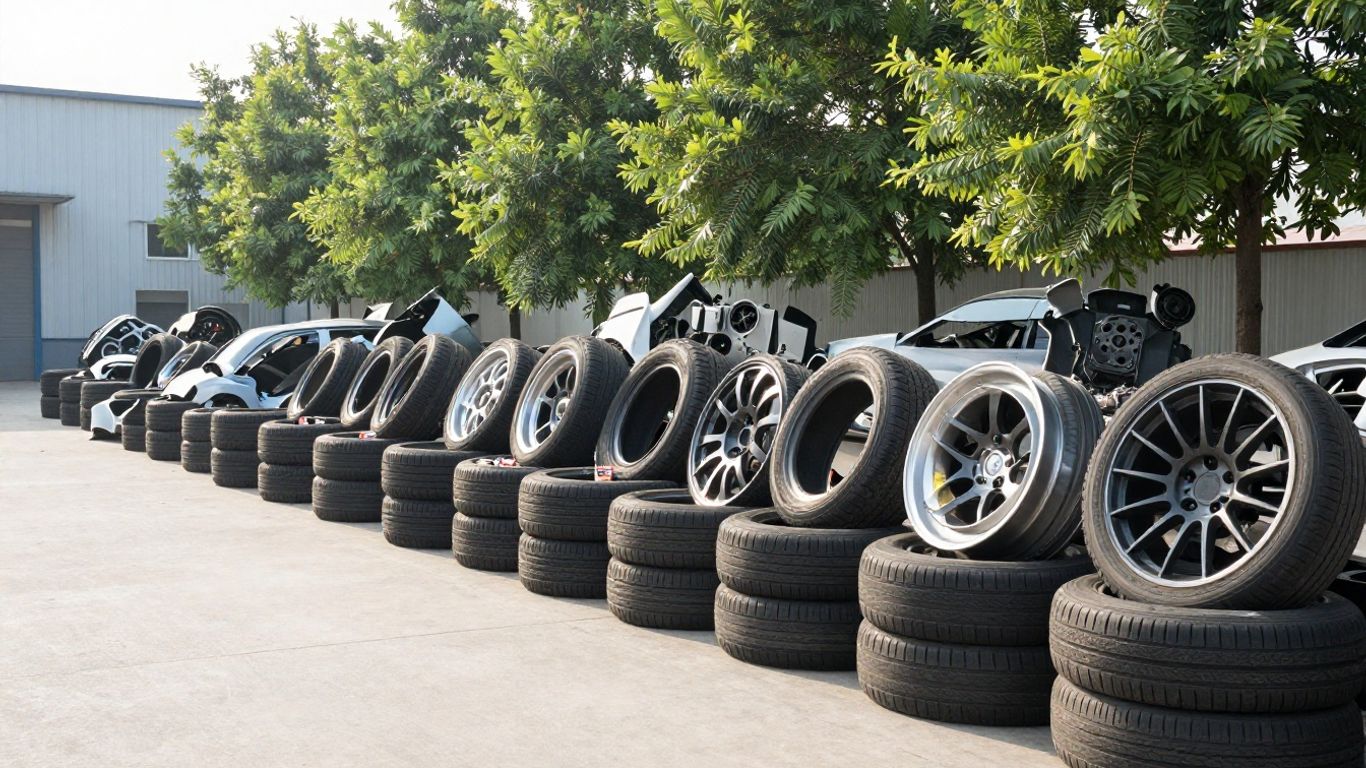
Reusing a serviceable component can reduce demand for new steel, aluminum, rubber, plastics, and other inputs. Auto-parts recycling also gives dismantlers a way to recover material from vehicles that would otherwise be treated mainly as waste. This is why vehicle parts recycling is often discussed as part of a circular automotive economy.
The effect is especially intuitive with large, material-heavy components. Recovering a usable transmission or body panel avoids making an entirely new item, although inspection and transport still contribute to the overall footprint.
Reduced manufacturing energy and emissions
New parts often require extraction, refining, forming, assembly, and shipping. A recycled or remanufactured alternative may avoid some of those steps, though rebuilding itself uses energy and materials. The best comparison considers the whole life cycle instead of assuming that “used” always means low impact.
Aluminum, steel, rubber, and electronics each have different recovery processes. The seller’s location, testing method, packaging, and return policy can therefore matter alongside the material itself.
Less landfill waste from used components
A used car part can often be dismantled, repaired, sold, or processed for its materials. Keeping it in circulation delays disposal and can extend the useful life of the vehicle it serves. Guidance on recycling old auto parts offers a useful general framework for thinking about reuse before disposal.
This does not mean every worn component should be kept in service. A cracked safety part or contaminated material needs the correct handling route, not a second life at any cost.
Why local sourcing can reduce transportation impacts
Buying from a nearby recycler or repair shop may reduce shipping distance and packaging, particularly for heavy items such as engines, transmissions, wheels, and body panels. Local sourcing also makes it easier to inspect a part, ask about its history, and return it if the fit is wrong. These practical advantages can prevent a replacement purchase from becoming a second shipment.
A local option is not automatically better if the part is poorly tested or unsuitable. Compare condition, fitment, and warranty before treating distance as the deciding factor.
The best eco friendly car parts to consider
There is no single greenest component for every vehicle. The right choice is a part that fits correctly, performs safely, lasts as expected, and has a responsible recovery or disposal path. Start with common replacement categories, then check the details that apply to your car.
Recycled tires, batteries, and body panels
Tires may include recovered rubber or be designed for retreading, while body panels and wheels can often be sourced from dismantled vehicles. Batteries also contain materials worth recovering, but they require careful storage, transport, and recycling. Condition and age matter more than an environmental label when failure could affect safety.
Inspect tread, corrosion, cracks, manufacturing dates, and compatibility. For body panels, confirm mounting points, finish, and whether the panel has been repaired after a collision.
Remanufactured engines, transmissions, and alternators
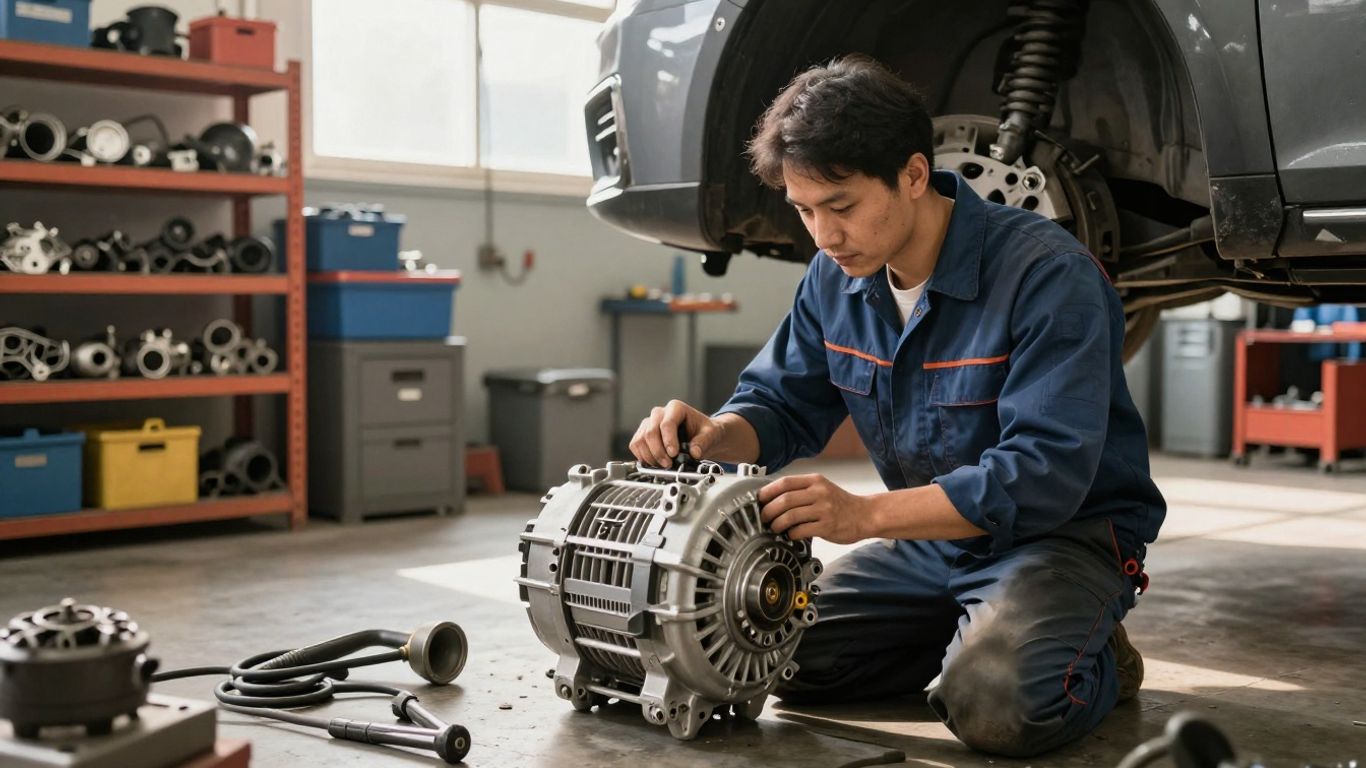
Remanufactured powertrain parts can preserve a substantial used core while restoring it to a tested operating condition. Ask what was replaced, what was measured, and whether the seller requires a core return. A written warranty and clear installation requirements are particularly valuable for expensive components.
For a broad inventory of used auto parts for all makes and models, Eco Green Auto Parts describes responsible sourcing, affordable pricing, and reliable warranties. Those stated features can help frame a comparison, but you should still verify the exact part and warranty for your vehicle.
Reusable filters, wiper blades, and interior components
Some filter housings, washable elements, wiper assemblies, floor materials, trim pieces, and seats can be cleaned, repaired, or reused. The environmental advantage is greatest when the reusable item is maintained properly and does not compromise visibility, air quality, or occupant protection.
Replace consumable elements at the recommended interval, even if the housing itself remains serviceable. For wipers, a streak-free blade is a safety requirement, not an optional refinement.
Bio-based fluids, lubricants, and replacement materials
Bio-based fluids and lubricants may be made partly from renewable feedstocks, while recycled plastics and fibers can appear in replacement trim or protective materials. Use only products whose viscosity, specification, and compatibility match the vehicle and the operating conditions.
Never mix fluids simply because both carry an environmental claim. Check the owner’s manual and the product data sheet, and follow local rules for collecting the used fluid.
How to choose compatible and reliable components
A sustainable part is not a responsible purchase if it does not fit or fails prematurely. Begin with the vehicle identification number, the exact engine or trim information, and the required specification. Then compare condition, provenance, testing, warranty, and likely service life.
Matching parts to your vehicle’s make, model, and year
Vehicle fitment can change within one model year, so a general description is rarely enough. Record the VIN, original part number, dimensions, connector type, and any relevant emissions or drivetrain specification before contacting a seller.
For electric-vehicle shoppers, electric car reviews can provide broader context about models and specifications, but replacement-part compatibility still needs to be confirmed against the individual vehicle. Do not infer that a part fits merely because the vehicle name appears in a listing.
Comparing original, aftermarket, recycled, and remanufactured options
Original-equipment, aftermarket, recycled, and remanufactured parts each have a different balance of price, availability, condition, and documentation. A recycled mirror may be straightforward to compare, while a remanufactured transmission demands more scrutiny. The following quick comparison can make the trade-offs easier to discuss with a mechanic.
| Option | Typical strength | Main question to ask |
|---|---|---|
| Original equipment | Known design and fitment | Is the price justified for this repair? |
| Aftermarket | Broad availability and choice | Does it meet the required specification? |
| Recycled | Preserves a usable existing component | What is its condition and history? |
| Remanufactured | Rebuilds a used core | What testing and warranty are included? |
No category is automatically superior. The practical winner is the option that meets the vehicle’s requirements and offers credible support after installation.
Checking safety standards, warranties, and testing
Ask for test results, inspection details, warranty duration, exclusions, and any required installation procedure. Safety-critical parts such as braking, steering, suspension, tires, and restraint components deserve especially careful verification. A warranty is useful only when you understand who pays for labor, shipping, diagnostics, or a replacement core.
Keep the invoice and part number with the vehicle records. Those details help if a failure occurs or if you need to order a matching component later.
Avoiding misleading environmental marketing claims
Words such as green, clean, natural, and sustainable can be too vague to guide a purchase. Look for measurable information: recycled-content percentages, remanufacturing steps, recognized standards, material disclosures, or a named take-back route. If a claim focuses on appearance or packaging while saying little about the part itself, remain skeptical.
The same careful evaluation applies to unrelated service choices, such as reviewing a web developer selection guide: define what you need, compare evidence, and ask how support works after the purchase. The subject is different, but the habit of checking claims is useful.
Where to buy eco friendly car parts
The seller affects the environmental and practical value of a part. A specialist recycler may know the component’s history, while a remanufacturer can explain its testing process. Local shops can also help confirm fitment before money changes hands.
Certified auto recyclers and salvage facilities
Certified recyclers and established salvage facilities usually have systems for cataloging, inspecting, storing, and recovering parts. Ask how they grade components, whether fluids have been removed safely, and how they handle parts that are not suitable for resale.
A dismantler’s location, return policy, and ability to provide photographs can matter as much as its inventory. For large components, local pickup may also reduce packaging and freight complications.
Trusted remanufacturing suppliers
A reputable remanufacturer should explain the core process, replaced wear items, testing, warranty, and core-return requirements. Compare those details rather than relying on the word remanufactured by itself. Suppliers that document the work make it easier to judge value.
In the available supplier information, Eco Green Auto Parts describes an inventory of more than 10,000 parts for all makes and models, along with responsible sourcing and warranty coverage. Treat those as claims to verify for the specific listing, not as a guarantee that every component has identical attributes.
Local repair shops and parts retailers
A trusted repair shop can recommend a compatible recycled or remanufactured part and install it correctly. Retailers may offer easier returns, while independent shops may have relationships with local recyclers. Ask whether the shop will stand behind both the part and its labor.
When sustainability is part of the conversation, explain whether your priority is reuse, recycled content, fewer shipments, lower cost, or all four. That gives the technician a more useful basis for comparison.
What to verify when buying online
Online listings need extra checking because photographs and descriptions may omit important details. Confirm the exact part number, donor vehicle, mileage if available, condition grade, shipping method, warranty, return terms, and core charge before ordering.
For example, some buyers may also be comparing expenses across unrelated plans, from international student loan options to vehicle repairs. Keeping those decisions separate helps prevent a cheap part from looking attractive simply because the wider budget is tight.
A video can help explain inspection or installation concepts, but it should supplement—not replace—the vehicle manual and qualified advice.
Managing cost, installation, and maintenance
Greener parts can lower purchase costs, but the cheapest listing is not always the least expensive choice. Include shipping, core charges, tools, labor, downtime, warranty limits, and likely replacement intervals in the comparison. A part that lasts and can be repaired may offer better value than a cheaper disposable alternative.
Comparing upfront prices with long-term value
Ask how long the component is expected to last, what maintenance it needs, and whether replacement elements remain available. A remanufactured alternator with a clear warranty may be more predictable than an untested used unit, even if the initial prices are close.
Also consider the cost of an incorrect order. Confirming fitment before purchase prevents return freight, wasted packaging, and an avoidable second repair visit.
Deciding when professional installation is necessary
Brakes, steering, suspension, airbags, high-voltage systems, fuel systems, and major drivetrain components generally call for trained installation. The work may require specialized tools, calibration, lifting equipment, or safety procedures that are not obvious from a tutorial.
Simple items such as some wiper blades or cabin filters may be suitable for an owner who follows the instructions. When uncertain, ask a qualified technician for a risk-based recommendation rather than guessing.
Maintaining parts to extend their usable life
Correct tire pressure, fluid changes, clean electrical connections, and timely inspection can extend the life of many components. Follow the service schedule and address small symptoms before they damage related parts. Maintenance is an environmental decision because it delays replacement.
Useful habits include:
- Checking tire pressure and tread regularly.
- Inspecting belts, hoses, connectors, and visible corrosion.
- Replacing filters and fluids at the specified intervals.
- Keeping warranty and installation records in one place.
These steps are modest, but they reduce premature failures and make future recycling or resale easier.
Balancing sustainability with vehicle safety
Safety always sets the boundary for an eco-friendly choice. Do not keep a damaged tire, worn brake component, weakened seat belt, or questionable restraint part in service to avoid waste. A properly installed new component can be the more responsible decision when it prevents a crash or protects occupants.
Sustainability works best as a whole-life practice: choose carefully, maintain the part, and send it to the correct recovery route when its service life ends.
How to recycle and dispose of old car parts responsibly
Disposal should be planned before the replacement is installed. Many parts contain recoverable metals or materials, while batteries, fluids, and some electronic components need controlled handling. Ask the repair shop or local authority which collection route is approved in your area.
Returning batteries, tires, and fluids through approved programs
Automotive batteries, used oil, coolant, brake fluid, and tires should go to programs or businesses equipped to receive them. Keep fluids in closed, labeled containers and never pour them onto soil, into drains, or into household trash. Tire retailers, service centers, municipal collection sites, and parts stores may accept specific items under local rules.
Call ahead before transporting anything. Acceptance limits and fees vary, and some facilities require different handling for lithium-ion batteries or contaminated materials.
Reusing or selling parts that are still functional
A working mirror, wheel, trim panel, seat, starter, or electronic module may help another vehicle avoid a new part. Describe its condition honestly, include the part number, and disclose damage or unknown history. If selling is not worthwhile, a recycler may still recover the materials.
Reuse is most useful when the recipient can verify fitment and safety. Do not pass along a component whose failure could put someone at risk.
Handling hazardous materials safely
Wear suitable protection, prevent leaks, and keep incompatible chemicals apart. Damaged batteries should not be handled casually, and fuel-system components may retain vapors even after removal. Follow the instructions of the receiving facility and local hazardous-waste authority.
Never burn, bury, dismantle, or crush a component simply to make it disappear. The wrong shortcut can contaminate water, injure workers, or create a fire.
Keeping records of recycling and replacement decisions
Save receipts, warranty documents, part numbers, installation dates, and recycling confirmations. These records support warranty claims and help you identify which components were reused, remanufactured, or sent for material recovery. They also make the next repair conversation faster.
A simple note in the vehicle’s service file is enough. The goal is a practical history, not complicated paperwork.
Conclusion
Eco friendly car parts are a practical way to reduce material demand and waste without treating safety as negotiable. Choose components with clear fitment, credible testing, useful warranties, and a realistic end-of-life route, then maintain them well and recycle them responsibly.
Frequently Asked Questions
What are eco friendly car parts?
They are components that may use recycled, remanufactured, renewable, or lower-impact materials, last longer, or have a responsible recovery route. The part must still meet the vehicle’s performance and safety requirements.
Are recycled car parts reliable?
They can be reliable when properly inspected, tested, and matched to the vehicle. Ask about condition, part history, testing, warranty coverage, and return terms before buying.
Are remanufactured parts better than used parts?
Not automatically. Remanufactured parts usually involve rebuilding and testing a used core, while a used part may be sold in its existing condition. Compare documentation, warranty, price, and the risk associated with the component.
How can I tell whether an environmental claim is credible?
Look for specific information such as recycled-content percentages, named standards, test results, documented remanufacturing steps, or a take-back program. Vague words without supporting details deserve caution.
Can I install eco friendly car parts myself?
Some simple items may be suitable for careful do-it-yourself installation. Brakes, steering, suspension, airbags, high-voltage systems, and major drivetrain work generally require appropriate training, tools, and procedures.
Where should I take an old car battery or tire?
Use an approved retailer, service center, municipal collection site, or hazardous-waste program that accepts that specific item. Call first to confirm requirements, fees, and transport instructions.
Does buying local always make a car part greener?
Local buying can reduce freight distance and packaging, especially for heavy parts, but it is not automatically the best option. Fitment, condition, durability, testing, and safe disposal should be considered together.