
Key Takeaways
Sustainable engine recycling is a practical way to recover materials, extend component life, and keep hazardous substances out of ordinary waste streams.
- Inspect engines before deciding whether parts should be reused, remanufactured, repurposed, or recycled.
- Drain and document fuels, oils, coolants, refrigerants, and other hazardous materials before dismantling.
- Test reusable components rather than judging them by appearance alone.
- Separate aluminum, steel, copper, plastics, electronics, and residual waste for appropriate downstream processing.
- Measure recovery, diversion, compliance, and environmental results from collection through final disposition.
What sustainable engine recycling involves
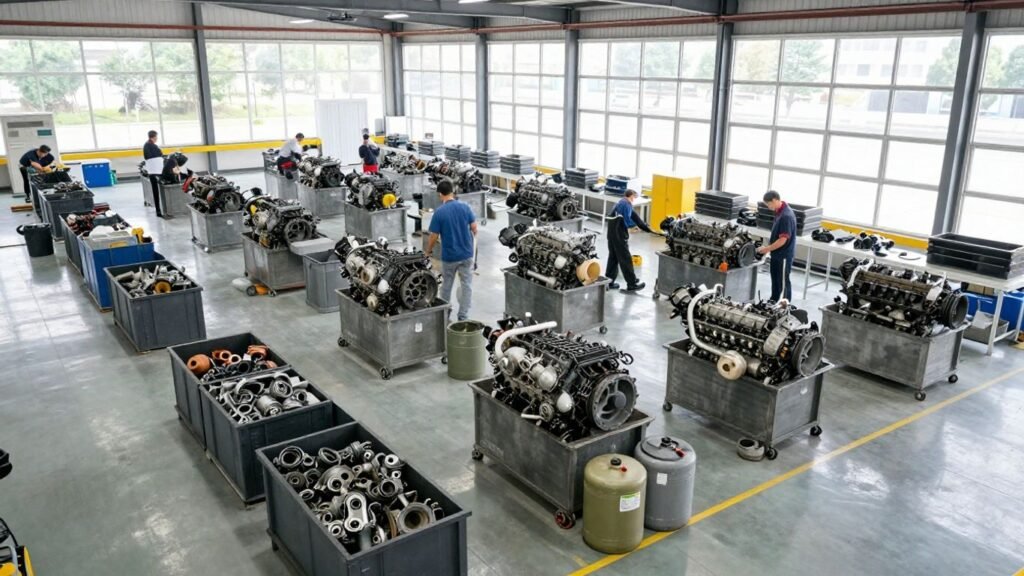
Sustainable engine recycling treats an end-of-life engine as a collection of potentially useful resources rather than a single waste item. The work combines mechanical inspection, controlled dismantling, material separation, and documented downstream handling. The goal is not simply to remove an engine from a site, but to preserve as much value as the condition and composition allow. A clear process also makes environmental claims easier to verify.
From end-of-life engines to recovered resources
An engine may contain serviceable assemblies, repairable castings, and recyclable metals even when it is no longer suitable for its original application. Recovery begins by identifying those different paths. Usable parts can return to service, while damaged or contaminated materials move into specialized recycling streams. A scrap engine block recycling process offers a useful example of how collection, fluid removal, component separation, and material recovery fit together.
The result is a set of resources with different destinations: tested components, prepared metal feedstock, recoverable fluids, and residues that require controlled disposal. Keeping these categories separate prevents a valuable material from being downgraded because it was mixed with avoidable contaminants.
Recycling, reuse, remanufacturing, and repurposing compared
These terms describe different decisions, and using them interchangeably can obscure what actually happened to an engine. Reuse generally means putting a component back into service with limited intervention. Remanufacturing restores a component through inspection, machining, replacement, and testing, while recycling turns material into feedstock for another manufacturing process. Repurposing gives an item a different practical use.
The distinction matters in reporting. Saying that an engine was “recycled” should not imply that every component was reused, and saying that a part was “remanufactured” should imply a defined restoration and testing procedure. Diesel injector remanufacturing illustrates why a component-level decision can preserve more value than discarding an entire assembly.
Why engines require specialized handling
Engines are dense, mixed-material products that may retain fuel, oil, coolant, refrigerant, or battery connections. They can also contain pressurized systems, sharp edges, heavy castings, and electronic modules. Moving directly from pickup to crushing or melting increases the risk of injury, contamination, and lost recovery value.
Specialized handling creates a controlled sequence: stabilize the unit, identify hazards, drain fluids, remove accessible components, and sort materials. The sequence may vary by engine type, but the principle is consistent: safety and material quality are linked.
The role of traceability in circular supply chains
Traceability connects the original engine to each material or component destination. Records can include identification numbers, condition assessments, removed fluids, part test results, weights, and downstream vendor documentation. This helps a business answer practical questions about ownership, compliance, and whether reported recovery actually occurred.
It also supports better purchasing decisions. A buyer seeking recycled metal or a tested replacement component needs confidence about its origin and condition. Privacy and record-handling practices matter too; even an unrelated Natural Escort privacy policy demonstrates how clearly defined data handling can support operational trust when records move between organizations.
How the engine recycling process works
A reliable process is staged rather than improvised. Collection establishes what has arrived, inspection determines its likely value, and controlled dismantling protects workers and materials. From there, each stream can be directed to a suitable processor instead of being treated as generic scrap. The steps below apply broadly, although exact requirements depend on the engine type and jurisdiction.
Collection, inspection, and initial sorting
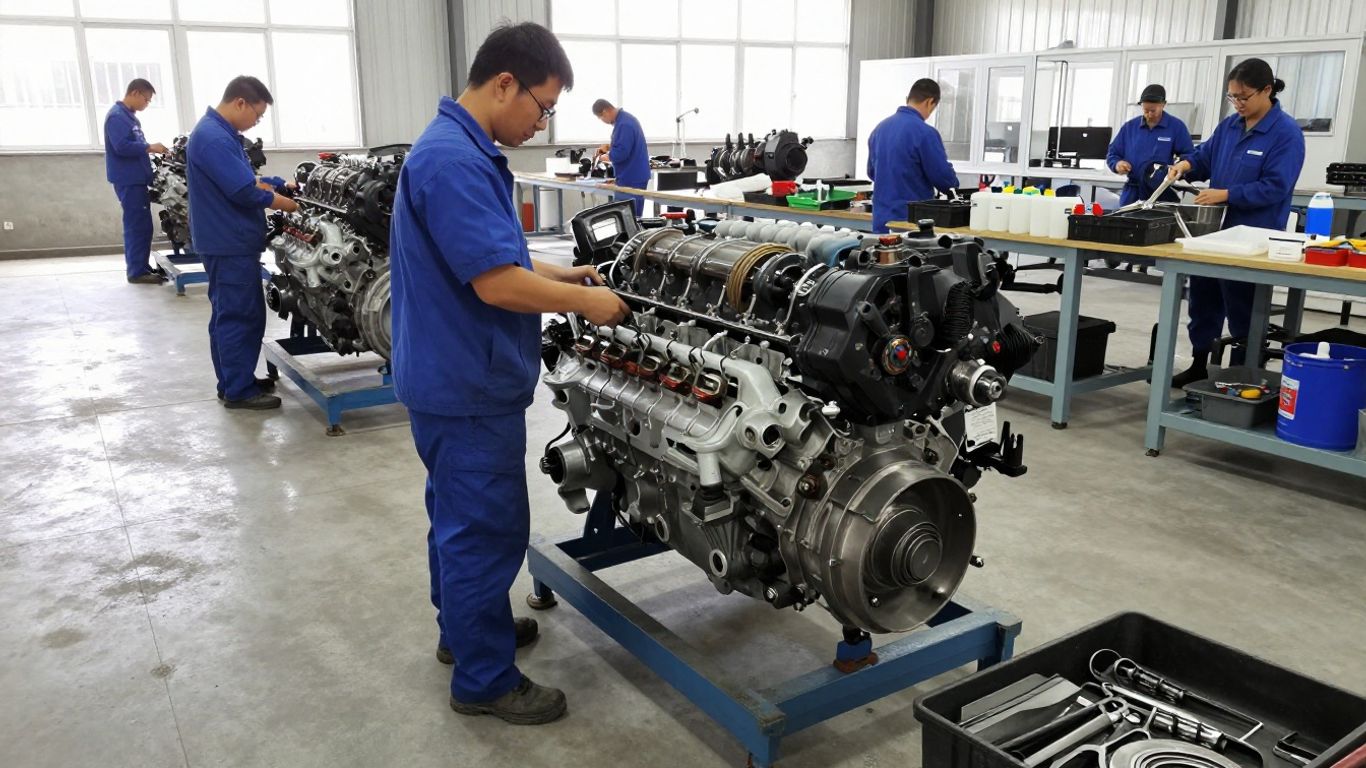
Collection should record the source, quantity, engine type, visible condition, and any known fluids or damage. At intake, workers can look for leaks, corrosion, missing parts, fire damage, and signs of contamination. Sorting by condition and material content prevents sound components from being damaged during handling and helps estimate recovery value before labor is committed.
Inspection is also the right point to identify engines that may be candidates for reuse or remanufacturing. Photographing the unit and recording its identity creates a baseline for later reconciliation.
Fluid draining and hazardous-material removal
Before major dismantling, technicians should drain accessible fuel, oil, coolant, and other regulated fluids into compatible, labeled containers. Batteries, filters, refrigerants, and contaminated absorbents may require separate treatment. Spills should be prevented through secondary containment and a response procedure rather than addressed after the fact.
Used oil management deserves its own control because improper disposal can affect soil and water. A description of used engine oil recycling shows how collected oil may be treated as a resource when the process and end use are properly defined. The key operational rule is simple: never mix streams merely to make collection faster.
Dismantling reusable components
Once hazards are controlled, workers can remove components that may have service or resale value. Parts should be cleaned enough for inspection without spreading contamination, then assessed against applicable specifications. Testing is more reliable than appearance, particularly for rotating, sealing, fuel-delivery, and electronic components.
A compact dismantling record should capture:
- The component identity and engine source
- Its condition and test result
- Any repair or cleaning performed
- Its final destination or disposition
This record makes the difference between a part that was genuinely recovered and one that was simply set aside. It also gives the business a practical basis for evaluating suppliers and improving sorting decisions.
Processing metals, plastics, and nonrecyclable residues
After reusable parts are removed, remaining materials are separated by composition as far as practical. Aluminum, ferrous metals, copper-bearing components, plastics, and electronic items may follow different processing routes. Residues that cannot be recycled should be characterized and sent to an authorized facility rather than blended into a general load.
Material preparation affects both environmental performance and commercial value. The more consistently a stream is sorted and free of fluids, the easier it is for a downstream processor to handle it. For a visual overview of the work, this engine recycling process video can complement written procedures, though site-specific controls still need to come from the responsible facility.
Which engine components offer the most recovery value
Recovery value depends on condition, demand, material composition, and the cost of testing or preparation. A valuable component is not necessarily the heaviest one; a tested assembly may preserve more value than a mixed metal load. Decisions should therefore consider both material value and avoided manufacturing effort. This is where careful inspection can materially change the outcome.
Reusable parts identified through testing
Reusable components may include housings, pumps, manifolds, shafts, starters, alternators, injectors, and other assemblies, depending on the engine. Their suitability cannot be determined from a visual check alone. Dimensional checks, electrical tests, pressure tests, and functional assessments can reveal whether cleaning is sufficient or repair is required.
A part should be labeled with its test status and limitations. That avoids passing uncertain inventory into another application and supports honest communication with the next user.
Aluminum, steel, copper, and precious-metal recovery
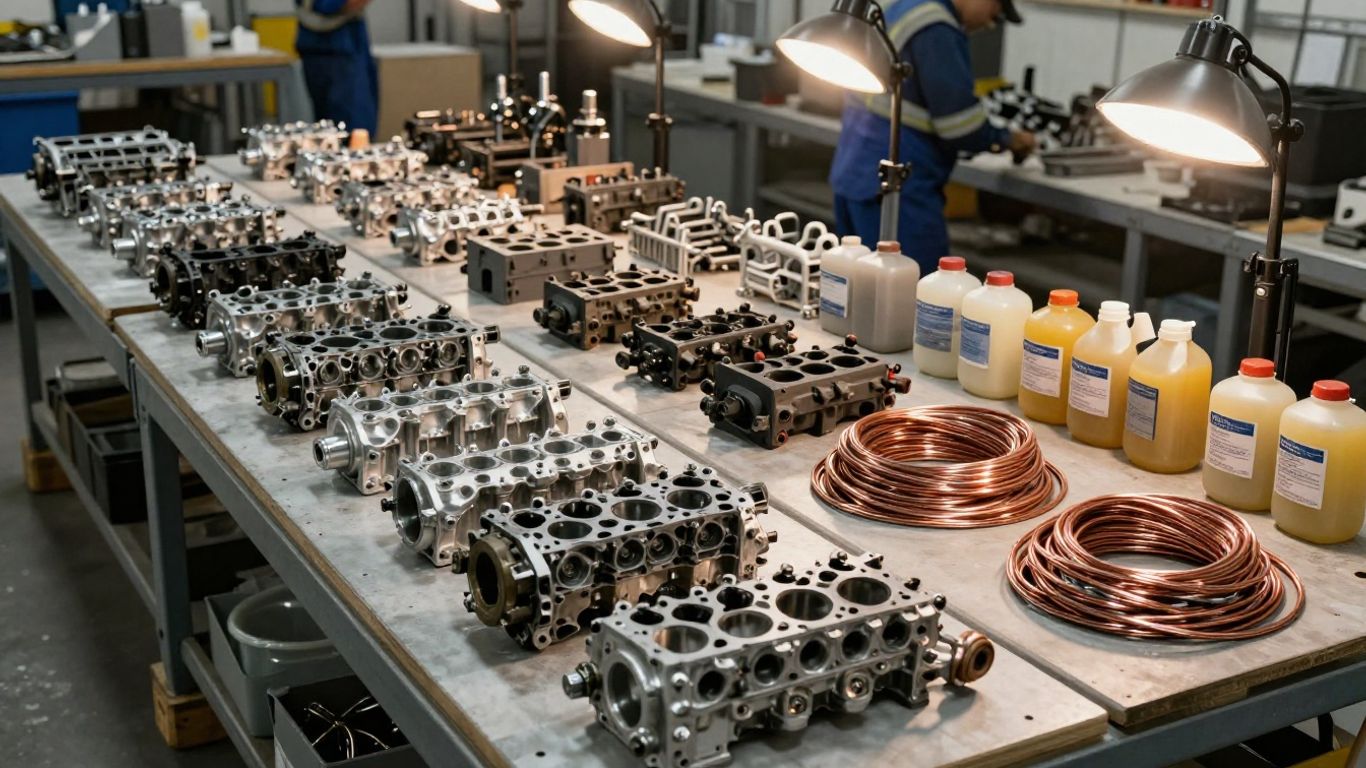
Engine blocks and heads often contain substantial aluminum or iron-based material, while wiring, motors, and connectors can add copper. Some electronic and exhaust-related components may contain smaller quantities of higher-value metals. Separation quality determines whether these materials remain useful feedstock or become a lower-grade mixed stream.
The same principle applies across sectors. Auto parts recycling benefits include reduced waste and lower demand for virgin materials, but the actual result depends on what is recovered and how cleanly it enters the next process. Weight tickets and processor reports help turn a general environmental claim into a measurable record.
Rebuilding engine blocks and cylinder heads
Castings can sometimes be cleaned, measured, machined, and inspected for rebuilding. Cracks, distortion, corrosion, and wear determine whether restoration is technically and economically sensible. A remanufacturing route should include defined tolerances, replacement criteria, and final testing rather than a vague promise that a component is “like new.”
When rebuilding is not viable, the casting may still be a useful metal feedstock. Keeping those decisions separate prevents repair costs from being applied to parts that have no reasonable service path.
Managing oil, coolant, batteries, and electronic components
Fluids and auxiliary components need dedicated handling because they can contaminate otherwise recyclable material. Batteries may contain corrosive or reactive substances, while electronic components can include mixed materials that require specialized processors. Filters and absorbents should be treated according to their contamination, not simply their appearance.
A clear material map helps workers know what to remove first and where it belongs. It also supports accurate reporting of recovered material, hazardous waste, and residual disposal.
The environmental benefits of sustainable engine recycling
The environmental case for sustainable engine recycling rests on several connected effects: less disposal, less extraction of virgin resources, and less energy-intensive manufacturing of replacement materials. Those benefits are not automatic. They depend on high-quality sorting, safe fluid management, credible downstream vendors, and realistic measurement boundaries.
Reducing landfill waste and raw-material extraction
Recovering a sound component can avoid the need to manufacture a replacement, while recycling a damaged casting can reduce demand for newly extracted metal. Even when an engine cannot be reused as a whole, its materials may remain productive in another supply chain. This layered approach is more effective than treating the unit as one undifferentiated object.
Landfill diversion should be reported carefully. A load sent away from a site is not necessarily recycled; the meaningful question is what happened at the final processing destination.
Lowering energy use and manufacturing emissions
Recycling metals generally avoids some of the extraction and primary processing associated with virgin feedstock. Remanufacturing can also retain the energy and material already invested in a component. The scale of the benefit varies with transport distance, processing technology, contamination, and the alternative being compared.
For that reason, businesses should avoid universal percentage claims unless the study boundary and source are clear. A scrap engine block recovery guide can help explain why material preparation and metal type influence the energy picture.
Preventing soil and water contamination
Oil, fuel, coolant, and battery materials can cause harm when engines are stored outdoors, punctured carelessly, or sent to unsuitable facilities. Covered storage, leak controls, spill kits, labeled containers, and prompt removal reduce those risks. Proper drainage is not merely a compliance task; it protects the quality of every other material stream.
The strongest programs treat pollution prevention as part of ordinary workflow. Workers know what to isolate, supervisors can verify it, and records show where each hazardous stream went.
Measuring lifecycle benefits against replacement engines
A useful comparison considers the engine’s actual fate rather than assuming maximum recovery. Businesses can compare reuse, remanufacturing, material recycling, and replacement while accounting for testing, repair, transport, processing, and residual disposal. The baseline might be a new component, a new engine, or continued operation of an existing unit.
A simple measurement framework can include the following categories:
| Measure | What it indicates | Useful evidence |
|---|---|---|
| Reuse rate | Components returned to service | Test and sales records |
| Material recovery rate | Mass sent to recycling streams | Weight tickets |
| Hazardous-fluid recovery | Controlled handling of fluids | Manifests and vendor receipts |
| Residual diversion | Waste kept from disposal | Final processor reports |
These measures do not replace a formal lifecycle assessment, but they reveal weak points in the process. They also make year-to-year improvement easier to discuss without overstating the result.
Safety and compliance requirements
Engine recycling combines heavy mechanical work with environmental controls, so safety must be designed into every stage. A compliant facility needs procedures that workers can follow under ordinary production pressure, not just policies stored in a binder. Requirements vary by location and engine type, but the basic responsibilities are broadly consistent.
Handling fuels, oils, coolants, and other hazardous fluids
Workers should identify fluid types before draining, use suitable containers, and prevent incompatible materials from being mixed. Containers need secure closures, labels, and secondary containment where required. Spill response equipment should be accessible, maintained, and supported by training.
Unknown fluids deserve caution. They should not be poured into a known stream until they have been identified or assessed by a qualified person. This protects workers and prevents a small uncertainty from contaminating a large batch.
Worker protection during dismantling and processing
Heavy engines require lifting plans, stable supports, suitable tools, and clear exclusion zones. Gloves, eye protection, protective footwear, hearing protection, and respiratory controls should match the task rather than be selected as a generic package. Lockout procedures and safe depressurization are essential where stored energy may be present.
Good housekeeping matters as well. Oil on a floor, loose parts underfoot, or an unstable pallet can turn routine dismantling into an incident.
Transportation, storage, and documentation requirements
Transport planning should account for weight, leak prevention, packaging, securement, and any rules applying to hazardous materials. Storage areas should protect engines and fluids from weather, unauthorized access, and accidental damage. Intake and outbound records should reconcile quantities, identities, and destinations.
A complete chain of custody may include pickup documentation, inspection notes, fluid records, weight tickets, transfer paperwork, and certificates or receipts from final processors. The exact documents depend on local rules and contractual needs.
Environmental permits and responsible downstream vendors
A recycler should understand which activities require permits, registrations, inspections, or specialized waste arrangements. Downstream vendors deserve the same scrutiny as the primary facility because a responsible handoff does not guarantee responsible final processing. Ask how vendors are qualified and how exceptions are handled.
Written procedures, current permits, and auditable records provide stronger assurance than broad sustainability language. They also give customers a defensible record if regulators or internal auditors ask where materials went.
How to choose a responsible engine recycling partner
The right partner is not necessarily the one offering the highest headline price. It is the one that can explain its process, document its outcomes, protect workers and customer information, and manage materials through their final destinations. A short site visit or structured questionnaire can expose gaps that a polished sales page will not.
Evaluating certifications, facilities, and processing capabilities
Ask what the facility is equipped to receive, dismantle, store, test, and process. Confirm whether the partner handles fluids and electronic components directly or passes them to qualified vendors. Certifications can be useful, but they should be current, relevant to the work, and supported by a scope that matches the service being purchased.
Photographs, permits, audit summaries, and sample records can help validate the answer. A facility that cannot describe its material flows clearly may not be able to support reliable reporting.
Confirming data security and parts traceability
Businesses should establish what information is collected, who can access it, how long it is retained, and how parts are identified after dismantling. Traceability is especially important when serialized components, warranty concerns, or sensitive equipment are involved. The unrelated BAT.TAXI platform is a reminder that clear records and compliance-oriented workflows matter whenever assets and transactions move between parties.
The partner should be able to show how an intake record connects to test results, recovered materials, and final disposition. If the chain breaks at any point, reported recovery rates become difficult to verify.
Comparing pricing, recovery rates, and service terms
Compare proposals on more than the purchase price. Review pickup charges, testing fees, fluid handling, storage periods, payment timing, rejected materials, and documentation. A lower quote may become less attractive if it excludes hazardous-fluid management or offers no visibility into downstream recovery.
Ask for definitions before comparing recovery rates. “Recovered” might mean reused, sold, recycled, or merely diverted from the original site, and those outcomes are not equivalent.
Identifying vague sustainability claims and greenwashing
Greenwashing often appears as impressive language without boundaries, evidence, or a clear destination for materials. A credible partner can explain what is measured, over what period, and by whom. It can also acknowledge losses, residues, transport impacts, and components that could not be recovered.
Be cautious of claims that rely only on attractive imagery or unrelated expertise. Even a page about certified personal trainers may be useful in its own field, but it is not evidence of engine recycling capability. Relevance and documentation should guide the evaluation.
How businesses can implement a sustainable engine recycling program
A program works best when it is treated as an operational workflow rather than an occasional disposal project. Start with the engines, sites, vendors, and regulations already in scope. Then define responsibilities, information requirements, and escalation points before the first pickup. Small, consistent controls usually outperform ambitious targets that nobody can track.
Creating an engine collection and sorting workflow
Map the journey from removal to final processing. Decide who labels the engine, who records its condition, where fluids are drained, how reusable parts are quarantined, and when materials are released to vendors. Standard forms and photographs reduce ambiguity across multiple locations.
The workflow should also include exceptions: leaking units, unknown contents, damaged batteries, missing identification, and engines that arrive mixed with unrelated scrap. Planning for these cases keeps the normal process moving safely.
Setting recovery, reuse, and diversion targets
Targets should distinguish reuse, remanufacturing, material recycling, and residual disposal. A single diversion number can hide whether the program is preserving component value or simply moving waste elsewhere. Baselines should reflect actual historical performance and the types of engines being collected.
Targets can be set for a pilot period first. After the business understands testing capacity, vendor constraints, and material yields, it can raise expectations without sacrificing safety or accuracy.
Tracking KPIs from pickup through final processing
Useful KPIs connect operational activity with environmental and commercial outcomes. Track quantities collected, inspection completion, reusable components, recovered material weights, hazardous-fluid volumes, residuals, incidents, and documentation completeness. Review trends by site, engine type, and vendor where the data supports that comparison.
A dashboard is only as useful as its source records. Someone should own data validation, investigate unusual changes, and retain evidence for the period required by policy or regulation.
Improving the program through audits and supplier collaboration
Periodic audits can test whether written procedures match what happens on the floor. Walk through a recent engine from intake to final disposition, check the records, and interview the workers who perform the steps. Share findings with vendors and agree on corrective actions with dates and owners.
Collaboration can improve packaging, pickup frequency, part testing, and material quality. The aim is a feedback loop: better sorting improves recovery, reliable data improves decisions, and clearer requirements improve supplier performance. For a different kind of experience planning, Ibiza Boat Club shows how safety instructions and environmental expectations can be integrated into a service journey; the operational lesson is broadly transferable, even though the industries differ.
Conclusion
Sustainable engine recycling is a disciplined way to keep components and materials useful while controlling hazards and waste. The strongest programs combine inspection, safe dismantling, credible downstream processing, and records that support every recovery claim. With clear targets and steady supplier review, businesses can turn end-of-life engines into a repeatable circular process rather than a one-time disposal decision.
Frequently Asked Questions
What is sustainable engine recycling?
It is the controlled recovery of usable components, repairable assemblies, recyclable materials, and properly managed fluids from end-of-life engines, with attention to safety, environmental protection, and traceability.
Can every engine component be reused?
No. Reuse depends on condition, compatibility, testing results, repair requirements, demand, and applicable safety specifications. Components that cannot be reused may still be recycled as material.
Why must engine fluids be removed before recycling?
Fuel, oil, coolant, and related substances can create fire, health, and pollution risks. They can also contaminate metal and plastic streams, reducing their recovery value.
What is the difference between recycling and remanufacturing?
Recycling converts material into feedstock for another process. Remanufacturing restores a component through defined inspection, repair or replacement work, and testing so it can serve again.
How can a business verify a recycler’s claims?
Request permits, process descriptions, chain-of-custody records, weight tickets, test records, downstream vendor details, and final processing documentation. Claims should be tied to defined measurements and time periods.
Which engine materials are commonly recovered?
Commonly recovered materials include aluminum, steel or iron-based metals, copper, selected plastics, electronic components, and certain higher-value metals. Actual recovery depends on separation quality and processor capability.
What is a useful first step for starting a program?
Create a baseline of engine volumes, conditions, current disposal routes, fluid types, and vendor performance. Use it to design a documented workflow and set realistic recovery and compliance targets.