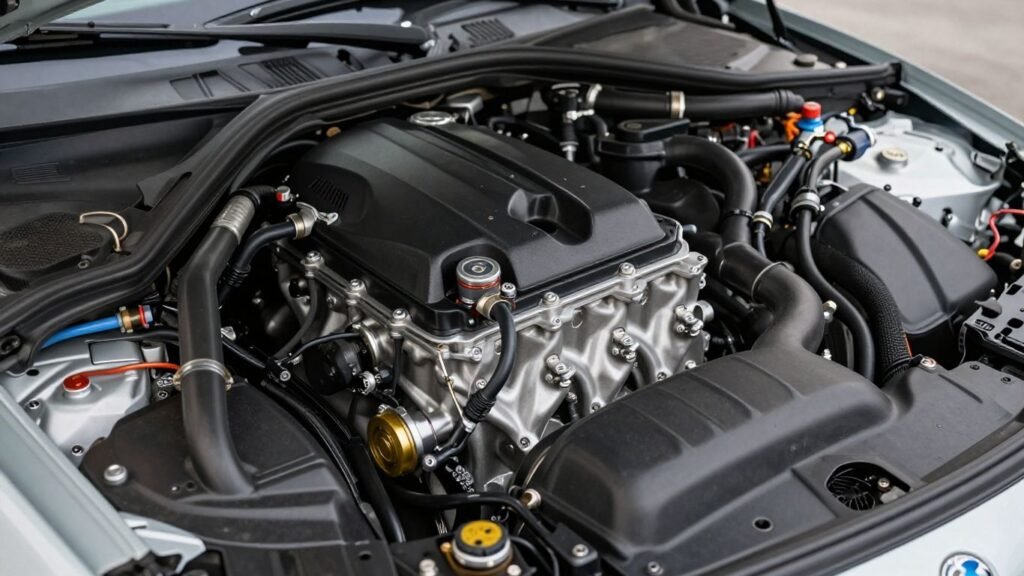
Thinking about your 2016 BMW 435i and wondering about its engine? It’s easy to get lost in all the technical talk. But sometimes, looking back at how car companies like BMW got started can give you a new appreciation for what’s under the hood. This article takes a quick look at BMW’s journey, from its early days to the cars we know today, and touches on how decisions made long ago shaped the brand. We’ll even weave in the idea of a ‘drop out engine’ for your 2016 BMW 435i Darwin, just to keep things interesting.
Key Takeaways
- BMW’s six-cylinder engine story really kicked off with the 303 model in 1933, a car that also introduced the famous kidney grille.
- The company faced tough times, even considering a merger with Daimler-Benz in 1959, but survived thanks to investment from the Quandt Group.
- Early BMW engineering ingenuity showed up in designs like the Bristol Aeroplane Company’s adaptation of BMW engines and prototypes like the 331.
- A decision to focus on luxury cars, like the 501, over smaller models like the 331, shaped BMW’s market direction.
- BMW’s roots trace back to aircraft and motorcycle manufacturing, with the R32 motorcycle being an early, influential design that still shows up in modern bikes.
The Genesis Of BMW’s Six-Cylinder Legacy
BMW’s journey into the world of automobiles, especially with their now-famous six-cylinder engines, didn’t just happen overnight. It’s a story rooted in engineering and a bit of historical happenstance. Before they were churning out the cars we know today, BMW was making aircraft engines. After World War I, things changed, and they had to pivot. They started making motorcycles, and then, through acquiring another company, they got their hands on car manufacturing.
The Groundbreaking BMW 303
Back in the early 1930s, BMW was looking to make a name for itself in the car market. They had already dabbled with smaller engines, but they wanted something more. The BMW 303, released in 1933, was a big deal. It was the first BMW car to feature a six-cylinder engine, and it also introduced that distinctive kidney grille that we still see on BMWs today. This car really set the tone for what BMW would become known for: sporty, well-engineered vehicles.
Evolution Through The 326 And 328 Models
Following the 303, BMW kept building on their six-cylinder success. The BMW 326, which came out in 1936, was a more luxurious four-door sedan. It took the smooth power of the six-cylinder engine and put it into a car that was comfortable and stylish for its time. But the real star that came out the same year was the BMW 328. This car was a pure sports car, built for performance. It used an advanced version of the six-cylinder engine and was incredibly successful in racing. It proved that BMW could build not just reliable cars, but also cars that could win on the track.
The Luxury Aspirations Of The 335
By the late 1930s, BMW was aiming even higher. They wanted to compete in the luxury car segment. The BMW 335, introduced in 1939, was their attempt at a large, powerful, and opulent sedan. It featured a bigger, more powerful six-cylinder engine, aiming to offer a premium driving experience. While its production was cut short by the outbreak of World War II, the 335 represented BMW’s ambition to create high-end vehicles and showed their capability in developing larger, more refined six-cylinder powerplants, setting a precedent for future luxury models.
Navigating Financial Storms And Product Pivots
Things were pretty rough for BMW back in the late 1950s. The company was really struggling, and it looked like they might not make it. They needed to come up with something new, fast, but money was tight. This led to some interesting decisions and products that, while maybe not blockbusters, were important steps.
The Challenging Era Of The BMW 600
BMW needed a car that could carry more than two people, something to compete with the growing German economy and people’s rising expectations. The problem was, they didn’t have the cash to design a whole new car from scratch. So, they took the little Isetta bubble car and stretched it. This resulted in the BMW 600, released in 1957. It had four seats and used some parts from the Isetta, like the front door and seats, but it had a longer body and a new frame. The engine was a motorcycle engine from the back, and they even used a new suspension system that would show up in later BMWs. Unfortunately, the 600 just couldn’t compete with the Volkswagen Beetle, which was bigger and more powerful. Production stopped in 1959, with fewer than 35,000 units made. It was a valiant effort, but not the success they hoped for.
The Critical 1959 Annual Meeting
By 1959, BMW was in serious trouble. The company was so close to being sold off. The situation was so bad that the shareholders were considering selling the whole company to Daimler-Benz. Imagine that – BMW becoming part of Mercedes! It was a really tense time. Thankfully, a group of investors, led by Herbert Quandt, stepped in. Their investment, along with some money coming in from a new car model, helped keep BMW afloat. This meeting was a turning point, a moment where the company’s future hung in the balance. Without that intervention, BMW as we know it might not exist today. It’s a good reminder that even big companies can face existential threats.
The Introduction Of The BMW 700
Out of the financial difficulties came a spark of ingenuity: the BMW 700. This little car, introduced in 1959, was a huge success and a lifesaver for the company. It was designed by Wolfgang Hartl and was a compact, stylish coupe or sedan that appealed to a lot of people. It was affordable, good to drive, and looked pretty sharp for its time. The 700 sold really well, far better than the 600, and its profits were a big help in getting BMW back on its feet. It proved that BMW could still build desirable cars even when times were tough. The success of the 700, combined with the Quandt investment, really set the stage for BMW’s comeback and the development of their future models.
- Design: It had a modern, sleek look that stood out.
- Performance: It offered a fun driving experience, which was a BMW hallmark.
- Affordability: It was priced right for the market at the time.
The period around 1959 was a make-or-break moment for BMW. Facing potential acquisition and with sales of their previous models lagging, the company desperately needed a hit. The introduction of the BMW 700 proved to be that hit, providing much-needed revenue and a renewed sense of direction.
Post-War Rebuilding And Engineering Ingenuity
So, the war ended, and things got… complicated for BMW. Imagine your factory is basically rubble, and the big bosses say, ‘Nope, no more making engines for planes or cars.’ That’s pretty much the situation BMW found itself in. The Munich plant was flattened, and other sites were taken over by the Soviets. It was a tough spot, to say the least.
Bristol’s Adaptation Of BMW Designs
Interestingly, some of BMW’s pre-war engine designs found their way into other hands. Bristol Aeroplane Company in the UK, for instance, ended up using some of these designs. It wasn’t a direct BMW operation, but it shows how ideas and engineering talent could still travel, even after such a massive global conflict. It’s a bit like finding a recipe from a famous chef and making it your own.
Independent Ventures And A Return To BMW
During the period when BMW was banned from making vehicles, they had to get creative. They started small, using salvaged equipment to make things like pots and pans, and then moved on to kitchen supplies and even bicycles. It wasn’t exactly high-performance engineering, but it kept the lights on. Eventually, permission came through to start making motorcycles again, and the R24 rolled out in 1948. This was a big step towards getting back to what they knew best.
The BMW 331 Prototype Concept
While the company was busy rebuilding and finding its footing, there were always ideas brewing for the future. The BMW 331 prototype concept was one of those forward-thinking projects. It represented a desire to move beyond the immediate survival needs and explore new vehicle designs. This kind of innovation is what keeps a company alive and kicking, even when things are tough. It’s about looking ahead, not just at what’s right in front of you.
The immediate aftermath of the war presented a stark reality: production facilities were destroyed, and manufacturing was heavily restricted by the Allied powers. This forced BMW into a period of making everyday items, a far cry from their previous focus on advanced engines. Yet, within this challenging environment, the seeds of future automotive success were being sown through sheer persistence and a refusal to abandon engineering principles.
Here’s a look at some of the key challenges and developments:
- Factory Closures and Restrictions: Post-WWI saw BMW’s factory gates locked due to raw material shortages, and post-WWII brought outright bans on vehicle manufacturing by the Allies.
- Shift to Civilian Goods: With engine production halted, BMW pivoted to making household items and bicycles to survive.
- Re-entry into Motorcycle Production: The R24 motorcycle marked a significant return to vehicle manufacturing in 1948.
- Eisenach Plant’s Fate: The factory in Eisenach was taken over by the Soviet Awtowelo group, continuing production under a different name (EMW) for a time.
It’s amazing to think about the journey from making pots and pans to the sophisticated machines we see today. It really shows the resilience of the engineering spirit. You can see this kind of resourcefulness in other areas too, like when staff at Blue Springs Lake had to fix a knife gate instead of replacing it, proving that ingenuity can solve a lot of problems.
Strategic Decisions Shaping BMW’s Future
Things were pretty dicey for BMW back in the late 1950s. The company was really struggling, losing money, and frankly, looking at a merger with Daimler-Benz. Can you imagine? It sounds wild now, but the Isetta, while popular, wasn’t making much profit. Their fancier sedans and sports cars were too expensive to build and not selling enough to keep the lights on. Even their attempt at a four-seater Isetta, the 600, flopped. Plus, the motorcycle market, which used to be a big deal for them, just dried up as people got richer and wanted cars instead. It was a tough spot.
The Veto Of The BMW 331
Back in the day, there was this prototype called the BMW 331. It was supposed to be a step forward, but for whatever reason, it never made it to production. Maybe it was too ahead of its time, or perhaps the company’s financial woes meant they just couldn’t afford to push it through. It’s one of those ‘what ifs’ in automotive history. The decision to not move forward with the 331 shows how careful BMW had to be with its resources during this period.
The Introduction And Challenges Of The BMW 501
The BMW 501, often called the ‘Baroque Angel’, was a beautiful car, no doubt. It represented BMW’s ambition to get back into the luxury car market after the war. However, building these cars was expensive, and they just weren’t selling in the numbers needed to make them profitable. It was a bit of a gamble that didn’t quite pay off as hoped, adding to the financial pressure the company was under.
The V8 Engine And Expanded Luxury Line
To try and compete and make their luxury cars more appealing, BMW did introduce a V8 engine. This was a big deal, aiming to give their cars more power and prestige. They also tried to expand their luxury offerings. It was a move to try and capture a higher-end market, but given the company’s overall financial situation, it was a challenging time to be rolling out expensive, high-performance vehicles. They needed every sale to count.
The company’s survival hinged on making smart choices, and sometimes, those choices meant saying no to promising projects or pushing through difficult financial times. It was a period of intense pressure and strategic rethinking.
- 1959 Annual Meeting: A critical moment where a proposed merger with Daimler-Benz was narrowly defeated by shareholders.
- Quandt Group Investment: The Quandt family stepped in, becoming the largest shareholder and providing much-needed financial stability.
- BMW 700 Launch: This smaller, more affordable car, derived from motorcycle engines, proved to be a much-needed success, helping to stabilize the company’s finances.
- BMW 1500 Introduction: Launched in 1961, this compact sedan with modern features helped re-establish BMW’s reputation for sporty, well-engineered vehicles.
Foundations Of A Global Automotive Powerhouse
The Origins Of BMW AG
It’s wild to think about how BMW, this huge car company we know today, started out. Back in 1922, a guy named Camillo Castiglioni bought the BMW name and its engine-building business from another company called Knorr-Bremse. He basically took the BMW name and merged it with his own aircraft manufacturing company, Bayerische Flugzeugwerke (BFw). So, the BMW we know today actually has its roots in BFw’s old factory buildings. They started small, with about 200 workers, making motorcycles and engines. Business wasn’t exactly booming at first, especially with all the economic craziness going on in Germany back then.
Post-War Survival And Restart
Things got really tough for BMW during and after World War II. The Nazi regime basically took over their factories to build aircraft engines, which, while profitable for a bit, put BMW in a really dependent position. Franz Josef Popp, the CEO at the time, actually warned that this focus on military production could be a huge risk to the company’s future. After the war, rebuilding was a massive challenge. The company had to figure out how to get back on its feet with damaged facilities and a changed world.
The Quandt Group’s Crucial Investment
One of the biggest turning points for BMW came with an investment from the Quandt Group. This financial backing was super important for BMW to survive and then start growing again. It allowed them to make the big decisions needed to move past the war years and start building the company into what it is today. Without that investment, who knows what would have happened.
Iconic Two-Wheeled Beginnings
Before BMW was really known for its cars, they made motorcycles. And not just any motorcycles, but ones that really stood out. Back in 1923, they showed off the R32 at the Berlin Motor Show. This wasn’t just another bike; it had a horizontally opposed twin-cylinder engine, air-cooled, with the cylinders sticking out sideways. This basic engine layout became a signature for BMW for decades.
The Revolutionary R32 Motorcycle
The R32 was a big deal. It wasn’t just about the engine, though. The engineers figured out a way to use a driveshaft to send power to the back wheel instead of a chain. This was a pretty smart move because it meant less maintenance and a smoother ride. People noticed right away. A magazine at the time even said it was "remarkably fast and successful." It really set the stage for what BMW motorcycles would become.
Here’s a quick look at some of the R32’s key features:
- Engine: 494 cc, air-cooled, horizontally opposed twin
- Drivetrain: Shaft drive (a big innovation then)
- Debut: 1923, Berlin Motor Show
- Reception: Praised by experts and popular with buyers
Enduring Design Elements
What’s really interesting is how many of the R32’s ideas stuck around. That boxer engine and the shaft drive? They’re still part of BMW motorcycle design today, even with all the modern tech. It shows how well those early engineers figured things out. It’s like they built something so solid, it just kept working and evolving.
The early success of the R32 wasn’t just a fluke. It proved that BMW could create innovative and reliable machines that people wanted. This early confidence in two-wheeled engineering likely played a role in their later automotive ventures, even if the path wasn’t always straight.
Expansion And The Birth Of Modern BMW Series
Acquisition Of Glas GmbH
Things were getting pretty tight for BMW by the mid-1960s. The Munich factory was just about maxed out on what it could produce. Instead of building a whole new place, which would have been a massive undertaking, BMW decided to buy out a company called Hans Glas GmbH. This company was in a bit of trouble, but it had factories in Dingolfing and Landshut. BMW went in, sorted things out, and those plants eventually grew into BMW’s biggest production sites. It was a smart move that helped them keep up with demand and set the stage for bigger things.
The Launch Of ‘New Six’ Sedans
Then, in 1968, BMW rolled out something new: the "New Six" sedans. These were the 2500, 2800, and the American Bavaria, along with some sporty coupes like the 2.5 CS and 2800 CS. These cars were a big deal. They showed that BMW was serious about making larger, more luxurious vehicles while still keeping that sporty feel. It was around this time that Eberhard von Kuenheim, who came over from Daimler-Benz, really started to shape the company. He was only 40 but had a vision to turn BMW from a European player into a global brand. And boy, did it work. By the mid-60s, BMW was doing really well financially.
The Formation Of The 3, 5, And 7 Series
BMW’s headquarters in Munich, the ones that look like four cylinders, were finished in 1971. But the real game-changer for their car lineup came in 1972 with the introduction of the 5 Series. These replaced the "New Six" sedans and had a fresh look thanks to Bertone. Then, in 1975, the coupes got a makeover and became the 3 Series. And just two years later, in 1977, the bigger sedans were rebranded as the 7 Series. This created the three-tier sports sedan structure that BMW has pretty much stuck with for decades. They also added other models like the 6 Series coupes and the M1 supercar when the market seemed to want them. Under von Kuenheim’s leadership from 1970 to 1993, BMW’s sales went up 18 times, car production quadrupled, and motorcycle production tripled. It was a period of massive growth and solidifying their place in the automotive world.
The strategic acquisition of Glas GmbH and the subsequent launch of the ‘New Six’ sedans marked a significant turning point, expanding BMW’s production capabilities and product offerings. This period laid the groundwork for the iconic 3, 5, and 7 Series, defining the brand’s future direction and global presence.
Wrapping It Up
So, there you have it. While the idea of a "Darwin’s Drop Out Engine" might sound a bit wild for your 2016 BMW 435i, it really points to the long history BMW has of making engines that just work, sometimes in surprising ways. From those early six-cylinders to the complex powerhouses of today, BMW has always been about building cars that drivers love. Your 435i is part of that story, a modern machine built on decades of engineering. Keep it running well, and it’ll keep giving you those miles of enjoyment.
Frequently Asked Questions
What is the “Drop Out Engine” in the context of a 2016 BMW 435i?
The term “Drop Out Engine” isn’t a standard BMW term. It likely refers to a specific engine modification or a slang term for an engine that’s been removed or replaced, possibly for performance upgrades or repairs on your 2016 BMW 435i. It’s best to clarify with the source of the term for a precise meaning.
What kind of engine does a 2016 BMW 435i typically have?
A 2016 BMW 435i usually comes with a powerful 3.0-liter turbocharged inline-six engine. This engine is known for its smooth performance and strong acceleration, making it a favorite among driving enthusiasts.
Are there common engine issues with the 2016 BMW 435i?
Like many modern turbocharged engines, the 435i’s engine can sometimes face issues such as turbocharger problems, oil leaks, or fuel injector issues. Regular maintenance and addressing warning lights promptly can help prevent bigger problems.
What are some popular engine upgrades for a BMW 435i?
Enthusiasts often upgrade the engine by adding a performance tune (ECU remapping), a better intake system, or an upgraded exhaust. These mods can boost horsepower and give the car a more aggressive sound.
How important is maintenance for the BMW 435i’s engine?
Engine maintenance is super important! Sticking to the recommended oil changes, filter replacements, and tune-ups will keep your engine running smoothly and help it last much longer. It also helps maintain its performance and fuel efficiency.
Can I use a different engine in my 2016 BMW 435i if the original fails?
While it’s technically possible to swap engines, it’s a complex and expensive process. It’s usually more practical and cost-effective to repair the original engine or replace it with a compatible BMW engine designed for that model year.