
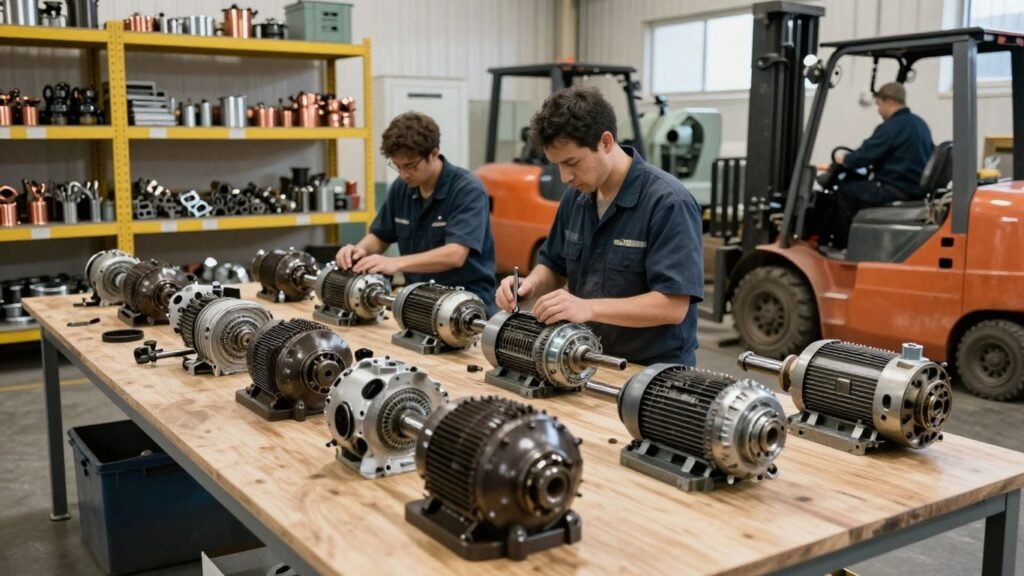
Key Takeaways
Recycled motors can reduce purchase costs, but the best decision comes from comparing performance, installation, energy use, and service life—not just the price tag.
- Recycled motors often cost less because usable materials and components stay in circulation.
- Compatibility checks prevent installation delays and unexpected modification costs.
- Inspection records, testing, warranties, and return policies reveal supplier quality.
- Efficient operation can matter more than the initial purchase price.
- Responsible buying includes safe transport, proper storage, and measurable results.
Understand what recycled motors are and where the savings come from
A recycled motor is not automatically the same thing as a used motor. The description may refer to a component that has been recovered for parts, cleaned and tested for reuse, or rebuilt to a defined operating condition. Understanding that distinction helps buyers compare like with like and see why recycled motors save money in some applications but not others.
Recycled, refurbished, remanufactured, and used motors compared
A used motor is generally sold in its existing condition, with limited preparation beyond removal and basic identification. A refurbished motor has usually been cleaned, inspected, and repaired where needed. A remanufactured motor is typically disassembled and rebuilt against a more deliberate standard, while a recycled motor is a broader term that may describe reuse of the complete unit or recovery of its materials and components. Ask the seller which process actually applies.
The label should be supported by a condition report rather than treated as a guarantee. A motor with documented testing may be a better purchase than one carrying a more impressive description but offering no evidence of inspection.
How material recovery lowers production costs
Recovered housings, shafts, bearings, laminations, copper, and other usable materials can reduce the amount of new material required for a replacement. That can also shorten the route from supplier to buyer when a suitable unit is already available. The economics are strongest when the recovered motor matches the application without extensive rebuilding.
Recycling can also reduce waste and the energy associated with producing entirely new equipment. General recycling guidance explains how keeping materials in use can reduce landfill waste and manufacturing-related emissions through energy-saving recycling. For a buyer, those broader savings matter most when the motor still meets the required duty and reliability expectations.
Why supply availability affects motor prices
Price is shaped by availability as much as by material value. A common motor recovered in volume may be inexpensive, while a specialized unit with an uncommon frame, shaft, or voltage can command a premium. Shipping distance, seasonal demand, and the cost of testing also influence the final quote.
A broad supply network can make recycled purchasing practical because buyers have more chances to find an exact or near-exact match. Automotive recyclers, for example, describe the value of pre-inspected parts available across many makes and models through PARTS. The same principle applies to motors: availability reduces downtime and makes comparison easier.
The role of testing and quality control
Testing turns an uncertain secondhand purchase into a more assessable business decision. Depending on the motor and seller, useful records may include insulation resistance, winding checks, no-load operation, vibration observations, current draw, and a visual inspection. The report should identify the tested unit, its condition, and any limits on the result.
A test does not predict every future failure, but it gives you a baseline. Documented test evidence matters because it lets your technician compare the motor with the equipment requirements and challenge vague assurances before money changes hands.
Calculate the true cost of a recycled motor
The purchase price is only one line in the budget. Installation labor, adapters, freight, commissioning, electricity, maintenance, and downtime can change the outcome quickly. A sound comparison places the recycled option beside a new equivalent and estimates the full cost over the period you expect to use it.
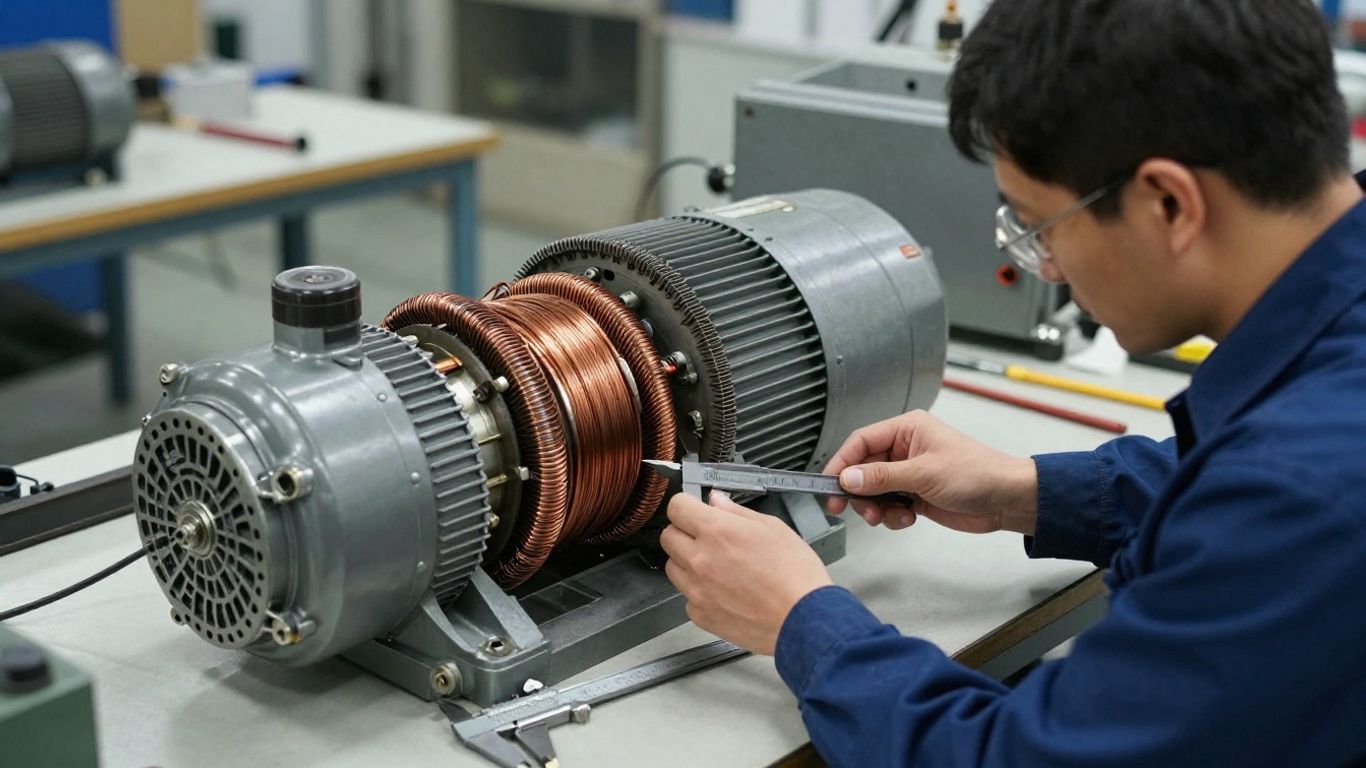
Purchase price versus total cost of ownership
Start with the quoted motor, then add every cost required to put it into dependable service. Include inspection by your own technician, delivery, lifting equipment, installation, alignment, controls, and any planned replacement parts. If failure would interrupt production, estimate the financial effect of that interruption as well.
A cheaper motor can still be the better choice when it fits immediately and has credible test records. Conversely, a low headline price may disappear once modifications and urgent labor are added.
Installation, compatibility, and modification expenses
Compatibility is where many apparently attractive purchases become expensive. Confirm the motor’s frame, mounting arrangement, shaft dimensions, rotation, enclosure, terminal configuration, and connection requirements before ordering. Small differences can require a base adjustment, coupling change, pulley replacement, or electrical work.
Request drawings, photographs, and nameplate information rather than relying on a general model description. The few minutes spent comparing specifications can prevent a motor from sitting unused while a shop fabricates an adapter.
Energy efficiency and operating costs
A motor that runs for long hours may cost more in electricity than it did to buy. Compare rated efficiency, load profile, speed, control method, and expected annual operating hours. A new high-efficiency motor may justify its higher price in a heavily used application, while a recycled unit can make financial sense for intermittent or low-duty service.
The right calculation uses your actual operating pattern. Avoid paying for specifications that provide no useful benefit, but do not overlook energy consumption simply because the recycled purchase price is attractive.
Warranty coverage and expected service life
Warranty terms help define the risk you are accepting. Check what parts are covered, how long coverage lasts, whether labor and freight are included, and what evidence is required for a claim. Also ask whether the motor was repaired, rewound, or simply tested in its recovered condition.
Expected service life should be treated as an estimate based on condition, duty, environment, and maintenance. A supplier who explains those assumptions is more useful than one who offers a confident but unsupported lifespan.
Choose the right recycled motor for the application
A recycled motor only saves money when it performs the work required of it. Start with the driven equipment and its operating conditions, then work backward to the motor specification. This prevents a familiar-looking replacement from being installed where its speed, torque, or enclosure is unsuitable.
Matching voltage, horsepower, speed, and torque
Read the nameplate and compare it with the equipment documentation. Voltage, phase, frequency, horsepower, full-load current, rated speed, and service factor all affect whether the motor can operate safely. Torque requirements during startup deserve special attention, especially for conveyors, compressors, pumps, and loaded machinery.
Do not substitute horsepower alone for a complete match. A motor with the right power rating but the wrong speed or starting characteristics may create overheating, poor process control, or mechanical stress.
Checking dimensions, mounting, and shaft specifications
Physical fit is as important as electrical fit. Measure the frame and mounting pattern, shaft diameter and length, keyway, center height, and available clearance. Check the coupling, belt, pulley, or gearbox interface before accepting a motor as interchangeable.
Photographs help, but measured dimensions are better. If the supplier cannot provide them, treat the quote as provisional and allow for the possibility that installation will require additional work.
Selecting motors for automotive, industrial, or commercial use
Application conditions change the selection criteria. An automotive motor may need vehicle-specific fitment and connector compatibility, while an industrial motor may need protection from dust, moisture, heat, or frequent starts. Commercial equipment may place greater emphasis on quiet operation, compact dimensions, and easy service access.
For vehicle-related purchases, the wider recycled-parts market offers a useful reminder: pre-inspection and ready-to-install fit can affect both repair time and cost. Buyers can review automotive recycling information while still confirming the motor’s exact application separately.
When a new motor is the more economical choice
New equipment may be preferable when the motor is safety-critical, operates continuously, has a rare specification, or must meet a current efficiency or compliance requirement. It can also be the better choice when a recycled unit needs extensive rewinding, custom adaptation, or uncertain controls integration.
The goal is not to choose recycled equipment at any cost. It is to choose the option with the lowest credible total cost while meeting performance and safety requirements.
Evaluate quality before you buy
Quality evaluation is a practical form of risk control. Ask for records before committing, compare the answers across suppliers, and involve the person who will install or maintain the motor. A clean exterior is useful evidence of care, but it cannot replace electrical and mechanical checks.
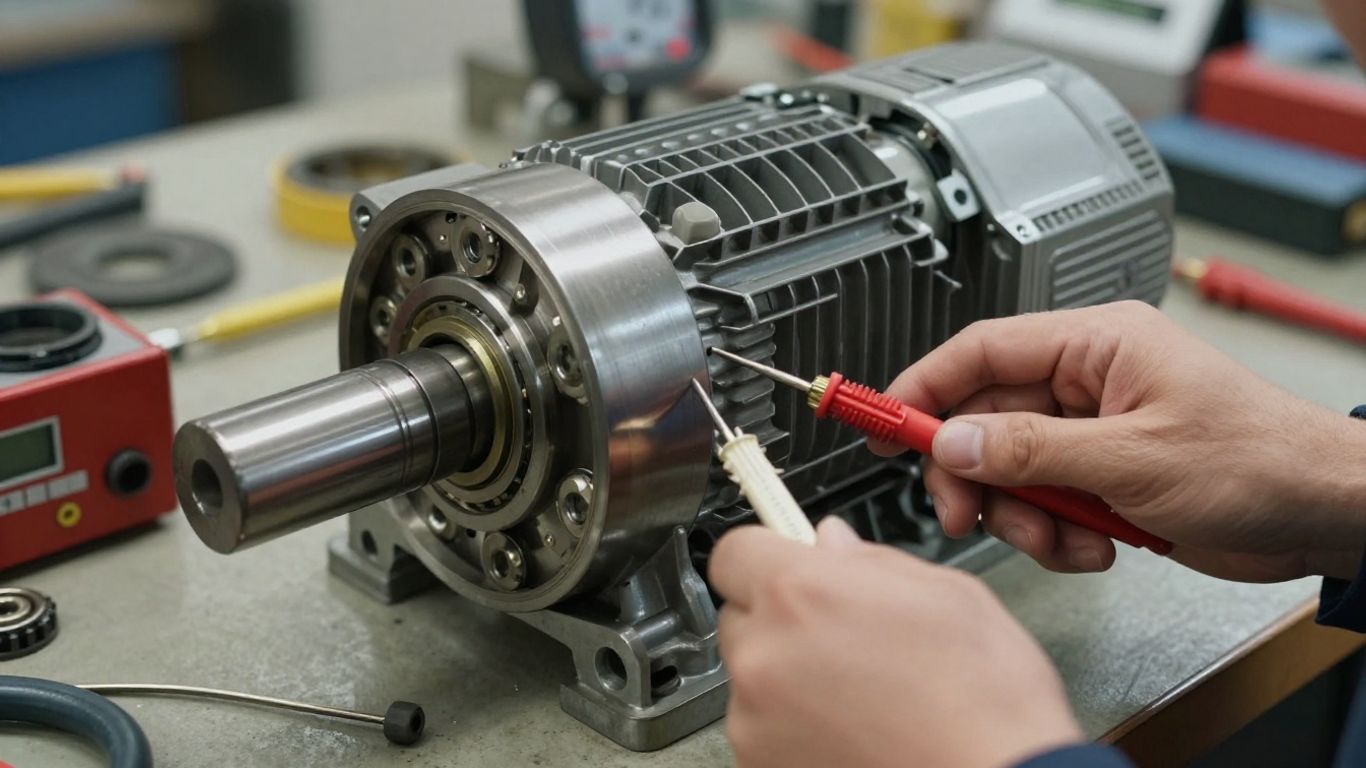
Reviewing inspection and performance-test results
Look for a dated report tied to the motor’s serial or inventory number. It should state what was inspected and tested, not merely say “good condition.” If the unit was run under load, ask what load and for how long; if it was tested without a load, understand what that test does and does not prove.
Keep the report with the purchase records. It provides a baseline for commissioning and may help resolve a warranty question later.
Identifying wear, corrosion, and rewinding concerns
Inspect bearings, seals, cooling passages, fan covers, terminal boxes, mounting feet, and shaft surfaces. Corrosion can signal storage or operating conditions that deserve further investigation. If the motor was rewound, ask who performed the work, what insulation system was used, and whether the winding data was recorded.
A repaired motor is not necessarily a poor motor. The concern is hidden work or a repair that does not suit the intended voltage, temperature, duty, or control method.
Comparing supplier warranties and return policies
Read the warranty before comparing prices. A short replacement-only warranty may be adequate for a low-cost spare, but a production-critical motor may justify stronger coverage and a clearer return process. Confirm inspection windows, restocking charges, shipping responsibility, and exclusions for installation mistakes or improper storage.
Suppliers should also explain how they identify and package units. Clear documentation reduces disputes and makes a modest price difference easier to assess.
Verifying certifications and responsible recycling practices
Ask whether the supplier follows recognized handling, dismantling, and material-recovery procedures, and whether any certification applies to the facility or product. Certification should be specific and verifiable rather than a vague environmental statement.
Responsible recycling includes safe handling of oils, metals, insulation materials, and electronic components. For comparison, FFS describes separating metal and plastic from mixed-material razor cartridges through a dedicated return scheme; the general lesson is to ask how difficult material streams are actually handled, not just whether they are called recyclable.
Reduce operating expenses with recycled motors
Savings continue after installation when the selected motor is maintained and used appropriately. A reliable spare can shorten an outage, while a properly matched replacement can reduce the need for repeated adjustments. These gains are operational rather than automatic, so track them against actual maintenance records.
Lower replacement and maintenance costs
A suitable recycled motor can reduce the cash required for an emergency replacement and may provide access to parts for older equipment. The benefit is greatest when the unit is already compatible and its condition is documented. Keep the original inspection report and installation readings so future troubleshooting starts with useful information.
Lower purchase cost should not lead to lower maintenance standards. Lubrication, alignment, cleaning, and electrical checks remain necessary.
Improving efficiency without over-specifying equipment
Efficiency improvements do not always require the newest or largest motor. First correct obvious causes of waste, such as poor alignment, excessive belt tension, blocked cooling, or operation far from the normal load range. Then compare the likely energy savings with the cost of changing the motor and controls.
A recycled motor can fit a sensible efficiency plan when its condition and rating match the duty. It should not be oversized simply to create a margin that the equipment never uses.
Keeping spare motors and critical components available
A planned spare can be cheaper than expedited freight and lost production. Prioritize motors whose failure would stop a critical process, and store the correct bearings, couplings, seals, or mounting hardware where appropriate. Label each spare with its tested condition, dimensions, and intended equipment.
Keep storage dry, clean, and protected from impacts. Rotate stored equipment through periodic inspection rather than assuming an unused motor remains ready indefinitely.
Planning preventive maintenance around motor condition
Maintenance intervals should reflect the motor’s age, repair history, operating environment, and duty cycle. Record vibration, temperature, current, noise, and insulation readings when practical. Changes from the commissioning baseline can reveal developing problems before an unexpected shutdown.
A simple maintenance record can include four recurring checks:
- Inspect cooling paths, housings, terminals, and mounting points.
- Check alignment, coupling condition, vibration, and unusual noise.
- Compare operating current and temperature with baseline readings.
- Review bearings, lubrication, seals, and stored-spare condition.
That routine turns a recycled purchase into a managed asset rather than a gamble. It also helps determine whether a future repair, replacement, or new motor is the most economical response.
Buy recycled motors safely and sustainably
The buying process should protect people, equipment, and the budget. Start with a complete specification, request evidence, and make responsibilities clear before shipment. Sustainable purchasing is strongest when the motor is reused successfully and its eventual materials are handled responsibly.
Questions to ask suppliers before ordering
Ask for the exact model and serial information, test results, repair or rewind history, dimensions, operating limits, warranty terms, and return procedure. Confirm whether the quoted price includes inspection, packaging, freight, and any accessories. If the motor is intended as a direct replacement, ask the supplier to state which specifications were compared.
You can also ask how the unit was sourced and what happens to motors that fail inspection. A transparent answer is a useful sign of process maturity.
How to compare quotes beyond the headline price
Place quotes in a common format so that one supplier is not hiding important costs in a separate line. Include the motor, testing, freight, taxes, installation changes, warranty value, expected downtime, and likely energy use. For automotive applications, a used auto parts cost comparison offers a related way to think about price, fit, and installation time together rather than separately.
This comparison often makes the decision clearer. A slightly higher quote may include better documentation, a more suitable return policy, or faster delivery.
Transport, storage, and installation considerations
Motors should be secured against impact, moisture, and contamination during transport. On arrival, inspect the packaging and shaft, verify the nameplate, and record any damage before installation. Follow the manufacturer’s handling guidance and use suitable lifting equipment; motors can be heavy even when their dimensions appear manageable.
After installation, check rotation, alignment, connections, vibration, temperature, and current under normal operating conditions. Keep those readings as the starting point for maintenance.
Measuring financial and environmental results over time
Track the original quote, installation cost, energy use where available, maintenance events, downtime, and eventual disposition. Compare the recycled motor with the new-equipment alternative you considered, using the same period and operating assumptions. Environmental results can be described carefully through avoided new production, extended service, and recovered material, without claiming a universal emissions figure.
For broader context, research on recycled vehicle components has examined energy and emissions differences between reused and newly manufactured parts, including the effect of avoiding raw-material processing. The practical takeaway is straightforward: measure both cost and service performance, then report what your own operation actually experienced.
Conclusion
Recycled motors save money when buyers treat them as engineered equipment rather than anonymous secondhand goods: verify the match, price the complete installation, inspect the condition, and maintain the result. A careful process can lower capital cost, limit waste, and keep older equipment productive without sacrificing sensible safety decisions.
Frequently Asked Questions
Are recycled motors reliable?
They can be reliable when their condition, history, compatibility, and test results are documented. Reliability still depends on the application, installation, environment, and maintenance.
Are recycled motors cheaper than new motors?
Often, but not always. Freight, modifications, testing, energy use, warranty coverage, and downtime can make a higher-priced new motor the more economical option.
What should I check on a recycled motor?
Check the nameplate, dimensions, shaft and mounting details, inspection records, test results, repair history, warranty, return policy, and visible signs of wear or corrosion.
Can a recycled motor improve energy costs?
It may, if it replaces an inefficient or poorly matched motor. Compare efficiency and actual load behavior with installation and purchase costs before making that assumption.
Is a refurbished motor the same as a recycled motor?
No. Recycled is a broad description, while refurbished usually indicates cleaning, inspection, and repair. Ask the supplier to define the process and provide supporting records.
How should a recycled motor be stored?
Store it in a clean, dry, protected area, secured against impacts and contamination. Inspect stored units periodically rather than assuming they remain installation-ready.
When should I choose a new motor instead?
Choose new equipment when the application is safety-critical, runs continuously, requires current compliance or efficiency standards, or would demand extensive modifications to accept a recycled unit.