

Key Takeaways
Good body shop engine supply depends on accurate identification, dependable sourcing, and a process that accounts for the full repair cost.
- Confirm the vehicle, engine code, specifications, and emissions requirements before ordering.
- Compare new, rebuilt, recycled, and used assemblies by condition and warranty, not price alone.
- Check availability, delivery coverage, core charges, and return terms with every supplier.
- Inspect shipments before installation and document problems immediately.
- Track supplier performance through accuracy, turnaround time, returns, and rework.
Understanding body shop engine supply needs
Engine-related repairs can begin with collision damage, a pre-existing mechanical fault, or a problem discovered during disassembly. That makes sourcing different from ordering a simple cosmetic panel: the part must work with the vehicle’s mechanical, electrical, and emissions systems. A clear body shop engine supply process gives estimators and technicians the same information before money is committed. It also helps the shop explain realistic repair choices to the vehicle owner.
When a body shop needs engine-related parts
A collision may damage the radiator, cooling fan, mounts, exhaust components, wiring, or other parts around the engine without immediately making the engine itself seem faulty. Technicians may also find oil leaks, cracked housings, bent brackets, or damaged accessories once the front end is opened. The first step is to separate collision-related replacement from maintenance work and then identify which parts are essential to a safe, complete repair.
That distinction matters for estimates. A complete engine assembly, long block, accessory, or small supporting component can have very different lead times and warranty terms. Documenting the reason for each part reduces disputes and keeps the estimate tied to the actual repair plan.
Common engine assemblies and components
The phrase “engine part” covers several levels of replacement. A shop might need a complete assembly, a long block, a cylinder head, an intake or exhaust component, an alternator, a starter, a radiator, or a mounting component. Parts surrounding the engine can be just as critical to fit and function as the main assembly; a broad engine compartment parts reference can help when terminology differs between an estimate, catalogue, and technician’s inspection.
Before requesting a quote, record whether the job requires an assembly that is ready to install or a component that will be transferred from the original unit. This avoids paying for parts the shop does not need and makes labor planning more accurate.
OEM, aftermarket, rebuilt, and used options
Each replacement category carries a different balance of price, condition, availability, and risk. OEM parts may offer the closest specification match, while aftermarket parts can provide another route when the application and quality are verified. Rebuilt assemblies depend heavily on the rebuilder’s inspection and replacement procedures, and used parts require careful checks of mileage, damage history, and included components.
The right option is the one that meets the repair order, warranty expectations, and vehicle requirements. Do not treat a lower invoice price as the final comparison; installation time, missing accessories, and the possibility of an early return can change the result.
Matching supply needs to repair volume
A high-volume shop needs a different purchasing rhythm from a small facility handling occasional major repairs. Frequent jobs justify standardised order forms, approved suppliers, and a short list of common components. Lower-volume shops may benefit more from broad supplier access and clear delivery commitments than from holding expensive assemblies in stock.
Review past repair orders to find patterns by vehicle type, engine family, and season. This gives purchasing staff a practical basis for deciding what to keep nearby and what to order only after a vehicle has been inspected.
Identifying the right engine and parts
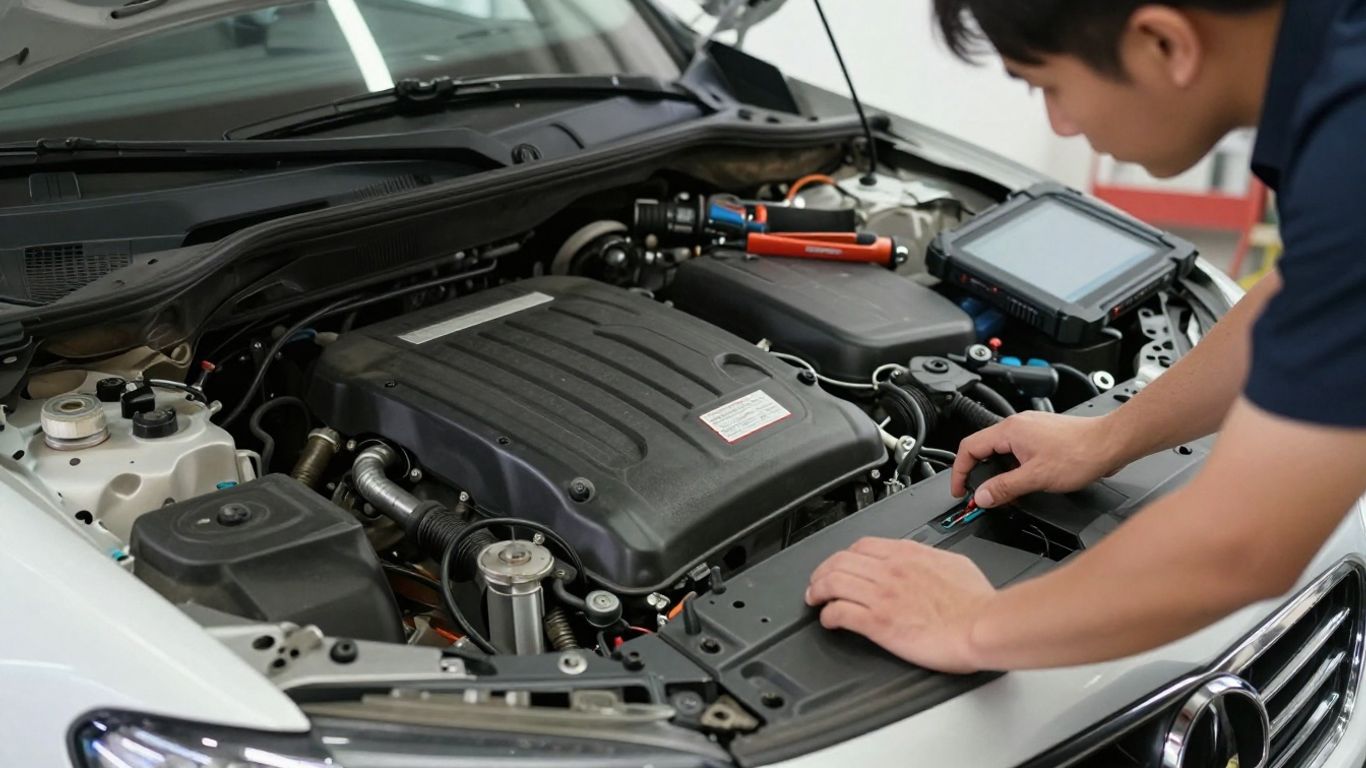
Correct identification is the foundation of every engine order. Similar vehicles can use different engines, transmissions, emissions equipment, connectors, and calibration requirements. The safest process checks several identifiers rather than relying on make, model, and year alone. A few minutes spent verifying the application can prevent a costly delivery, installation, and return cycle.
Using the vehicle identification number
The vehicle identification number should be the starting point for a quote because it ties the request to a specific vehicle. Give the supplier the complete VIN, not a partial sequence copied from an old estimate. Also provide the production date, drivetrain, body style, and any information visible on the existing engine or vehicle label.
The VIN does not replace a technician’s inspection, but it gives the supplier a reliable search key. Ask the supplier to return the identified application in writing so the estimator can compare it with the repair order before approving the purchase.
Confirming engine codes and specifications
Engine codes, displacement, fuel type, induction system, and production details can change the fit of an assembly. Confirm whether the quoted unit includes the intake, exhaust manifolds, sensors, wiring, injectors, mounts, accessories, or other transferable items. A “complete engine” is not always configured the same way by every supplier.
Write down what is included and what must be moved from the damaged unit. This simple comparison often reveals why two apparently similar quotes differ and gives the technician a clearer installation plan.
Checking compatibility across model years
A part listed for a vehicle family may span several model years without being interchangeable across all of them. Mid-year changes, revised connectors, software requirements, mounting points, and emissions equipment can affect compatibility. Ask for confirmation of the exact production range and compare photographs or identifying marks when the part is used or recycled.
For shops buying across Australian markets, supplier coverage and local availability can also influence the practical choice. A part that fits on paper but must travel a long distance may not support the promised repair date.
Verifying emissions and regulatory requirements
Emissions equipment should be treated as part of the specification, not an afterthought. Check catalytic components, sensors, evaporative systems, engine management equipment, and any local compliance requirements that apply to the vehicle. A replacement that starts and runs may still be unsuitable if required equipment is missing or mismatched.
Keep the inspection notes, supplier confirmation, and part documentation with the repair file. The record supports quality control and gives the customer a clearer explanation if the original choice has to change.
Choosing reliable body shop engine suppliers
Supplier selection affects more than the purchase order. Inventory accuracy, packaging, technical answers, freight coverage, warranty handling, and return speed all shape the repair experience. The best supplier is not necessarily the one with the lowest listed price. It is the one that can provide suitable parts with information the shop can trust.
Comparing supplier inventory and availability
Ask whether the item is physically available, allocated to another order, awaiting inspection, or merely listed in a catalogue. Availability should include the exact assembly and configuration, not just a broad vehicle match. Confirm the supplier’s cut-off time, dispatch point, and expected delivery date before promising a customer a completion date.
It can be useful to compare specialist catalogues with broader networks. Engine Parts Center describes online access to internal engine parts and engine kits, while Speed & Engine Warehouse describes engine kits and parts for passenger car and industrial engines. These examples show why the scope of a supplier’s catalogue should be checked against the actual repair rather than assumed from its name.
Evaluating quality standards and warranties
A warranty is meaningful only when the shop understands what it covers, how long it lasts, and what installation conditions apply. Ask whether testing, inspection, or measurement is performed before dispatch, and clarify whether labor, fluids, seals, and diagnostic work are excluded. Used and rebuilt units deserve especially careful documentation of mileage, condition, and included components.
Record the warranty contact, claim window, and evidence required for a return. That information should travel with the part from receiving to installation so a technician is not left searching for terms after a problem appears.
Reviewing delivery speed and shipping coverage
Delivery promises should account for the shop’s location, freight method, oversized-part handling, and the possibility of damage in transit. Nationwide access can widen the sourcing pool, but distance also makes packaging and claims procedures more important. Confirm whether the supplier delivers to the workshop, a depot, or a commercial address with specific receiving requirements.
A reliable promise includes a date and a contingency. If the supplier cannot confirm dispatch, the estimator should avoid presenting the part as guaranteed and should discuss an alternative repair path.
Assessing customer service and technical support
Good support begins with staff who can answer application questions without guessing. Test the process with a real identification request: provide the VIN and engine details, ask what is included, and see whether the response is clear enough for both the estimator and technician. Fast replies have little value if the answer is incomplete.
Operational guidance can also come from industry organisations. ASA National presents resources for automotive repair professionals dealing with operations, teams, and customer satisfaction; those broader management concerns are relevant when a shop builds its own supplier-review process.
Balancing cost, quality, and turnaround time
A replacement engine decision is a three-way calculation involving purchase price, installation risk, and delivery time. The cheapest quote may become expensive if it arrives incomplete or requires a second order. The fastest option may not be suitable if its specification or warranty is unclear. A useful purchasing decision makes these trade-offs visible before approval.
Calculating the total replacement cost
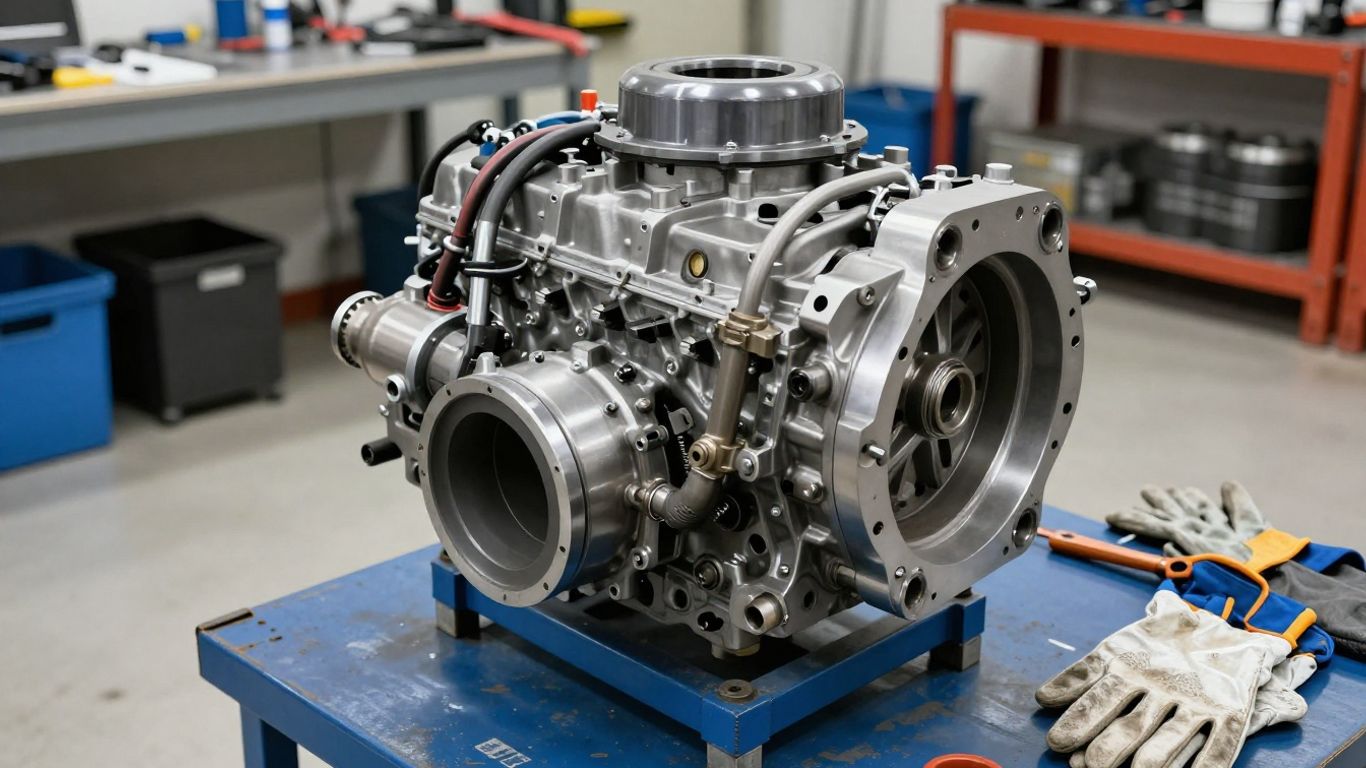
Start with the quoted part, then add freight, taxes, core charges, consumables, programming, fluids, seals, and expected labor. Include diagnostic time if the replacement requires additional testing or calibration. Comparing this total rather than the headline price gives the estimator a fairer basis for customer approval.
A simple quote comparison should also show the financial effect of delay. A vehicle occupying a hoist, a missed delivery promise, or a second diagnostic appointment may cost more than a modest difference between two parts.
Comparing new, rebuilt, and recycled engines
New assemblies can offer predictable condition but may be costly or difficult to obtain. Rebuilt units can provide a middle path when the rebuilder’s process and warranty are clear. Recycled engines may be practical for older vehicles or time-sensitive repairs, provided mileage, testing, damage history, and included equipment are documented.
The choice should reflect the vehicle’s value, the customer’s expectations, and the repair warranty the shop is prepared to support. It should also account for whether the technician can reuse accessories from the original engine without introducing additional risk.
Factoring in labor, core charges, and returns
Core charges can change the amount paid at checkout and may depend on returning the old assembly in an acceptable condition. Before ordering, confirm the return deadline, packaging requirements, drain-down instructions, and exclusions for damaged or incomplete cores. Labor estimates should allow for inspection, transfer of accessories, cleaning, and post-installation testing.
Use a consistent comparison so each supplier is measured against the same assumptions. The following items are easy to miss when a quote is reviewed in a hurry:
- Freight, depot fees, and oversized-item charges
- Core deposits and the condition required for credit
- Gaskets, fluids, filters, programming, and calibration
- Warranty exclusions, claim evidence, and labor coverage
After these costs are added, the preferred quote may not be the cheapest initial offer. It is the option with the most credible total and the fewest unknowns.
Avoiding low-cost parts that create rework
Rework usually begins with an assumption that was never checked: the wrong engine code, missing accessories, uncertain mileage, or an unclear warranty. Ask what evidence supports the part’s condition and whether the supplier can provide photographs or test information. If an answer is vague, the risk should be reflected in the estimate or the supplier should be replaced.
A short delay before purchase is often less disruptive than removing an unsuitable engine after installation. Accurate matching protects margin because it reduces wasted labor as well as customer frustration.
Managing orders, inventory, and engine cores
Once a supplier has been chosen, internal control determines whether the process remains dependable. The shop needs one place for order details, status updates, receiving notes, and return records. This is especially useful when several people handle estimating, purchasing, receiving, and installation. Clear ownership prevents a part from arriving without anyone knowing which vehicle it belongs to.
Creating a repeatable parts-ordering process
Build the order around a standard request containing the VIN, engine code, vehicle details, required assembly, included components, delivery address, and needed date. The person placing the order should record the supplier’s confirmation number and the name of the contact who verified fitment. Approval should happen before the order becomes non-refundable.
A repeatable process does not need to be complicated. It simply makes the same critical questions visible every time and gives the technician a way to flag discrepancies before installation.
Tracking inventory for high-demand components
Inventory records should distinguish an item that is physically on hand from one that is merely listed as available by a supplier. Track quantity, condition, application, location, date received, and any warranty or core information. High-value assemblies need stronger controls than ordinary consumables because a misplaced or unrecorded unit can distort both cash flow and scheduling.
Review usage by vehicle type and repair season. Stock only parts with a reasonable chance of being used, and set a clear review date for slow-moving inventory.
Handling engine cores and return requirements
The old engine should be labelled as soon as it is removed, with the repair order, vehicle details, and supplier return information attached. Store it safely, drain it as required, and protect openings during handling. Photograph its condition before dispatch, particularly if the core has visible damage.
Return tracking should include the pickup date, freight reference, delivery confirmation, and expected credit. If the supplier rejects the core, the shop needs the original photographs and inspection notes to investigate the decision.
Inspecting shipments before installation
Receiving inspection is the final checkpoint before a problem becomes a labor charge. Compare the packaging label with the order, look for impact damage or fluid leakage, and confirm that the assembly and included parts match the supplier’s written description. Do not discard packaging until the part has passed the initial check.
Photograph any damage immediately and notify the supplier through the stated claims process. A written record is more useful than a later recollection, especially when the repair schedule is tight.
Building a dependable engine supply strategy
A dependable strategy turns individual purchasing decisions into a repeatable operating advantage. It combines supplier relationships, quality rules, contingency planning, and measurement. The goal is not to eliminate every delay; some parts will always be difficult to find. The goal is to identify risk early and respond consistently when it appears.
Establishing preferred supplier relationships
Preferred suppliers should earn their place through accurate fitment information, dependable dispatch, fair warranty handling, and communication when circumstances change. Keep more than one approved source for critical applications, but avoid spreading routine orders so widely that no supplier understands the shop’s standards.
Review the relationship periodically with examples from completed jobs. A supplier that performs well on ordinary orders but struggles with returns or unusual engine codes may need a narrower role.
Setting purchasing and quality-control policies
Write down who can approve a major assembly, which identification details are mandatory, and when a second confirmation is required. The policy should cover inspection on arrival, documentation of mileage and condition, core handling, and escalation of a warranty issue. These rules protect the shop even when experienced staff are absent.
Keep the policy practical enough to use during a busy day. A short form with required fields is usually more effective than a long document that nobody opens.
Planning for urgent and hard-to-find parts
Urgent sourcing starts with an honest assessment of the repair date. Ask suppliers about equivalent configurations only when the technician confirms that the alternative is technically acceptable. For older or uncommon vehicles, begin searching as soon as the need is identified and warn the customer that availability may change.
Maintain a list of contacts, freight options, and approval limits for unusual orders. The list should support a quick decision without bypassing VIN, specification, and compliance checks.
Measuring supplier performance with repair KPIs
Supplier reviews are more useful when they rely on the shop’s own records. Track whether the correct part arrived, whether it arrived on time, how often it was damaged, how long returns took, and how much rework followed installation. Review these figures by supplier and part category rather than relying on a general impression.
Useful measures include:
| Measure | What it reveals | Review question |
|---|---|---|
| Order accuracy | Whether the supplied part matched the request | How often did fitment require correction? |
| On-time delivery | Reliability against the promised date | Did the part support the scheduled repair? |
| Return cycle time | Speed of resolving unsuitable or damaged parts | How long was cash or capacity tied up? |
| Rework rate | Cost of poor identification or quality | Which failures repeated across suppliers? |
The table gives the shop a manageable starting point. Combine the numbers with technician feedback, then use the findings to adjust approved suppliers, order checks, and customer promises.
Conclusion
Body shop engine supply works best when every order is treated as a fitment and process decision, not just a price search. Verify the vehicle and specification, compare the complete cost, inspect what arrives, and measure the supplier after the repair is finished. That discipline helps a shop protect its schedule, margin, and customer trust.
Frequently Asked Questions
What information should a shop provide when ordering an engine?
Provide the full VIN, vehicle details, production information, engine code, drivetrain, required assembly, and a clear list of included components. Photos or identifying marks can help with used and recycled parts.
Is a used engine always the least expensive option?
Not necessarily. Freight, core charges, missing accessories, inspection time, warranty limits, and the cost of rework can make a used engine more expensive overall than another replacement category.
How can a shop reduce engine fitment errors?
Use the VIN as a starting point, confirm the engine code and specifications, compare model-year changes, and obtain written supplier confirmation before approving the order.
What should be checked when an engine arrives?
Check the part number and application, inspect packaging and the assembly for damage, verify included components, photograph problems, and keep the packaging until the initial inspection is complete.
What is an engine core charge?
A core charge is a deposit that may be refunded when the old assembly is returned under the supplier’s conditions. Confirm deadlines, acceptable condition, packaging, and freight arrangements before ordering.
How should a shop compare engine suppliers?
Compare verified availability, fitment accuracy, warranty terms, delivery performance, freight coverage, technical support, return handling, and total cost rather than comparing headline prices alone.
Which engine replacement option is best for a repair?
The best option depends on the vehicle, customer expectations, compliance requirements, budget, warranty, and required turnaround. The choice should be made after the specification and full repair cost are clear.