
Key Takeaways
Earth friendly motor parts are chosen not only for what they cost, but also for how they are made, used, maintained, and handled at the end of their service life.
- Reused and remanufactured parts can reduce demand for new raw materials.
- Compatibility, safety, testing, and warranty coverage still matter.
- Environmental claims deserve specific evidence rather than broad green language.
- Durable parts can offer better value when their full life cycle is considered.
- Proper installation, maintenance, and recycling complete the sustainability effort.
Understanding earth friendly motor parts
Sustainable vehicle maintenance is less about finding a perfect part and more about making careful trade-offs. A component may have recycled content, come from a remanufacturing process, or simply avoid premature disposal through reuse. The best choice depends on the vehicle, the part’s safety role, and the evidence behind the environmental claim. Thinking through the entire life cycle makes the phrase earth friendly motor parts more useful than treating it as a label alone.
What makes a motor part environmentally responsible
An environmentally responsible part generally uses resources efficiently and remains useful for as long as practical. That might mean incorporating recovered metal, restoring a functioning core, or reducing unnecessary packaging. It should also meet the vehicle maker’s fit and performance requirements, since a part that fails quickly can create another round of manufacturing, shipping, and waste.
The environmental case is strongest when a supplier can explain where the component came from and what happened to it before sale. Clear specifications, inspection details, and a sensible warranty are more meaningful than a general claim that something is “green.” Whole-life impact matters: production, transport, installation, use, maintenance, and disposal all belong in the assessment.
Recycled, remanufactured, and renewable materials
These terms describe different things. A recycled part or material has been recovered and processed for another use, while a remanufactured component is typically a previously used core that is inspected, cleaned, rebuilt, and tested. Renewable materials come from resources that can regenerate, such as certain plant fibers, but renewable does not automatically mean low-impact or suitable for every application.
Automotive interiors are one area where material choices are changing. Research on plant-based interior materials describes the use of agave, bamboo, flax, kenaf, and seaweed in foams and trim coverings. Such materials may reduce reliance on traditional inputs, but their practical value still depends on durability, chemical treatment, sourcing, and end-of-life options.
How sustainable parts differ from conventional components
The difference may be visible in the supply chain rather than in the part’s appearance. A conventional replacement is often made from newly extracted and processed materials, whereas a reused or remanufactured component keeps more existing material in circulation. That can reduce waste and avoid some of the energy associated with making a wholly new item.
Still, sustainable does not mean universally preferable. A used sensor with uncertain history may be a poor choice for a safety-critical system, while a carefully tested remanufactured alternator may be entirely sensible. Compare the actual condition, testing, warranty, and expected service life instead of assuming that one category always wins.
The environmental impact of manufacturing and disposal
New components can involve mining, refining, molding, machining, and long-distance transport before they reach a repair shop. Disposal creates a second problem when useful metals, plastics, fluids, or electronics are not separated and recovered. Reuse can interrupt that pattern by keeping a functional component in service and sending only unsuitable material to recycling.
The case for reusing car parts rests on this broader resource picture: fewer usable components are discarded, and more value is extracted from materials already in circulation. The benefit is not identical for every part, however. Contamination, shipping distance, failed refurbishment, and repeated replacement can reduce the advantage, so practical evidence matters.
Choosing sustainable parts for your vehicle
Choosing a greener component starts with the same discipline as any good repair: identify the exact vehicle, system, and failure. Parts that look interchangeable may differ in dimensions, connectors, load ratings, calibration, or software compatibility. Ask a qualified technician or supplier to confirm the specification before placing an order.
Environmental considerations then become part of the comparison, not a substitute for it. A responsible selection balances safety, expected life, repairability, material recovery, and transport. For broad inventory needs, Eco Green Auto Parts describes used parts for all makes and models, including engines, transmissions, wheels, and lighting, along with responsible sourcing and warranty information.
Engine and drivetrain components
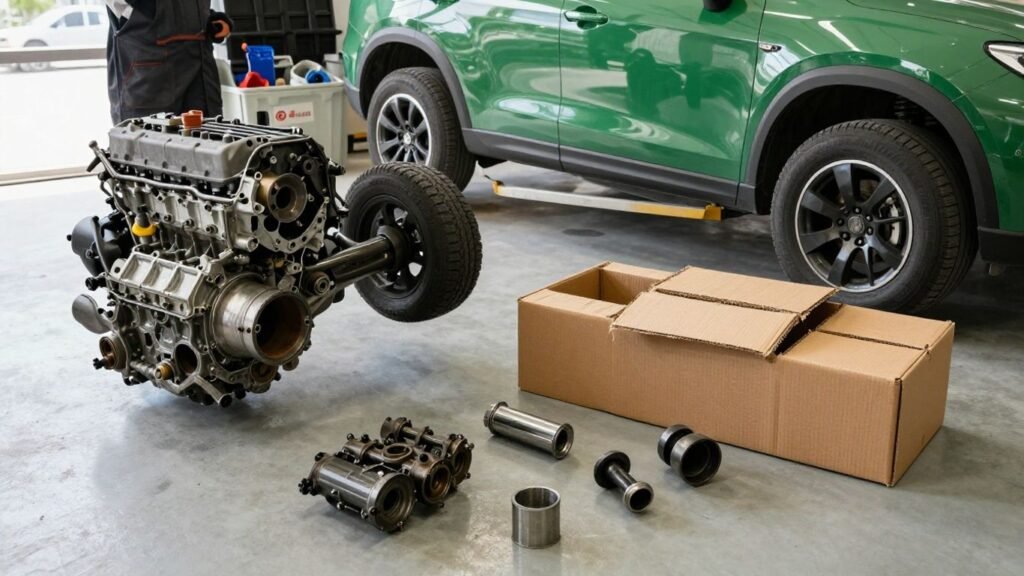
Engines, transmissions, transfer cases, and related assemblies contain substantial quantities of metal and may be good candidates for reuse or remanufacturing when their cores are suitable. Ask whether the component was inspected, which wear items were replaced, and whether critical clearances or pressure tests were checked. The right answer will vary by part and supplier, so avoid treating “rebuilt” as a complete technical description.
Fitment is especially important in drivetrain work. Verify the engine family, transmission code, emissions configuration, sensors, mounting points, and control-module requirements. A lower-priced component that requires extensive adaptation may use more labor and materials overall than a correctly matched option.
Braking, suspension, and steering parts
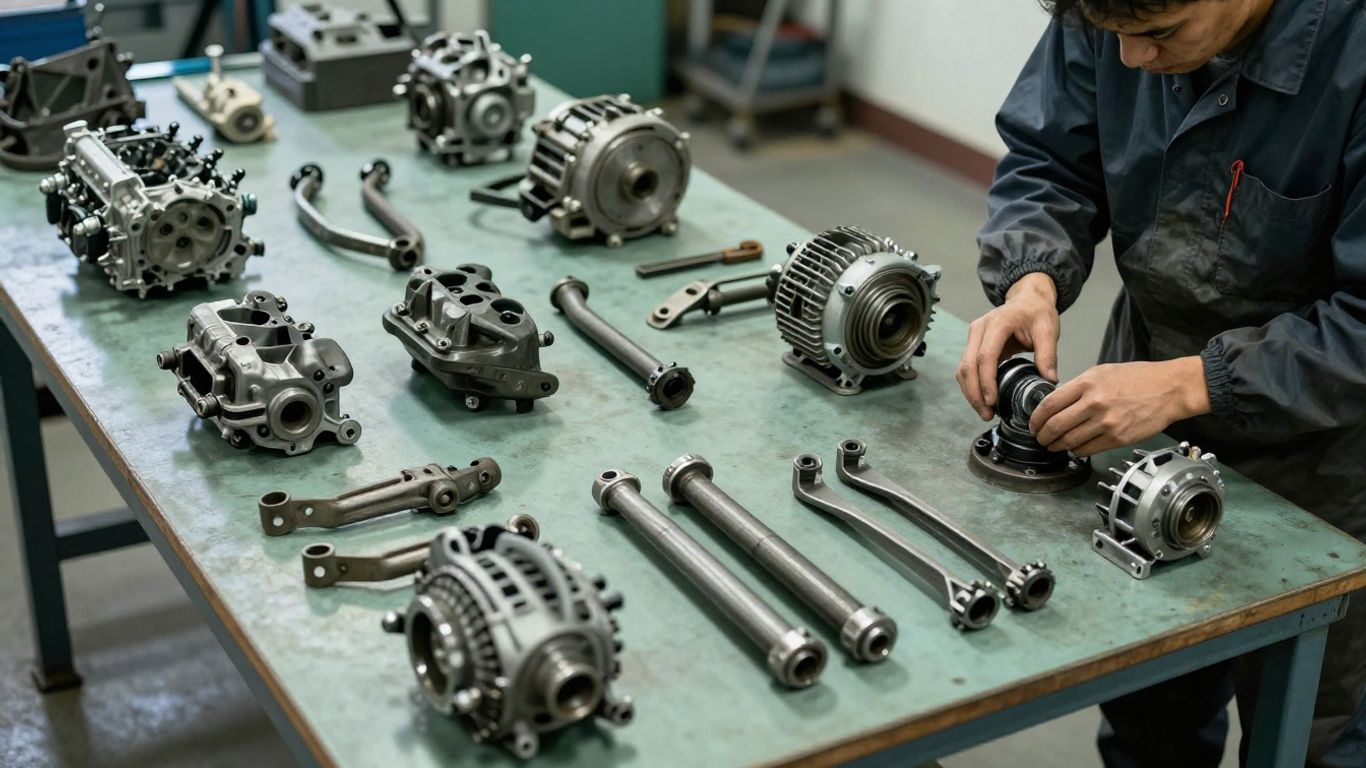
Safety-critical parts deserve a conservative approach. Brake calipers, steering components, hubs, and suspension assemblies should come with clear condition information and should be inspected by someone who understands the system. Some items are appropriate for professional rebuilding; others are better replaced with a new or fully certified component.
Do not compromise on corrosion, cracks, deformation, friction surfaces, or fastener integrity to pursue a sustainability claim. The most responsible part is one that performs reliably and does not create a near-term repeat repair. Proper torque, alignment, bleeding, and post-installation checks are part of the environmental calculation too.
Electrical and interior components
Starters, alternators, lighting, switches, control modules, seats, trim, and interior panels offer varied opportunities for reuse. Electrical parts should be checked for connector compatibility, charging output, diagnostic requirements, and moisture damage. Interior pieces may be excellent candidates for reuse when their structure and mounting points remain sound.
The eco-friendly parts guide describes greener vehicle upgrades in broad terms, but any upgrade still needs to match the vehicle’s electrical architecture and intended use. A part that cannot communicate with the car or withstand its operating conditions is not a sustainable purchase simply because it is marketed with environmental language.
Matching eco-friendly options to vehicle requirements
Start with the vehicle identification number, service history, and the technician’s diagnosis. Then compare options using a short set of practical questions. This keeps the decision grounded when several parts appear to offer similar environmental benefits.
- Is the part correct for this exact vehicle and system?
- Has its condition or refurbishment process been documented?
- Does it meet the required safety, load, or emissions specification?
- What warranty and return terms apply?
Those answers help separate a genuinely suitable component from an attractive but risky bargain. They also make it easier to explain the decision later if the vehicle is sold or repaired again.
Recycled versus remanufactured motor parts
Recycled and remanufactured components are often discussed together, although they preserve value in different ways. Recycling usually focuses on recovering material, while remanufacturing attempts to return a whole component to useful working condition. Used parts may involve neither process beyond inspection and removal from another vehicle.
There is no universal hierarchy. A clean, low-mileage used assembly can be a better fit than a poorly documented rebuild, while a remanufactured part may make more sense when precision and reliability are central. The decision should follow the part’s role and the quality of the available evidence.
How recycled parts are processed
A recycler may remove a component from an end-of-life vehicle, identify it, inspect it, and list it for reuse. Parts that cannot be reused can be dismantled so that metals, plastics, glass, fluids, and electronics move into separate recovery streams. The exact process depends on the facility and the type of material.
Ask whether the part was tested or sold as-is. A recycled metal housing and a functioning used electronic module are not equivalent products, even if both came from a vehicle being dismantled. Their appropriate prices, warranties, and inspection standards should be different.
What remanufacturing involves
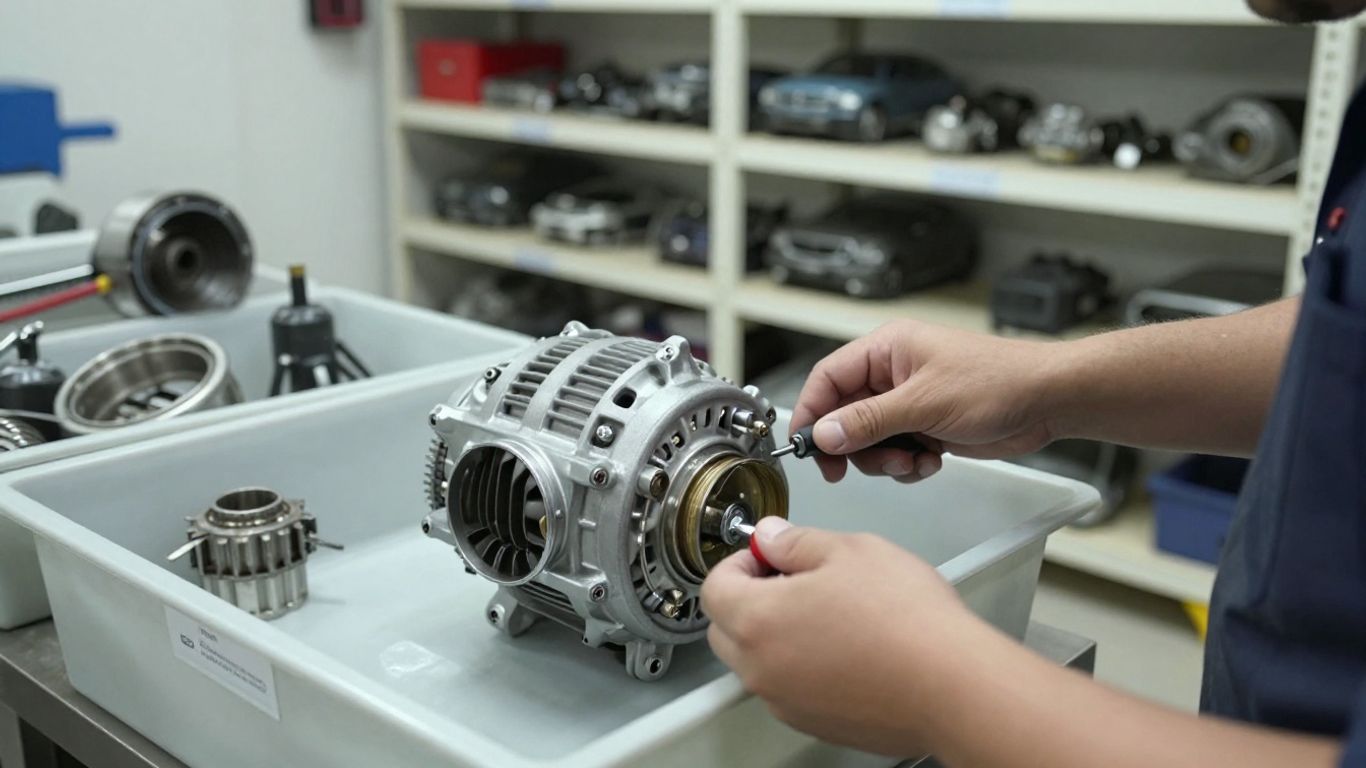
Remanufacturing normally begins with a core. The component is disassembled, cleaned, measured, and assessed; worn or damaged pieces may be replaced, then the unit is reassembled and tested. A credible seller should be able to describe the checks that matter for that particular component rather than offering only a generic assurance.
Eco Green Auto Parts presents its inventory as including used engines and transmissions and highlights reliable warranties. That information can make a supplier worth considering, but buyers should still confirm the exact part’s condition, coverage, and return process before ordering.
Comparing quality, reliability, and warranties
A warranty is useful only when its terms are clear. Check its duration, labor coverage, exclusions, return shipping rules, core charges, and requirements for installation. Also ask whether testing records or inspection notes are available, especially for electrical and drivetrain components.
A longer warranty is not automatically proof of better quality, but vague coverage is a reason to slow down. Compare like with like: the same part number, comparable mileage or service history, equivalent testing, and realistic installation conditions.
When used parts may be the better choice
Used parts can be sensible when the original design is durable, the component is easy to inspect, and a replacement is scarce or expensive. Body panels, trim, wheels, housings, and some mechanical assemblies may retain much of their value after a vehicle is retired. A used part can also preserve an original fit that aftermarket alternatives do not match.
For older vehicles, availability and repair practicality matter. Confirm corrosion, mileage, storage conditions, and whether seals or wear items should be replaced before installation. Reuse is most persuasive when the part has a known identity and a reasonable path to continued service.
Evaluating suppliers and product claims
Supplier evaluation is where sustainability becomes verifiable. Look for a business that states what it sells, how components are sourced, what testing occurs, and how returns are handled. A polished environmental message is not enough if the technical details are missing.
This is also a useful place to distinguish a documented practice from a broad corporate aspiration. Discussions of ESG business challenges often point to standardization problems and the tension between long-term goals and short-term pressure. For a vehicle purchase, that means asking for concrete information tied to the actual part.
Certifications and environmental standards
Certifications can provide useful structure, but their scope matters. Determine whether a standard applies to the manufacturing site, recycled content, chain of custody, waste handling, or a particular product. Check the issuing organization, certificate number, validity period, and whether the claim covers the part you are buying.
Do not assume that an environmental certification confirms mechanical performance. Safety and durability require their own specifications, tests, and warranty terms. The strongest documentation connects both sides: environmental management and part suitability.
Questions to ask about sourcing and production
A supplier should be able to answer basic questions without hiding behind slogans. Ask where the part originated, whether it was removed from a vehicle or rebuilt from a core, and what condition assessment was performed. For new components, ask about recycled or renewable content only when those details affect your decision.
You can also ask how unusable cores and packaging are handled. A supplier may not have every answer immediately, but a straightforward explanation is more useful than an impressive phrase with no supporting detail.
Identifying vague or misleading green claims
Words such as “eco,” “clean,” and “planet-friendly” can mean almost anything unless they are defined. A claim may omit transport, difficult-to-recycle materials, short service life, or a trade-off elsewhere in production. Be cautious when a label offers a benefit but no percentage, scope, comparison, or verification.
The greenwashing identification guide offers a useful framework for checking vague terminology, hidden trade-offs, and unsupported certifications. Apply that same habit to parts listings: look for measurable details and be willing to ask for the source of a claim.
Reviewing warranties, testing, and traceability
Traceability begins with the part number and ends with a record of what was inspected, replaced, or tested. For used parts, mileage and donor-vehicle information may help. For remanufactured parts, the core process and final test should be clearer. A written warranty then gives the buyer a practical remedy if the component does not perform as promised.
Keep invoices, photographs, installation records, and warranty correspondence. These documents can help resolve a problem and may preserve the part’s value if it is later returned, rebuilt, or recycled.
Balancing sustainability, cost, and performance
A lower purchase price can be attractive, but it is only one part of the calculation. Installation labor, shipping, downtime, warranty support, fuel use, and the likelihood of another repair all affect the real cost. Sustainable choices often become clearer when those factors are considered together.
That does not mean paying a premium is always wise. Some reused components deliver excellent value, while some new products may be the only responsible choice for a high-risk application. Use evidence and expected service life rather than assuming that price or marketing language tells the whole story.
Comparing upfront prices with lifetime value
Make a simple comparison between the purchase price and the likely cost over the part’s service life. Include installation, required companion parts, maintenance, returns, and the consequences of failure. A slightly more expensive component may be cheaper overall if it lasts longer and has better support.
The comparison should remain realistic. Do not assign a guaranteed lifespan to a used part without a documented basis, and do not count a theoretical recycling benefit if the component cannot be recovered locally. Good estimates are modest and transparent.
| Factor | Lower-cost option | Higher-value question |
|---|---|---|
| Purchase price | May be cheaper initially | What is included in the price? |
| Installation | Could require extra adaptation | Does it fit without added work? |
| Warranty | May be limited or unclear | What labor and returns are covered? |
| Service life | Depends on condition and history | What evidence supports durability? |
This table is a starting point, not a scoring system. The right choice is the one that offers a credible combination of fit, condition, support, and useful life.
Understanding fuel-efficiency and emissions benefits
Some components can affect how efficiently a vehicle operates, but the benefit depends on correct installation and the condition of the rest of the vehicle. A properly functioning engine management, exhaust, wheel, or drivetrain component may help the car operate as designed. Claims of specific fuel savings should be treated cautiously unless they are tied to a defined test and vehicle configuration.
Do not confuse a part’s manufacturing footprint with the vehicle’s operating emissions. Both matter, but they are measured differently. Keeping an existing vehicle reliable can sometimes avoid the material demands of replacing it, while an unsuitable repair can increase waste through repeated work.
Factoring in durability and maintenance needs
Durability is an environmental attribute because frequent replacement consumes more materials and creates more transport and packaging. Maintenance protects that investment: correct fluids, clean electrical connections, proper alignment, and timely inspection can extend service life. These ordinary actions often matter more than a dramatic product claim.
Record what was installed and when. A clear maintenance history helps technicians diagnose future problems without replacing good parts unnecessarily, which saves money and reduces avoidable waste.
Deciding when premium sustainable parts are worthwhile
A premium may be justified when the part is safety-critical, difficult to install, highly specialized, or backed by unusually clear testing and traceability. It may also make sense when a durable rebuild prevents repeated replacement. For simpler components, a well-inspected used option can provide much of the same environmental benefit at a lower cost.
Choose based on consequences, not guilt. A careful repair plan that keeps the vehicle safe and functional is usually more sustainable than an inexpensive part that fails and has to be shipped, installed, and discarded again.
Installing and disposing of motor parts responsibly
The sustainability story continues after checkout. Installation quality affects safety, reliability, and how long the part remains useful. Disposal matters just as much because fluids, batteries, electronics, tires, and contaminated materials need appropriate handling.
Plan the repair before the old component is removed. Confirm who will install it, what will happen to the core, and whether packaging or shipping materials can be returned. Small decisions at this stage prevent a workable part from becoming waste.
Finding qualified installation and repair services
Use a technician familiar with the vehicle system and the type of component being installed. Ask whether the shop can perform required calibration, bleeding, programming, alignment, or post-installation testing. For safety-critical work, a low labor price is not a substitute for appropriate training and equipment.
Give the installer the part’s warranty requirements and keep the work order. Some warranties depend on correct installation, fluid replacement, or proof that related components were inspected.
Extending part life through proper maintenance
Follow the vehicle maker’s maintenance schedule and address small symptoms before they damage a larger assembly. Correct lubrication, clean filters, proper tire pressure, and regular inspections can reduce stress on many systems. Maintenance also makes future reuse more plausible because the component’s history is easier to understand.
Avoid unnecessary modifications that alter load, heat, or electrical conditions. A part designed for one operating environment may wear quickly when used outside it, undermining both its cost and environmental value.
Returning old components for reuse or recycling
Ask the seller whether the old component can be returned as a core. If it cannot be reused, take batteries, fluids, tires, and electronic parts to facilities equipped to handle them. Do not pour used oil or coolant into drains or place contaminated components in ordinary household waste.
A supplier with a clear core or recycling process can help close the loop. Eco Green Auto Parts describes responsible sourcing and warranty coverage, so buyers can ask how those practices connect with returns and end-of-life handling for a specific purchase.
Reducing packaging and transportation impacts
Group compatible purchases when practical, select accurate fitment before ordering, and avoid expedited shipping unless the repair genuinely requires it. Reuse clean packing materials and separate cardboard, plastics, and metal according to local rules. The best packaging decision is often the one that prevents a wrong-part return.
Local availability can reduce transport, but distance should not outweigh safety or reliability. A correctly matched part that lasts is usually preferable to a nearby component that fails quickly.
For organizations managing several vehicles, continuity also matters: succession planning practices are not an automotive repair method, but the underlying idea of documenting responsibilities can help fleets preserve maintenance knowledge as staff change. In a different but related way, practical leadership skills can encourage drivers and technicians to treat reuse, maintenance, and safe disposal as shared responsibilities.
Conclusion
Earth friendly motor parts are not defined by a single material or marketing phrase. They are selected through a fuller view of sourcing, fit, safety, service life, maintenance, and disposal, with documentation supporting the claims. When those details line up, reuse and remanufacturing can be practical ways to conserve resources without sacrificing dependable transportation.
Frequently Asked Questions
What are earth friendly motor parts?
They are vehicle components selected for lower overall environmental impact through reuse, remanufacturing, recycled or renewable materials, durability, efficient transport, and responsible end-of-life handling.
Are remanufactured parts reliable?
They can be reliable when the core is suitable, worn components are properly addressed, the unit is tested, and the warranty is clear. Quality varies, so review the process and coverage for the specific part.
Is a used part always more sustainable than a new one?
Not always. A used part can avoid new material extraction, but poor condition, repeated failure, long shipping, or difficult installation can reduce the benefit. Suitability and service life still matter.
Which vehicle parts should not be bought used?
There is no universal list, but safety-critical components require especially careful inspection and documentation. Some may be appropriate only when professionally rebuilt or supplied with recognized testing and warranty support.
How can I verify an environmental claim?
Look for a defined claim, measurable scope, supporting records, relevant certification, and information about sourcing and disposal. Be cautious when a seller uses broad environmental language without evidence.
Do sustainable parts cost more?
They may cost more upfront, less upfront, or about the same. Compare installation, warranty, expected service life, maintenance, shipping, and the risk of repeat replacement rather than looking only at the purchase price.
What should happen to an old motor part?
Return a suitable core to the seller or take the component to an appropriate automotive recycling or hazardous-material facility. Keep fluids, batteries, tires, and electronics out of ordinary waste streams.