

Key Takeaways
Choosing a workshop engine supplier is less about finding the lowest advertised price and more about confirming fit, quality, support, and total cost.
- Define the vehicle types, engine codes, and order volumes your workshop actually handles.
- Compare new, remanufactured, and used engines against the repair and customer requirements.
- Verify testing, specifications, warranty terms, compatibility, and included components before ordering.
- Factor in freight, downtime, labor, core charges, and claim procedures—not only the quoted price.
- Select a supplier that communicates clearly and can support repeat orders as your workshop grows.
Understand your workshop’s engine supply needs
A good supplier relationship begins with a clear picture of your own workshop. The makes and models you see most often, the engine families you regularly replace, and the jobs you prefer to accept will shape the type of stock and technical support you need. Before comparing suppliers, turn that knowledge into a practical purchasing brief.
This also prevents a common mistake: choosing a supplier because it carries many engines, without checking whether its range suits your actual repair mix. A smaller, well-matched inventory can be more useful than a broad catalog that is difficult to search or verify.
Identify the vehicle makes, models, and engine types you service
Start with repair records from the last year or two. Group them by make, model, model year, fuel type, displacement, engine code, and whether the engine was naturally aspirated, turbocharged, hybrid-related, or otherwise specialized. The goal is not to create a perfect database on day one; it is to see which applications generate regular demand and which are occasional exceptions.
Record the information your technicians need to confirm an order. A registration number or vehicle identification number may be useful, but it should not replace checking the engine code and application details. This basic mapping gives your purchasing team a reliable starting point when requesting quotes.
Estimate order volumes and replacement demand
Estimate both planned replacements and unpredictable demand. A workshop may have steady work for common engines while only occasionally needing a less familiar unit, so average monthly volume alone can hide important peaks. Include engines held for approved jobs, likely warranty replacements, and seasonal changes in customer demand.
A short demand list can make the estimate more useful:
- The engine families ordered most often.
- The applications that create the longest vehicle downtime.
- The parts or assemblies that are difficult to source locally.
- The number of urgent orders placed during a typical quarter.
After reviewing these figures, ask suppliers how they handle repeat demand rather than simply asking whether they have one unit available today. Consistent access may matter more than a single attractive quote.
Decide between new, remanufactured, and used engines
The right engine condition depends on the vehicle, repair budget, customer expectations, and the workshop’s own quality policy. New engines can suit certain high-value or tightly specified repairs, while remanufactured engines may offer a middle path when documented processes and warranty coverage are available. Used engines can be appropriate for some repairs, but their history, inspection detail, mileage, and terms need careful review.
Do not treat these categories as interchangeable. Ask what has been inspected, replaced, machined, tested, or carried over from the original unit. The answer should be specific enough for a technician to understand what is being purchased and what still needs attention during installation.
Match supplier capabilities to your workshop’s specialties
A supplier should fit the way your workshop operates. If your team handles a narrow group of passenger vehicles, prioritize accurate application data and dependable access to those engines. If you rebuild or modify units in-house, you may need parts availability and technical information rather than a fully assembled replacement.
Australia’s trusted Car Parts Supplier connects customers with quality used, genuine, and aftermarket parts through a broad car parts network. That type of network can be useful when a repair requires more than the engine itself, particularly when sourcing needs span Melbourne, Sydney, Brisbane, and other locations nationwide.
Evaluate engine quality and supplier standards
Price and availability are meaningful only when the engine meets an acceptable standard. Ask suppliers to explain how units are inspected, what measurements are taken, and how the finished product is tested. Vague assurances are less useful than written specifications and repeatable procedures.
A workshop also needs consistency. One satisfactory engine does not establish a dependable supply relationship, so assess whether the supplier can describe its process clearly across different applications. The following questions are especially helpful when comparing options.
Check remanufacturing and testing processes
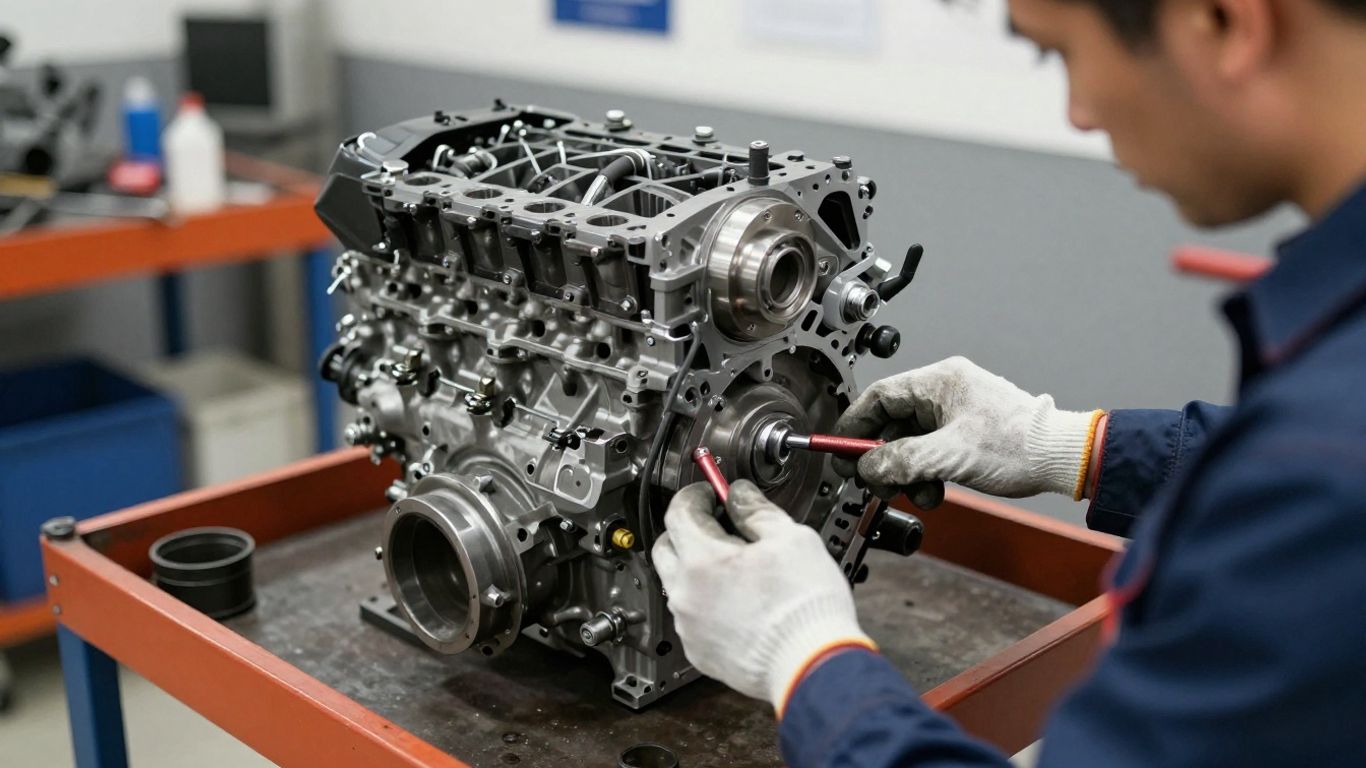
For a remanufactured engine, ask what happens between receiving the core and dispatching the finished unit. The answer may cover disassembly, cleaning, measurement, machining, replacement of wear components, assembly, and final testing. Confirm which steps apply to the exact engine being quoted rather than assuming every unit follows an identical program.
Testing should also be described in practical terms. Ask whether the engine is run, pressure-tested, measured, or checked against specified operating requirements, and request any available test documentation. A process that can be explained and documented gives your workshop more confidence than a general quality statement.
Review parts, machining, and assembly specifications
Find out which components are replaced as standard and which are inspected for reuse. Clarify the machining limits, tolerances, surface finishes, fastener requirements, and assembly checks that apply to the engine. These details help your technician plan the installation and identify any parts that must be transferred from the original unit.
It is also worth separating what the supplier does from what the workshop must do. A quoted engine may require new seals, sensors, accessories, fluids, or ancillary components before it is ready for service. Written specifications reduce assumptions on both sides.
Verify warranties, certifications, and quality controls
Read the warranty before treating it as a deciding advantage. Check its duration, mileage or usage limits, covered components, exclusions, labor provisions, freight responsibilities, and claim deadlines. Ask whether installation requirements, maintenance records, or approved fluids affect eligibility.
Certifications can be useful, but they should be relevant to the product and process being purchased. Request copies or explanations where appropriate, and check whether quality checks are recorded. A warranty is most valuable when the claim process is clear and realistic for a working repair shop.
Assess the supplier’s record for reliability and consistency
Look for evidence that orders are described accurately, packed properly, and delivered when promised. Customer feedback can reveal how a supplier handles discrepancies as well as successful transactions. Pay attention to comments about communication, returns, missing components, and the response to a failed or delayed order.
The best assessment combines outside feedback with your own small trial order. Track what was quoted, what arrived, how quickly questions were answered, and whether the paperwork matched the engine. Those observations will be more relevant to your workshop than a broad reputation alone.
Confirm compatibility before placing an order
Compatibility is where a seemingly good purchase can become an expensive delay. Engines that look similar may differ in codes, sensors, emissions equipment, mounting points, electronics, or accessory arrangements. A careful supplier should be willing to verify the application rather than asking the workshop to make an educated guess.
Give the supplier complete vehicle information and keep the confirmation in writing. This creates a shared reference if the order needs to be corrected and helps your technician prepare before the delivery arrives.
Compare engine codes, specifications, and vehicle applications
Match the engine code, displacement, fuel system, transmission relationship, drive layout, and model-year application. Where relevant, compare emissions equipment, control systems, mounting arrangements, and accessory placement. Never rely on a description such as “fits several models” without checking the exact vehicle and production details.
The engine code should appear on the quote, order confirmation, or other supporting document. If the supplier cannot confirm the code, treat that as a reason to pause rather than a minor paperwork issue.
Request fitment data and technical documentation
Ask for application lists, measurements, photographs, specification sheets, and installation notes when they are available. A photograph can help identify external differences, but it should support—not replace—technical confirmation. For unusual applications, request a written statement of what has been verified.
This is also the right stage to ask about preparation. Documentation may explain whether the engine is supplied dressed or bare, whether components are tested, and which original parts must be transferred. Clear information lets the workshop schedule labor more accurately.
Check included and excluded components
An engine quote can cover very different levels of assembly. Confirm whether it includes the long block, cylinder head, oil pan, manifolds, injectors, turbocharger, sensors, wiring, brackets, accessories, flywheel, and other related parts. Also ask whether gaskets, seals, filters, fluids, and installation hardware are supplied.
Write the answer into the purchase record. This simple step avoids disputes and gives the service advisor a more accurate estimate for the customer. It also prevents a technician from discovering missing parts only after the vehicle is already on the hoist.
Plan for required adaptations or installation parts
Some replacement engines require the transfer of accessories or modifications to suit the vehicle. Identify those needs before the order is placed and price the required parts at the same time. Include programming, calibration, fluids, filters, hoses, seals, and any specialist tools that may affect the job.
If the adaptation is uncertain, ask the supplier for technical guidance and allow extra time in the schedule. A realistic plan is safer than promising a rapid repair based on an assumption that every component will interchange.
Compare pricing, warranties, and total value
The lowest engine price is not necessarily the lowest repair cost. Freight, core charges, missing components, extra labor, delays, and warranty administration can change the economics quickly. Compare suppliers using the same assumptions and ask for a complete delivered price wherever possible.
A useful comparison separates immediate payment from risk. A slightly higher quote may be better value if it includes stronger documentation, clearer support, or terms that reduce the chance of a second removal and installation.
Look beyond the initial engine price
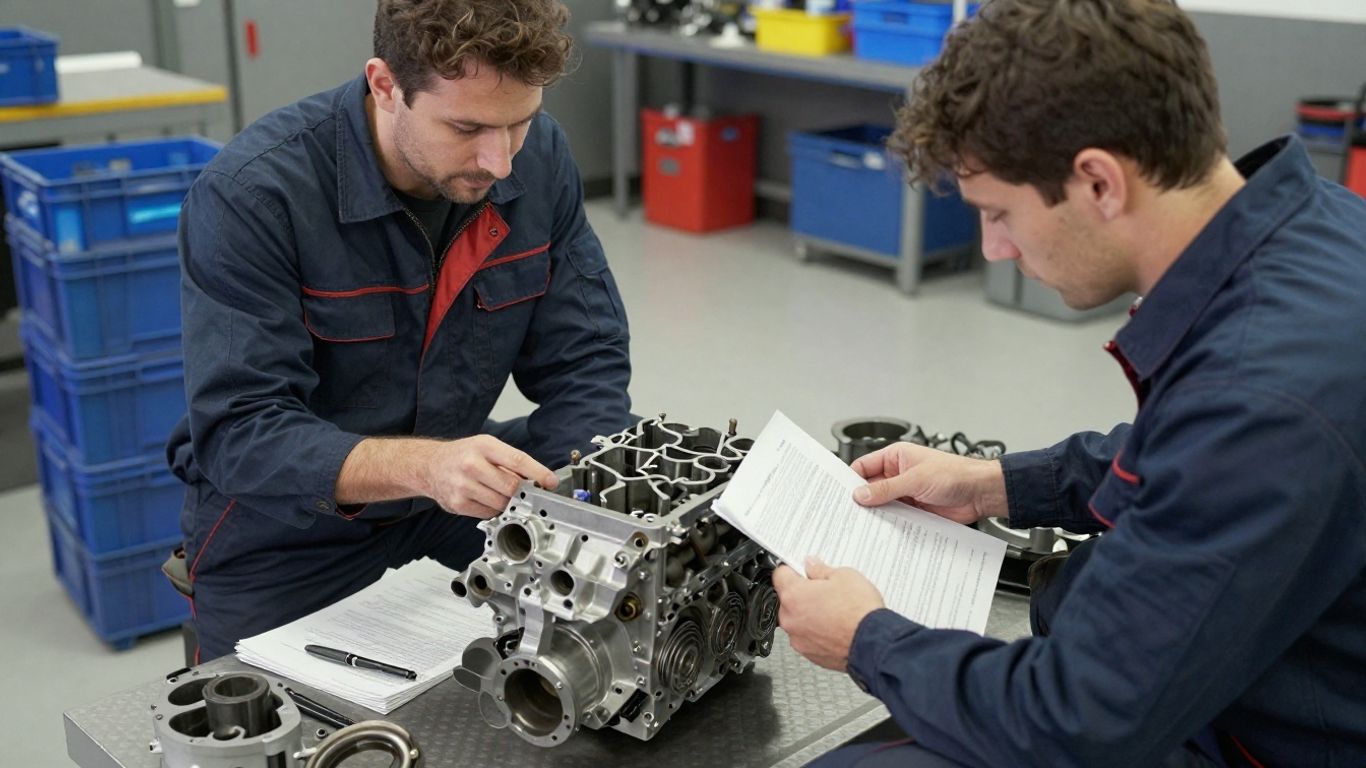
Ask each supplier to itemize the engine, freight, taxes, core charge, optional components, and any handling fees. Confirm whether the quoted price applies to the specific engine code and condition required. If a price is only an estimate, find out what could cause it to change.
Use a consistent comparison table so that differences are visible rather than buried in email threads:
| Cost or term | Supplier A | Supplier B | Supplier C |
|---|---|---|---|
| Engine price | Confirmed | Confirmed | Confirmed |
| Freight and handling | Included or quoted | Included or quoted | Included or quoted |
| Core charge | Amount and terms | Amount and terms | Amount and terms |
| Warranty coverage | Duration and exclusions | Duration and exclusions | Duration and exclusions |
| Expected delivery | Date or lead time | Date or lead time | Date or lead time |
After filling in the table, compare the assumptions behind each number. A supplier that appears more expensive may simply be showing costs that another quote leaves unstated.
Understand core charges and return requirements
A core charge is usually tied to returning an acceptable old unit, but the definition of acceptable varies. Ask about deadlines, packaging, freight, missing components, damage, and whether the core must be the same type as the replacement. Confirm how the refund is issued and how long assessment normally takes.
Keep the original packaging until the return position is clear. Photograph the core before dispatch and retain the freight record. These small administrative habits can protect the workshop when the charge is substantial.
Compare warranty coverage and claim procedures
Review warranties side by side instead of comparing only their headline length. Check who pays for diagnosis, removal, reinstallation, freight, fluids, and related damage. Confirm the notification process and whether the supplier must approve testing or repairs before work begins.
A warranty should be workable under real shop conditions. Ask how a claim is opened, what evidence is needed, and how the vehicle is handled while the claim is assessed. Clear answers are a sign that the supplier has considered the practical side of after-sales support.
Calculate downtime, labor, and failure-related costs
Estimate the cost of the vehicle occupying a bay, the technician hours required for removal and installation, and the effect of a delayed part on customer commitments. Add diagnostic time, rebooking, towing, rental transport, and any customer service work that could follow a failure.
The focus should be total repair exposure, not just the unit price. This calculation does not need to be complicated; even a conservative estimate can show why verified compatibility and dependable warranty support deserve a place in the purchasing decision.
Assess delivery, inventory, and support
A supplier becomes part of the workshop’s scheduling system as soon as an order is placed. Delivery promises affect bay allocation, customer communication, and technician productivity. Ask how stock is confirmed, when orders leave the warehouse, and what happens if the expected unit is no longer available.
Support matters just as much when the engine is in transit as when it is being installed. Reliable communication can help the workshop make an informed decision before a delay becomes a missed appointment.
Review stock availability and lead times
Distinguish between stock that is physically available and stock that is listed but still subject to confirmation. Ask for a dispatch estimate, delivery window, and the point at which the order becomes committed. For less common engines, ask whether the unit is built to order or sourced from another location.
A supplier serving multiple regions may provide useful reach, but the workshop should still verify the actual route and timing for its location. Record the promised date and check promptly if the order status changes.
Confirm packaging and freight protection
Engines are heavy, awkward components that can suffer damage if they are not secured correctly. Ask how the unit is supported, protected from moisture, and prepared for handling. Confirm whether external parts are capped or protected and whether the freight service is suitable for the weight and dimensions.
Inspect the shipment before signing where possible. Photograph visible damage, retain the packaging, and notify the supplier quickly if anything appears compromised. Good freight practices do not remove the need for receiving checks.
Evaluate urgent-order and backorder options
Ask what happens when a customer’s vehicle cannot wait for the standard lead time. A supplier may offer an alternative specification, a different location, or a backorder estimate, but the workshop needs to know the conditions and added cost before promising anything. Do not substitute a different engine without confirming compatibility.
It is sensible to establish an escalation contact for urgent orders. That gives the service team a clear route when a normal online or email process is too slow, without encouraging rushed technical decisions.
Check technical assistance and after-sales service
Before opening an account, find out who answers fitment questions and when support is available. Ask whether technical staff can help with documentation, installation queries, warranty claims, and returns. Also check whether the supplier communicates through a portal, email, phone, or a combination of channels.
A supplier that answers clearly before the sale is easier to evaluate. After the sale, the same standard should continue through dispatch updates, component questions, and claim handling.
A general engine replacement guide can be useful for training newer staff, but it should supplement the supplier’s application information and the vehicle manufacturer’s requirements. Workshop-specific procedures still take priority.
Vet and select the right workshop engine supplier
Once the technical and commercial details are clear, compare the suppliers as potential long-term partners rather than one-off sellers. The right workshop engine supplier should make accurate ordering easier, communicate when circumstances change, and handle problems without unnecessary friction.
Australia’s trusted Car Parts Supplier is positioned around fast, affordable access to quality used, genuine, and aftermarket parts across Melbourne, Sydney, Brisbane, and nationwide. For a workshop, that broader parts-network approach may be relevant when an engine order also involves related replacement components.
Review customer feedback and industry experience
Read feedback for patterns rather than isolated praise or criticism. Look for repeated comments about accurate descriptions, delivery, packaging, returns, technical answers, and the resolution of problems. Industry experience matters most when it relates to the types of vehicles and repair volumes your business handles.
You can also ask how long the supplier has supported trade customers and which applications it handles most often. A straightforward answer is more useful than an impressive but unrelated claim.
Request references from similar repair businesses
Ask for references from workshops with a comparable customer base, geography, and order profile. A reference should be able to discuss ordinary transactions as well as an occasional discrepancy or warranty claim. Listen for whether the supplier communicates proactively and takes responsibility when something goes wrong.
Do not ask a reference to guarantee future performance. Use the conversation to test whether the supplier’s stated process matches the experience of another repair business.
Ask questions before opening a trade account
Clarify account terms, payment timing, minimum order requirements, freight arrangements, returns, warranty steps, and the person responsible for account support. Ask whether quoted prices are held for a defined period and how stock reservations work. These details can affect daily operations more than a small difference in the first invoice.
A short pre-account checklist helps keep the conversation focused:
- Can the supplier confirm engine codes and vehicle applications in writing?
- What testing, inspection, and documentation accompany each engine type?
- Which components, freight costs, and core requirements are included?
- How are urgent orders, returns, and warranty claims handled?
The answers should be specific enough for your purchasing and service teams to use. If several responses remain vague, treat that uncertainty as part of the supplier risk.
Compare supplier quotes using consistent criteria
Send the same vehicle and engine information to each supplier and request comparable terms. Assess the quoted unit, condition, inclusions, delivery, warranty, core arrangement, payment terms, and support together. Avoid allowing one supplier to quote a bare engine while another quotes a more complete assembly.
A written scorecard can help several people in the workshop reach the same decision. It also gives you a record of why a supplier was selected when prices or stock conditions change later.
Build a long-term supply relationship and review performance regularly
Start with a manageable order and measure what happens. Track quote accuracy, delivery time, packaging, fitment, documentation, returns, warranty outcomes, and how quickly questions are answered. Review the results after several orders rather than making a judgment from one transaction.
Australia’s trusted Car Parts Supplier can be considered as part of a broader sourcing approach when a workshop wants access to used, genuine, and aftermarket parts through a nationwide network. Whatever supplier you choose, keep reviewing performance as your vehicle mix, customer expectations, and order volume change.
Conclusion
Choosing a workshop engine supplier is a practical exercise in reducing uncertainty. Define your needs, verify compatibility, inspect the supplier’s standards, compare the full cost, and test the quality of communication before relying on regular supply. A careful process protects workshop time and gives customers a clearer, more dependable repair experience.
Frequently Asked Questions
What should a workshop ask an engine supplier first?
Start with the engine code, vehicle application, condition, availability, included components, warranty, and delivery estimate. Those details establish whether the supplier can meet the repair requirement before price becomes the main discussion.
Is a remanufactured engine better than a used engine?
Neither option is automatically better for every repair. Compare the inspection and testing process, documented condition, warranty, price, availability, and suitability for the vehicle and customer’s budget.
How can a workshop avoid ordering the wrong engine?
Provide complete vehicle details and request written confirmation of the engine code and application. Check specifications, photographs, included components, and any required adaptations before authorizing the order.
What costs should be included in an engine comparison?
Include the engine, freight, taxes, core charges, installation parts, labor, downtime, fluids, and possible warranty-related costs. Comparing only the advertised engine price can produce a misleading result.
What is a core charge?
A core charge is an amount held against the return of an old engine or component that meets the supplier’s stated requirements. Confirm the return deadline, condition rules, freight process, and refund procedure in advance.
How important is the engine warranty?
The warranty is important, but its practical value depends on coverage, exclusions, claim steps, labor provisions, and response times. Read the full terms and ask how a real claim would be handled.
How can a workshop judge supplier reliability?
Review feedback, speak with similar repair businesses, place a controlled trial order, and track accuracy, delivery, packaging, support, and returns. Repeated performance is more meaningful than a single successful purchase.