

Key Takeaways
A used engine can be a sensible repair, but only when the engine, seller, warranty, and installation plan all hold up under scrutiny.
- Confirm the exact engine code and vehicle compatibility before paying.
- Compare the motor’s mileage, history, condition, and included parts.
- Inspect for leaks, cracks, corrosion, overheating, and neglect.
- Budget for shipping, labor, fluids, seals, belts, and hoses.
- Get warranty terms and the complete installation estimate in writing.
Understand what mechanic used motors are
The phrase mechanic used motors usually refers to replacement engines removed from another vehicle and sold for installation in a different one. These engines can offer a practical middle ground when a vehicle is worth repairing but a new engine costs too much. The real value depends less on the word “used” and more on accurate matching, honest history, and competent installation.
Used motors versus rebuilt and remanufactured engines
A used motor is generally sold in the condition in which it was removed, although it may have been inspected or tested by the seller. A rebuilt engine has had selected components repaired or replaced, while a remanufactured engine is restored to a defined specification through a more extensive process. Those labels can vary by seller, so ask what work was actually performed rather than relying on the category alone.
A used engine may retain the wear accumulated by its donor vehicle. That is not automatically a problem, but it makes mileage, maintenance records, testing, and warranty coverage especially relevant. A remanufactured option may cost more because more of the internal assembly has been examined or renewed.
Why drivers choose a used replacement motor
The main attraction is cost. A used motor can reduce the upfront price of an engine replacement and may make sense for an older vehicle whose market value does not justify a fully rebuilt or new unit. It can also shorten the repair decision when a compatible engine is already available.
The trade-off is uncertainty. A lower purchase price does not remove the need to pay for diagnosis, shipping, labor, fluids, and related parts. The cheapest motor is not always the cheapest repair once those expenses are included.
Common vehicles and repair situations
Used replacement motors are often considered for high-mileage cars, work vehicles, older SUVs, and trucks with otherwise serviceable drivetrains. They can be appropriate after severe internal damage, a failed head gasket, a cracked block, or an engine that has consumed excessive oil. The surrounding vehicle still matters: good transmission, sound bodywork, reliable electronics, and a reasonable maintenance outlook improve the case for replacement.
A mechanic should first confirm that replacement is the right diagnosis. An engine that runs poorly may need sensors, fuel-system work, cooling-system repairs, or electrical diagnosis rather than a complete motor.
When a used motor may not be the right choice
A used engine may be a poor fit when the vehicle has extensive rust, transmission problems, structural damage, or several expensive systems nearing the end of their service life. It may also be unsuitable when the required engine is rare, poorly documented, or difficult to match with the vehicle’s electronics.
Consider the remaining life of the car, the cost of installation, and the warranty period together. If the total repair approaches the value of a dependable replacement vehicle, pause before committing.
Find a trustworthy source for a used motor
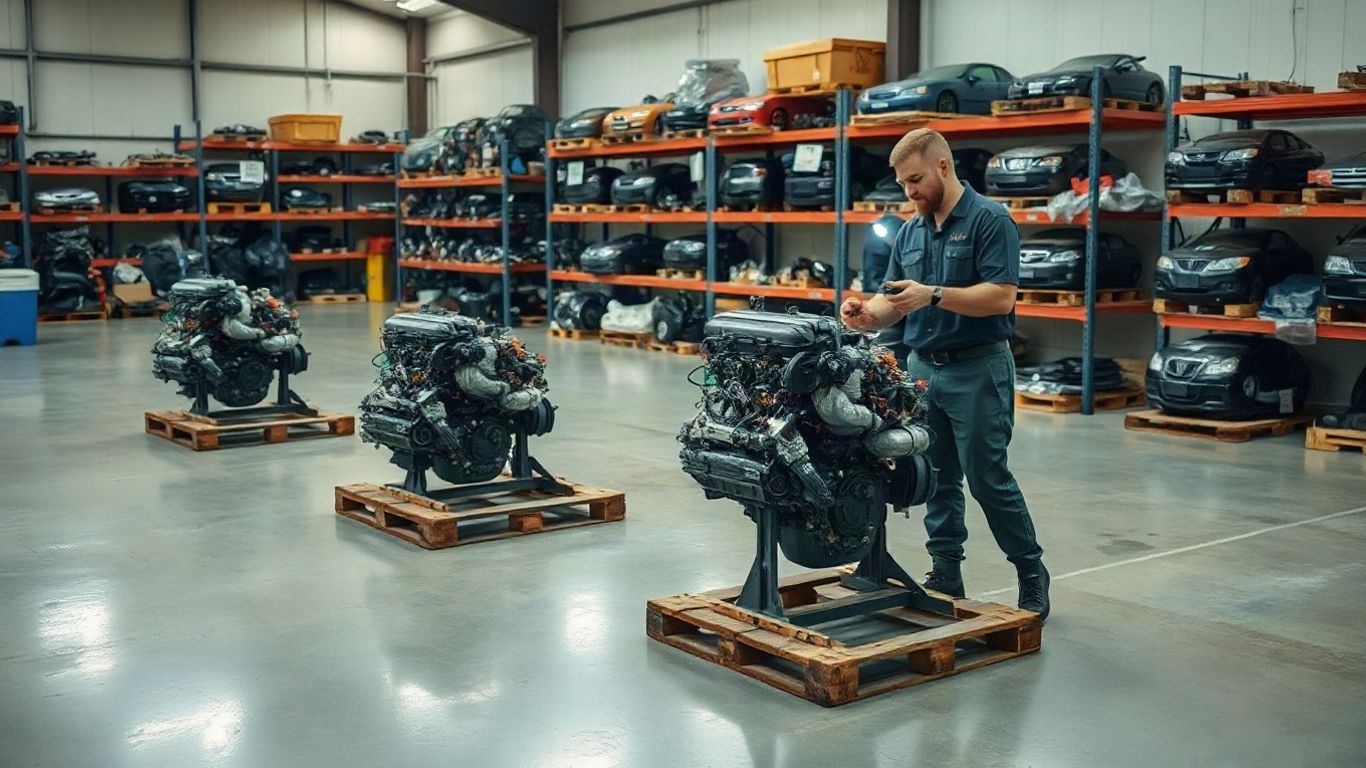
The seller is part of the purchase, not a detail to handle after choosing an engine. A trustworthy source should explain where the motor came from, what was checked, what is included, and what happens if it does not work. For shoppers comparing dealer practices, FTC buyer guidance is a useful reminder to seek written terms, understand warranty language, and account for independent inspections.
Local mechanics, salvage yards, and auto recyclers
A local mechanic may know which recyclers provide usable records and stand behind their inventory. Salvage yards and auto recyclers can offer donor-vehicle information, engine mileage, and test details, though the level of documentation varies widely. Ask whether the motor was removed from a running vehicle, whether it was drained and stored properly, and whether the yard allows inspection before purchase.
A parts supplier with a broad car parts network can also help locate a compatible used unit across Melbourne, Sydney, Brisbane, or elsewhere in Australia. The useful part is not simply access to inventory; it is whether the supplier can identify the correct application and explain the order terms clearly.
Dealer listings and online marketplaces
Online listings make comparison easier, but photographs and short descriptions rarely prove mechanical condition. Read the listing for the exact engine code, mileage, donor vehicle, test method, included accessories, shipping terms, and warranty. If several important details are absent, contact the seller before treating the listing as a serious option.
A reputable listing should not pressure you to pay immediately or discourage questions. Ask for current photographs, not only catalogue images, and confirm that the pictured motor is the one being sold.
Questions to ask about the motor’s history
A few direct questions can reveal whether the seller knows the inventory. Ask for the donor vehicle identification details, recorded mileage, reason for removal, storage conditions, and any compression or leak-down results. Also ask whether the engine is complete or being sold as a long block, and whether a return is possible if a mechanic finds a mismatch.
Written answers are more useful than a reassuring phone call because they give you something to compare with the invoice. They also make gaps in the history easier to spot.
Warning signs of an unreliable seller
Be cautious when the price is dramatically below comparable units, the seller will not provide an engine code, or the warranty is described only with vague phrases such as “guaranteed good.” Heavy external grime, fresh paint hiding corrosion, missing plugs, and unexplained fluid residue also deserve questions. None proves failure by itself, but several together should slow the purchase.
Never let urgency replace verification. A motor that cannot be identified confidently is not a bargain simply because it is available today.
Match the motor to your vehicle
Compatibility is more precise than make and model. Two vehicles from the same year may use different engine codes, emissions equipment, wiring, transmissions, or calibration. Before ordering, compare the vehicle identification number, original engine code, production date, drivetrain, and the replacement unit’s documentation.
The safest approach is to have the installing mechanic review the listing before payment. That second set of eyes can prevent an expensive return, especially when the motor is being shipped from another city or state.
Confirming the engine code and specifications
Find the engine code in the vehicle documentation, on the engine itself, or through a reliable parts catalog. Confirm displacement, cylinder count, fuel system, induction type, emissions configuration, and mounting arrangement. Do not assume that an engine with the same displacement will plug in without changes.
Ask whether the replacement is sold as a complete engine, a long block, or a short block. The answer affects both compatibility and the parts you will need to transfer from the original unit.
Checking model year and compatibility
Model-year ranges in listings are only a starting point. Manufacturers can change sensors, intake and exhaust arrangements, engine management, mounts, and accessory drives during a production run. Compare the donor and recipient vehicles by engine code and build details, not by model name alone.
Your mechanic should also check whether the vehicle’s transmission, computer, immobilizer, and wiring harness will communicate correctly with the replacement. A mechanically compatible motor can still create an electronic or emissions problem if the configuration differs.
Comparing mileage, condition, and configuration
Mileage helps establish expectations, but it is not a complete condition report. A higher-mileage engine with documented maintenance and a clean inspection may be a safer purchase than a lower-mileage unit with no history. Compare the seller’s testing, storage practices, warranty, and return terms alongside the odometer figure.
It helps to compare candidates in a consistent way. The following questions keep a low price from dominating the decision:
- Is the engine code an exact match or does it require documented changes?
- Is the mileage recorded and supported by donor-vehicle information?
- What testing was completed before the motor was listed?
- Does the price include the accessories needed for installation?
After using those questions, rank the options by total risk and total cost, not by mileage alone. The right motor is the one your mechanic can install and support with reasonable confidence.
Verifying included components and accessories
Clarify whether the sale includes the intake manifold, exhaust manifolds, throttle body, injectors, alternator, starter, sensors, brackets, wiring, and air-conditioning compressor. Many used engines are sold without external accessories because the installer is expected to transfer compatible parts from the original motor.
Ask for an itemized invoice. Missing components can turn an apparently inexpensive engine into a series of parts purchases, and some original accessories may already be damaged by the failure that prompted the replacement.
Inspect a used motor before buying
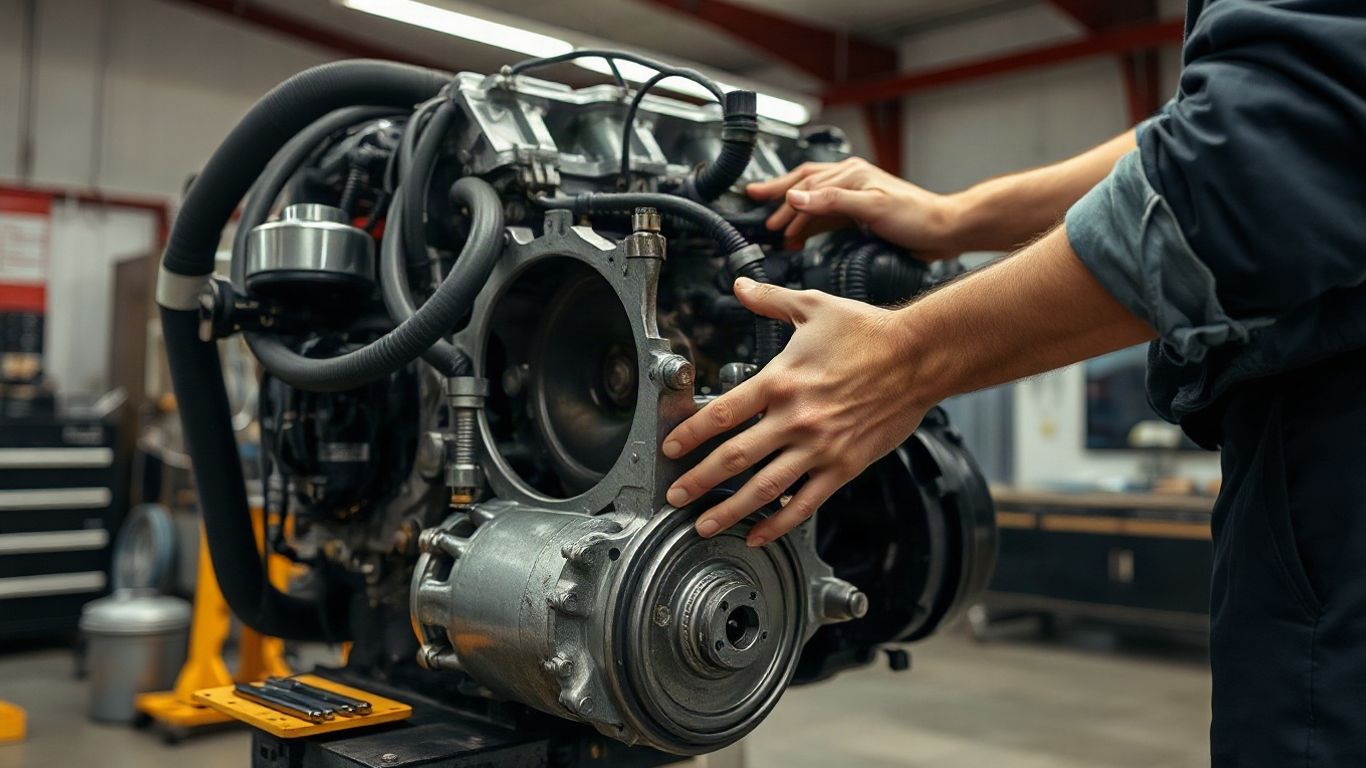
Inspection cannot reveal everything about an engine’s internal condition, but it can identify obvious risks and support a better decision. When possible, inspect the motor in person or have an independent mechanic do it before funds change hands. A supplier serving customers nationwide can help make the right part easier to find, but physical and documentary checks still matter.
Reviewing maintenance and vehicle history
Look for service records showing oil changes, cooling-system work, timing-belt replacement, and major repairs. A donor vehicle’s history may explain why the engine was removed and whether it was involved in flooding, overheating, or a collision. If records are incomplete, treat that as uncertainty rather than assuming routine maintenance.
The vehicle history should also be consistent with the stated mileage. Inconsistent numbers, missing ownership information, or a vague removal story are reasons to ask for more evidence.
Checking for leaks, cracks, and corrosion
Examine the block, cylinder heads, oil pan, front cover, freeze plugs, and threaded openings for cracks, impact damage, or heavy corrosion. Look for oil and coolant residue around seals and mating surfaces. Surface dirt is normal on a removed motor; fresh wetness, damaged threads, and corrosion inside ports are more concerning.
Rotate the crankshaft only with the seller’s permission and the appropriate tool. It should move in a controlled way, without obvious binding or grinding. This check is useful but does not replace internal testing.
Assessing compression and internal condition
Compression testing can reveal variation between cylinders, while a leak-down test can help identify leakage past valves, rings, or the head gasket. Results need context: the test method, engine temperature, throttle position, and equipment all affect interpretation. Ask the seller to provide the actual readings rather than a simple statement that the engine “tested good.”
A mechanic may also inspect the oil, coolant passages, spark plugs, and end play where appropriate. These checks can uncover clues that an external visual inspection misses.
Identifying signs of overheating or neglect
Discolored metal, brittle wiring, warped mating surfaces, damaged gaskets, sludge under the oil cap, and a heavily stained coolant reservoir can indicate heat or maintenance problems. One sign is not conclusive, particularly on an older engine, but a pattern of neglect increases the chance of additional work.
Ask how the motor was stored after removal. Open intake or exhaust ports, standing water, and prolonged outdoor exposure can create damage that was not present when the engine left the donor vehicle.
Calculate the full replacement cost
The purchase price is only the first line of the estimate. A replacement engine also brings delivery, hoisting, diagnosis, labor, fluids, seals, and possible troubleshooting after startup. Price the complete repair before ordering so a seemingly affordable used motor does not create a financial surprise halfway through the job.
A written estimate should separate the engine from installation and supporting work. That makes it easier to compare a used unit with rebuilt or remanufactured alternatives on equal terms.
Purchase price and shipping charges
Ask whether the quoted price includes a pallet, freight, insurance, residential delivery, lift-gate service, and core charges. Shipping damage can complicate a return, so photograph the crate and engine before accepting delivery. Confirm who is responsible for filing a freight claim and how quickly damage must be reported.
Local pickup may reduce freight costs, but only if the motor can be transported safely and inspected at the destination. Saving delivery money is not worthwhile if poor handling creates new damage.
Labor for removal and installation
Labor depends on vehicle layout, access, rust, the type of engine assembly, and how many accessories must be transferred. Ask whether the estimate includes diagnosis, removal, cleaning, transfer of components, installation, programming, fluids, bleeding, and post-repair testing.
An experienced mechanic can also identify related work before the motor is installed, when access is easiest. Get approval for additional labor before it is performed whenever possible.
Replacement parts and required fluids
Budget for oil, coolant, filters, seals, gaskets, belts, hoses, spark plugs, and other service items recommended for the specific engine. Some parts can be reused after inspection, while others are inexpensive insurance during installation. The mechanic should distinguish required work from optional maintenance so the estimate remains clear.
Keep a reserve for small hardware, damaged fasteners, sensors, and unexpected compatibility issues. Those costs are common enough to deserve a place in the plan.
Comparing used, rebuilt, and new engine costs
A useful comparison includes price, warranty length, expected preparation, installation requirements, and the likelihood of additional repairs. The table below provides a simple framework for evaluating the options without treating any category as automatically best.
| Option | Typical advantage | Main uncertainty | Best comparison point |
|---|---|---|---|
| Used motor | Lower initial purchase price | Donor history and remaining wear | Documented condition and warranty |
| Rebuilt engine | Selected components renewed | Extent and quality of the rebuild | Written parts and labor scope |
| Remanufactured engine | More standardized restoration | Higher upfront cost and core terms | Specification and warranty coverage |
| New engine | No donor-vehicle wear | Highest purchase price | Total cost against vehicle value |
The table is a starting point, not a quote. Add shipping, labor, supporting parts, taxes, and warranty conditions before deciding which option is genuinely affordable.
Protect your purchase and plan the installation
A good engine can still become a poor purchase if the paperwork is vague or the installation is rushed. Before payment, make sure the seller, mechanic, and vehicle owner agree on what is being supplied and what success will look like. The parts supplier’s role is most useful when the correct component, order details, and delivery expectations are clear from the start.
Understanding warranties and return policies
Read the warranty for duration, mileage limits, covered components, exclusions, labor reimbursement, and required maintenance. Some warranties require installation by a qualified shop or proof of oil and coolant service. Others cover the replacement motor but not diagnosis, removal, shipping, or consequential damage.
Confirm the return window and restocking fee before ordering. Ask what happens if the engine is incompatible, arrives damaged, or fails a test during installation. Keep the invoice, photographs, inspection results, and all written messages.
Getting a written estimate from the mechanic
The estimate should identify the engine, labor, parts, fluids, taxes, disposal charges, and any diagnostic or programming work. It should also state what is excluded. A clear document gives you a practical way to compare quotes and prevents a low initial figure from hiding necessary work.
Have the mechanic note the engine code and mileage on the estimate. If the seller sends a different unit, you can catch the mismatch before installation begins.
Replacing seals, belts, and hoses during installation
With the engine accessible, replacing inexpensive wear items can be more efficient than waiting for them to fail later. The right choices depend on the engine’s condition, the vehicle’s service schedule, and inspection results. Timing components, rear main seals, thermostat parts, belts, and hoses deserve particular attention where access would otherwise require substantial labor.
Do not approve every possible replacement without discussion. Ask the mechanic which items are mandatory, which are recommended, and which can safely remain after inspection.
Testing and documenting the completed repair
After installation, the mechanic should check for leaks, warning lights, abnormal noise, overheating, charging problems, and proper fluid levels. A road test and a follow-up inspection can reveal issues that are not visible during the first start. Keep records of the engine code, mileage at installation, parts replaced, fluids used, and warranty conditions.
Take photographs of the completed work and save the final invoice with the seller’s documents. That record supports future maintenance and makes any warranty conversation much easier.
Conclusion
Buying mechanic used motors can be a sensible way to extend a vehicle’s life when you verify compatibility, inspect condition, calculate the whole repair, and protect the purchase with clear paperwork. A careful comparison takes more time than choosing the lowest listing, but it gives the installation a much better chance of being a durable, predictable repair.
Frequently Asked Questions
What does “used motor” mean?
A used motor is an engine removed from another vehicle and offered for installation in a different vehicle. It may have been tested or inspected, but it has generally not received the extensive restoration associated with a remanufactured engine.
Is a used engine cheaper than a rebuilt engine?
Usually, a used engine has a lower upfront purchase price, but the final cost depends on shipping, labor, preparation, warranty coverage, and replacement parts. Compare complete installed costs rather than engine prices alone.
How do I know if a used motor will fit my car?
Match the engine code, model year, drivetrain, emissions equipment, mounting arrangement, electronics, and transmission compatibility. Have the installing mechanic verify the details before you pay.
What history should a used engine have?
Ask for the donor vehicle information, mileage, reason for removal, maintenance records, storage details, and test results. A consistent history does not guarantee perfection, but it reduces uncertainty.
Should I inspect a used motor before buying it?
Yes. Look for cracks, corrosion, leaks, damaged threads, overheating clues, and neglected storage. Compression or leak-down testing by a qualified mechanic can provide additional information about internal condition.
What parts should be replaced during installation?
The appropriate parts depend on the engine and inspection, but seals, belts, hoses, filters, fluids, and accessible service items are commonly reviewed. Ask the mechanic to separate required work from recommended maintenance.
What should a used engine warranty cover?
Read the exact terms for covered components, duration, mileage, labor, shipping, exclusions, installation requirements, and returns. A verbal promise is not enough; keep the written warranty and invoice together.