

Key Takeaways
A recycled engine can keep a serviceable powertrain in use while reducing demand for new materials and manufacturing. The best choice depends on verified compatibility, testing, installation quality, and the vehicle’s remaining useful life.
- Confirm the engine’s exact fit for your vehicle.
- Distinguish recycled, rebuilt, remanufactured, and used engines.
- Check inspection records, mileage, warranty terms, and return conditions.
- Calculate installation and long-term ownership costs, not just the purchase price.
- Maintain the replacement carefully and recycle removed components responsibly.
Understand how recycled engines support greener transportation
Choosing to go green with recycled engines starts with understanding what is actually being reused. An engine is not automatically a sustainable choice simply because it came from another vehicle. Its condition, transport, preparation, expected service life, and the fate of the removed unit all matter. Still, keeping a usable engine in circulation can avoid some of the material and energy demands associated with producing a replacement from new resources.
What a recycled engine is and how it differs from a rebuilt engine
A recycled engine is typically recovered from a vehicle that is no longer being used, then identified, inspected, and sold for reuse. A used engine may be offered largely in its original condition, while a recycled engine may receive cleaning, testing, or selected replacement parts depending on the supplier. A rebuilt engine, by contrast, is disassembled and repaired or reconditioned with the goal of restoring its operation; the exact scope varies by shop.
The labels are not interchangeable. Ask which components were measured, which were replaced, and whether the engine was tested before shipment. That detail gives you a better basis for comparison than a green-sounding description alone.
How engine reuse reduces manufacturing emissions
Producing a new engine requires raw materials, foundry and machining work, energy, transportation, and final assembly. Reusing an existing engine does not eliminate every environmental burden, since recovery, cleaning, testing, storage, and shipping still consume resources. It can, however, reduce the need for a complete new manufacturing cycle.
The same reasoning applies to other components. A practical overview of recycled auto parts explains why reuse can reduce landfill waste, manufacturing pollution, and demand for virgin resources. Those benefits are strongest when the replacement lasts long enough to avoid an early second repair.
The role of recycled engines in reducing automotive waste
Vehicles contain valuable metals and complex assemblies that should not be treated as disposable. Recovering an engine gives a functioning or repairable component another use and separates it from the wider stream of scrap. The removed engine can also be assessed for parts recovery rather than sent straight to disposal.
This is one part of a circular approach to vehicle ownership: maintain what works, recover what can be reused, and send materials to appropriate recycling channels. Even small decisions, such as choosing Generative Engine Optimization for a content project rather than treating information as disposable, belong to a broader habit of reusing existing resources thoughtfully. The comparison is about resource discipline, not the technical work performed on an engine.
When engine recycling offers a stronger environmental benefit than replacement
Recycling is often most persuasive when the vehicle body, transmission, suspension, and safety systems remain sound. Replacing one failed engine can extend the useful life of an otherwise serviceable vehicle, avoiding the materials and energy needed to build and transport an entirely different car. That calculation changes if the vehicle has serious structural corrosion, repeated major failures, or poor fuel efficiency that cannot reasonably be improved.
The greener decision is therefore conditional. Compare the likely years of service from the recycled engine with the environmental cost of keeping an unreliable vehicle on the road or replacing the whole vehicle prematurely.
Choose the right recycled engine for your vehicle
A recycled engine is only useful if it works with the vehicle around it. Fitment involves more than engine size: production year, transmission, wiring, emissions equipment, sensors, software, and regional specifications can all matter. Gather the vehicle identification number and existing engine information before requesting quotes.
A careful match also prevents avoidable shipping, returns, and repeat labor. Those avoided costs are practical savings, but they are environmental savings too.
Match the engine to your make, model, and production year
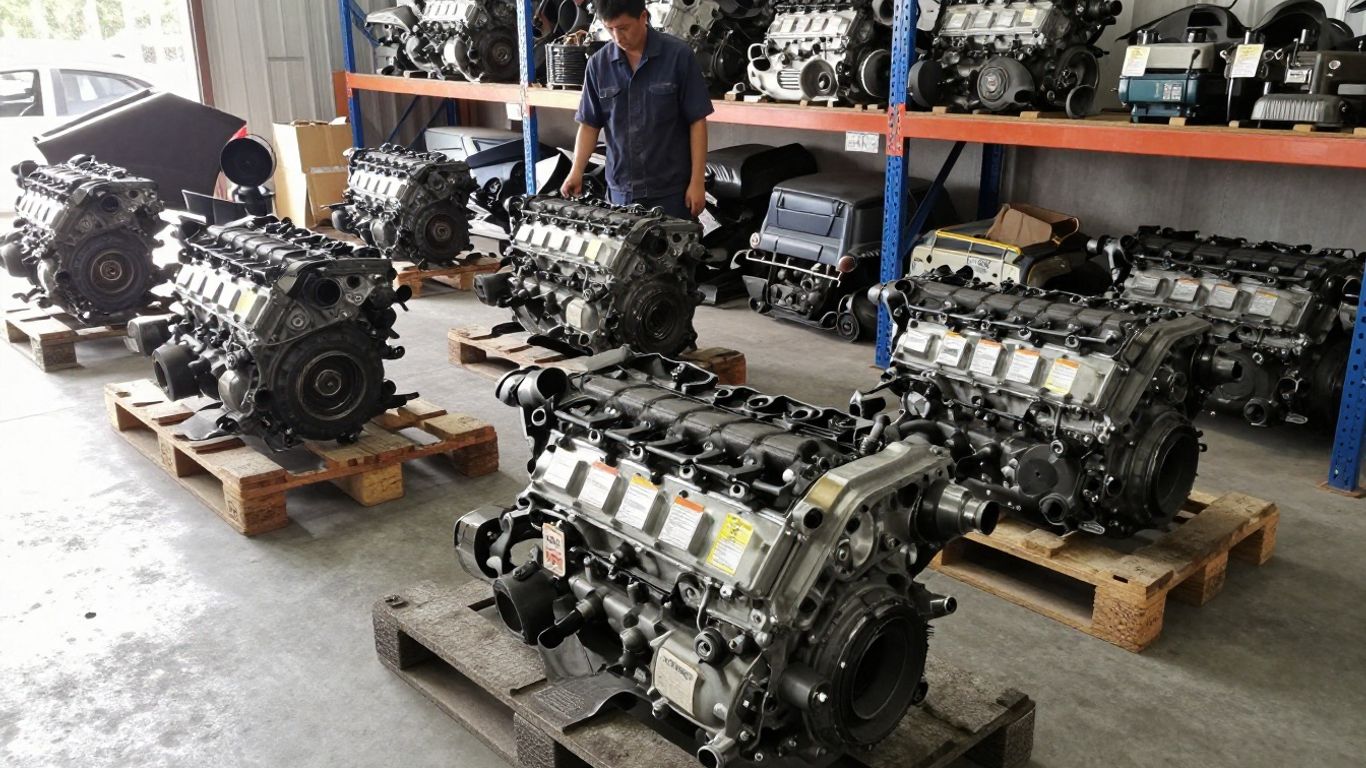
Start with the vehicle identification number, exact trim, engine code, transmission type, and production year. Two vehicles with the same model name may use different sensors, intake systems, mounts, or control modules. Ask the recycler to confirm compatibility in writing rather than relying on a broad model description.
Also verify whether the replacement is intended for the same emissions market. A unit from a different region may have physical similarities but still create inspection or diagnostic problems.
Compare recycled, remanufactured, rebuilt, and used engines
These categories describe different levels of work, although sellers do not always use them consistently. A used engine may have limited preparation. A recycled engine emphasizes recovery and reuse. A rebuilt engine has generally been disassembled and repaired to a stated scope, while a remanufactured engine is usually restored against defined specifications with more systematic inspection and replacement.
Request a written description of the process. Price comparisons become meaningful only when you know what testing, machining, replacement parts, and documentation are included.
Check mileage, testing, and performance documentation
Mileage can help you compare candidates, but it is not a complete measure of condition. Operating history, storage conditions, maintenance records, compression results, leak checks, and test procedures may tell you more. Ask whether the stated mileage is documented and whether the engine was tested as a complete unit or only inspected visually.
Look for records that identify the engine, the checks performed, and any limitations. Documentation protects your decision by making vague promises easier to question before money and labor are committed.
Evaluate compatibility with emissions and onboard diagnostic systems
Modern engines communicate with control modules, oxygen sensors, catalysts, variable valve timing systems, and other emissions-related equipment. Confirm that the replacement supports the vehicle’s original diagnostic architecture and that required components are included or transferable. A physically compatible engine can still trigger fault codes or fail an emissions inspection if its supporting systems do not match.
Have the technician identify any programming, relearning, or calibration steps before installation. That planning is preferable to discovering incompatibility after the vehicle is apart.
Verify the environmental and quality claims
Words such as recycled, green, eco, and sustainable can describe a responsible process, but they do not prove one. A trustworthy seller should be able to explain where the engine came from, what happened during inspection, and what protection applies if it fails. Environmental claims deserve the same careful reading as mechanical claims.
Use specific questions and documents rather than relying on polished marketing. The goal is a replacement that performs reliably and has a traceable recovery story.
Look for reputable recyclers and established industry standards
Check how long the recycler has operated, whether its inventory is traceable, and whether its policies are easy to find. Industry memberships, documented quality procedures, and clear grading systems can be useful signals, though they are not substitutes for reading the actual terms. A reputable business should welcome questions about testing and fitment.
Be wary of claims that offer impressive environmental language without describing the process behind it. A simple explanation of recovery and inspection is more useful than a long list of slogans.
Ask how the engine was recovered, inspected, and tested
Ask whether the engine came from a dismantled vehicle, a salvage source, or another channel, and whether fluid contamination or collision damage was assessed. Find out which parts were inspected, whether internal measurements were taken, and what kind of operational test was completed. The answer should be specific enough for a technician to evaluate.
You can apply the same care to other household and vehicle waste streams. Guidance on water filter recycling illustrates the value of knowing how a product is handled after use instead of assuming that the word recyclable tells the whole story.
Review warranties, return policies, and replacement coverage
Read the warranty before purchase, especially its duration, covered components, labor exclusions, claim procedure, and requirements for professional installation. Ask who pays shipping if the engine is defective and whether replacement coverage is prorated. A return policy may address fitment while a warranty addresses failure, so do not treat them as the same protection.
Keep invoices, photographs, installation records, and maintenance receipts. These documents can determine whether a legitimate claim is accepted.
Identify greenwashing in recycled engine marketing
Greenwashing often appears as an environmental promise with no boundary, measurement, or explanation. Be cautious when a seller claims zero impact, guaranteed fuel savings, or universal compatibility without evidence. Reuse is beneficial only in context, and a recycled engine is not automatically cleaner if it fails quickly or requires repeated shipping and repairs.
Look for precise wording about what is recycled, what is replaced, and what has been tested. Specific limits usually signal more honest communication than absolute claims.
Calculate the total cost of a recycled engine
The purchase price is only the first line of the budget. Engine replacement can involve diagnostic work, fluids, seals, freight, programming, accessory transfers, and substantial labor. A lower-priced unit may become expensive if its fitment is uncertain or its warranty excludes the work needed to install it.
Build the estimate before ordering. That makes it easier to compare a recycled engine with a new replacement, a remanufactured unit, or a different vehicle altogether.
Compare purchase prices with a new engine replacement
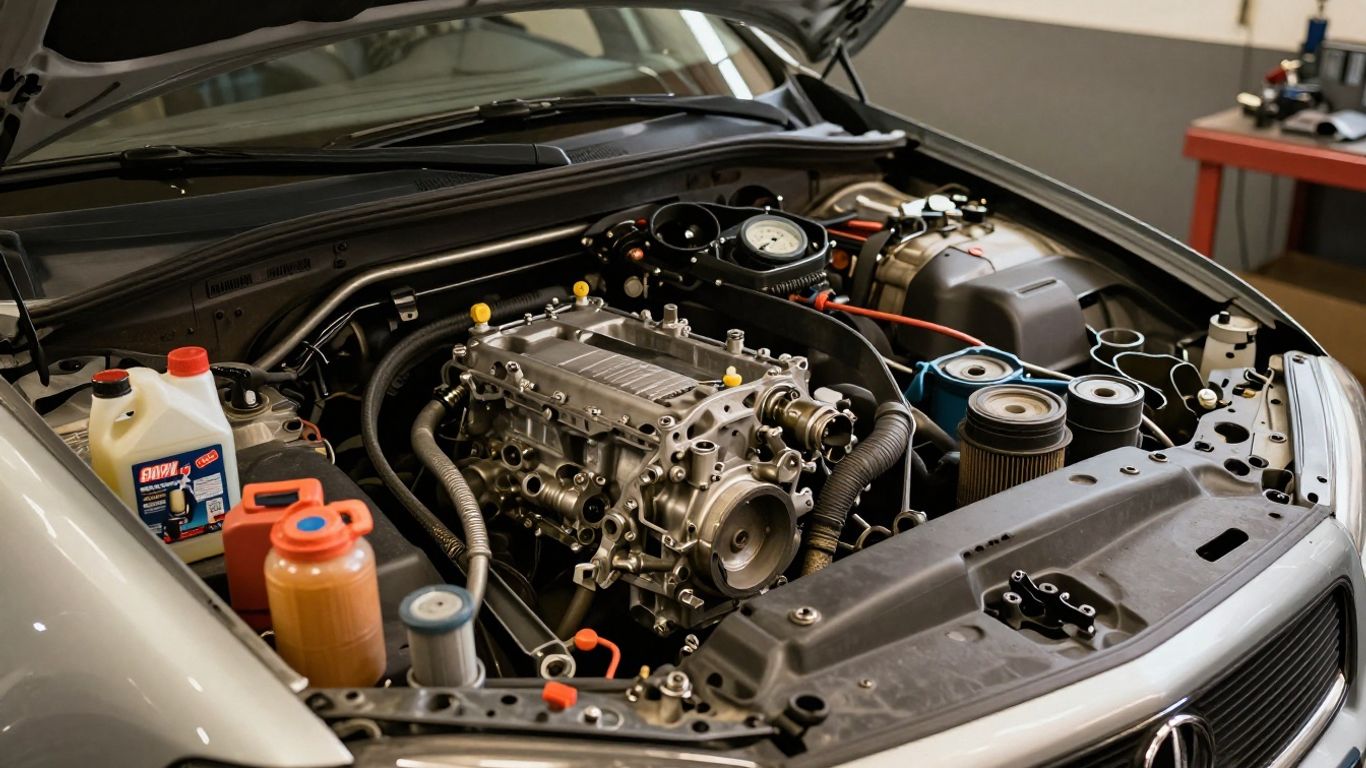
Request itemized quotes for each realistic option. A new engine may carry a higher initial price but offer predictable specifications and stronger coverage, while a recycled engine may reduce the material and purchase burden. A rebuilt or remanufactured unit may sit between those choices depending on the work included.
Compare like with like: included accessories, testing, freight, taxes, warranty length, and expected delivery condition should appear in every quote. Otherwise, the cheapest headline price can be misleading.
Include labor, shipping, fluids, and installation costs
Ask the technician to identify both required and recommended work. The estimate may include removal, installation, diagnosis, mounts, hoses, belts, filters, fluids, exhaust connections, electrical checks, and post-installation testing. Shipping can also involve a core charge or special return freight.
A written estimate should answer several practical questions before the order is placed:
- Is professional installation required by the warranty?
- Which seals, belts, filters, and fluids are included?
- Who pays for return shipping or a defective replacement?
- Will programming, diagnostic scanning, or emissions testing add labor?
Once these items are visible, the decision is less likely to be driven by an attractive but incomplete price. It also helps prevent a second round of transport and labor caused by missing parts.
Estimate fuel economy and maintenance expenses
A recycled engine should not be assumed to improve fuel economy simply because it replaces a failing unit. Estimate fuel use from the vehicle’s condition, driving pattern, engine specification, tire condition, and maintenance history. A healthy replacement may restore normal operation, but it cannot overcome every efficiency problem elsewhere in the vehicle.
Budget for routine servicing and possible age-related components. A maintenance plan that keeps the engine operating efficiently can matter more over time than a small difference in the initial purchase price.
Weigh warranty protection against upfront savings
Warranty coverage has practical value when the replacement requires extensive labor to install. Compare not only the length of coverage but also the seller’s claims process, exclusions, labor reimbursement, and replacement timing. A slightly more expensive engine may be the better financial choice if its condition and support are clearer.
Set aside a contingency for unexpected work. Responsible budgeting recognizes uncertainty without assuming that every recycled engine will fail.
Install and maintain a recycled engine responsibly
Installation quality determines much of the replacement’s useful life. A good engine can be damaged by contaminated fluids, incorrect connections, poor alignment, or skipped diagnostic checks. Treat the swap as a complete repair project rather than a simple part exchange.
The technician should also document what was transferred from the old engine and what was replaced. That record supports future maintenance and any warranty request.
Use a qualified technician for installation
Choose a technician who has experience with the vehicle’s engine family and electronic systems. Before work begins, confirm the warranty’s installation requirements and ask how the shop will inspect related components. Proper diagnosis matters because an engine failure may have been caused by cooling, lubrication, fuel, electrical, or transmission problems that could damage the replacement too.
After installation, the shop should check for leaks, warning lights, abnormal noise, correct fluid levels, and appropriate operating temperature. A road test and scan can reveal issues that are not obvious at idle.
Replace seals, filters, belts, and fluids during the swap
Accessible wear items are often cheaper to replace while the engine is out of the vehicle. The exact list depends on the engine and supplier, but a technician may inspect seals, gaskets, filters, belts, hoses, coolant, oil, and other fluids. Replacing a questionable component early can prevent a later teardown.
Use the vehicle manufacturer’s specifications and the supplier’s instructions. Do not substitute generic parts or fluids when the warranty or engine design calls for a particular specification.
Break in the engine according to the supplier’s instructions
Follow the supplier’s break-in guidance, since the correct procedure depends on whether the engine is used, rebuilt, or remanufactured. The instructions may address initial fluid changes, driving speed, load, idle time, and inspection intervals. Keep the first drives varied and attentive rather than treating the vehicle as fully proven immediately.
Record the installation date, mileage, fluid changes, and any symptoms. Early attention to a small leak or warning light is safer than assuming it will resolve itself.
Follow a maintenance schedule to extend service life
A recycled engine earns its environmental advantage over time, so regular maintenance is part of the sustainability decision. Use the manufacturer’s schedule as a baseline and adjust it for severe service, towing, short trips, dust, or extreme temperatures. Check fluid levels and warning lights between services.
A simple routine can include these recurring actions:
- Change oil and filters at the specified intervals.
- Inspect belts, hoses, mounts, and leaks during service visits.
- Keep the cooling system clean and correctly filled.
- Investigate warning lights, smoke, unusual noise, or overheating promptly.
Consistent care reduces avoidable failures and helps the engine remain useful for more miles. It also makes the vehicle’s next repair or resale history easier to understand.
Make your vehicle even more sustainable
An engine swap is only one part of a vehicle’s environmental footprint. Fuel use, tire pressure, driving style, maintenance, accessory choices, and end-of-life handling all influence the result. Small improvements are most worthwhile when they support reliability rather than create new complexity.
Think in terms of the whole vehicle. A modest, well-maintained car can be a more sensible choice than an expensive modification program that adds parts without addressing basic efficiency.
Improve driving habits to reduce fuel consumption
Smooth acceleration, anticipating traffic, avoiding unnecessary idling, and keeping tires properly inflated can reduce wasted fuel. Remove heavy items that do not belong in the vehicle and combine errands when practical. Regular maintenance also helps the engine operate as designed.
These habits cost little and work whether the engine is recycled, rebuilt, remanufactured, or new. They also reduce wear on brakes, tires, and drivetrain components.
Combine the engine swap with eco-friendly vehicle upgrades
Prioritize upgrades with a clear purpose and a reasonable payback. Depending on the vehicle, that may include low-rolling-resistance tires, efficient lighting, aerodynamic improvements, or careful tuning by a qualified professional. A useful overview of eco-friendly car modifications can help organize possibilities without assuming every modification suits every vehicle.
Comfort choices can also be considered thoughtfully. For example, natural sheepskin seat covers are discussed as an alternative to synthetic interior materials, though any purchase should be judged by durability, care, and whether it replaces rather than adds unnecessary material.
Recycle the removed engine and other automotive components
Ask the installer or recycler how the removed engine will be handled. It may qualify for a core return, parts recovery, metal recycling, or fluid reclamation. Batteries, tires, catalytic converters, coolant, and used oil each require appropriate channels, so do not place them in ordinary household waste.
The same principle applies to transport and leisure choices: even a London cabbie building repeat direct business is making a practical resource decision when unnecessary intermediaries and trips are reduced. The automotive parallel is straightforward—reuse, repair, and responsible recovery should be planned together.
Know when replacement is greener than continued repairs
Continued repairs are not automatically sustainable if they keep a highly inefficient or unsafe vehicle operating through repeated failures. Consider rust, crash safety, emissions performance, fuel consumption, parts availability, and the likely cost of another major repair. If the vehicle needs several unrelated systems replaced, a different vehicle may have a lower total impact.
A recycled engine makes the strongest case when it restores a structurally sound vehicle for several more years. If that condition is not present, compare the full life-cycle picture rather than defending the swap simply because one component can be reused.
A day on the water can also be planned with environmental care, as the Ibiza Boat Club guide illustrates through attention to safety, waste, and respect for the surrounding environment. The lesson carries back to the driveway: sustainability is a pattern of choices, not a label attached to one purchase.
Conclusion
A recycled engine can be a sensible route to cleaner, smarter driving when its condition, compatibility, warranty, installation, and long-term value are verified. By maintaining the replacement and responsibly recovering the old components, you give reuse a better chance to deliver its environmental promise.
Frequently Asked Questions
Is a recycled engine the same as a used engine?
Not necessarily. A recycled engine is recovered for reuse and may be cleaned or tested, while a used engine may be sold with less preparation. Ask the supplier to define the exact process.
Is a recycled engine better for the environment than a new engine?
It can be, because reuse may reduce demand for new materials and manufacturing. The benefit depends on condition, shipping, installation, service life, and responsible handling of the removed engine.
How do I confirm that a recycled engine will fit?
Provide the vehicle identification number, engine code, production year, transmission details, and emissions-market information. Get written confirmation from the supplier before ordering.
What records should an engine seller provide?
Useful records can include mileage or source information, inspection findings, testing results, included components, warranty terms, and return instructions. Specific documentation is more useful than broad environmental language.
Does a recycled engine improve fuel economy?
It may restore normal operation if the original engine was failing, but it does not guarantee better fuel economy. Tires, driving habits, maintenance, vehicle load, and other systems also affect fuel use.
Should I replace parts while installing the engine?
Often, accessible seals, filters, belts, hoses, and fluids should be inspected and replaced when appropriate. Follow the vehicle specifications, supplier instructions, and technician’s assessment.
When should I choose a different vehicle instead?
Consider another vehicle when the current one has serious structural corrosion, poor safety, repeated major failures, or very high operating costs. Reusing one engine is less persuasive if the rest of the vehicle has little useful life remaining.