
Key Takeaways
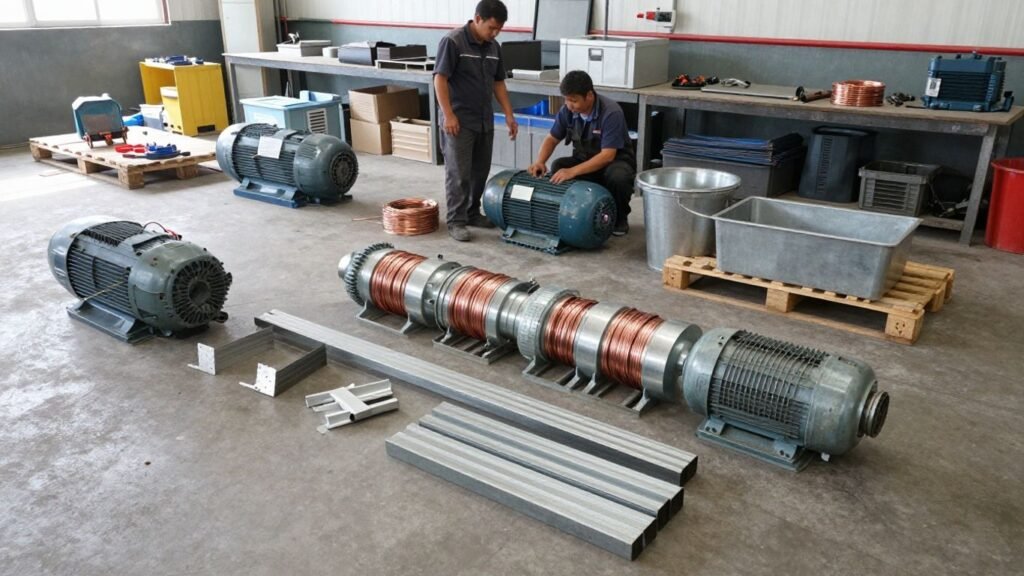
Used motors should be assessed before they are treated as scrap. A careful process can keep workable equipment in service, recover useful parts, and send only true end-of-life material to recycling.
- Inspect condition, history, specifications, and safety before deciding a motor’s fate.
- Repair and refurbishment often preserve more value than immediate recycling.
- Reuse motors only when their performance and compatibility are well understood.
- Separate motors from mixed waste so metals and electronic parts can be recovered properly.
- Track results so a waste-reduction program improves over time.
Understand how used motors contribute to waste
Used motors accumulate in factories, repair shops, warehouses, farms, and equipment fleets. Some fail suddenly, while others are removed during upgrades even though they still have serviceable components. The practical goal is to reduce waste used motors create by making a considered decision before disposal.
Common sources of used motors
Motors commonly come from decommissioned machinery, failed pumps, conveyors, fans, compressors, appliances, and vehicles. Maintenance teams may also remove motors during scheduled replacements because a newer unit is easier to source or better suited to revised operating conditions. That does not automatically make the old motor worthless.
A retired motor may have a damaged winding but usable housing, shaft, fan, terminal box, or mounting hardware. Conversely, a motor that looks clean may have hidden bearing wear or insulation damage. Its source and removal reason provide useful context for the inspection that follows.
Environmental impacts of discarded motors
A motor sent to general waste occupies space and can lose materials that required energy and mining to produce. Damaged insulation, oils, coatings, and attached electronic components may also complicate handling if the unit is broken apart carelessly. The environmental cost is not limited to the final disposal event; replacing a repairable motor also creates demand for another manufactured unit.
Waste prevention starts with avoiding unnecessary disposal and preventing contamination between materials. Guidance on vehicle maintenance waste reduction offers a useful parallel: orderly handling, inventory control, cleanup, and staff training can all reduce avoidable waste in equipment-related workplaces.
Valuable materials and components inside motors
Even a motor that cannot be repaired may contain recoverable metals and parts. Copper windings, aluminum components, steel laminations, cast housings, fasteners, cables, and electronic controls can enter different recovery streams when prepared correctly. The exact value depends on the motor’s construction, condition, and local market.
Do not assume that dismantling everything on site is the best approach. Uncontrolled disassembly can create injuries, mixed materials, and damaged components. In many cases, identifying the motor and keeping it intact until an appropriate recycler evaluates it preserves more options.
When reuse is better than recycling
Reuse is usually preferable when a motor can perform its intended duty safely with little more than cleaning, testing, or a routine part replacement. It retains more of the original product and avoids the labor and energy involved in processing materials into something new. Recycling remains the right path when repair costs, safety risks, or uncertain performance outweigh the likely benefit.
A simple decision should consider condition, compatibility, expected workload, repair cost, and documentation. The answer need not be permanent: a motor can be held for further testing, harvested for parts, or transferred to a qualified recovery facility as new information becomes available.
Evaluate a used motor before disposal
Disposal should be the outcome of an evaluation, not the starting assumption. Begin with the motor’s identity and history, then inspect its physical and electrical condition without energizing an unsafe unit. This short pause often separates a recoverable asset from material that should leave the site.
Check the motor’s condition and operating history
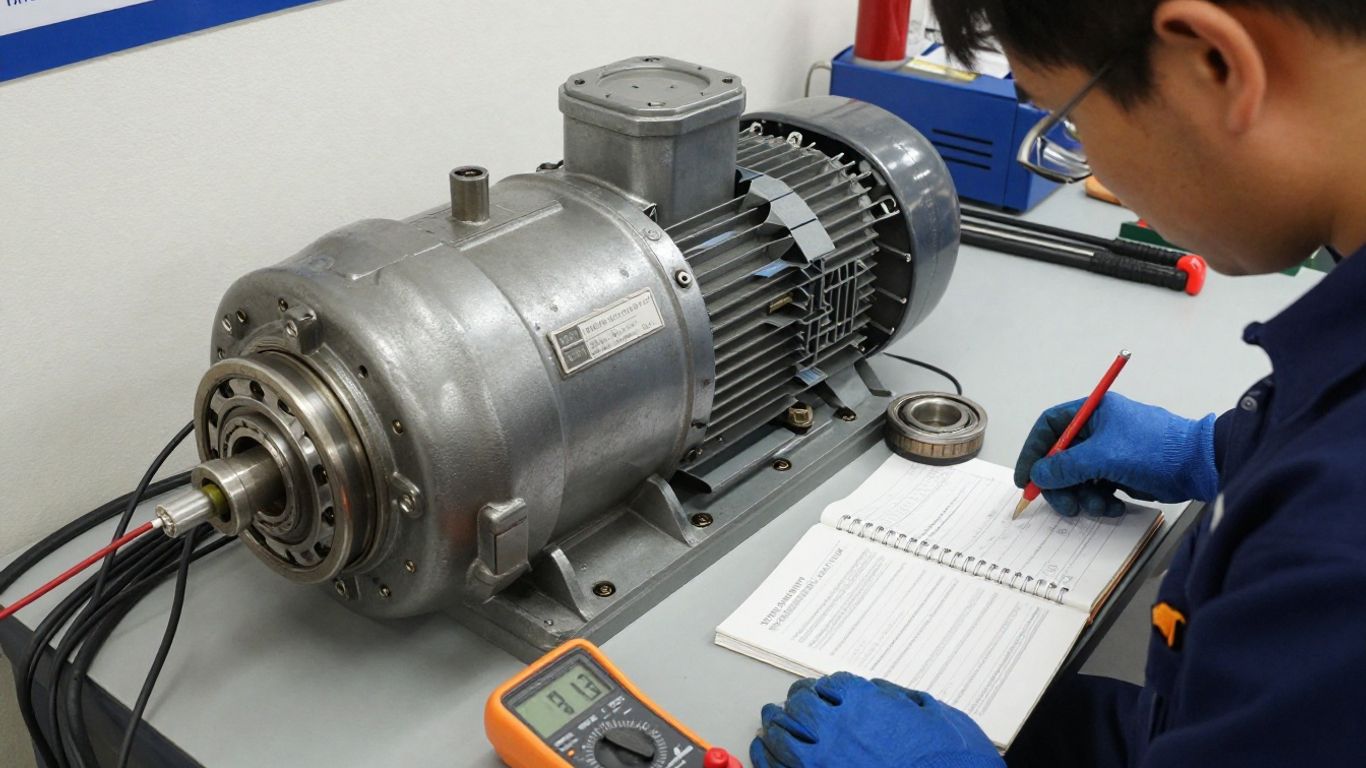
Record the nameplate information, removal date, equipment it served, and reason it was taken out of service. Ask whether it was exposed to heat, moisture, dust, chemicals, vibration, overloads, or repeated starts. These details help explain symptoms that a visual inspection alone may miss.
Look for corrosion, cracks, bent shafts, damaged cable entries, loose terminals, missing covers, and signs of overheating. Rotate the shaft only when safe to do so, and treat resistance or insulation tests as tasks for people with the right training and equipment. A clean record is valuable even when the motor is ultimately recycled.
Identify repairable versus irreparable damage
Some problems are routine: worn bearings, hardened seals, dirty cooling passages, damaged fans, loose connections, or replaceable terminal components. More serious faults may include burned windings, a distorted rotor, cracked housing, severe shaft damage, or insulation failure after exposure to harsh conditions. The distinction depends on the motor’s design and the availability of skilled repair.
Avoid making a repair decision from one symptom. A noisy bearing may be inexpensive to replace, but it can also signal shaft misalignment or broader damage. Compare the repair estimate with the motor’s replacement cost, expected service life, and the consequences of an unexpected failure.
Confirm specifications, compatibility, and safety
A motor is reusable only if it suits the equipment and the working environment. Verify voltage, phase, frequency, power, speed, frame size, mounting arrangement, shaft dimensions, enclosure type, and duty requirements. Confirm that the control system, starter, drive, and protective devices are appropriate before installation.
Safety also includes the history of the equipment around the motor. Lockout and tagout procedures, stored energy, guarding, grounding, and site-specific electrical rules must be addressed. When specifications are missing or unreadable, quarantine the unit rather than guessing.
Document parts that can be salvaged
Create a short parts record before the motor is moved or dismantled. Note quantities, dimensions, condition, and storage location for components likely to help with future repairs. Photographs can clarify what is present and reduce repeated inspection work.
A useful record might include:
- Motor identification and nameplate details.
- Condition of the housing, shaft, fan, and terminal box.
- Bearings, seals, cables, and controls that may be reusable.
- Known defects, test results, and recommended next action.
This information turns a pile of unidentified equipment into a manageable inventory. For comparison, the documentation discipline used in Central Florida home renovation planning also centers on records, schedules, selections, and change tracking; the same habit is useful when equipment changes hands.
Extend the life of used motors through repair
Repair works best when it is deliberate rather than improvised. The motor should be cleaned, measured, serviced with suitable parts, and tested under controlled conditions before anyone depends on it. A repair record should travel with the unit so the next user knows what was done.
Clean and inspect the motor safely
Remove loose dirt and debris without forcing contamination deeper into bearings, windings, or ventilation passages. Use cleaning methods suitable for the motor’s materials and follow workplace controls for dust, solvents, and electrical equipment. Never wash or energize a motor until its condition and the approved procedure are clear.
After cleaning, inspect seals, cooling paths, fasteners, terminal connections, and insulation. Check for moisture and corrosion, then allow the unit to dry fully where applicable. Cleaning should reveal condition, not conceal evidence of overheating or chemical exposure.
Replace worn bearings, seals, and electrical parts
Bearings and seals are common service items, but replacement requires correct dimensions, tolerances, lubrication, and installation technique. Electrical parts such as terminal blocks, fans, capacitors, cables, or sensors must match the motor and its control arrangement. Substituting a convenient part without checking its rating can create a new failure or safety hazard.
Use qualified repair personnel for winding work, insulation treatment, shaft machining, balancing, and other specialized tasks. A part replacement is worthwhile only when it restores dependable operation rather than postponing a larger fault.
Test performance before returning the motor to service
Testing should reflect the motor’s intended use. Depending on the unit, this may include insulation checks, continuity, rotation, vibration, temperature, current draw, noise, and operation under an appropriate load. Test results should be recorded with the date, equipment used, and person responsible.
The test is not just a pass-or-fail ritual. Compare readings with the motor’s specifications and prior records, and investigate unusual changes. If the motor performs acceptably but shows a developing issue, label it clearly and schedule follow-up work instead of treating it as fully restored.
Decide when professional refurbishment is necessary
Professional refurbishment is sensible when the motor is valuable, specialized, difficult to replace, or worth preserving for a critical application. It is also appropriate when the repair involves winding replacement, precision machining, balancing, advanced testing, or safety certification beyond the site’s capabilities.
Ask for a written scope, test results, replaced-parts list, and warranty terms where available. The aim is not simply to make the motor run once; it is to establish whether it can return to service with predictable performance.
Reuse used motors in practical applications
Reuse requires a good match, not just a spare mounting point. A motor that is adequate for a lightly loaded fan may be unsuitable for a pump with demanding startup torque or continuous duty. Treat every transfer as an engineering decision and keep the inspection record with the unit.
Match motors with compatible equipment
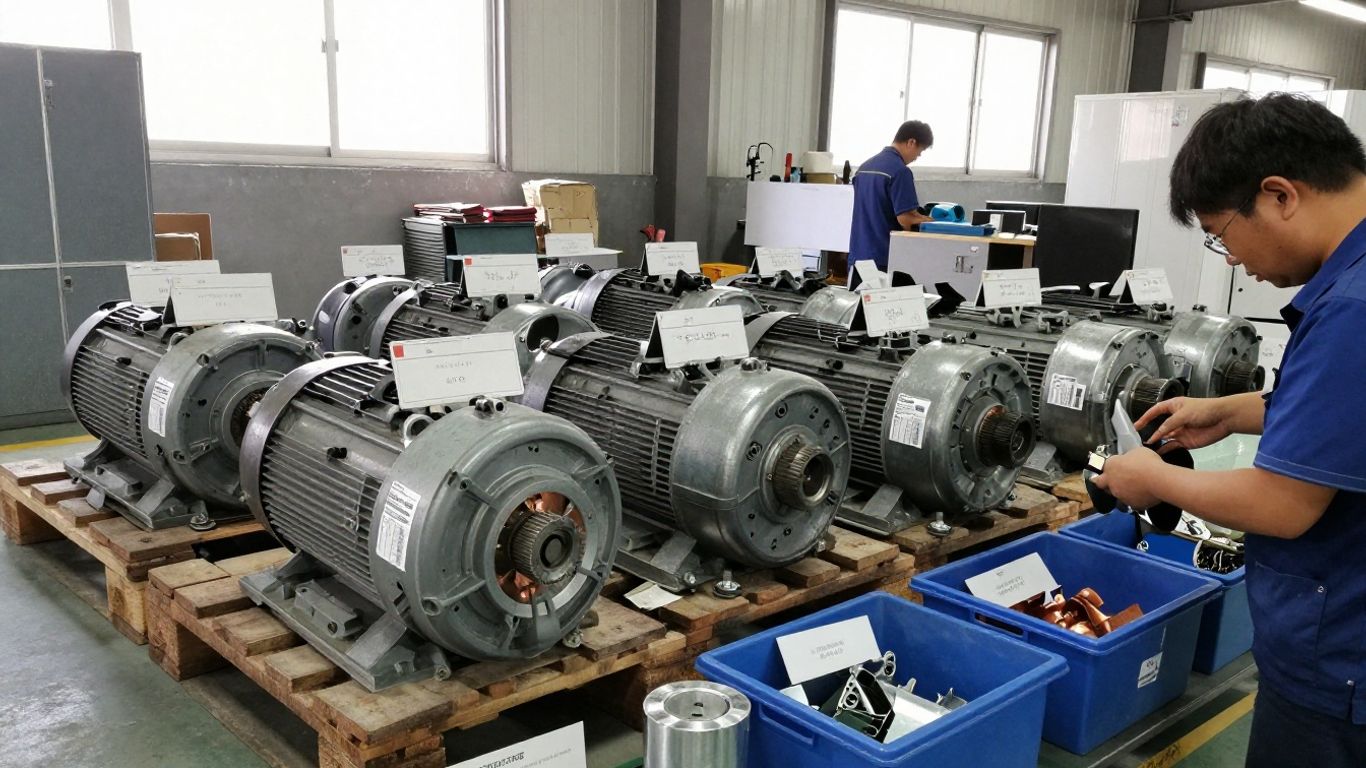
Compare the motor’s nameplate and measured condition with the receiving equipment’s requirements. Pay attention to speed, torque, duty cycle, enclosure, cooling, mounting, shaft fit, and power supply. The controls and protection should be reviewed at the same time, since a motor cannot be judged in isolation from the system driving it.
Trial installation may be appropriate for noncritical equipment, provided the unit is guarded and monitored. For critical machinery, use an approved change process and have a qualified person confirm the selection before commissioning.
Repurpose motors for low-demand projects
A motor with limited remaining life may still serve in a low-demand, noncritical application if its condition is known and the hazards are controlled. Examples might include a workshop ventilation project, a small test rig, or an educational demonstration. Repurposing should never mean removing essential guards or accepting unknown electrical behavior.
Define the project’s operating limits before installation. A clear duty cycle, inspection interval, and shutdown rule can keep a modest reuse project from becoming an avoidable incident.
Create a reliable inventory of reusable units
Store reusable motors by verified specifications rather than by appearance. Label each unit with its identification, condition, test date, known defects, and intended limitations. Keep records searchable so technicians can find a suitable spare before ordering a replacement.
The inventory should distinguish tested, repairable, parts-only, and hold-for-review units. It can also record shelf location, ownership, and compatibility notes. A small accurate inventory is more useful than a large collection of unidentified motors.
Avoid unsafe or inefficient reuse
Do not install a motor simply because its shaft fits. An incorrect speed, overload, enclosure, voltage, or duty rating can damage equipment and expose people to electrical or mechanical danger. Likewise, transporting and modifying a very old motor may cost more than buying an efficient replacement.
Set an approval threshold for reuse, especially where failure could stop production or cause injury. If the evidence is incomplete, choose inspection or recycling rather than optimistic guesswork. Even unrelated resources, such as a colloidal silver generator guide, illustrate why setup, testing, fault identification, and safe handling should be documented rather than assumed.
Recycle motors and recover valuable materials
Recycling is the responsible endpoint for motors that are unsafe, uneconomical to repair, or no longer compatible with available equipment. The quality of recovery depends heavily on preparation. Keeping motors identified and separated makes it easier for a facility to route metals, electronics, and other materials correctly.
Separate motors from other waste streams
Create a designated collection area for motors and keep them out of general trash, mixed scrap, and containers holding liquids. Separate intact motors from loose windings, electronic controls, batteries, oily parts, and unrelated metal where local procedures call for it. Preventing cross-contamination protects workers and improves the value of recovered material.
Mark units that may contain oils, capacitors, refrigerants, or other regulated components. If the contents are uncertain, ask the recycler or environmental specialist before dismantling or transporting them.
Prepare motors for responsible recycling
Drain or manage fluids only under an approved procedure, remove easily detachable nonmetal materials when safe, and protect sharp edges and exposed wiring. Do not burn insulation or use makeshift methods to strip copper. Those practices create pollution and can violate workplace or environmental rules.
Keep weight tickets, transfer records, and recycler documentation where required. Preparation should make the motor safer to handle without destroying information that helps determine the best recovery route.
Recover copper, aluminum, steel, and electronic parts
Motors often contain several material streams, and each has different recovery requirements. Copper windings, aluminum housings or components, steel laminations, cast iron, and electronic parts may be separated at different stages. The recycler’s process and local market determine how much value is recovered.
The circular approach described in this overview of O’Reilly Auto Parts includes returning core parts so suppliers can recover materials such as copper, aluminum, steel, and cast iron for remanufactured parts. The same broad principle applies here: keep useful material in circulation instead of treating every discarded unit as undifferentiated waste.
Choose certified recycling and recovery facilities
Ask facilities how they handle motors, electronics, fluids, data, and residual waste. Confirm licenses, accepted materials, transportation requirements, and the records they provide. A low quoted price is not enough if the downstream process is unclear.
Use approved vendors for regulated materials and retain certificates or receipts. Periodically review vendor performance, contamination issues, and recovery reports so the program rewards responsible handling rather than merely moving waste off site.
Build a waste-reduction program for used motors
A program becomes practical when it fits normal maintenance work. Assign ownership, define decision points, and make the preferred path easy for employees to follow. The goal is consistent behavior across shifts and locations, not a complicated procedure that is ignored under pressure.
Set collection and storage procedures
Choose clearly marked collection points with suitable pallets, covers, spill controls, and lifting guidance. Protect motors from rain, standing water, impact, and uncontrolled stacking. Store tested units separately from suspect or parts-only units so a technician does not accidentally install the wrong motor.
Write a simple flow: identify, inspect, decide, label, store, repair, reuse, recycle, or dispose. The process should say who approves each step and where records are kept. Similar operational thinking appears in vehicle maintenance waste guidance, particularly around spill prevention, hazardous waste, and practical shop procedures.
Track reuse, repair, recycling, and disposal rates
Measure what happens to each motor after collection. A basic log can capture incoming quantity, condition, repair decision, final destination, time in storage, and reason for disposal. Over several months, these records reveal where value is being lost.
Use a small set of consistent categories rather than changing definitions from one reporting period to the next. The data is most useful when maintenance, purchasing, and environmental staff can all interpret it the same way.
Train employees on handling and safety
Training should cover lifting, electrical isolation, inspection limits, labeling, storage, spill response, and escalation. Employees need to know when they may perform a visual check and when a qualified electrician, mechanic, or environmental professional must take over. Short refreshers after an incident or process change help keep the rules practical.
Make the preferred behavior visible at the collection area. Clear labels and an easy reporting route often prevent more mistakes than a long policy document stored on an intranet.
Measure cost savings and environmental results
Compare avoided purchases, repair costs, storage costs, recycling revenue, vendor charges, and disposal fees. Also track downtime, repeat failures, transport, and labor so an apparent saving does not hide a reliability problem. Environmental measures may include units diverted from disposal and the weight of materials sent to recovery.
Treat results as evidence for improving the process, not as a promise that every motor should be repaired. In a different business context, a B2B SaaS lead funnel is also evaluated by tracking stages and outcomes; the transferable lesson is to define categories before measuring performance.
Avoid common mistakes when managing used motors
Waste reduction can fail through small shortcuts. A motor may be scrapped too early, damaged in storage, handled outside the rules, or replaced before anyone checks whether repair is sensible. Reviewing these failure points gives a program a practical quality check.
Sending reusable motors directly to scrap
Scrap is convenient, especially when storage space is limited, but convenience can hide avoidable cost. Before sending a motor away, verify its condition, specifications, and possible use as a spare or parts source. A short triage process is usually enough to identify obvious candidates for repair or reuse.
Not every motor deserves refurbishment. The key is to make the decision deliberately and record why the unit was scrapped.
Storing motors in ways that cause further damage
Outdoor exposure, damp floors, unstable stacks, and uncovered terminals can turn a repairable motor into a parts-only unit. Use stable supports, weather protection, lifting access, and separation between heavy equipment. Rotate stored inventory when appropriate so old units do not disappear behind newer arrivals.
Label storage limits as well as the motor itself. A unit waiting for inspection should not be mistaken for a tested spare.
Ignoring hazardous materials and compliance requirements
Motors may be associated with oils, capacitors, contaminated dust, coatings, or electronic components that require special handling. Requirements vary by location and material, so confirm the applicable rules with qualified personnel and approved vendors. Never assume that a metal housing makes the entire motor ordinary scrap.
Keep records of inspections, transfers, and disposal routes. Good documentation supports compliance and helps answer questions if a shipment, spill, or vendor process is later challenged.
Buying replacements before evaluating repair options
A replacement may be necessary, but ordering first can eliminate the chance to compare repair, reuse, and refurbishment. Check the failed motor’s history, get a realistic repair assessment, and consider whether a tested spare is already available. This is especially useful when supply delays or equipment downtime make the decision more consequential.
The right answer may still be a new, more efficient motor. What matters is that the purchase follows an informed evaluation rather than an automatic disposal habit.
Conclusion
A used motor is not automatically waste. Inspecting it carefully, repairing it when justified, reusing it safely, and recycling it through the right channel can conserve materials and reduce unnecessary disposal while giving maintenance teams a clearer, more reliable process.
Frequently Asked Questions
When should a used motor be repaired instead of recycled?
Repair is worth considering when the motor has a sound core, the fault is identifiable, replacement parts and skills are available, and the expected service justifies the cost and safety requirements.
Can any used motor be reused in another machine?
No. The motor must match the receiving equipment’s voltage, phase, power, speed, torque, duty, mounting, enclosure, controls, and safety requirements.
What information should be recorded before disposing of a motor?
Record the nameplate details, source equipment, removal reason, visible condition, test results, salvageable parts, handling concerns, and final destination.
How should used motors be stored?
Store them on stable supports in a dry, protected, clearly labeled area. Keep suspect, tested, repairable, and parts-only units separated.
Are motors safe to place in mixed scrap?
Not always. Motors may include oils, capacitors, electronics, coatings, or contaminated materials. Check local requirements and the recycler’s acceptance rules first.
Is dismantling a motor always necessary before recycling?
No. Dismantling can create hazards and reduce value if done poorly. Ask the receiving facility what preparation it requires.
How can a business measure motor waste reduction?
Track the number and weight of motors collected, repaired, reused, recycled, and disposed of, along with repair costs, avoided purchases, downtime, and vendor charges.