

Key Takeaways
A sudden stall can be frightening, but a calm sequence of decisions reduces the danger. Protect people first, then diagnose only what can be checked safely.
- Move as far from traffic as possible without worsening the situation.
- Use hazard lights and warning equipment to make the vehicle visible.
- Treat smoke, overheating, leaks, loud noises, and sudden power loss seriously.
- Call emergency services when there is immediate danger, and roadside assistance otherwise.
- Have the vehicle towed when continuing to drive could cause injury or major damage.
Make the scene safe immediately
When an engine stops unexpectedly, the first priority is not identifying the failed part. It is creating distance from moving traffic and making the disabled vehicle visible. Keep your actions simple, deliberate, and suited to the road, weather, and traffic around you. A roadside emergency guide can help you prepare for this kind of situation before it happens.
Move the vehicle away from traffic if possible
If the car still responds to the steering and braking systems, guide it toward the shoulder, a nearby parking area, or another safe location away from the travel lanes. Do not make a risky turn or cross several lanes just to reach a more convenient spot. Once the engine has stopped, steering and braking may feel different, so slow down smoothly and avoid sudden movements.
Turn on hazard lights and use warning equipment
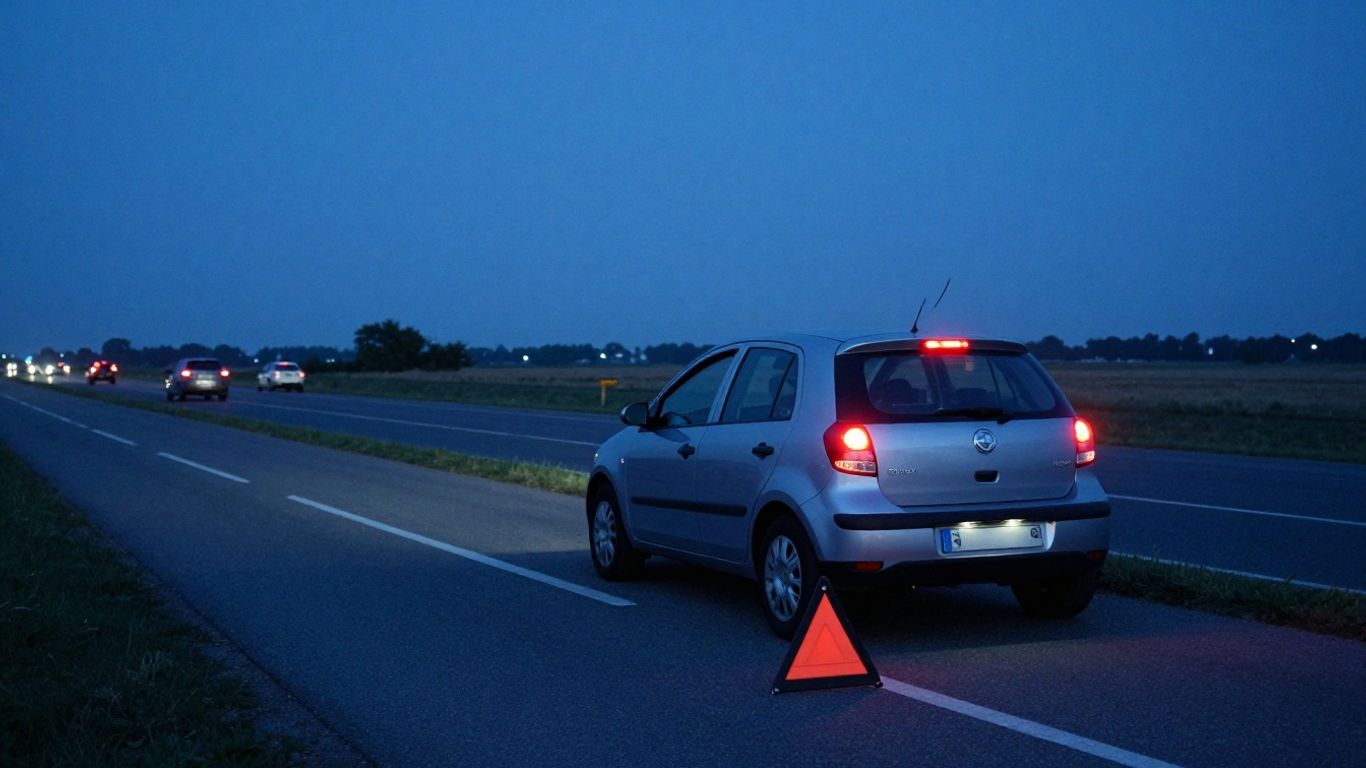
Switch on the hazard lights as soon as you can. If you carry reflective triangles, flares, or another approved warning device, use them only when you can place them without stepping into traffic. Keep the placement appropriate to the road and visibility conditions. At night or on a bend, assume approaching drivers may not see you until the last moment.
Exit the vehicle only when it is safe
Staying inside with the doors locked is often safer than standing beside a live roadway, especially on a narrow shoulder. If the vehicle is in immediate danger or you must leave, exit on the side away from traffic if possible and move well behind a barrier or far from the road. Never gather around the front or rear of the car where another vehicle could strike it.
Stay alert for traffic, fire, and other hazards
Watch for fast-moving vehicles, leaking fuel, rising smoke, exposed wires, unstable ground, and poor visibility. Do not lift the hood if flames or heavy smoke are present. If the car is in a dangerous position, tell the dispatcher that immediately rather than trying to solve the problem yourself.
Check whether the engine has truly failed
A vehicle that will not move may have an engine problem, a flat battery, an electrical fault, or another issue in the starting or fuel system. You do not need to diagnose the exact cause at the roadside. You only need enough information to describe what happened and avoid making it worse. The phrase breakdown engine failure urgent is a useful reminder that safety and timely help matter more than certainty.
Recognize common signs of engine failure
A complete loss of power, an engine that shuts off while driving, or a vehicle that cranks without starting can all indicate a serious fault. Severe knocking, repeated stalling, overheating, or a sudden inability to accelerate deserve caution even if the vehicle briefly starts again. A useful engine failure signs guide discusses unusual noises such as knocking, ticking, and squealing belts.
Distinguish engine failure from a dead battery
A dead battery often produces a click, slow cranking, or no response when you turn the key. If the engine cranks at its normal speed but does not start, the problem may lie elsewhere. Do not keep trying random fixes; tell the recovery provider exactly what you heard and saw when you turned the key.
Look for warning lights, smoke, leaks, or unusual noises
Note which warning lights appeared and whether the temperature gauge rose. Look around the vehicle without touching hot components for puddles, steam, smoke, or a strong burning smell. An engine warning signs checklist covers symptoms including rough running, fluid leaks, overheating, smoke, and starting difficulty.
Avoid repeated attempts to restart the engine
Repeated cranking can drain the battery and may worsen a fault involving fuel, lubrication, or overheating. If the engine starts but sounds wrong, runs roughly, or immediately loses power, shut it down when safely stopped. Record the sequence of events while it is fresh, including speed, dashboard warnings, and any change in sound.
Get urgent roadside assistance
Once the vehicle is in the safest position available, contact the right kind of help. Explain whether anyone is injured, whether the car is blocking traffic, and whether there is smoke, fire, or a fuel leak. Clear information helps responders judge urgency and arrive with suitable equipment.
Call emergency services when there is immediate danger
Call 911 if people are injured, the vehicle remains in a live lane, there is a fire or suspected fuel leak, or traffic creates an immediate risk. Give the roadway, direction of travel, nearest exit or landmark, and number of passengers. If you are unsure whether the scene is safe, say so plainly.
Contact a breakdown recovery or mobile mechanic service
For a vehicle that is safely off the road without immediate danger, call your roadside assistance plan, insurer, dealership, or a reputable recovery service. Ask whether the service includes diagnosis, towing, or both. If the symptoms suggest major engine damage, request a tow rather than asking someone to help you continue driving.
Share your exact location and vehicle details
Use your phone’s location function, mile markers, exit numbers, and nearby signs to make the position easy to find. Provide the vehicle’s make, model, color, license plate, and whether it is carrying passengers or a trailer. If you are in a commercial vehicle, mention its size and any cargo concerns.
Explain the symptoms to help technicians prepare
Describe the last normal moment before the failure, not just the fact that the car stopped. Mention power loss, dashboard lights, temperature changes, smoke, leaks, noises, and whether the engine cranks. A mobile engine repair resource offers an example of the kind of symptoms and location details that can matter during an engine emergency.
Handle common engine failure situations
Different symptoms call for different precautions, but none justify taking chances beside traffic. If the vehicle is hot, smoking, leaking, or losing power, stop treating it as a routine inconvenience. The goal is to preserve safety and prevent a small fault from becoming a larger repair.
Respond to overheating without causing more damage
Turn off the engine as soon as you are safely stopped and wait for the vehicle to cool. Never remove a radiator or coolant cap while the system is hot, because pressurized fluid can cause severe burns. Do not pour cold water over a hot engine, and do not continue driving simply because the temperature drops for a moment.
Deal with smoke, burning smells, or fluid leaks
Smoke from the engine bay, a strong fuel smell, or liquid spreading under the vehicle calls for distance and professional help. Turn the engine off and avoid cigarettes, open flames, and electrical experimentation. If smoke becomes heavy or flames appear, move away and call emergency services rather than opening the hood.
Manage a vehicle that loses power while driving
Keep both hands on the wheel, activate the hazard lights, and steer toward a safe stopping place. The car may lose power-assisted steering or braking, so allow extra distance and use firm, controlled pressure. Once stopped, do not re-enter traffic to test whether the problem has corrected itself.
Understand when a jump-start is unsafe
A jump-start is not appropriate when there is smoke, a fuel leak, a damaged battery, severe corrosion, or an unknown electrical fault. It is also a poor choice when the engine cranks normally but refuses to start. Before approving one, make sure the vehicle is stable, the cables and terminals are undamaged, and the assistance provider knows the symptoms.
Protect yourself while waiting for help
The wait can last longer than expected, particularly during storms, overnight hours, or heavy traffic. Keep your phone charged if possible and stay aware of changing conditions. The safest place is usually the one that puts the greatest physical distance between people and moving vehicles.
Remain visible without standing in traffic
Wear a reflective vest if you have one, and keep hazard lights operating when the battery allows. Stand behind a barrier or well away from the roadway rather than beside the vehicle. Do not wave down traffic or walk along the shoulder searching for assistance.
Keep passengers secure and supervised
Ask passengers to remain seated and belted unless moving away from the vehicle is clearly safer. Children should stay with a responsible adult, and pets should remain secured. Keep essential medication, identification, and phones together so they are ready if responders ask everyone to relocate.
Use extra caution at night or in poor weather
Rain, snow, fog, and darkness make a stopped vehicle harder to see and make shoulders less stable. Use interior lights sparingly so the battery is not drained, and avoid walking outside unless necessary. Tell the dispatcher about poor visibility or exposure to extreme temperatures.
Avoid accepting help from unknown motorists
A motorist who stops may mean well, but you are not required to approach anyone or hand over keys, money, or personal information. Keep doors locked and communicate through a partly opened window if needed. Wait for identified responders or a recovery provider, and call back if the person sent to help does not match the description you were given.
Decide whether to repair or recover the vehicle
A roadside inspection may reveal something minor, but a sudden engine shutdown can also point to damage that cannot be assessed safely on the shoulder. Do not base the decision only on whether the engine restarts. Consider the sounds, smells, warning lights, and the technician’s explanation before agreeing to drive away.
When a roadside repair may be practical
A repair may be reasonable when the vehicle is safely positioned, the fault is clear, and the technician can correct it without compromising reliability. Simple issues may sometimes be addressed at the roadside, but the provider should explain what was found and what limitations remain. If the car still runs poorly, arrange recovery instead of treating a temporary restart as a full repair.
Why serious engine damage requires towing
Knocking, persistent overheating, heavy smoke, major leaks, or an engine that will not turn over can worsen rapidly under load. Driving even a short distance may turn a repairable problem into extensive damage. Towing also keeps an uncertain vehicle away from traffic and gives a shop a safer place to inspect it.
Questions to ask before approving repairs
Ask what failed, how the technician reached that conclusion, and whether the repair is temporary or complete. Confirm the estimated price, warranty, parts used, and whether the vehicle should be towed for further diagnosis. Before authorizing work, it helps to write down the key questions rather than relying on memory under stress:
- Is the vehicle safe to drive right now?
- What evidence supports this diagnosis?
- What is the total estimated cost?
- What happens if the repair does not solve the problem?
These answers help separate a sensible roadside fix from a rushed decision. If the explanation remains unclear, request a tow to a repair facility and ask for a written assessment.
What information to collect for insurance or warranty claims
Take photographs only from a safe position, including the vehicle, visible damage, dashboard warnings, and surrounding road conditions. Keep the recovery invoice, technician’s notes, repair estimates, and receipts. The same careful documentation used in emergency roof leak repair can be useful when an insurer asks what happened and when.
For business vehicles, preserve dispatch records and downtime details as well. A documented IT disaster recovery plan is a different kind of preparation, but the practical lesson is similar: know who to contact, what information matters, and how to record the incident.
Before leaving the vehicle, confirm the destination, expected arrival time, and who will receive it. If a repair shop or insurer needs digital records, send them while the details are still clear.
Conclusion
When a car suddenly stops, create distance from traffic, assess only what is safe to observe, and call for help early. Smoke, overheating, loud noises, leaks, and persistent power loss are reasons to stop experimenting and arrange professional recovery. A steady response protects people first and gives the technician the clearest path to a sound decision.
Frequently Asked Questions
What should I do first if my engine stops on the highway?
Turn on the hazard lights, keep control of the vehicle, and move toward the shoulder or another safe area if possible. If you remain in a travel lane, call 911 immediately.
Should I leave the car after an engine failure?
Not automatically. Staying inside with the doors locked may be safer than standing beside traffic, but move away from the vehicle if it is exposed to collision, fire, smoke, or another immediate hazard.
How can I tell whether the battery is dead?
A dead battery commonly causes clicking, slow cranking, or no response when starting. Normal cranking with no start suggests the cause may be elsewhere, so describe the sound to the assistance provider.
Is it safe to keep driving after the engine restarts?
Not if the vehicle overheated, lost power, produced smoke, leaked fluid, or made a serious noise. A restart does not prove the underlying fault is resolved.
When should I call 911 instead of roadside assistance?
Call 911 when there are injuries, fire, a suspected fuel leak, dangerous exposure to traffic, or a vehicle stopped in a live lane. Use roadside assistance for a vehicle safely out of immediate danger.
Can I open the hood if the engine is smoking?
Avoid opening it when smoke is heavy or flames are visible. Move away from the vehicle and contact emergency services, since fire and hot components can create serious danger.
Should a suspected engine failure be towed?
Towing is the safer choice when the engine will not restart, the vehicle is overheating, or there are loud noises, smoke, or significant leaks. It prevents further damage and allows a proper inspection in a controlled location.