

Key Takeaways
A last minute motor search can still lead to a sound purchase if you decide what matters before contacting sellers. Move quickly on availability, but never let urgency replace basic checks.
- Set a firm total budget before viewing vehicles.
- Search dealerships, private sellers, marketplaces, and specialist sources.
- Confirm that listings are current and genuinely available.
- Check records, condition, documentation, and ownership carefully.
- Treat deposits, finance, transport, and return terms as part of the deal.
Define your priorities before starting a last minute motor search
Speed is useful only when it is guided by a clear plan. Before opening listings, decide what you can spend, what the vehicle must do, and which compromises would be acceptable. A short written brief can prevent an attractive but unsuitable vehicle from taking over the search.
Set a realistic budget and payment limit
Start with the maximum amount you can pay without relying on optimistic assumptions about future income. Include the purchase price, taxes, registration, insurance, inspection, and any immediate repairs. If you are financing, set a monthly payment limit as well as a total borrowing limit, since a comfortable payment can conceal an expensive loan.
Leave some cash in reserve for problems discovered after purchase. A vehicle bought in a hurry is less risky when the budget has room for tires, servicing, or a diagnostic check.
Decide which vehicle type fits your needs
Think about the job the vehicle must perform rather than beginning with a favorite badge. A compact car may be easier to collect and insure, while a van, truck, motorhome, or campervan may be necessary for equipment, passengers, or overnight travel. Consider road access, parking, fuel use, towing needs, and the number of people who will regularly travel in it.
Write down the minimum body style and capacity you can accept. This makes it easier to broaden the search later without drifting into vehicles that cannot actually meet your needs.
Separate must-have features from nice-to-have options
A last-minute search becomes manageable when the list is short. Must-haves might include seating capacity, cargo space, automatic transmission, four-wheel drive, or a particular safety requirement. Nice-to-have options can include a premium audio system, a particular color, heated seats, or cosmetic upgrades.
Keep the must-have list practical and testable. If a seller cannot clearly confirm a requirement, treat it as unverified until you see the vehicle or review the paperwork.
Identify acceptable trade-offs on age, mileage, and condition
Decide in advance whether you would accept an older vehicle with lower mileage, a newer one with more miles, or minor cosmetic damage. Mechanical condition and maintenance history generally deserve more weight than surface appearance, but the right balance depends on how soon you need the vehicle and how much repair work you can manage.
Set boundaries instead of making vague promises to yourself. For example, you might accept faded paint but not warning lights, or higher mileage with complete service records but not an uncertain ownership history.
Find suitable vehicles through multiple search channels
No single source gives a complete view of the market, especially when time is short. Search several channels at once, then compare the same vehicle by its identification number, mileage, location, and asking price. This is also a good point to prepare a short message so sellers can answer the same essential questions quickly.

Compare dealership and private-seller listings
Dealerships may offer more predictable opening hours, financing processes, and paperwork, while private sellers can have vehicles that are less widely advertised. Neither route removes the need for checks. Ask who legally owns the vehicle, whether there is outstanding finance, and why it is being sold.
Compare like with like. A lower private-sale price may not remain lower after an inspection, transport, registration work, or repairs are included.
Use online marketplaces and local inventory tools
Use filters for distance, price, vehicle type, mileage, and availability, but do not trust filters blindly. Read the full description, inspect all photographs, and look for inconsistencies between the headline and the details. Save promising listings in a simple note with the seller’s contact information and the time you checked them.
For garages and service businesses, an MOT booking software guide can provide useful context on live availability and booking records, although vehicle shopping itself still requires direct verification. Keep that distinction clear when using online information.
Check motorhome, campervan, and specialty vehicle sources
Specialist sources can be valuable for motorhomes, campervans, work vehicles, classic models, and adapted vehicles because sellers often understand the equipment and its maintenance history. Check habitation systems, conversions, towing equipment, and specialist modifications separately from the base vehicle.
If the search concerns a business motorhome, a business motorhome purchase article may offer background for thinking about operational use and tax questions. Tax treatment depends on individual circumstances, so obtain current professional advice before relying on it.
Contact sellers directly about unlisted or incoming vehicles
A phone call can uncover a vehicle that has just arrived, is awaiting photography, or has not yet been published online. Ask for the registration or vehicle identification number, current mileage, location, known faults, viewing times, and whether anyone else is already committed to buy it.
Keep the conversation factual and follow up in writing. A seller who avoids basic questions or pressures you to pay before viewing deserves extra caution, regardless of how rare the vehicle appears.
Filter listings for genuine last-minute availability
A listing is only useful if the vehicle exists, is still available, and can realistically be collected or delivered when you need it. Availability may change between a search and a phone call, particularly for competitively priced vehicles. Build a quick verification step into every contact rather than assuming that a live-looking advertisement is current.
Confirm that the vehicle is still for sale
Ask directly whether the vehicle is available now, not merely whether the advertisement is active. Confirm the exact price, mileage, and seller name, then request recent photographs or a short video if you cannot visit immediately. If the answers do not match the listing, pause until the details are reconciled.
A clear time-stamped message can help establish what was agreed, but it is not a substitute for seeing the vehicle and documents.
Check location, collection time, and delivery options
Distance affects more than convenience. Work out how you will reach the vehicle, whether the seller can release it during your available hours, and whether it can legally and safely be driven away. If delivery is offered, confirm who arranges it, what it costs, when responsibility transfers, and whether the vehicle is insured during transit.
Allow time for an inspection and payment verification. A same-day collection should not mean a same-day decision with no opportunity to check the basics.
Review listing dates, pricing changes, and availability claims
Look for the original listing date, edits, reductions, and phrases such as “sale pending” or “deposit taken.” A sudden price reduction may be legitimate, but it can also signal a fault or an attempt to create pressure. Ask why the price changed and whether any new condition has been added.
The safest comparison is between the current written details and what the seller says on the phone. Save screenshots if the advertisement is likely to disappear.
Watch for duplicate, misleading, or outdated advertisements
The same vehicle may appear in several places at different prices, sometimes because an old advertisement was never removed. Compare photographs, wording, mileage, seller contact details, and vehicle identification information. Reverse-searching photographs can sometimes reveal copied images, though it cannot prove fraud on its own.
Do not send money merely because a listing looks polished. Genuine urgency should still leave room for identity checks, a viewing, and a written agreement.
Evaluate a vehicle quickly without missing major risks
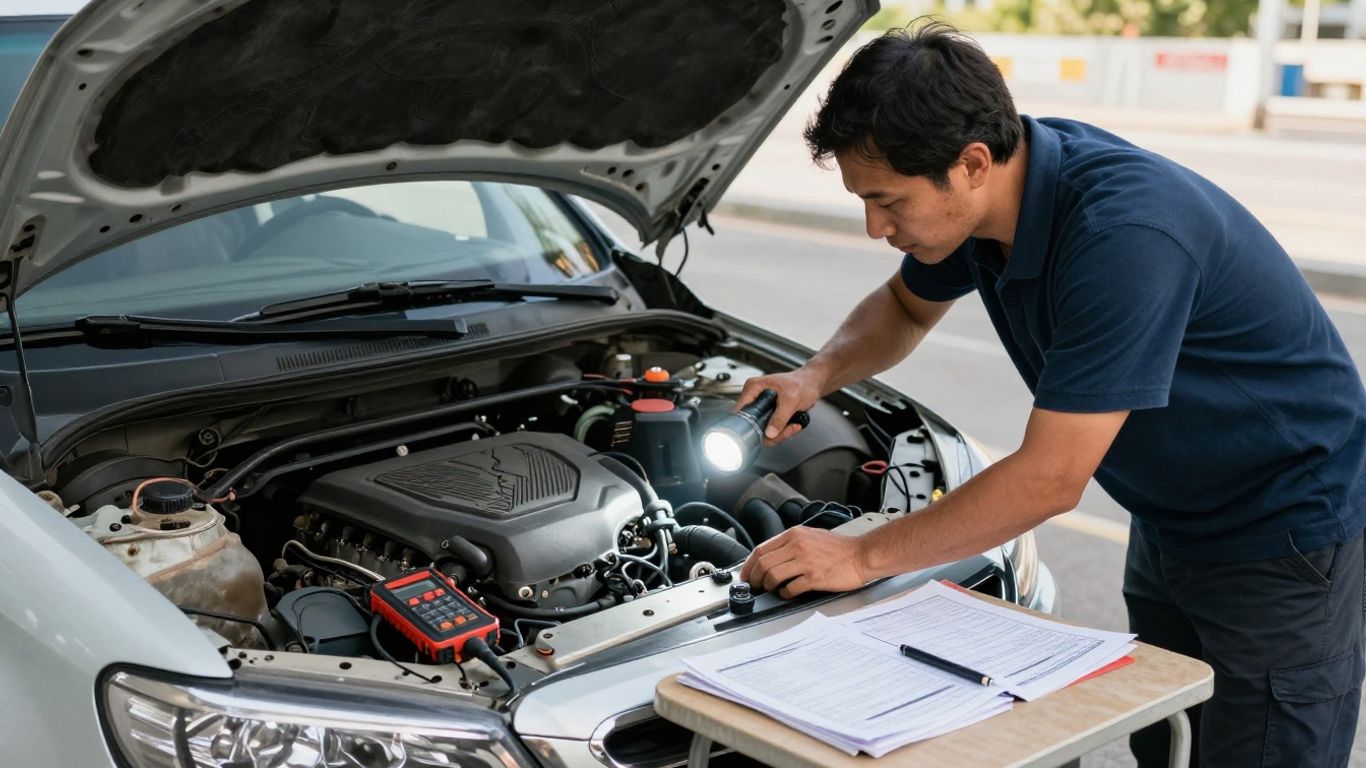
A rushed viewing needs structure. Walk around the vehicle in daylight when possible, take notes, and avoid letting a seller’s enthusiasm set the pace. The goal is not to diagnose every fault in a parking lot; it is to identify reasons to stop, negotiate, or arrange a proper inspection.
Review the history, mileage, and ownership records
Ask for service invoices, inspection records, registration documents, and evidence supporting the stated mileage. Check whether the seller’s name matches the ownership paperwork and whether the vehicle identification number appears consistently on the vehicle and documents. A gap in records is not automatic proof of a problem, but it should affect the price and your willingness to proceed.
Look for signs of repeated use, import history, commercial operation, or accident repair. When the history cannot be explained, do not let a low price make the decision for you.
Inspect the engine, transmission, tires, and bodywork
Start the engine from cold if possible and listen for unusual noises, smoke, warning lights, or difficult starting. During a test drive, notice clutch engagement, gear changes, braking, steering, vibration, and temperature. Check tires for matching specifications and uneven wear, then inspect panel gaps, paint differences, glass, lights, and signs of water entry.
A quick inspection works best when you use the same order every time. It reduces the chance that excitement about one attractive feature will distract you from a basic mechanical concern.
Check safety equipment, registration, and required documentation
Confirm that seat belts, airbags, lights, mirrors, emergency equipment, and required child-seat anchors are present and intact. Check the registration status, inspection or emissions requirements, and any restrictions that could prevent immediate use. For a converted or modified vehicle, ask whether the changes are documented and legal where you will operate it.
Missing paperwork can delay collection even when the vehicle itself seems sound. Make a list of documents that must be handed over before you transfer the balance.
Arrange a professional inspection when time allows
A qualified mechanic or inspection service can examine areas that are difficult to judge during a brief viewing. Give the inspector the vehicle identification details and ask for a written report with urgent faults separated from routine maintenance. If the seller refuses a reasonable independent inspection, treat that refusal as meaningful information.
A professional report does not guarantee a perfect vehicle, but it can turn an emotional decision into an informed one. You can also use the findings to renegotiate or walk away.
Compare costs beyond the advertised price
The headline price is only the first line of the calculation. A vehicle that appears close by and inexpensive may become costly after taxes, insurance, delivery, repairs, and financing are included. Write down each amount before making an offer so the comparison remains fair.
Calculate taxes, registration, insurance, and dealer fees
Ask for a written breakdown of every mandatory charge. Depending on where you live, this may include sales or use tax, registration, title work, inspection fees, documentation charges, and dealer fees. Obtain an insurance quote using the exact vehicle details rather than relying on a general estimate.
For questions outside the vehicle purchase itself, a Barcelona home-buying guide illustrates why taxes, fees, and legal paperwork should be considered separately from a headline price. The same budgeting habit is useful here, even though the transactions are different.
Estimate repairs, servicing, and immediate upgrades
Price the work the vehicle needs now, not only the repairs that seem urgent. Include tires, fluids, belts, brakes, batteries, recalls, habitation equipment, and accessories required for your intended use. Ask a mechanic for approximate costs when a fault is uncertain.
Use the estimate to set a walk-away figure. A discount is not a saving if it merely covers predictable work that you would have to fund immediately.
Compare finance terms with the total cash price
Compare the annual percentage rate, term, fees, deposit, early repayment rules, and total amount payable. A longer term may lower the monthly payment while increasing the overall cost. Ask whether the quoted rate depends on add-on products or a particular deposit.
The cash price and financed price should be written side by side. The total cost matters most when two vehicles have different prices or finance offers.
| Cost item | Cash purchase | Financed purchase | Question to ask |
|---|---|---|---|
| Vehicle price | Purchase amount | Deposit plus financed amount | Is the advertised price conditional? |
| Taxes and registration | Pay at transfer | Pay at transfer or add to loan | Which charges are mandatory? |
| Fees and interest | Usually limited fees | Interest plus lender or dealer fees | What is the total amount payable? |
| Immediate repairs | Paid separately | Paid separately or added to borrowing | What must be fixed before use? |
This comparison makes hidden borrowing costs easier to see. If the financed option only works with an uncomfortable term or payment, the vehicle is probably outside your practical budget.
Include travel, transport, and storage expenses
Add fuel, flights, rail tickets, temporary insurance, overnight stays, delivery charges, and storage. A distant bargain may also require time away from work or a second driver. If the vehicle cannot be collected immediately, check whether storage charges begin after a short grace period.
When planning travel under pressure, a last-minute transport planning guide can offer general ideas about central coordination and changing schedules. Use those principles to organize your trip, not as a substitute for confirming the seller’s arrangements.
Complete the purchase securely under time pressure
The final stage is where haste can become expensive. Keep control of the sequence: verify the seller, inspect the vehicle, agree on written terms, and only then make the payment required to complete the transaction. If a seller tries to reverse that order, step back.
Verify the seller’s identity and ownership documents
Match the seller’s identity to the ownership and registration documents, and check that the vehicle identification number is consistent. If someone is acting for an owner or dealership, ask for evidence of their authority. Confirm whether there is outstanding finance, a lien, or another restriction that could affect transfer.
Use official records and government resources available in your jurisdiction where possible. Screenshots or informal assurances should not be treated as final proof of ownership.
Use a written agreement with clear terms
The agreement should identify the vehicle, price, deposit, payment schedule, mileage, included equipment, known faults, collection or delivery date, and any promises made by the seller. Record whether the sale is subject to an inspection, finance approval, or satisfactory documents.
Read the document before signing, especially any language about “sold as seen,” warranties, cancellation, or returns. If a material promise is not written down, assume it may be difficult to enforce later.
Avoid unsafe deposits and rushed payment methods
Be wary of requests for gift cards, cryptocurrency, cash sent through unusual services, or transfers to an account unrelated to the seller. Verify bank details independently, because payment instructions can be intercepted or changed. A small deposit should still have written terms explaining when it is refundable and what happens if the seller cannot complete the sale.
Never allow a countdown to replace verification. A genuine seller may have another interested buyer, but you still have the right to make a safe decision.
Confirm pickup, delivery, cancellation, and return arrangements
Before paying the balance, confirm the handover address, documents, keys, accessories, delivery responsibility, and insurance position. Ask what happens if the vehicle is materially different from its description or cannot be delivered on time. Keep copies of the agreement, receipts, messages, inspection report, and payment confirmation.
If buying from a business, check the applicable consumer protections in your location. For a private sale, assume your remedies may be narrower and make the checks before payment rather than after a dispute.
Improve your results when the first search fails
A failed first attempt is not a reason to abandon your standards. It may simply mean the radius, vehicle category, timing, or search terms are too narrow. Review what blocked the purchase—price, condition, availability, or logistics—then change one variable at a time.
Expand the search radius without losing practicality
A wider radius can reveal better-maintained vehicles, but calculate the extra travel and inspection cost before treating them as genuine options. Set a maximum distance that still allows a second visit or professional inspection if needed. Delivery can widen the field, provided the provider, cost, insurance, and handover terms are clear.
Do not expand so far that you feel forced to buy after an expensive trip. Practicality is part of the search criteria.
Consider similar makes, models, and vehicle configurations
If the exact model is scarce, compare vehicles that meet the same functional requirements. Look at different body styles, engine choices, wheelbases, seating layouts, or equipment packages. Focus on the job the vehicle must do, then identify alternatives that preserve the essential parts of that job.
Make a fresh checklist for each alternative. Similar names do not always mean similar payload, reliability, running costs, or safety equipment.
Set alerts for newly listed vehicles
Use marketplace and dealer alerts for price, distance, body type, and key features. Respond promptly when a suitable listing appears, but send the same verification questions each time. Alerts are useful for improving timing; they do not verify a seller or vehicle.
Keep a short record of listings that disappear. Patterns in repeated photographs, changing prices, or inconsistent descriptions can help you recognize low-quality advertisements more quickly.
Know when waiting is safer than accepting a poor match
Waiting is often the better choice when the vehicle has unexplained warning lights, missing ownership records, unclear finance, unsafe payment requests, or costs that exceed your limit. A missed opportunity is frustrating, but a bad purchase can create months of expense and disruption.
You can also use waiting time to secure insurance, arrange finance, find an inspector, and refine your requirements. The right last minute motor search is still allowed to end with no purchase today.
Conclusion
Finding a vehicle quickly is possible without treating safety as an obstacle. Set your limits first, verify availability, compare the complete cost, inspect the vehicle, and keep payment tied to clear written terms. If those conditions cannot be met, walking away is a successful result—not a failed search.
Frequently Asked Questions
How quickly can I complete a last-minute vehicle purchase?
A purchase may be completed in a day when the vehicle, documents, inspection, insurance, and payment are all ready, but speed depends on the seller and local registration process. Do not skip verification to meet an arbitrary deadline.
What should I check first in a used vehicle listing?
Check that the vehicle is still available, confirm the seller’s identity, compare the stated mileage and price, and ask for the identification number. These steps can eliminate misleading listings before you spend time traveling.
Is a private seller or dealership safer?
Neither is automatically safe. A dealership may provide a more formal process, while a private seller may offer a lower price, but both should be checked for ownership, condition, accurate descriptions, and clear payment terms.
Should I buy a vehicle without seeing it in person?
Avoid doing so when possible. If distance makes a visit impossible, use an independent inspection, verify documents, request current photographs or video, and make sure the agreement explains delivery, condition, and cancellation arrangements.
How much money should I keep aside for repairs?
There is no universal amount because repair costs vary by vehicle, age, mileage, and condition. Obtain an inspection or mechanic’s estimate and keep a separate emergency reserve instead of spending the entire budget on the purchase price.
What are warning signs of a fraudulent vehicle listing?
Warning signs include a price far below comparable vehicles, copied photographs, inconsistent mileage, pressure to pay before viewing, refusal to show documents, unusual payment requests, and a seller who cannot clearly explain the vehicle’s location or ownership.
When should I stop searching and wait?
Wait when every available option exceeds your budget, fails basic checks, has unclear ownership, or cannot be inspected safely. A later purchase with better records and manageable costs is usually preferable to accepting a poor match under pressure.