Key Takeaways
A complete car wrecking service can handle far more than towing a damaged vehicle away. It may include collection, paperwork, dismantling, parts testing, recycling, and responsible disposal.
- Confirm what pickup, towing, and documentation are included in the quote.
- Remove personal belongings and prepare proof of ownership before collection.
- Ask how reusable parts, fluids, tires, batteries, and scrap metal are handled.
- Compare the final payment rather than focusing only on the advertised price.
- Choose a licensed, insured company with clear terms and local coverage.
What a complete car wrecking service includes
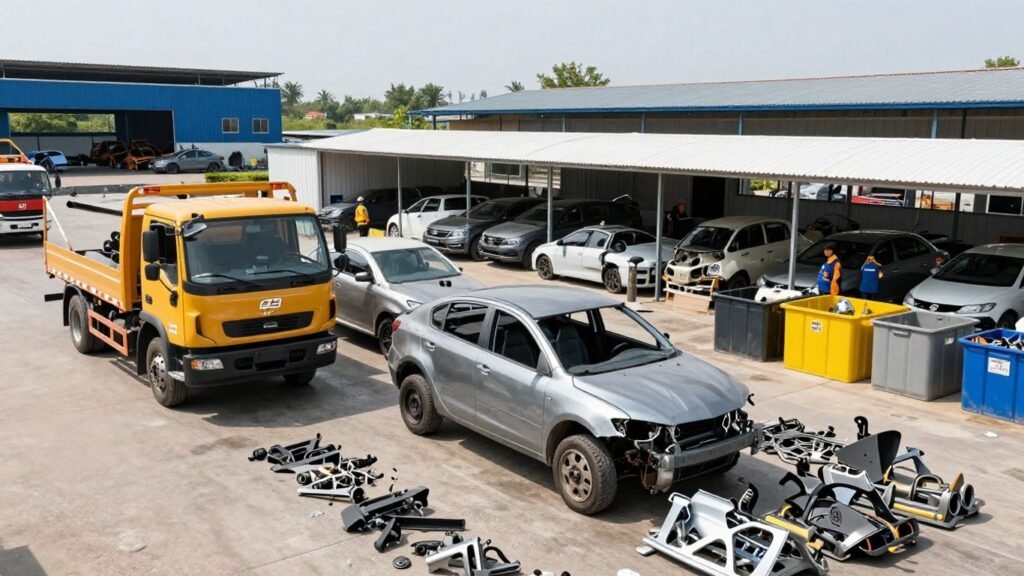
A complete car wrecking service follows the vehicle from the place it is stored to its final destination. The work may begin with a site assessment and towing, then continue through depollution, dismantling, parts recovery, and metal recycling. A reputable operator should explain which stages it performs directly and which are handled by approved downstream facilities. That clarity helps you understand both the price and the environmental outcome.
Vehicle pickup, towing, and site assessment
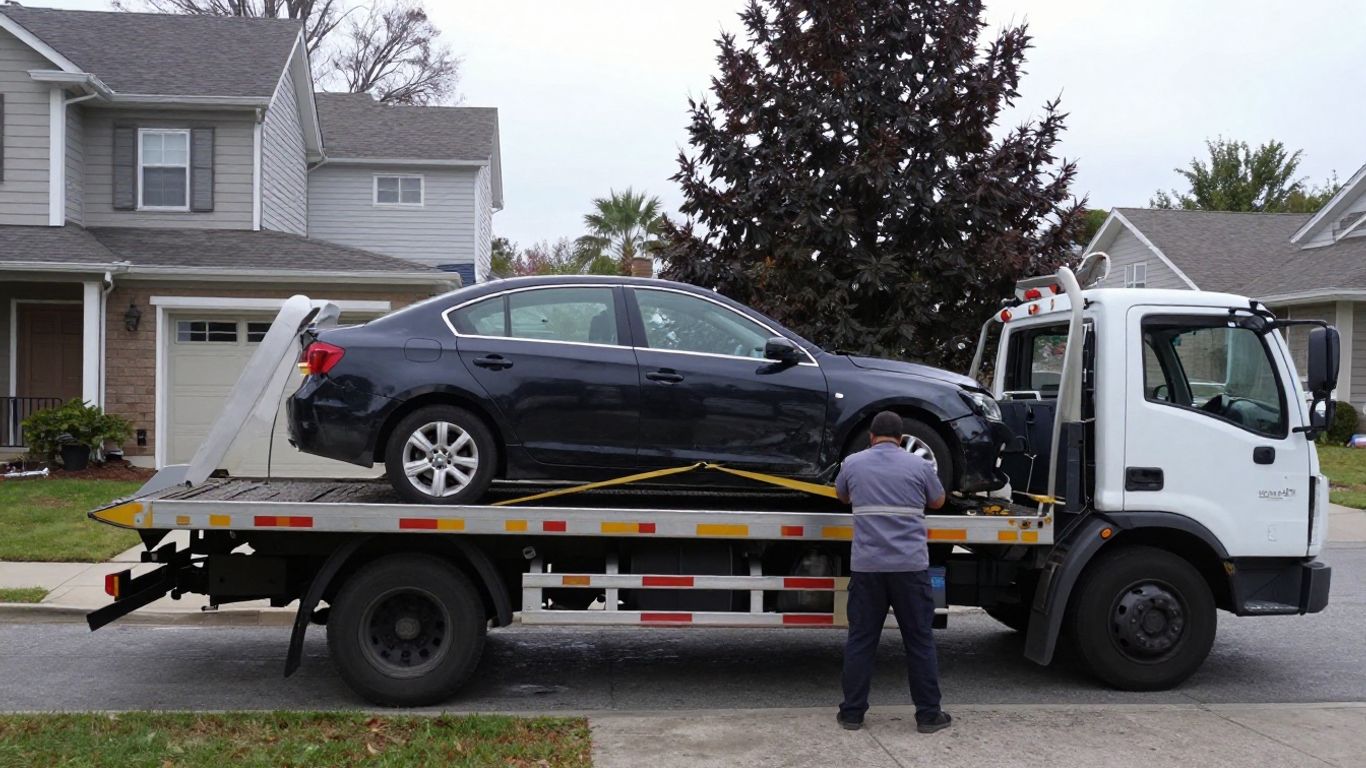
The first step is usually arranging safe access to the vehicle. The company may need to know whether the car is parked on a street, behind a gate, in a garage, or on uneven ground, because those details affect the equipment and time required. A non-running vehicle may need a flatbed or winching, while a drivable car can often be moved more simply. Before the truck arrives, confirm the pickup address, access instructions, keys, and whether towing is included.
End-of-life vehicle dismantling
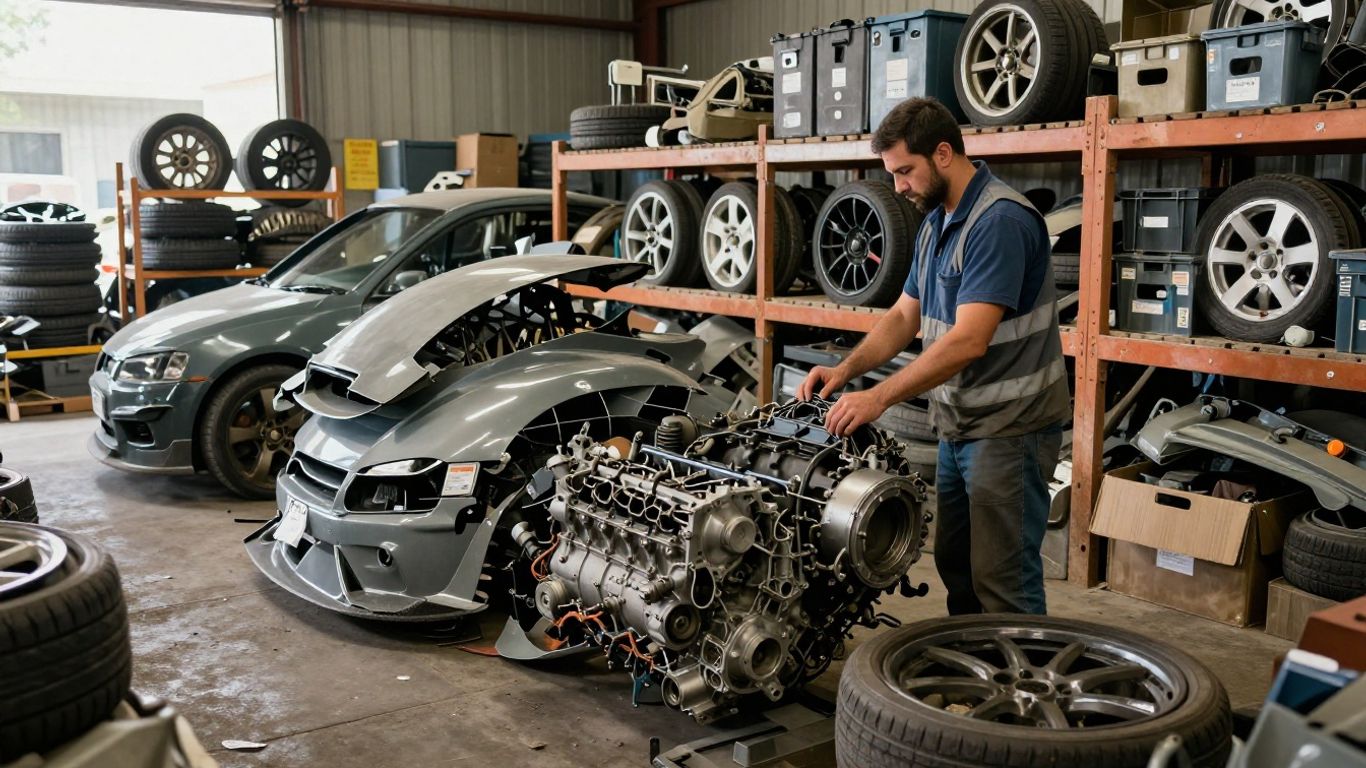
Once the vehicle reaches the yard, technicians separate components that can be reused from material that should be recycled or disposed of under specific rules. Dismantling commonly includes removing fluids, batteries, tires, airbags, and other items before the shell is processed. The sequence matters: proper depollution reduces spills and makes later handling safer. It also gives the company a clearer inventory of parts that may have resale value.
Salvageable parts recovery and resale
Parts are not valuable simply because they came from a working model. They need inspection, cleaning, identification, and often testing before a yard can list them for sale. Engines, transmissions, alternators, wheels, lights, body panels, and interior pieces may be graded according to condition and mileage. When looking for a replacement, used auto and truck parts can be a practical alternative to buying new, particularly for an older vehicle.
Scrap metal processing and responsible disposal
After reusable components are removed, the remaining shell is prepared for material recovery. Steel and aluminum are separated where practical, while glass, plastics, catalytic converters, and other materials follow their own processing routes. Hazardous items should never be treated like ordinary household waste. The best service can describe its recycling and disposal procedures instead of offering only a vague promise to “take care of everything.”
How the car wrecking process works
The process is easier when the owner knows what information to provide and what decisions must be made in advance. The vehicle’s year, make, model, condition, location, title status, and missing parts all influence the quote. Keep communication in writing where possible, especially if the car is being collected after an accident. A clear record prevents misunderstandings about the vehicle and the agreed payment.
Requesting a quote and describing the vehicle
Start with an accurate description rather than an optimistic one. Mention whether the engine starts, whether the wheels roll, whether the catalytic converter is present, and whether major panels or parts are missing. A few well-lit photographs can help the company assess the vehicle before sending a truck. Ask whether the estimate is conditional on an in-person inspection and whether the quoted amount is reduced by towing or administrative charges.
Preparing ownership and registration documents
The company will generally need evidence that you have the right to sell or scrap the vehicle. Requirements vary by state and by the vehicle’s status, so check with the relevant motor vehicle agency as well as the wrecking company. Have your title, registration details, government identification, and lien-release information available if applicable. If the owner cannot attend, ask in advance what authorization is accepted.
Arranging vehicle collection
Collection is more than choosing a convenient time. Make sure the vehicle is accessible, the keys are available, and the driver can reach it without damaging surrounding property. Remove personal items, license plates if your jurisdiction requires it, toll tags, and paperwork containing private information. For a vehicle involved in an accident, car accident injury care may also be relevant before the owner focuses on disposal, particularly when symptoms develop after the collision.
Inspecting, dismantling, and grading components
At the yard, the initial description is checked against the actual vehicle. Technicians may photograph its condition, verify identification numbers, and decide which parts can be tested or sold. Components with uncertain history or visible damage should be graded honestly rather than presented as fully functional. This inspection is one reason a quote can change if the vehicle differs substantially from the details supplied.
A company that explains its process should be able to answer practical questions about towing and parts. For example, Mike’s Auto describes services including towing, scrap metal buying, used auto parts, and recycling solutions. Those documented service categories illustrate the kind of scope a customer can ask about, without assuming that every vehicle will qualify for the same payment or parts outcome.
Receiving payment and disposal paperwork
Payment timing and method should be agreed before collection. Some companies pay after inspection, while others provide a confirmed amount subject to stated conditions. Request a receipt or sale record and ask what paperwork confirms the vehicle’s transfer or disposal. Keep copies of the title transfer, payment record, and any release or cancellation confirmation for your files.
The paperwork is especially useful if a later registration, tax, or insurance question arises. A simple folder containing the quote, messages, photographs, and final receipt can save considerable time.
When to use a car wrecking service
Wrecking is not always the best answer, but it can be sensible when a vehicle is unsafe, uneconomical to repair, or difficult to sell privately. The decision depends on more than age. Consider repair estimates, storage costs, towing distance, title status, and the time you would spend finding a buyer. A fast disposal route can be worthwhile when the vehicle has little practical use and is taking up valuable space.
Writing off a damaged or unsafe vehicle
A collision-damaged car may look repairable while hiding structural, electrical, or safety problems. If the repair estimate approaches the vehicle’s market value, salvage or recycling may be more realistic than rebuilding it. Do not drive a vehicle with compromised steering, suspension, brakes, restraint systems, or severe fluid leaks merely to deliver it to a yard. Arrange appropriate transport and keep insurance documentation connected to the claim.
For owners dealing with the financial aftermath of a crash, an injury compensation guide can help identify costs that extend beyond the repair bill. Vehicle disposal and injury claims are separate matters, so keep their records distinct.
Selling an unwanted, non-running car
A non-running vehicle can be difficult to sell through a private listing because buyers may expect a test drive, detailed mechanical answers, and a convenient inspection. A wrecking company can often evaluate it based on photographs and basic information, then arrange removal. Be candid about missing keys, flat tires, engine problems, modifications, and storage restrictions. Accurate details make the final appointment smoother.
Clearing abandoned or inoperable vehicles
Removing a vehicle from private property, an apartment lot, or a business site may require more than a standard pickup. Confirm who owns it, whether notices are required, and whether local authorities must authorize removal. Never move or sell a vehicle that belongs to someone else, even if it has been left unattended for a long time. Documentation protects both the property owner and the towing company.
In commercial settings, vehicle removal may occur alongside other property-maintenance work. That does not make unrelated services part of a wrecking contract; for example, commercial bat removal concerns a separate inspection and remediation issue. Keeping scopes separate avoids confusion when several contractors are involved.
Choosing wrecking over private resale or repair
Private resale can bring more money if the vehicle is complete, documented, and attractive to buyers, but it usually takes more time and negotiation. Repair may make sense when the work is affordable and the car has dependable long-term value. Wrecking is often the simpler choice when storage, transport, and uncertainty outweigh the likely return. Write down the three options and compare their net value after fees, not just their headline prices.
How to choose a reliable car wrecking company
A reliable company makes the transaction understandable before it becomes urgent. Look for a physical business presence, reachable contact information, clear service limits, and a quote that identifies deductions. Local requirements matter because towing, title transfers, salvage handling, and environmental obligations vary. A professional tone is useful, but written terms matter more than polished advertising.
Checking licenses, insurance, and local compliance
Ask which licenses or registrations the company holds and whether its tow operators and storage yard are insured. You can also verify relevant requirements with your state or local agency. If the company cannot explain how it handles title transfers, hazardous fluids, or abandoned vehicles, treat that as a warning sign. Compliance is not merely paperwork; it affects whether the vehicle is properly removed from your responsibility.
Comparing quotes, towing fees, and payment terms
Compare at least two or three written estimates when time allows. A lower offer may exclude towing, loading, storage, administrative fees, or deductions for missing parts. Ask whether the quoted amount is guaranteed, when payment is made, and what circumstances permit a revision. The useful figure is the amount you will actually receive after every stated charge.
| Quote detail | Why it matters | Question to ask |
|---|---|---|
| Vehicle payment | Shows the basic offer | Is this amount conditional? |
| Towing charge | May reduce the final payment | Is pickup included? |
| Missing-part deductions | Reflects salvage value | Which parts affect the deduction? |
| Payment timing | Sets expectations | Is payment made at pickup or inspection? |
After comparing the rows, ask each company to explain differences in plain language. A quote that is slightly lower but complete may be better than a larger number that changes at pickup.
Reviewing customer feedback and service coverage
Reviews can reveal whether a company arrives when promised, communicates changes, and pays what it quoted. Read recent comments for patterns rather than relying on one enthusiastic or angry review. Also confirm the exact area covered, including rural addresses, apartment complexes, and long-distance pickups. Fernandes Wrecking & Towing is one example of a service description that identifies towing, junk-car buying, recycling, and used parts, along with a stated service area.
Confirming parts warranties and return policies
If you are buying a salvaged part, ask how it was tested and what identification is included. A warranty should state its duration, covered failure, labor treatment, and exclusions. Return policies also matter because a part may not fit despite appearing compatible by model year. Staunton Wrecking describes used engines, transmissions, body parts, tires, and other parts, but buyers should still confirm the specific item’s condition and terms before paying.
What happens to your vehicle and its parts
A wrecked vehicle is best understood as a collection of materials and components rather than one indivisible object. Some items can be reused, some can be recycled, and some require controlled handling. The exact result depends on condition, demand, contamination, and local processing capacity. Responsible dismantling aims to recover value without passing hazards into the general waste stream.
Testing engines, transmissions, and electrical components
Large mechanical components may be inspected for visible damage, leaks, corrosion, mileage, and signs of overheating. Engines and transmissions can require more extensive testing than a simple visual check, while starters, alternators, sensors, and control modules need appropriate electrical checks. A part graded as tested should have a defined basis for that description. Buyers should ask for compatibility information and any available test notes.
Reusing body panels, interiors, and wheels
Doors, hoods, fenders, mirrors, seats, dashboards, wheels, and trim may be recoverable when damage is limited. Color, configuration, wear, and rust affect resale value as much as the basic part number. Used body panels may need cosmetic work, and interior pieces can show sun damage or staining. Good inventory records help match the part to the right vehicle rather than relying on a vague visual resemblance.
Handling batteries, fluids, tires, and hazardous materials
Before crushing or shredding, the vehicle should be drained and made safe. Fuel, oil, coolant, brake fluid, refrigerant, batteries, airbags, and other hazardous items need handling appropriate to their risks. Tires may be stored or processed separately, and damaged batteries require particular care. The owner should ask where these materials go if environmental responsibility is a deciding factor.
Recycling metal, glass, plastic, and catalytic converters
Once reusable parts and hazardous materials are removed, the remaining vehicle can be compacted and sent for material separation. Ferrous metal is commonly recovered at scale, while aluminum, glass, and plastics may follow different channels. Catalytic converters contain valuable materials and are frequent targets for theft, so identification and transaction records are sensible. Recycling does not mean every component is recovered, but careful dismantling increases the amount that can avoid disposal.
Costs, paperwork, and legal considerations
The financial side of wrecking is shaped by the vehicle and by local rules. A heavy, complete vehicle with sought-after parts may be worth more than a newer car missing its engine or catalytic converter. Distance, access, title problems, storage, and market demand can all change the final figure. Treat the quote as a transaction with terms, not as a casual estimate.
Factors that affect your vehicle’s value
Condition is only one part of the calculation. Make, model, year, mileage, completeness, damage, location, and demand for replacement parts all matter. A vehicle with a clean title and intact components is generally easier to process than one with missing ownership records or extensive fire damage. Ask which factors produced the offer so you can compare estimates fairly.
Documents needed to transfer or scrap a car
Commonly requested documents include a title, registration information, photo identification, and lien-release paperwork when relevant. Some jurisdictions require a bill of sale, salvage certificate, or notification of sale. If the vehicle belonged to an estate, business, or jointly owned household, additional authorization may be necessary. Confirm the exact list before the tow truck arrives, because missing paperwork can delay payment.
Cancelling registration and insurance
Do not assume that the wrecking company automatically cancels your registration or policy. Follow your motor vehicle agency’s process for plates, registration, and notice of sale, then contact your insurer about removing or changing coverage. Keep confirmation numbers and dates. If the vehicle is still listed in your name, future notices or fees may continue even after it has left your property.
Avoiding title, lien, and ownership problems
A lender’s lien generally must be resolved before a vehicle can be sold or scrapped. Check the title for all owners and make sure names, signatures, and identification details match the required forms. If the title is lost, ask the agency about a replacement rather than relying on an informal agreement. A company that pressures you to skip ownership checks is not offering a shortcut; it is creating risk.
Understanding environmental and disposal regulations
Environmental rules govern the storage, draining, transport, and processing of end-of-life vehicles. Requirements differ by jurisdiction, especially for refrigerants, batteries, fluids, tires, and salvage titles. A responsible operator should be able to describe its compliance approach and provide disposal or transfer records when applicable. For property owners considering additions such as a 2-car solar carport, vehicle removal and construction planning should likewise be treated as separate permitting questions rather than combined assumptions.
Conclusion
A complete car wrecking service can turn a difficult vehicle problem into a more orderly process, but the outcome depends on accurate information, proper paperwork, and a company that explains its fees and handling methods. Compare the net offer, confirm collection details, protect your records, and ask where reusable parts and hazardous materials will go. Those small checks make towing, dismantling, recycling, and salvage recovery easier to manage.
Frequently Asked Questions
What is included in a complete car wrecking service?
It may include vehicle pickup, towing, inspection, depollution, dismantling, salvageable parts recovery, scrap processing, and disposal paperwork. Services vary, so confirm each item before accepting a quote.
Can a wrecking company take a car that does not run?
Often, yes, but the company needs to know the vehicle’s condition and location. Non-running cars may require a flatbed, winch, special access, or additional equipment, which can affect the price.
What documents do I need to scrap a vehicle?
Most transactions require proof of ownership and identification, while some also require registration details, a lien release, a bill of sale, or a salvage certificate. Local rules determine the exact requirements.
Should I remove the license plates before pickup?
That depends on your state or local motor vehicle rules. Check the agency’s instructions and ask the company whether plates, toll tags, or other vehicle equipment should be removed.
How is the value of a junk or wrecked car calculated?
Value can depend on make, model, year, completeness, condition, parts demand, scrap prices, location, title status, and towing requirements. The final payment may be lower if parts are missing or access is difficult.
What happens to hazardous materials in an old car?
Fluids, batteries, refrigerants, airbags, and other hazardous items should be removed and handled through appropriate channels before the vehicle is crushed or shredded. Ask what records or disposal information the company provides.
Is it better to repair, privately sell, or scrap a damaged car?
Compare the likely repair cost, private-sale value, time, storage, towing, paperwork, and risk. Scrapping is often practical when repairs are uneconomical or the vehicle is unsafe, but the best choice depends on the specific car and your priorities.