

Key Takeaways
A crisis motor replacement is safest when the decision is based on verified specifications, controlled installation, and a realistic sourcing plan.
- Record the failed motor’s complete nameplate information before ordering.
- Match electrical, mechanical, and load requirements rather than relying on horsepower alone.
- Treat refurbished and substitute motors as options that require careful verification.
- Use lockout procedures, documented wiring, proper alignment, and commissioning tests.
- Keep critical spares and supplier contacts ready before the next failure.
What crisis motor replacement involves
A motor failure can turn a routine maintenance issue into an operational emergency within minutes. The first priority is to make the equipment safe, then determine whether the motor can be repaired or must be replaced. A calm, documented response usually prevents a rushed purchase from creating a second problem.
Common situations that require an emergency motor swap
Emergency replacement is often needed when a motor has seized, suffered winding damage, overheated repeatedly, or developed a bearing fault that makes continued operation unsafe. Water ingress, contamination, impact, and an electrical event can also leave little time for a normal repair cycle. The urgency is higher when the motor drives a pump, fan, conveyor, compressor, or other machine that stops an essential process.
Before removing anything, identify whether the failure is actually inside the motor. A tripped overload, damaged cable, failed starter, or jammed driven machine can look like a motor failure at first. Testing the surrounding equipment may save hours and avoid ordering the wrong replacement.
How motor failure affects safety, output, and costs
A failed motor can create exposed moving parts, unexpected restarts, hot surfaces, or damaged couplings. Production losses then accumulate alongside the direct cost of the motor, labor, freight, and possible damage to connected machinery. Downtime changes the buying decision because the fastest compatible solution may be more valuable than the lowest invoice price.
The financial impact is not identical at every site. Consider the process, the available bypass, staffing, delivery commitments, and the cost of restarting equipment. A local sourcing approach can matter when a long shipment would extend the outage; practical guidance on same-day spindle replacement makes the same broader point for urgent machine downtime.
When to repair the existing motor instead
Repair may be sensible when the frame, shaft, core, and enclosure remain in good condition and a qualified shop can return the motor within the required window. A rewind or bearing replacement can preserve an unusual mounting arrangement and avoid changes to controls or alignment. It is also worth considering when the original motor has a known duty rating that is difficult to match with a substitute.
Compare the repair estimate with the cost and availability of a suitable replacement. Include testing, transport, removal, installation, and the risk of a delayed return. If the motor is already old, has suffered repeated failures, or has damaged laminations and a distorted shaft, repair may only postpone the next outage.
Signs that replacement is the safer option
Replacement becomes more attractive when insulation tests are poor, the shaft is bent, the housing is cracked, or overheating has affected several internal components. Repeated trips after the original fault has been corrected are another warning. A motor that has been exposed to severe contamination or fire may have hidden damage even if it starts again.
Ask a qualified technician to assess uncertain cases. The goal is not merely to make the shaft turn; it is to restore dependable operation without exposing people or adjacent equipment to another failure. That distinction should guide the choice between a repaired original and a new, refurbished, or surplus unit.
How to identify the correct replacement motor
Correct identification is the foundation of a successful crisis motor replacement. A motor that looks similar may still have the wrong electrical characteristics, frame, shaft, enclosure, or mounting arrangement. Photograph the nameplate and the installation from several angles before the failed unit is disturbed.
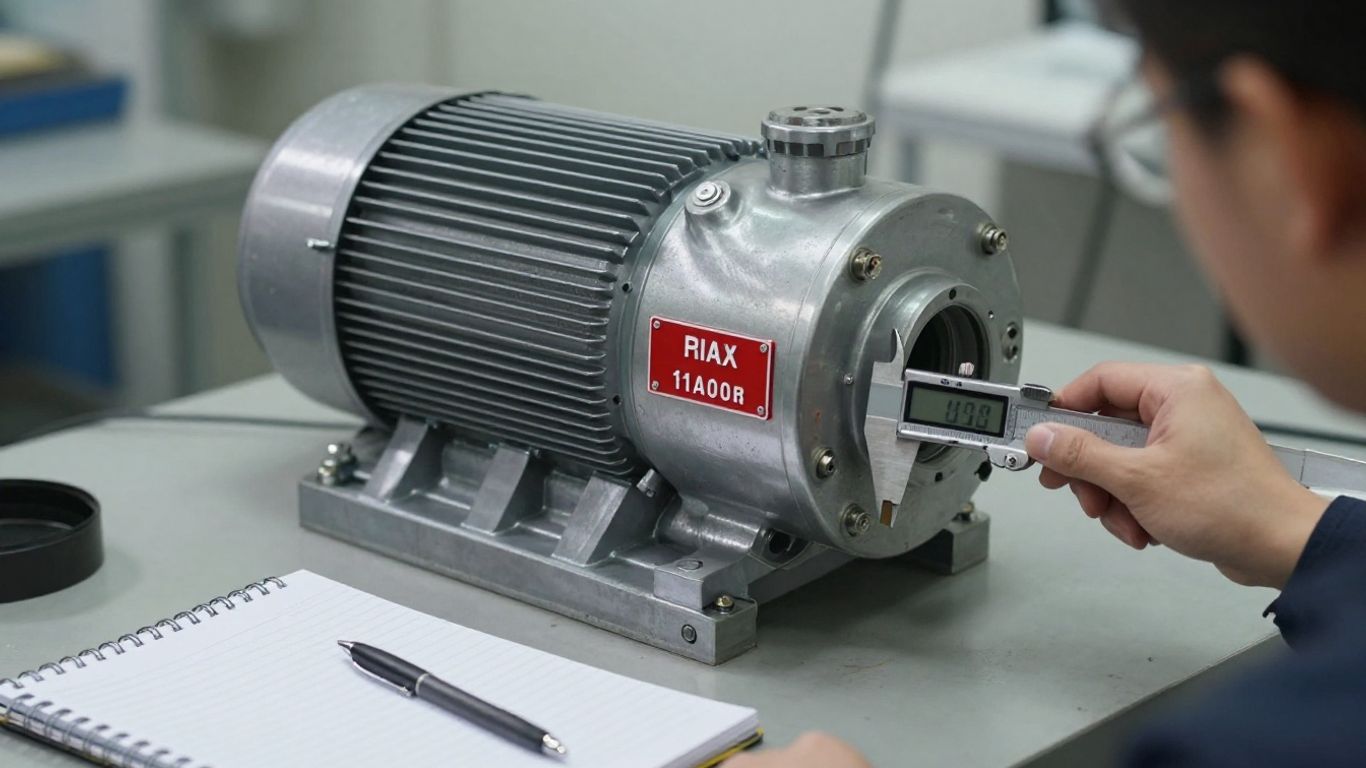
Reading the motor nameplate accurately
Write down every legible field, including model or catalog number, horsepower, voltage, current, phase, frequency, speed, frame, enclosure, service factor, and insulation information. Do not rely on memory or a partial number copied from an old maintenance record. If paint or dirt obscures the plate, clean it carefully without removing the information.
Compare the nameplate with the motor manual, drawings, and purchase history. A photograph can also help a supplier identify a discontinued model, but the supplier should still confirm the selection against the physical installation and load.
Matching horsepower, voltage, phase, and frequency
Horsepower is only one part of the electrical match. Confirm voltage and whether the motor is intended for single-phase or three-phase service, then check frequency and full-load current. A motor with the right horsepower but the wrong voltage or phase can fail to start, overheat, or damage the control system.
Check the starter, variable-frequency drive, overload setting, and available supply at the same time. If the replacement will operate from a drive, confirm that its speed range and insulation system are suitable for that application. Never assume that a motor’s terminal arrangement is identical to the failed unit.
Confirming speed, frame size, and mounting type
Rated speed affects the driven machine’s output, torque, and balance. Frame size determines whether the feet, flange, or face will fit, while mounting type controls how the motor transfers its weight and reaction forces. Verify whether the installation uses horizontal feet, a vertical mount, a C-face, a D-flange, or another arrangement.
A catalog description may use a standard frame designation, but field conditions can still differ because of adapters, shims, guards, or custom bases. Measure the mounting points and compare them with the replacement drawing before committing to freight.
Checking shaft dimensions and load requirements
Measure shaft diameter, extension length, keyway dimensions, and the distance from the shaft shoulder to the mounting face. Check the coupling, pulley, belt arrangement, or direct-drive connection for wear while the motor is accessible. The driven load may also impose thrust, radial load, starting torque, or intermittent-duty requirements that a standard replacement cannot tolerate.
Use the equipment documentation to confirm the duty cycle and operating environment. The correct motor must fit physically and electrically while providing the torque and protection the machine actually needs. This is where a few careful measurements can prevent an expensive return.
How to source a replacement motor quickly
Fast sourcing is a coordination exercise, not just a search for a part number. Contact several appropriate channels with the same verified data and explain the application, delivery location, and deadline. Clear information lets a supplier distinguish a true substitute from a motor that merely appears similar.
Comparing local suppliers, distributors, and manufacturers
Local distributors may offer faster collection, technical help, and easier returns, while manufacturers can confirm current equivalents and documentation. A specialist repair shop may provide a repaired original or a tested exchange unit. Ask each source what is physically available, not merely what can be ordered.
When time is short, compare the complete path: confirmation, dispatch, freight, receiving, and technical support. Advice on proactive servo drive maintenance is a useful reminder that sourcing is stronger when it is part of an equipment plan rather than an improvised response.
Evaluating refurbished and surplus motors
Refurbished and surplus motors can shorten the outage and reduce cost, but their condition must be established. Request test results, insulation readings, bearing information, repair history, storage conditions, and a clear description of any modifications. Ask whether the unit was tested under load or only checked for continuity and rotation.
A surplus motor may be unused yet still have degraded seals, aged grease, or storage-related corrosion. Confirm the warranty, return terms, and availability of replacement parts. The right question is not whether the motor is new; it is whether its condition and documentation support the required service.
Verifying stock, lead times, and shipping options
Ask for a stock confirmation, estimated dispatch time, carrier method, tracking details, and the latest realistic arrival time. “Available” can mean physically on a shelf, available from another warehouse, or available only after production. Those are very different answers during an outage.
Use the following information when requesting a quote so that suppliers can respond without several rounds of clarification:
- Complete nameplate photograph and transcribed specifications.
- Frame, mounting, shaft, and coupling measurements.
- Supply voltage, phase, frequency, and control method.
- Application, duty cycle, environment, and required delivery date.
This compact brief also gives the receiving and installation teams a common reference. It reduces the chance that a purchasing shortcut will quietly change an electrical or mechanical requirement.
Avoiding compatibility problems with substitute motors
A substitute should be reviewed as an engineering match, not accepted because its horsepower is close. Check speed, torque, enclosure, service factor, frame, shaft, mounting, bearings, and terminal configuration. Make sure the motor can operate with the existing protection and control equipment.
Get deviations in writing before ordering. If an adapter plate, new coupling, modified guard, or control change is needed, include those parts and the labor in the schedule. The cheapest motor becomes a poor emergency choice if it cannot be installed safely when it arrives.
How to prepare for the motor replacement
Preparation begins before the replacement reaches the site. A controlled shutdown, accurate records, and the right lifting equipment make the work safer and reduce the chance of damaging a pump, gearbox, coupling, or base. Even under pressure, a short preparation pause usually saves time later.
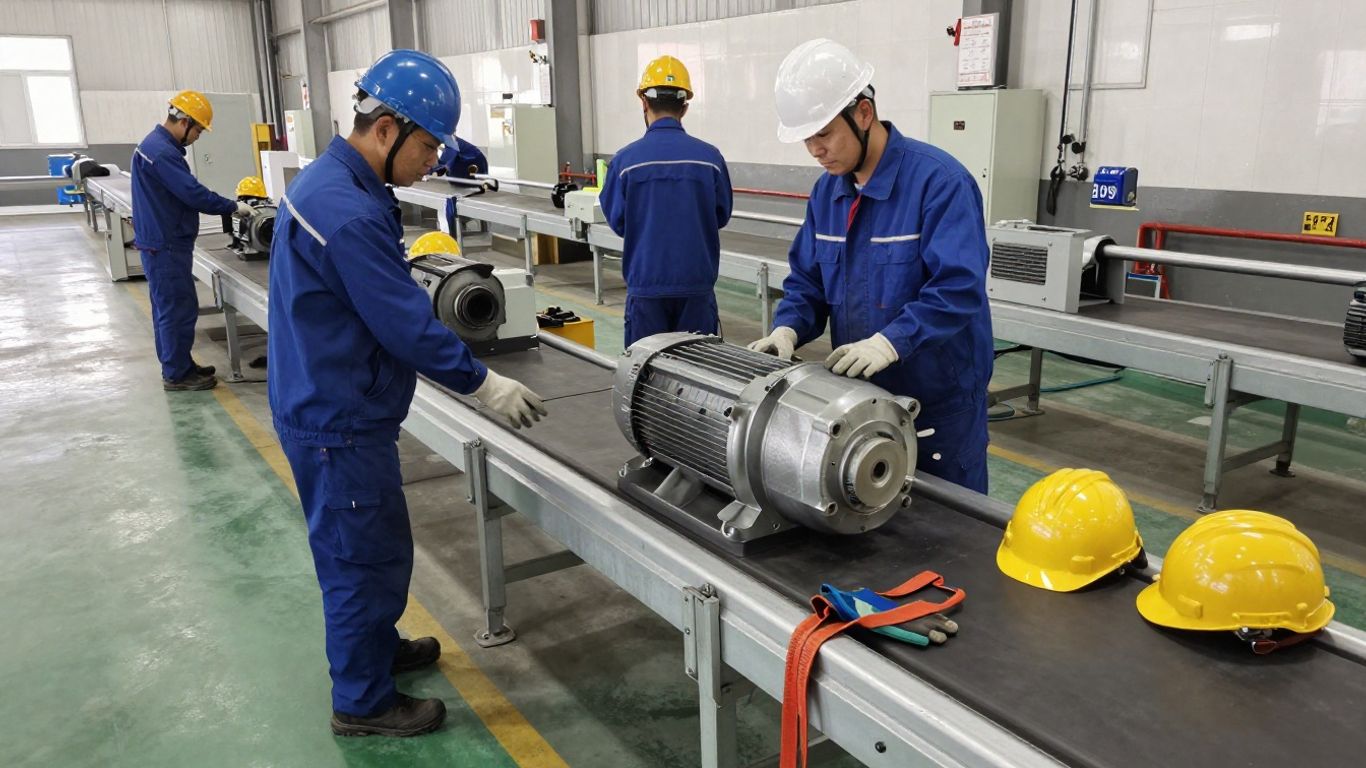
Isolating power and following lockout procedures
Only authorized, qualified personnel should isolate and work on the equipment. Follow the site’s lockout/tagout procedure, identify every energy source, disconnect stored or backfed energy, and verify the absence of voltage with an appropriate test instrument. Mechanical energy, pressure, gravity, and hot surfaces may also need to be controlled.
Do not treat a stopped motor as proof that it is de-energized. Apply the site’s required locks and tags, communicate the shutdown to affected workers, and maintain control of the keys. If the isolation is unclear, stop and resolve it before continuing.
Documenting wiring, connections, and mounting positions
Photograph terminal links, cable labels, grounding conductors, conduit routes, shims, coupling positions, and guard locations. Mark conductors using the site’s approved method and record the original overload settings. Draw a simple connection sketch if the installation is old or differs from the available schematic.
Measure the motor position before removal, including soft-foot shims and coupling spacing. These records provide a reference during installation and help explain any change that must be made for the replacement.
Gathering tools, lifting equipment, and replacement parts
Confirm that the team has suitable lifting equipment, slings, torque tools, alignment instruments, electrical test equipment, and the correct hand tools. Inspect lifting accessories before use and verify their capacity for the motor and the lifting arrangement. Prepare new fasteners, keys, gaskets, coupling elements, cable glands, and shims where appropriate.
A small parts check is often overlooked. Have the motor documentation, wiring diagram, alignment instructions, test forms, and approved protective equipment available at the work area. This avoids leaving a safe, isolated machine unattended while someone searches for a minor fitting.
Planning around production schedules and site access
Agree on the shutdown window, work boundaries, permits, crane or hoist access, and restart authority. Let operations know what tests will occur before the machine can return to service. If the work is near food, chemicals, heat, or washdown areas, include the required cleaning and environmental controls.
Plan for surprises such as seized fasteners, damaged couplings, or a base that has shifted. A contingency window and a named decision-maker make it easier to respond without bypassing safety or quality checks.
How to install and commission the new motor
Installation is more than placing a motor on its feet and reconnecting the wires. The replacement must be mechanically aligned, electrically protected, and tested under controlled conditions. Follow the motor and driven-equipment instructions, and record the results so the next technician has a reliable baseline.
Removing the failed motor without damaging connected equipment
Support the motor before loosening its fasteners and protect the shaft, cable, conduit, coupling, and adjacent guards. Remove the coupling or belt load according to the equipment procedure rather than forcing the motor free. Keep shims and hardware identified so their original positions are not lost.
Use rated lifting equipment and keep people clear of suspended loads. Once removed, inspect the base and driven equipment for signs of misalignment, oil contamination, loose anchors, or a mechanical seizure that may have caused the original failure.
Aligning the motor and driven machinery
Set the motor in place without tightening it fully, then check soft foot, coupling condition, and shaft alignment. Correct angular and parallel misalignment using the approved method and suitable shims. Belt-driven systems also need correct pulley alignment and tension rather than simply matching the old position.
Rotate the assembly by hand where safe and permitted, checking for binding or contact. Alignment should be verified again after final tightening because the base, fasteners, or shims can shift during the process. Good alignment reduces bearing load, vibration, and heat.
Connecting wiring, controls, and overload protection
Reconnect conductors from the documented diagram and verify the motor’s voltage and connection arrangement. Confirm grounding, terminal tightness, cable entry protection, overload settings, starter or drive parameters, and any interlocks. Do not assume that a replacement motor uses the same links or rotation as the removed unit.
Before energizing, inspect the enclosure and guards, check that tools are clear, and confirm that the team understands the test sequence. A qualified person should complete electrical tests required by the site procedure and applicable rules.
Testing rotation, vibration, temperature, and current draw
Start with a controlled bump test when the equipment procedure allows it, then confirm rotation before coupling the load or allowing full operation. Observe current on each phase, listen for abnormal noise, and check vibration, bearing temperature, and housing temperature as the motor reaches operating conditions.
Record readings at startup and after the motor has stabilized. Compare them with the motor documentation, previous records, and site limits. If current is unbalanced, vibration rises, temperature continues climbing, or rotation is wrong, stop the test and correct the cause before releasing the machine.
How to prevent the next motor replacement crisis
The best emergency replacement is the one that has already been partly planned. Maintenance records, a sensible spare strategy, and dependable inspection routines expose problems before they become shutdowns. They also make the next sourcing decision faster because the necessary information is already available.
Building a critical-spares inventory
Rank motors by production impact, failure history, lead time, and interchangeability. Keep critical units protected from moisture and contamination, and record their storage dates, test requirements, and exact locations. Include associated parts such as couplings, adapters, keys, bearings, and fuses when a missing accessory could delay installation.
A spare inventory does not need to contain every motor on site. It should cover the units whose failure would create the greatest operational risk, especially those with unusual frames, shafts, or long procurement times.
Setting preventive inspection and maintenance routines
Schedule inspections based on the motor’s duty, environment, and manufacturer guidance. Check connections, cooling paths, lubrication, seals, alignment, and signs of overload. Review recurring trips and temperature changes rather than resetting protection without investigating the cause.
Document what was observed and what action was taken. Preventive maintenance is most useful when it creates a trend that people can act on, not just a collection of completed work orders.
Monitoring vibration, heat, noise, and energy use
A change in vibration, temperature, sound, or energy consumption can indicate developing mechanical or electrical trouble. Establish normal readings for important motors and compare new measurements with that baseline. A gradual change may justify planned intervention before a bearing or winding failure stops production.
Use measurements alongside operator observations. Someone who works near the machine every day may notice a changed hum or repeated warm-up behavior before a formal inspection does. Treat that information as a useful prompt for diagnosis, not as a substitute for testing.
Creating an emergency replacement checklist and supplier plan
Keep a short checklist with nameplate fields, photographs, measurements, isolation steps, lifting requirements, test criteria, and supplier contacts. Review it after every replacement while the details are still fresh. The same habit applies to broader crisis planning; a crisis leadership webinar can provide a separate management perspective, though the technical decisions still belong with qualified maintenance personnel.
Finally, confirm who can approve a purchase, who can receive an urgent shipment, and who can authorize a restart. A supplier plan with current contacts and agreed information requirements turns a stressful event into a sequence of known actions.
Conclusion
A crisis motor replacement calls for speed, but speed should come from preparation rather than guesswork. Verify the motor, source a genuine mechanical and electrical match, isolate the equipment correctly, and commission the installation with recorded tests. A modest spare strategy and clear supplier plan can make the next failure shorter, safer, and far less disruptive.
Frequently Asked Questions
How quickly can a replacement motor be sourced?
It depends on the motor’s specifications, local stock, supplier response, freight, and site access. A complete nameplate record and accurate measurements usually shorten the decision process.
Can I replace a motor with one that has the same horsepower?
Not safely on horsepower alone. Voltage, phase, frequency, speed, frame, mounting, shaft dimensions, enclosure, duty, and control compatibility must also match.
Should a failed motor always be replaced rather than repaired?
No. Repair may be appropriate when the motor is otherwise sound and can be returned within the required time. Severe mechanical damage, repeated failures, or an unreliable repair timeline may favor replacement.
What information should I send to a motor supplier?
Send a clear nameplate photograph, transcribed ratings, model number, mounting and shaft measurements, application details, control method, environment, and required delivery date.
Is a refurbished motor suitable for emergency service?
It can be, provided its condition, testing, repair history, warranty, and compatibility are documented. Confirm that it meets the application’s electrical and mechanical requirements before ordering.
What checks should be completed after installation?
Verify rotation, alignment, grounding, protection settings, current draw, vibration, noise, and temperature. Record readings after startup and again once the motor reaches stable operating conditions.
How can a plant reduce the risk of another motor crisis?
Identify critical motors, keep suitable spares and accessories, maintain accurate records, inspect equipment routinely, monitor condition changes, and keep an emergency supplier and approval plan current.