

Key Takeaways
A dependable Trade & Workshop Supply process starts with knowing what the team actually uses, then connecting purchasing, storage, safety, and supplier review.
- Record everyday tools, materials, consumables, and replacement parts.
- Separate critical stock from occasional or project-specific purchases.
- Compare total cost, compatibility, documentation, and after-sales support.
- Use reorder points, clear storage locations, and named purchasing responsibilities.
- Review supplier performance regularly and prepare for shortages before they disrupt work.
Understanding trade and workshop supply needs
Trade and workshop supply decisions affect more than the purchasing budget. The right stock helps people complete work correctly, while poorly chosen or unavailable items create delays, substitutions, and avoidable safety risks. A practical system begins with usage data rather than assumptions about what a workshop ought to carry.
Identifying the tools and materials your team uses most
Start by reviewing completed jobs, purchase records, and conversations with the people using the equipment. Group items by task and frequency: daily consumables, shared tools, replacement parts, cleaning products, protective equipment, and specialist items. This makes the difference between a genuinely essential product and something that is simply familiar.
Ask technicians which items cause delays when missing and which supplies are repeatedly borrowed from another bay or location. That evidence can guide a focused workshop supplies program, rather than an oversized catalogue that is difficult to manage.
Separating essential supplies from occasional purchases
Not every item deserves the same stocking policy. Essential supplies should have a named owner, a minimum quantity, and a dependable replenishment route; occasional purchases can be ordered against a confirmed job or project. The distinction prevents expensive equipment from being bought too early while everyday materials quietly run out.
A useful test is to ask what happens if the item is unavailable for a week. If the answer is cancelled work, unsafe improvisation, or a stopped production line, it belongs in the critical category. If the answer is merely a longer lead time for a non-urgent task, it may be better handled as an order-on-demand item.
Matching supplies to professional standards and regulations
Specifications should be recorded alongside each important product. Include the required size, material, performance rating, compatible equipment, and any documentation that must accompany it. This is especially important for protective equipment, electrical items, lifting accessories, and substances subject to workplace controls.
The person selecting a product should be able to explain why it is suitable for the task, not just point to a low price. Keep current technical sheets and approval records where supervisors and users can find them, and revisit them whenever a process, regulation, or piece of equipment changes.
Planning for seasonal, project-based, and emergency demand
Historical usage can reveal patterns that are easy to miss in day-to-day ordering. Seasonal maintenance, annual shutdowns, weather-related work, and scheduled projects may all create short periods of unusually high demand. Build those needs into the purchasing calendar instead of treating every spike as an emergency.
For genuine emergencies, define substitute products, alternate supply routes, and escalation contacts in advance. A small contingency stock of high-impact items can be more valuable than a large quantity of slow-moving materials.
Choosing reliable tools and workshop equipment
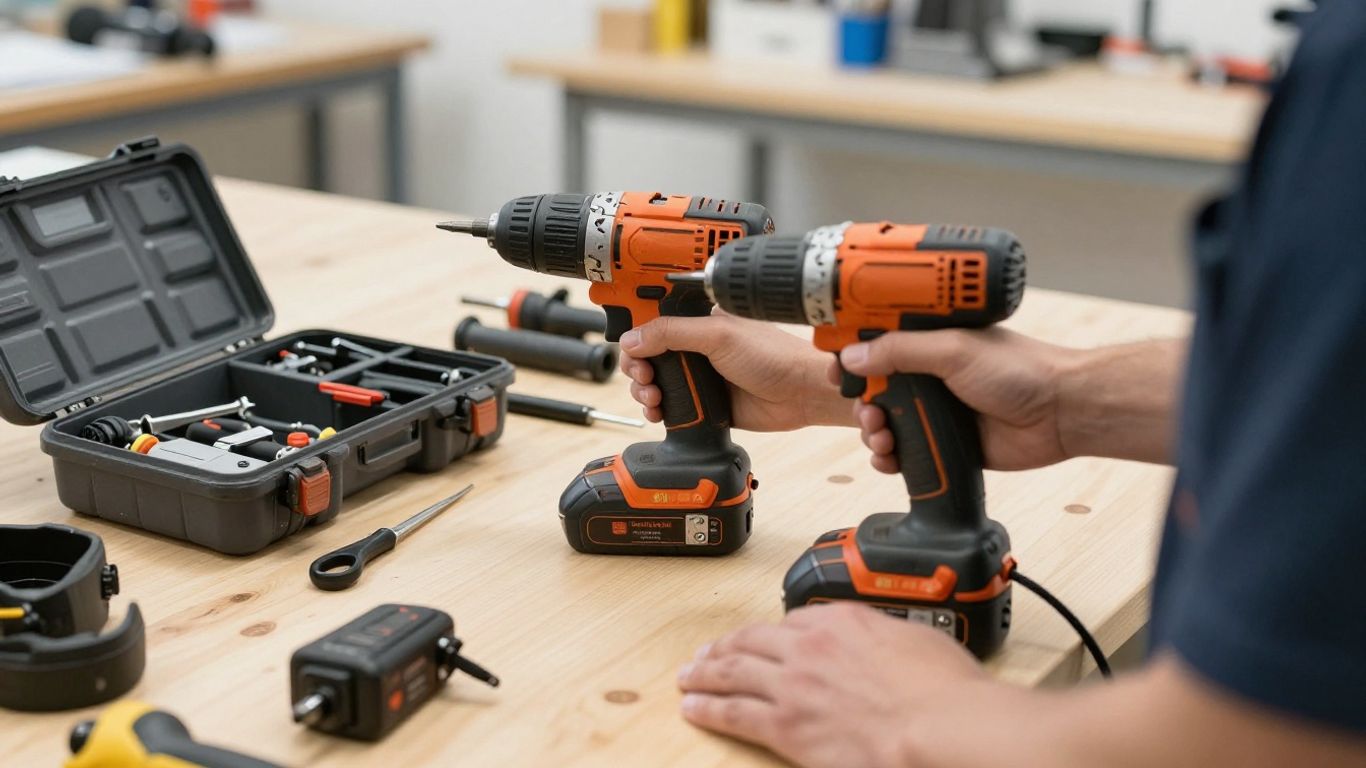
Equipment should be judged in the setting where it will be used, not only by its brochure description. A tool that performs well in light duty may be unsuitable for constant use, while an advanced model can create unnecessary cost or training demands. The best choice balances performance, serviceability, compatibility, and the working habits of the team.
Comparing quality, durability, and total cost
Purchase price is only one part of the calculation. Consider expected service life, maintenance, calibration, accessories, energy use, downtime, and the cost of replacing a failed item. A cheaper product may be poor value if it wears quickly or cannot be repaired locally.
Use a simple comparison that reflects the job rather than relying on general claims. Total ownership cost matters when several tools appear similar, because small differences in reliability and maintenance can accumulate across a busy workshop.
Selecting hand tools, power tools, and specialist equipment
Hand tools need to suit the force, reach, precision, and frequency of the work. Power tools add questions about runtime, charging, extraction, noise, guarding, and operator training. Specialist equipment requires an even closer look at installation, calibration, access, and the competence needed to use it safely.
Involve experienced users before committing to a standard range. They can identify awkward controls, fragile accessories, or missing attachments that may not be obvious during a short demonstration.
Checking compatibility with existing systems and accessories
Compatibility includes more than whether a tool physically fits. Check voltage, battery platforms, connectors, thread sizes, software requirements, mounting points, consumable formats, and available replacement parts. Standardizing where it makes operational sense can simplify training and reduce the number of accessories held in stock.
A compatibility record should be part of the product specification. It gives buyers a quick reference when equipment is replaced and helps prevent a technically attractive purchase from becoming an isolated item that the workshop cannot support.
Evaluating warranties, repairs, and replacement policies
Before ordering, confirm what the warranty covers, how faults are reported, where repairs take place, and whether loan equipment is available. Also check the expected turnaround time for common failures and the availability of wear parts. A service policy has little practical value if the equipment must be shipped away for every minor repair.
Keep warranty details with the asset record and note the purchase date, serial number, inspection history, and repair contacts. This turns after-sales support into a usable process rather than paperwork that disappears after delivery.
Building an efficient procurement strategy
Good procurement reduces uncertainty without making routine buying unnecessarily slow. It gives staff clear choices, sets sensible approval boundaries, and keeps supplier conversations focused on service as well as price. The approach should be consistent enough to control spending but flexible enough to handle unusual jobs.
Creating preferred supplier and product lists
A preferred list can include approved products, accepted alternatives, supplier contacts, lead times, and the person responsible for reviewing each category. Keep it short enough to be useful. Too many nominally approved choices can recreate the same confusion as having no standard at all.
Review the list when a product changes, a supplier repeatedly misses expectations, or users report a performance problem. A national supplier catalogue may help with market visibility, but the final list should still reflect the workshop’s own equipment and requirements.
Comparing prices, lead times, and minimum order quantities
Price comparisons should include delivery charges, order minimums, payment terms, and the cost of holding extra stock. A low unit price can become unattractive when it forces the business to buy more than it can use before a product expires or becomes obsolete.
Record quoted lead times and compare them with actual delivery dates. This creates a more honest picture of supplier performance and helps buyers decide when a slightly higher price is justified by dependable availability.
Consolidating orders to reduce shipping and administration costs
Combining compatible orders can reduce duplicate freight, invoices, and receiving work. It also makes delivery planning easier for the workshop team. Consolidation should not become an excuse to delay a critical item, however; urgent operational needs should follow a separate path.
A regular ordering cycle works well for predictable consumables, while a small number of exception orders can cover breakdowns and project requirements. The balance is simple: fewer routine transactions, without making technicians wait for basic supplies.
Setting approval processes for high-value purchases
High-value equipment deserves a documented decision. The request should explain the operational need, alternatives considered, expected usage, installation requirements, and who will maintain the asset. Approval can then focus on whether the purchase solves a real problem rather than on a vague preference.
Set different approval thresholds for consumables, replacement tools, and capital equipment. The process should also record the final decision and review date so the organization can learn from major purchases.
Managing workshop inventory and stock levels
Inventory management is a practical part of workshop safety and productivity. Supplies need to be visible, accessible, protected from damage, and easy to count. A well-organized store reduces searching and makes unusual consumption easier to spot.

Organizing supplies for faster access and safer workspaces
Place frequently used items close to their point of use, but keep walkways, exits, electrical panels, and work surfaces clear. Use consistent labels, fixed locations, and suitable containers for small parts. Heavy products should be stored at safe lifting heights, while sensitive items need protection from moisture, heat, dust, or impact.
Good organization also supports accurate replenishment. If every item has a home, a missing product is easier to notice and a new delivery is easier to put away correctly.
Using reorder points and minimum stock levels
A reorder point should reflect normal usage during supplier lead time, plus a reasonable buffer for variation. Minimum stock is the lowest acceptable quantity before work is exposed to disruption. These values do not need to be perfect on day one; they can be adjusted as real consumption becomes clearer.
A simple stock review can follow a consistent sequence:
- Check quantities against the recorded minimum level.
- Review open orders and expected delivery dates.
- Identify unusual usage, damage, or expired products.
- Place routine orders and escalate critical shortages.
This process is more reliable than waiting for an empty shelf to trigger a purchase. It also gives supervisors a clear opportunity to question sudden changes before they become recurring waste.
Tracking consumables, spare parts, and high-value equipment
Different inventory types need different records. Consumables may require quantity and expiry tracking, spare parts need equipment or model references, and high-value tools should have asset numbers, locations, custodians, and inspection dates. A single broad spreadsheet can work for a small operation if its fields are clear and consistently maintained.
For multi-site operations, agree on naming conventions and transfer records. When a tool moves between locations, the record should move with it; otherwise the system gradually becomes a list of guesses.
Reducing waste, damage, and obsolete inventory
Waste often begins with poor visibility. Duplicate purchases, opened containers, incorrect storage, and outdated specifications all tie up money without supporting current work. Use first-in, first-out practices where appropriate, inspect deliveries promptly, and investigate repeated damage rather than accepting it as normal.
Before disposing of slow-moving stock, check whether it can be returned, transferred, repurposed, or used in a planned job. These small decisions can reduce both disposal costs and unnecessary reordering.
Prioritizing safety, compliance, and sustainability
Safety belongs in the supply process from the first specification to final disposal. The cheapest available item may not be suitable if it lacks the required protection, instructions, or traceability. Environmental considerations matter too, but they should be evaluated alongside performance and safe use rather than treated as a separate afterthought.
Selecting compliant personal protective equipment
Protective equipment should match the hazard, task, duration, fit, and working environment. Gloves, eye protection, footwear, hearing protection, and respiratory equipment each have different limitations. Ask users about comfort and movement as well as formal ratings, because equipment that is difficult to wear correctly may not provide dependable protection.
Keep sizes available for the people who need them, inspect reusable items, and replace products according to condition and manufacturer guidance. Training should explain both how to use the equipment and when it is no longer acceptable.
Checking product certifications and technical documentation
Before approval, collect certificates, declarations, safety data sheets, operating instructions, and maintenance requirements where relevant. Verify that documents apply to the exact product and model, not merely to a similar item in the same range. Store them in a location that remains accessible after the purchase is complete.
Documentation also supports audits and incident reviews. If a product is substituted, update the record rather than assuming an old certificate still applies.
Storing hazardous materials and chemicals correctly
Chemical storage should follow the product’s safety information and applicable workplace requirements. Keep incompatible substances separated, containers closed and labeled, and spill-control materials available. Limit access where necessary, maintain ventilation, and make sure staff understand the response procedure for leaks or exposure.
Inventory records should include quantities, expiry dates, and disposal arrangements. A small, current chemical stock is generally easier to control than a crowded cabinet containing products nobody remembers ordering.
Choosing reusable, recyclable, and energy-efficient supplies
Sustainability decisions should consider the full use cycle. Durable items that can be repaired may reduce replacement waste, while refillable or reusable systems can cut packaging when they suit the work. Energy consumption, transport distance, cleaning requirements, and end-of-life routes are useful comparison points.
Avoid selecting a greener option that fails prematurely or creates a new safety problem. The strongest choice is usually the one that meets the task requirement, lasts well, and has a practical route for reuse, recycling, or responsible disposal.
Improving long-term supply performance
A supply system should improve through regular feedback. Delivery records, stock adjustments, equipment faults, and user comments reveal whether the process is working in practice. Reviewing those signals turns purchasing from a series of isolated transactions into an operational capability.
Measuring supplier reliability and order accuracy
Track whether orders arrive when promised, contain the correct quantities, and match the approved specification. Note damaged packaging, partial deliveries, invoice errors, and communication quality as well. A supplier that is inexpensive but repeatedly creates receiving or scheduling work may not be delivering good overall value.
Use a small set of measures that people will actually maintain. Monthly or quarterly reviews can then focus on recurring patterns instead of isolated complaints.
Reviewing product performance and user feedback
Technicians can identify performance issues long before they appear in financial reports. Create a simple route for reporting failures, uncomfortable protective equipment, poor fit, excessive waste, or accessories that do not last. Include the job type and conditions so the feedback is useful rather than merely positive or negative.
When a product underperforms, check whether the issue comes from selection, storage, training, or the product itself. That distinction prevents an unnecessary replacement when a process change would solve the problem.
Preparing for shortages and supply chain disruptions
Resilience comes from preparation, not from holding unlimited stock. Identify single-source items, long-lead components, and products with no practical substitute. For each, consider an approved alternative, a second supply route, an appropriate buffer, or a design change that reduces dependence.
Research on trade and supply chain resilience offers a useful reminder that disruptions can arise from policy, transport, production, and demand changes. A workshop does not need a complex model to apply the lesson; it needs visibility of its most exposed items and a tested response.
Updating the supply strategy as the workshop grows
Growth changes buying patterns, storage needs, approval levels, and supplier expectations. Revisit the strategy when new equipment is installed, another site opens, job volumes shift, or the team begins using unfamiliar materials. Standardize what genuinely benefits the operation and leave room for specialist judgment.
A yearly review can examine categories, supplier performance, inventory value, safety records, and user feedback together. That broader view helps the business invest in the parts of its Trade & Workshop Supply process that will make the next year easier to manage.
Conclusion
A practical workshop supply system connects real usage with sound purchasing, clear storage, safety controls, and continual review. By keeping essential items available, choosing equipment for its full working life, and preparing for disruption, a trade business can make everyday work more predictable without carrying unnecessary complexity.
Frequently Asked Questions
What should a workshop stock first?
Start with items used frequently or required to complete critical work, including core consumables, essential hand tools, protective equipment, and commonly needed replacement parts. Base quantities on actual usage and supplier lead times.
How often should workshop inventory be reviewed?
Review fast-moving and safety-critical items frequently, while slower-moving equipment can follow a monthly or quarterly schedule. The right rhythm depends on usage, expiry risk, storage capacity, and the cost of a stock-out.
How can a business compare workshop equipment fairly?
Compare performance, durability, maintenance, accessories, energy use, training, warranty support, and expected replacement costs alongside the purchase price. This provides a clearer view of total ownership cost.
What is a reorder point?
A reorder point is the quantity at which a new order should be placed to cover expected use during the supplier’s lead time and a reasonable safety buffer. It should be adjusted as usage or delivery patterns change.
How can workshops reduce excess inventory?
Classify items by usage, avoid duplicate product variants, monitor expiry dates, and review slow-moving stock. Transfers, returns, planned use, or approved substitutions may be preferable to buying more of the same category.
What documents should be kept for workshop supplies?
Depending on the item, records may include technical specifications, certifications, safety data sheets, operating instructions, warranty details, inspection records, and disposal information. Keep the documents tied to the exact product or model.
How should a workshop prepare for supplier shortages?
Identify high-impact and single-source items, then define approved alternatives, secondary supply routes, buffer quantities, and escalation contacts. Test the response periodically so it is usable during a real disruption.