

Key Takeaways
A damaged vehicle can be a sensible project, but only when its condition, paperwork, and repair cost are understood before money changes hands.
- Separate cosmetic damage from structural, mechanical, electrical, and flood-related problems.
- Check the title, ownership records, seller, and inspection rules before bidding.
- Price parts, labor, diagnostics, transport, and hidden damage—not just the auction amount.
- Complete safety-critical repairs first and document every stage of the rebuild.
- Buy only when the finished vehicle makes financial and practical sense for you.
What damaged repairable motors are and who they suit
Damaged repairable motors are vehicles that have sustained enough damage to affect their value or road status but may still be restored. The label alone says very little about the actual work involved. A lightly damaged car with clear records can be a manageable project, while a badly flooded or twisted vehicle may become an expensive lesson. These projects suit people with mechanical knowledge, reliable repair support, and patience with paperwork.
The difference between damaged, repairable, and salvage motors
“Damaged” describes condition, not necessarily the final legal status of a vehicle. “Repairable” usually suggests that restoration is possible, while “salvage” often refers to a vehicle or title affected by an insurance loss or other serious event. Definitions and inspection requirements vary by state, so buyers should confirm the precise meaning with the relevant authority rather than relying on an auction listing.
A vehicle can also be repairable in a practical sense but uneconomical to restore. That distinction matters. A replacement bumper and headlamp are one kind of project; a bent chassis, deployed restraint system, and water-damaged wiring are something else entirely.
Common damage categories and their repair implications
Collision damage is often easiest to understand when photographs show the point of impact, but visible damage can conceal movement in suspension mounts or chassis rails. Fire, flood, theft recovery, hail, and vandalism each create different risks. Flood exposure is particularly difficult to judge because corrosion and electrical faults may appear long after the vehicle has been dried and cleaned.
The listing should be treated as a starting point, not a diagnosis. Ask what was damaged, what was removed, whether the vehicle starts, and whether replacement parts are included. A guide to automatic gate motors may concern a different kind of motor, but it is a useful reminder that motor-driven systems contain separate mechanical, electrical, and control components that should not be assessed as one simple unit.
When a repairable motor can offer real value
Value comes from the gap between the purchase price and the finished vehicle’s realistic market value, after every cost is included. The calculation may work for a buyer who can perform some labor, source parts intelligently, and keep the vehicle for several years. It is less attractive when every task must be outsourced or when the buyer needs a dependable vehicle immediately.
The best candidates have a traceable history, limited damage, a complete interior, and readily available parts. A low odometer reading or attractive model does not compensate for missing modules, uncertain ownership, or extensive corrosion. A cheap purchase is not cheap ownership if the repair path is unclear.
The skills, tools, and workspace required
A safe rebuild needs more than a socket set. Mechanical work may require lifting equipment, torque tools, scan equipment, and service information, while body repairs can require measuring equipment and specialist alignment tools. Electrical faults demand careful testing rather than guesswork, especially where airbags, pretensioners, and high-voltage systems are involved.
You should also have a dry, secure workspace and a plan for transporting a non-running vehicle. If the work exceeds your experience, arrange an inspection or repair estimate before bidding. The right project is one you can control, not merely one you can afford to win.
Where to find damaged repairable motors
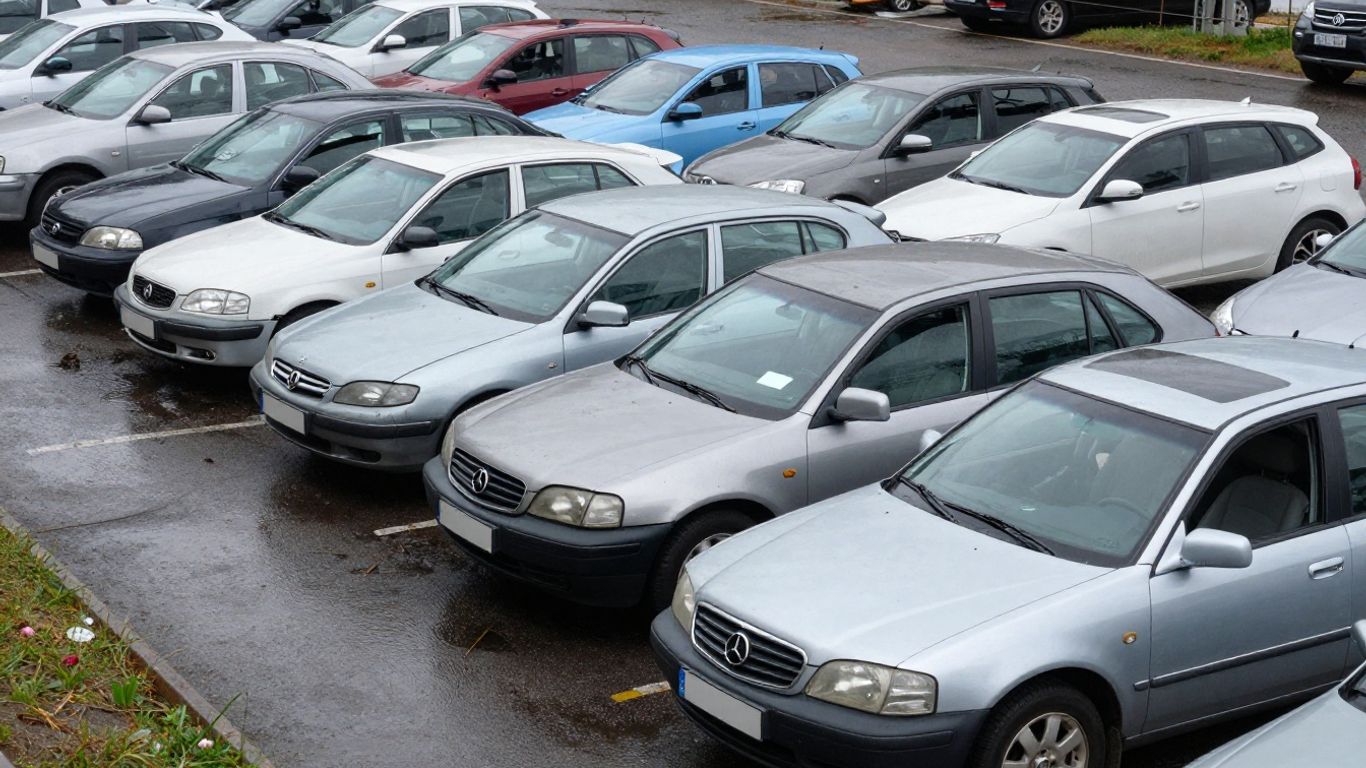
Damaged repairable motors appear through auctions, dealers, dismantlers, insurers, and online marketplaces. Each source presents information differently, and none removes the buyer’s responsibility to verify the vehicle. Compare several listings before deciding what a fair price looks like.
Salvage auctions and online vehicle marketplaces
Auction listings can provide photographs, lot details, title information, and sometimes condition notes. Use them to narrow the field, then investigate the specific lot independently. A marketplace listing for repairable vehicles may help you see how descriptions and “run and drive” labels are presented, but such labels do not guarantee roadworthiness or freedom from hidden damage.
Read the bidding terms closely. Fees, storage charges, buyer premiums, transport, and payment deadlines can change the final cost substantially. If a listing has only a few distant photographs, treat that lack of evidence as a risk rather than an invitation to guess.
Dealers, dismantlers, and insurance auctions
Dealers and dismantlers may offer more direct communication than a timed auction, and they may be able to answer questions about keys, missing parts, or the vehicle’s arrival condition. Insurance auctions can provide a broad selection, but the buyer must understand their inspection limits and title procedures. A local visit is valuable whenever one is possible.
Ask whether the seller owns the vehicle, is acting as an agent, or is selling on behalf of an insurer. The answer affects what records should be available and who can correct an error. Never assume that a professional-looking yard has inspected every mechanical or electrical system.
How to verify the listing and seller
Start by comparing the vehicle identification number across the listing, photographs, title documents, and any inspection report. Look for inconsistent mileage, mismatched panels, missing keys, freshly cleaned interiors, or damage that appears different between photos. Reverse-image searches and independent vehicle-history checks can expose copied listings or recycled photographs.
A careful seller should explain the payment process, collection arrangements, fees, and return or dispute policy in writing. Be cautious when the price is far below comparable vehicles or when the seller creates pressure to pay outside the platform. Good photographs help, but they do not replace an in-person inspection.
Documents, titles, and ownership records to check
Before committing, identify the title brand, lien position, registration status, and documents required for a rebuilt or repaired vehicle inspection. Keep copies of the bill of sale, title, auction invoice, photographs, and written seller communications. If the vehicle crossed state lines, check whether the destination jurisdiction applies additional inspection or registration rules.
Paperwork should also support the repair itself. Keep receipts and photographs of parts, structural measurements, restraint-system work, and alignment results. Even a small body repair benefits from proper preparation; guidance on acrylic sealant repairs illustrates the broader principle that surface preparation and correct application affect the durability of a finished job.
How to inspect a damaged repairable motor
Inspection is a process of reducing uncertainty. Begin with the vehicle’s identity and exterior, then move through the structure, drivetrain, electrical systems, and safety equipment. Take notes as you go so that each suspected fault becomes a priced repair rather than a vague concern.
Identifying structural and external damage
Look along panel gaps, door openings, chassis rails, suspension pickup points, and the floor. Uneven gaps, ripples in metal, cracked seam sealer, or fresh underbody coating can indicate previous work. Check the glass dates, paint texture, wheel position, and tire wear for clues that different areas were repaired at different times.
Cosmetic parts can hide serious movement behind them. A bumper cover may be inexpensive, while the reinforcement, crash boxes, radar brackets, or mounting points behind it may not be. Do not approve a repair estimate until the vehicle has been measured when structural damage is suspected.
Checking the engine, transmission, and drivetrain
Confirm whether the engine turns freely, whether oil and coolant look contaminated, and whether the intake contains water or debris. Inspect fluid levels, leaks, mounts, belts, hoses, cooling components, and the exhaust. If the engine runs, listen for unusual noise and watch for smoke, overheating, warning lights, or unstable idle.
The transmission, driveshafts, axles, differentials, steering rack, and suspension deserve equal attention. Impact can bend a knuckle or damage a mount without leaving an obvious mark. A road test may be impossible, so a lift inspection and diagnostic scan become more important.
Evaluating electrical, safety, and computer systems
Modern vehicles may have several control modules, cameras, radar units, sensors, and communication networks. Check the battery, charging system, fuse boxes, grounds, lighting, windows, locks, climate controls, and instrument cluster. Confirm whether warning lights remain on after startup rather than assuming they are only caused by the visible collision.
Airbags, seatbelts, pretensioners, and occupant sensors are safety systems, not optional trim. Never substitute resistors or ignore stored crash data to make a dashboard look normal. High-voltage vehicles require the correct isolation procedure and trained personnel.
Using photos, diagnostic scans, and professional inspections
Photographs are most useful when they show the whole vehicle as well as close details of damage, labels, connectors, and underbody areas. A scan tool can reveal faults that are invisible from the outside, but scan results still require interpretation. Stored codes may be symptoms, consequences of disconnected parts, or evidence of a deeper network problem.
For a costly project, pay for an independent inspection before purchase or arrange one immediately after winning. The fee is small compared with buying a vehicle that cannot be registered or safely repaired. Use a written report to update the estimate, not as a substitute for judgment.
How to calculate the true repair cost
The purchase price is only the first line on the worksheet. A realistic budget includes transport, auction fees, storage, inspection, parts, labor, programming, paint, alignment, registration, and unexpected delays. Price the project before bidding, while it is still easy to walk away.
Estimating parts, labor, and specialist services
Create a parts list from the inspection rather than from the first photograph. Separate components that can be repaired from those that must be replaced, and ask whether used parts include sensors, brackets, wiring, or fasteners. Labor should be divided into mechanical, structural, body, paint, glass, tire, and electrical work.
Specialist services can include frame measurement, module programming, wheel alignment, air-conditioning recovery, battery isolation, and title inspections. Ask each shop what its estimate excludes. A low quote may simply leave diagnostics, calibration, or finishing work for someone else.
Accounting for hidden damage and replacement components
Add a second pass for items that are commonly overlooked: clips, brackets, seals, fluids, fasteners, trim, sensors, wheel bearings, hoses, and one-time-use bolts. Check whether a replacement bumper or lamp arrives bare or complete. Some components may need programming or calibration after installation.
The condition of the donor parts matters too. A used door can carry corrosion, damaged wiring, or a mismatched window regulator. Record each assumption in the estimate and mark it as confirmed, probable, or unknown. Unknown items deserve a reserve, not a hopeful zero.
Comparing repair costs with market value
Compare the finished vehicle with similar vehicles in the same region, specification, mileage range, and title status. Do not compare a repaired-title vehicle directly with a clean-title example and call the difference profit. Resale demand, inspection requirements, and buyer confidence all affect the final figure.
A simple table can make the decision less emotional. Use conservative numbers and include the value of your own labor, even if you do not plan to pay yourself in cash.
| Cost or value item | Conservative estimate | Confirmed amount | Notes |
|---|---|---|---|
| Purchase and auction fees | $____ | $____ | Include buyer premium |
| Transport and storage | $____ | $____ | Distance and delay risk |
| Parts and consumables | $____ | $____ | Include clips and fluids |
| Labor and specialist work | $____ | $____ | Add calibration and alignment |
| Expected finished value | $____ | $____ | Adjust for title status |
After filling in the table, test the result against a worse-case repair scenario. If a modest increase in parts or labor removes all financial margin, the project is probably too fragile.
Building a contingency budget for unexpected expenses
A contingency is not permission to spend without control. Set a percentage or dollar reserve based on the damage type, inspection quality, and your experience, then require yourself to approve changes when the reserve is being used. Flood, fire, and structural projects generally deserve more caution than minor cosmetic work.
Also allow for time. A vehicle sitting while you wait for a module, title inspection, or specialist appointment can create storage and transport costs. The safest budget includes enough room to pause rather than rushing an unsafe repair.
How to plan and complete the repairs
A rebuild goes more smoothly when the work is sequenced before parts are ordered. Photograph the vehicle as received, label removed components, and keep a running list of open questions. The goal is not simply to make the vehicle look complete; it is to restore safe, reliable function and produce evidence of the work.
Prioritizing safety-critical repairs
Begin with structure, steering, brakes, tires, restraints, fuel systems, and high-voltage isolation where relevant. Do not spend on cosmetic refinishing while the chassis, suspension geometry, or airbags remain uncertain. Follow manufacturer procedures for welding, restraint replacement, torque settings, and calibration.
Once the vehicle is safe to move, address cooling, lubrication, electrical power, and drivetrain operation. A staged approach prevents finished paint from being damaged while major mechanical work is still underway.
Choosing between OEM, aftermarket, and used parts
Original equipment parts can offer the clearest fit and specification, but they may not always be the most economical choice. Quality aftermarket parts can suit some non-safety-critical applications, while used parts may make sense for trim, body panels, or older mechanical assemblies. The decision should consider condition, warranty, fit, and availability—not price alone.
For airbags, restraint components, structural parts, steering components, and advanced sensors, verify compatibility carefully. A part that looks identical may have a different revision, connector, or calibration requirement. Keep the invoice and source for every safety-related component.
Coordinating mechanical, body, and electrical work
Plan the order so one trade does not undo another’s work. Structural measurements and suspension checks should precede final body alignment; wiring and module checks should precede trim installation; paint should follow test fitting and water testing. One person should own the overall schedule and parts list.
Use short written updates between shops. Confirm which components are supplied, what has been tested, and what remains unresolved. This is especially useful when a repair moves between a mechanical workshop, body shop, auto electrician, and inspection facility.
Documenting repairs and verifying quality
Keep a dated repair file with before-and-after photographs, invoices, alignment readings, scan reports, calibration records, and inspection results. Record part numbers and note whether each part was new, used, repaired, or reconditioned. Clear documentation protects future owners and helps you diagnose problems later.
Before delivery, check warning lights, fluid leaks, panel fit, lights, windows, locks, restraints, brakes, steering, tire pressures, and road behavior. Complete a cautious test drive, then rescan the vehicle and inspect it again underneath. A clean appearance is only one part of a quality repair.
How to buy damaged repairable motors responsibly
Responsible buying means accepting the limits of the vehicle and your own resources. A repairable motor is not automatically a bargain, and a professional seller is not automatically a guarantee. Review the legal, financial, safety, and resale consequences before placing a bid.
Understanding title brands, registration, and inspections
Title brands can affect registration, insurance, financing, and resale for years. Find out whether the jurisdiction requires receipts, photographs, a safety inspection, a structural inspection, or a special application for a rebuilt title. Requirements may differ between the place of purchase and the place where you intend to register the vehicle.
Do not remove or alter identification labels, and do not describe a branded-title vehicle as clean when selling it. Accurate disclosure is part of responsible ownership, not merely a paperwork formality.
Avoiding common auction and seller scams
Watch for cloned listings, stolen photographs, pressure to pay by wire transfer or cryptocurrency, false claims about refundable deposits, and sellers who refuse a third-party inspection. Confirm the seller’s legal name, physical location, payment instructions, and authority to sell the vehicle.
If the vehicle identification number is absent, blurred, or inconsistent, stop. A bargain cannot compensate for uncertain identity or ownership. Keep every message and receipt in one folder before and after the transaction.
Knowing the insurance and financing limitations
Some insurers may limit coverage for vehicles with salvage or rebuilt histories, while some lenders may decline to finance them. Obtain insurance and financing answers before purchase, not after repairs are complete. Ask about comprehensive and collision coverage, valuation methods, inspection requirements, and exclusions.
Transport and storage insurance may also be separate from ordinary road coverage. If you are moving a non-running vehicle, confirm who carries risk during loading, transit, and unloading.
Deciding whether to keep, resell, or part out the motor
Keeping the vehicle can make sense when you know its repair history and plan to use it for several years. Reselling requires complete disclosure, realistic pricing, and documentation. Parting it out may recover value when the structure, electronics, or title problems make a full rebuild uneconomical, but dismantling also involves storage, labor, shipping, and environmental responsibilities.
A vehicle that cannot be repaired safely should not return to the road simply because money has already been spent. If your assessment points toward dismantling, use lawful channels and dispose of fluids, batteries, airbags, and other hazardous materials properly. Even unrelated projects, such as selecting preserved flower arrangements, rely on checking condition and care requirements before purchase; the same habit is useful here, though the risks are far higher.
Conclusion
Damaged repairable motors reward preparation more than optimism. Verify the vehicle, understand the title, inspect beyond the visible impact, price the complete repair, and document the finished work. When the numbers and safety requirements still make sense after that process, a damaged vehicle can become a worthwhile project rather than an expensive surprise.
Frequently Asked Questions
Are damaged repairable motors always worth buying?
No. They are worth considering only when the repair scope is understood, the paperwork is acceptable, and the total cost compares favorably with the vehicle’s realistic finished value.
What is the biggest risk when buying a damaged vehicle?
Hidden structural, electrical, flood, or safety-system damage can turn a seemingly minor repair into a costly and difficult rebuild. Incomplete records increase that risk.
Can I inspect a vehicle before an auction?
Some auctions allow scheduled inspections, while others rely mainly on photographs and condition descriptions. Check the auction’s rules and arrange an independent inspection where possible.
Should I buy OEM parts for every repair?
Not necessarily. OEM, quality aftermarket, and used parts can each be appropriate, depending on fit, condition, safety relevance, warranty, and availability. Safety-critical components need especially careful verification.
How much contingency should a repair budget include?
There is no universal percentage. Minor, well-documented damage may need a smaller reserve, while flood, fire, structural, or poorly documented projects require substantially more room for surprises.
Can a rebuilt-title vehicle be insured?
Often it can, but coverage varies by insurer and jurisdiction. Some policies may limit comprehensive or collision coverage, require an inspection, or use a different valuation method.
Is parting out a damaged vehicle a better option than rebuilding it?
It can be, especially when structural or title problems make a safe rebuild uneconomical. Compare expected parts income with dismantling labor, storage, shipping, disposal, and legal obligations before deciding.