

Key Takeaways
Removing an engine is a controlled workshop operation, not something to attempt while a vehicle is running. The phrase can also describe ordinary dismantling after a car has been taken out of service.
- A running engine must be shut down and diagnosed before any removal work begins.
- Belts, fans, fuel, fluids, electricity, exhaust gases, and vehicle movement all create serious hazards.
- Professional removal requires fluid handling, careful labeling, structural support, and suitable lifting equipment.
- Repair, replacement, salvage, and recycling decisions should be based on cost, condition, and local requirements.
- A tow, qualified repair shop, or responsible recycler is safer than roadside dismantling.
What “running engines removed from cars” actually means
The phrase “running engines removed from cars” can sound as though someone is lifting an engine out while it is still operating. That is an unsafe interpretation and not a normal repair procedure. More often, people are describing engines removed from vehicles that once ran, or a dismantling video using loose, informal language.
Engine removal while the vehicle is idling
Taking an engine out of a car while it is idling would expose anyone nearby to rotating parts, hot surfaces, live electrical systems, and moving vehicle components. The engine and transmission are also part of the car’s weight distribution, so removing one without proper support can make the body shift unexpectedly. A running engine should be switched off, isolated, and assessed before removal is even considered.
Sometimes the confusion comes from an engine that continues running after the key is turned off. This condition, often called run-on or dieseling, is a fault to diagnose rather than evidence that an engine can safely be removed while operating. A guide to engine run-on describes causes that can include residual heat, fuel delivery, carbon buildup, or an incorrectly adjusted idle.
Engines removed after a vehicle is scrapped or dismantled
In ordinary dismantling, the vehicle is made safe first. The battery is disconnected, fluids are drained, wiring and hoses are separated, and the engine is supported before mounts are removed. The power unit may then be lifted out for reuse, rebuilding, parts recovery, or recycling.
The engine might have been in good working order before the vehicle reached a dismantler, but that does not mean it remains running during extraction. “Running” can simply refer to the vehicle’s condition before it was retired, especially in listings or casual conversations.
Why the phrase can be confused with engine removal from running cars
Online clips, headlines, and short descriptions often leave out the preparation between a vehicle arriving at a workshop and the engine being lifted. That missing context makes a careful dismantling job appear sudden or improvised. It is also easy to confuse engine removal with an engine that is difficult to shut down.
An engine that keeps running deserves a diagnostic approach. For example, dashboard warnings can help establish whether the issue involves the engine, emissions system, or another critical system; readers can review this engine warning light guide before deciding whether the car is safe to drive.
How engine swaps differ from engine removal
Engine removal is one stage of a larger job. An engine swap adds decisions about compatibility, mounts, wiring, cooling, exhaust, fuel delivery, control modules, programming, and legal emissions requirements. The old engine may be removed because it failed, while the replacement is installed only after the vehicle and donor unit have been checked.
A swap is therefore not a shortcut around safe removal. Even a planned performance project needs the same basic controls as a routine replacement: isolate the car, manage fluids, support the drivetrain, and verify every connection before starting the vehicle again.
Why an engine might be removed from a car
There are several legitimate reasons to remove an engine, and not all of them mean the vehicle is beyond repair. A damaged engine may be rebuilt, exchanged for a used unit, or removed so the rest of the car can be dismantled. The sensible choice depends on mechanical condition, vehicle value, parts availability, and the cost of professional labor.
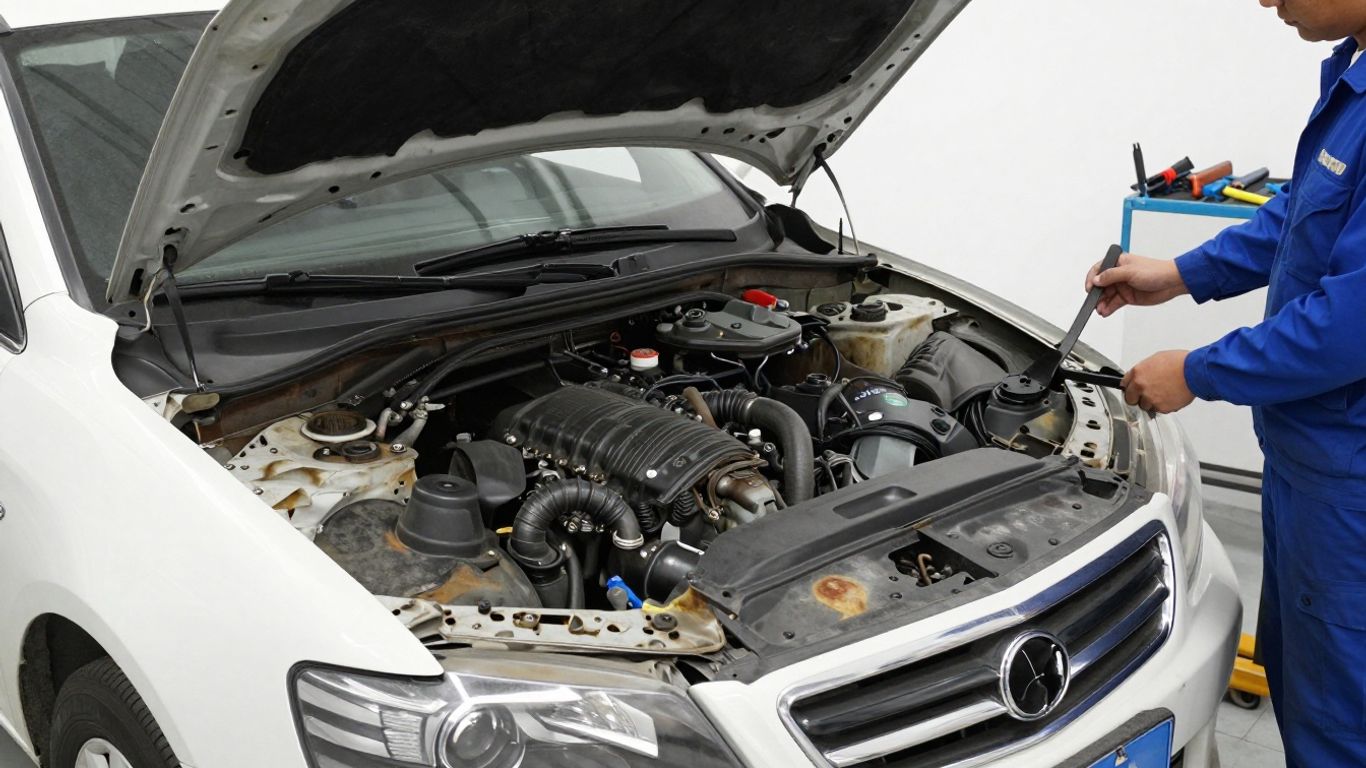
The fact that an engine is out of the vehicle says little on its own about whether removal was necessary. A proper inspection should come before a decision to scrap, replace, or rebuild it.
Severe mechanical failure or fire damage
A seized engine, major internal failure, cracked block, or severe overheating can make removal necessary for a detailed inspection. Fire damage may affect wiring, sensors, hoses, fuel components, and nearby structural parts even when the engine itself looks intact. In those cases, a technician needs to assess the complete system rather than judging the engine from its external appearance.
Sometimes the engine is removed for rebuilding rather than discarded. That distinction matters because machining, replacement parts, and testing may offer a better outcome than buying a complete replacement.
Salvage, recycling, and vehicle dismantling
Dismantlers may remove an engine from a vehicle that has reached the end of its useful road life but still contains reusable components. The engine, transmission, alternator, sensors, and accessories can be assessed separately. Fluids and refrigerants must be handled through appropriate channels rather than released onto the ground.
For owners deciding what to do with a nonrunning car, a practical guide to nonrunning vehicle options can help frame the choice between repair, sale, parts recovery, and recycling. The best route depends on the vehicle’s condition and local services.
Engine replacement and performance projects
Replacement work may follow a failure, a long-term maintenance decision, or a carefully planned conversion. Performance projects can involve different mounting points, cooling needs, wiring architecture, and drivetrain loads, so removing the original engine is only the beginning of the engineering work.
A new or rebuilt unit should also be prepared and installed according to its instructions. Engine break-in is a separate concept from engine removal; it concerns the early operating period of a newly installed or rebuilt engine and the way its moving parts settle together. A useful overview of mechanical break-in explains that distinction.
Stolen vehicles and illegal stripping
Some engines are removed from stolen vehicles or stripped without the owner’s permission. That is not ordinary dismantling and may involve altered identification numbers, missing documentation, damaged wiring, or unsafe storage. Anyone buying a used engine should ask for ownership records, invoices, and identifying information before money changes hands.
Suspiciously cheap parts can create legal and financial problems later. A legitimate supplier or dismantler should be able to explain where the part came from and what condition it is in.
The dangers of removing an engine while it is running
A running engine is a collection of fast-moving, hot, pressurized, and electrically active systems. Removing it adds suspended weight and changes the balance of the vehicle at exactly the wrong time. Even experienced technicians do not treat a running engine as something to be lifted out casually.
The safest approach is to stop the engine, prevent accidental restarting, secure the vehicle, and use equipment rated for the load. That sequence is more than workshop formality; it gives people time to identify hazards before the drivetrain is disconnected.
Moving parts, belts, fans, and rotating components
Belts, pulleys, cooling fans, and other rotating components can catch clothing, gloves, or tools. A fan may start unexpectedly on some vehicles even after the engine has stopped if the electrical system remains connected. The crankshaft and accessories can also stay hot and moving briefly after shutdown.
Keeping hands clear is not enough if the engine is still energized. Isolation and verification are needed before anyone reaches into the engine bay or begins loosening components.
Fuel, oil, coolant, and electrical hazards
Fuel vapors can ignite, while oil and coolant can cause burns, slips, or skin irritation. Battery current can create sparks or short circuits, particularly when tools bridge terminals or damaged wiring. Pressurized cooling systems may remain hot after shutdown, so opening them too soon can release scalding liquid.
A controlled job accounts for each hazard separately. Safe isolation comes first, followed by drainage, containment, and inspection of the areas where hoses, lines, and connectors will be separated.
Vehicle instability and unexpected movement
The engine and transmission contribute substantial weight to the front or center of the vehicle. If the body is not supported correctly, removing mounts can alter its balance, compress suspension components, or allow a vehicle to shift on an unsuitable surface. A parking brake alone is not a complete securing method.
The vehicle should be on a stable, level working surface with appropriate wheel chocks and lifting supports. People should also stay out of the likely path of a falling or swinging load.
Exhaust fumes and carbon monoxide exposure
A running internal-combustion engine produces exhaust gases, including carbon monoxide, which can accumulate quickly in enclosed or poorly ventilated spaces. Carbon monoxide has no reliable warning smell, so feeling normal does not prove that the air is safe. Running an engine indoors for convenience is especially dangerous.
Ventilation and exhaust extraction are necessary where an engine must be operated for testing. During removal, the safer choice is normally to shut it down and avoid creating exhaust in the first place.
Why professional lifting equipment is essential
An engine hoist, lift, chain, load leveler, and rated attachment points are selected according to the engine’s weight and shape. Improvised ropes, damaged chains, jacks placed under unsuitable components, or lifting from unknown brackets can fail without much warning. The load must remain controlled while mounts are released and the engine is moved clear.
A professional also plans where the engine will go next. The work is not finished when the unit leaves the bay; it still needs a stable stand, protected connections, and a clear route that keeps people away from the suspended load.
How professionals prepare a car for engine removal
Preparation makes engine removal slower at the beginning and safer throughout the rest of the job. The vehicle is identified, inspected, secured, and documented before connections are disturbed. This also reduces the chance of damaging reusable parts or creating confusion during reassembly.
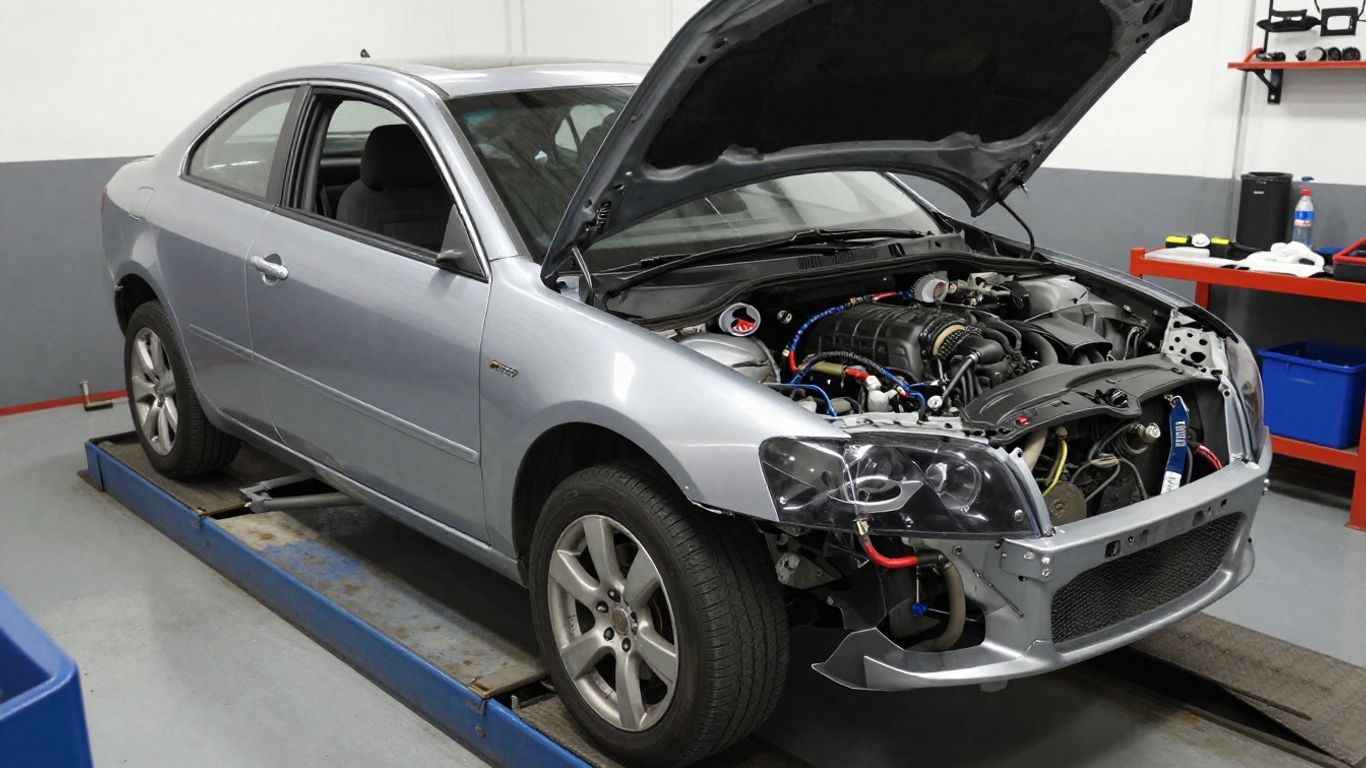
The exact procedure varies by vehicle, but the principles are consistent: isolate energy, control fluids, record connections, support the drivetrain, and lift only from suitable points.
Disconnecting the battery and securing the vehicle
The battery is disconnected according to the vehicle’s service requirements, with attention to alarm systems, memory settings, and high-voltage systems where applicable. The ignition is kept off, keys are controlled, and the vehicle is prevented from rolling. A technician may also check that stored electrical energy or supplementary restraint systems are addressed before work begins.
The car’s position matters as much as its electrical state. A level surface, suitable wheel chocks, and correctly rated stands provide a stable foundation for the lifting operation.
Draining fluids and handling hazardous materials
Oil, coolant, fuel, transmission fluid, refrigerant, and other materials are dealt with using the appropriate recovery method. Drain pans and sealed containers prevent contamination and reduce slip hazards. Fluids are not mixed casually because different materials require different storage, recycling, or disposal routes.
Before opening a system, the technician considers whether it may still be hot or pressurized. Clean handling protects the workshop and makes it easier to identify leaks during later testing.
Labeling wiring, hoses, mounts, and connections
Modern engine bays can contain many similar connectors, vacuum lines, grounds, brackets, and clips. Labels, photographs, diagrams, and tagged fasteners help preserve the original layout. This is particularly useful when the vehicle will be repaired weeks later or when parts are being transferred to another engine.
Careful labeling also exposes missing or damaged components early. That can prevent an apparently complete replacement job from stalling when the engine is already out of the car.
Supporting the engine and transmission safely
The engine and transmission may need to be supported together or separately, depending on the vehicle design. A technician confirms which mounts can be released and whether the remaining drivetrain components need a separate support. The load should be balanced before it is moved.
No one should place any part of the body beneath a suspended engine. Once clear, the unit is lowered onto a suitable stand or transport support rather than left hanging from the hoist.
Choosing the right hoist, lift, and mounting points
Equipment is chosen for capacity, reach, clearance, and the engine’s center of gravity. The lifting points must be designed or approved for that purpose, and chains or adapters must be in good condition. A load leveler can help control the angle, but it does not make an unsuitable attachment point safe.
A final check should confirm that hoses, wiring, exhaust components, and mounts are free before lifting. If the engine resists movement, the answer is to stop and find the remaining connection, not to add force.
When an engine should be repaired instead of removed
Removal can be justified, but it is not automatically the best response to an engine fault. Some problems are external, localized, or repairable in the vehicle, while others require removal for internal work. A sound decision compares evidence and total cost rather than reacting to one alarming symptom.
The vehicle’s use also matters. A reliable repair on a valuable daily driver may make sense, while extensive work on a low-value car may not. A qualified inspection turns that broad question into a more realistic estimate.
Comparing repair costs with replacement costs
Ask for separate estimates for in-car repair, engine removal and rebuild, a tested used engine, and a remanufactured or replacement unit. Each estimate should include fluids, seals, belts, gaskets, programming, diagnosis, and the possibility of related failures. A low parts price can become expensive if labor or compatibility issues are left out.
These broad categories can help organize the first comparison:
| Option | Typical reason to consider it | Main uncertainty |
|---|---|---|
| Repair in place | Fault is external or localized | Hidden internal damage |
| Remove and rebuild | Original engine is worth preserving | Machine work and parts scope |
| Used replacement | Vehicle needs a practical lower-cost route | History and remaining life |
| Remanufactured unit | More defined replacement package | Warranty terms and fitment |
The table is a starting point, not a quote. A technician still needs to verify the engine code, vehicle specification, damage, and labor time before recommending one route.
Assessing the vehicle’s age and remaining value
A repair should be considered alongside rust, accident history, transmission condition, suspension wear, electronics, and bodywork. Spending heavily on the engine may be reasonable if the rest of the vehicle is sound. It may be poor value if several major systems are already near the end of their service life.
Market value is only one part of the decision. The cost and inconvenience of finding another dependable vehicle, plus the owner’s knowledge of the current car, can also matter.
Checking compression, oil pressure, and diagnostic codes
Compression testing, leak-down testing, oil-pressure checks, cooling-system tests, and diagnostic scans can narrow the problem before removal. Codes should be interpreted with symptoms and physical inspection; replacing an engine because of one code can miss a wiring, sensor, fuel, or control issue.
Testing is not perfect, but it gives a stronger basis for spending decisions. It can also identify an engine that is fundamentally healthy despite a fault in an attached component.
Considering rebuilt, used, or remanufactured engines
A used engine may be suitable when its history, mileage, compatibility, and testing are documented. A rebuilt engine may retain the original unit while replacing worn or damaged components. A remanufactured unit usually comes with defined specifications and warranty terms, but the installation still needs to be correct.
Ask what is included: sensors, manifolds, injectors, timing components, seals, and accessories may not come with the long block. Matching the part to the vehicle identification number and engine code helps avoid expensive surprises.
Accounting for labor, programming, and related parts
The engine itself is only one line in the budget. Removal and installation may require new mounts, fluids, gaskets, hoses, belts, filters, exhaust hardware, cooling parts, electrical repairs, and electronic programming. Some vehicles also need adaptations or post-installation checks before they can be returned to service.
A written estimate should distinguish confirmed work from possible additional work. That makes it easier to approve the repair in stages if inspection reveals more damage than expected.
Legal and environmental considerations
Engine removal affects more than mechanical safety. Vehicle dismantling, fluid storage, refrigerant recovery, salvage records, emissions equipment, insurance, and warranty terms may all be relevant. Requirements differ by location, so owners should check local authorities and use licensed or qualified services where required.
The environmental side is practical as well as legal. Preventing spills, recovering materials, and keeping contaminated parts out of ordinary waste protects people and reduces cleanup costs.
Local rules for dismantling vehicles
Some jurisdictions regulate vehicle dismantlers, storage yards, waste transport, and the handling of parts containing hazardous materials. A person dismantling a car at home may still have obligations even if the vehicle is privately owned. Zoning, noise, fire safety, and abandoned-vehicle rules can also apply.
Before dismantling, check the rules that apply to the vehicle’s location and destination. A licensed recycler or dismantler can usually explain which paperwork and handling steps are required.
Requirements for fluid disposal and recycling
Used oil, coolant, fuel, refrigerant, brake fluid, and contaminated absorbent materials should be separated, contained, and sent through approved disposal or recycling channels. Never pour automotive fluids into drains, soil, or general rubbish. Spills should be contained promptly with suitable materials.
Metal, batteries, catalytic components, wiring, and reusable parts may each follow different recycling routes. Keeping them separated improves recovery and reduces contamination.
Emissions compliance after an engine swap
A replacement engine must be compatible with the vehicle’s emissions equipment and local rules. Removing or bypassing catalytic converters, sensors, evaporative controls, or other required systems can create inspection problems and unsafe emissions. A swap may also require documentation or inspection before registration.
Compatibility is not just a question of whether the engine physically fits. Controls, exhaust, fuel systems, and calibration all affect whether the completed vehicle remains compliant.
Documentation for salvage and rebuilt vehicles
Keep receipts, donor-vehicle details, engine identification numbers, inspection reports, photographs, and installation invoices. These records can support registration, future sale, warranty claims, and insurance discussions. They also help demonstrate that a used engine was obtained legitimately.
If a vehicle has a salvage or rebuilt designation, disclose it accurately. Missing or inconsistent paperwork can delay inspections and reduce the vehicle’s value.
Insurance and warranty implications
Tell the insurer about a replacement or modified engine when the policy requires it. A nonstandard engine, performance conversion, or salvage repair may affect coverage, valuation, or claim handling. Warranty terms should be read before mixing parts, modifying control systems, or using a non-approved installer.
Written confirmation is safer than assuming the change is covered. Keep all invoices and test results with the vehicle records.
Safer alternatives to removing a running engine
The safest alternative is usually to stop, secure, and diagnose the vehicle rather than act on an alarming sound or online suggestion. A running engine can be noisy, smoky, or difficult to shut down, but those symptoms do not make immediate removal sensible. If there is fire, heavy smoke, fuel leakage, or a dangerous location, move away and call emergency or roadside assistance services.
A controlled next step protects the vehicle and the people around it. It also gives a technician better information than a rushed dismantling attempt would.
Shut down and diagnose the vehicle first
Turn the vehicle off if it can be done safely, move away from traffic, and do not reach into a moving engine bay. Note warning lights, unusual noises, smoke, leaks, temperature, and whether the engine continues running after the ignition is switched off. Do not restart it repeatedly if there is low oil pressure, overheating, or a strong fuel smell.
A short video or photograph taken from a safe distance can help a technician, but it is not a substitute for inspection. The priority is to prevent injury and further damage.
Tow the car to a qualified repair facility
A tow is preferable to driving a vehicle with severe overheating, oil-pressure warnings, brake problems, fuel leaks, or an engine that behaves unpredictably. Tell the towing provider about the vehicle’s condition so it can be loaded safely. At the repair facility, request a diagnosis before authorizing removal.
This approach is especially useful when the vehicle cannot be safely parked, when the engine fault is unclear, or when specialized equipment will be needed.
Use a professional engine-removal service
If removal is genuinely required, use a workshop with suitable lifting equipment, trained personnel, fluid-recovery procedures, and a clear estimate. Ask how the engine will be supported, where the drained fluids will go, and what will happen to the removed unit. Those questions reveal whether the service is organized before work begins.
Professional removal is not limited to dealerships. Independent repairers, engine specialists, and licensed dismantlers may all be appropriate, provided their equipment and process match the job.
Sell or recycle a nonrunning vehicle responsibly
A nonrunning car may still have value as a repair project, parts source, or recyclable vehicle. Get a written offer, confirm whether the buyer is licensed where necessary, and arrange proper collection rather than leaving the vehicle in a public place. Remove personal belongings and retain ownership records.
If parts are sold separately, describe their condition honestly. A buyer should know whether an engine was tested, stored, damaged, or simply removed from an unknown vehicle.
Avoiding roadside dismantling and improvised lifting methods
Roadside engine removal exposes workers and passing traffic to falling loads, fuel spills, poor visibility, and unstable ground. Improvised lifting with ropes, vehicle jacks, tree branches, or undersized equipment can fail suddenly. Even a quiet driveway may lack the clearance and surface strength needed for the job.
Leave major dismantling to a properly equipped facility. The safer alternative is not a cleverer lifting trick; it is a controlled recovery and a documented repair or recycling decision.
Conclusion
An engine should never be removed from a car while it is running. Shut the vehicle down, keep people clear, and get a qualified diagnosis before choosing repair, replacement, dismantling, or recycling. Careful preparation protects the vehicle, the environment, and everyone involved.
Frequently Asked Questions
Can an engine really be removed while a car is running?
It should not be attempted. A running engine has rotating parts, heat, fuel, electrical energy, and exhaust hazards, while removing it can destabilize the vehicle and release a suspended load.
What does “running engines removed from cars” usually mean?
It usually refers to an engine taken from a vehicle that once ran, or to an informal description of dismantling. It should not be read as a safe method for extracting an operating engine.
What should I do if my engine keeps running after I turn the key off?
Keep clear of moving parts, avoid repeated restarting, and seek qualified roadside or repair assistance. The cause may involve fuel, heat, carbon buildup, or another fault that needs diagnosis.
Is it better to repair an engine or replace it?
Compare the confirmed repair cost with used, rebuilt, and remanufactured replacement options. Vehicle condition, remaining value, parts availability, labor, and warranty terms all affect the answer.
Can I remove an engine in my driveway?
Major engine removal is risky without a stable surface, rated lifting equipment, fluid controls, and appropriate knowledge. A qualified workshop is generally safer and may also meet local disposal requirements.
What happens to fluids during engine removal?
Oil, coolant, fuel, refrigerant, and other fluids should be recovered into suitable containers and sent through approved disposal or recycling channels. They should never be poured onto the ground or into drains.
Does an engine swap affect registration or insurance?
It can. Emissions compliance, inspection, vehicle records, coverage, valuation, and warranty terms may all be affected, so check the relevant local and policy requirements before completing the swap.