

Key Takeaways
Fast motor delivery depends on accurate equipment details, confirmed inventory, and a realistic transport plan.
- Identify the exact motor before contacting suppliers or carriers.
- Confirm physical stock and pickup readiness, not just an online listing.
- Share complete addresses, access details, dimensions, and weight.
- Compare courier, freight, and dedicated transport based on the load.
- Keep a next-day repair, replacement, or temporary-equipment plan ready.
What emergency motor delivery today means
Emergency motor delivery today usually means finding a compatible motor, securing it from available stock, and moving it by the fastest practical service. It does not always mean a guaranteed arrival within a few hours. Distance, supplier cutoff times, road conditions, packaging, and the receiving site’s access can all change the result.
The first useful step is to separate the equipment emergency from the shipping emergency. A failed production motor may require a replacement immediately, while a repairable unit or temporary motor may create more flexibility. That distinction helps you choose a sensible service rather than paying for speed that does not solve the underlying problem.
Common reasons for needing urgent motor delivery
Motors are commonly needed urgently after overheating, bearing failure, electrical faults, water exposure, or unexpected mechanical damage. A critical fan, pump, conveyor, compressor, or machine may be unable to operate until the motor is repaired or replaced. Downtime can also become more expensive when technicians, crews, or other equipment are already waiting on site.
Before ordering, record what failed and whether the motor is still safe to handle. A photograph of the nameplate, the mounting position, and the connected equipment can help a supplier understand the situation without guessing. The 24/7 emergency service page is an example of the kind of service information customers may review when seeking urgent motor repair, sales, electrical service, or after-hours delivery.
Motors that qualify for same-day transport
Many standard motors can move the same day when they are physically in stock, packaged, and located within a workable service radius. Small units may travel by courier, while heavier motors may require palletized freight, a liftgate, or a dedicated vehicle. The motor’s size alone does not determine eligibility; handling requirements and pickup readiness matter just as much.
Ask whether the item is new, refurbished, repaired, or a substitute model. A replacement that appears similar may have different voltage, frame dimensions, shaft details, or duty characteristics. The supplier should confirm the proposed motor against the equipment before transport is booked.
Delivery timelines and service-area limitations
A same-day request is shaped by the time it is placed. A supplier may have stock but no staff available to release it, or a carrier may have a vehicle nearby but no capacity for the motor’s dimensions. Rural destinations, restricted industrial sites, bridges, severe weather, and long-distance routes can also make same-day service impractical.
Request a time range rather than an informal promise. Confirm the pickup cutoff, estimated departure, delivery window, and any point at which the plan will be reassessed. For broader emergency logistics context, published emergency delivery measures illustrate how unusual conditions can affect commercial transport rules, although they do not guarantee transport for a particular motor.
How emergency delivery differs from standard shipping
Standard shipping is usually optimized around cost, scheduled routes, and routine handling. Emergency service prioritizes availability and timing, often with more direct coordination between the supplier, carrier, and receiving site. That extra coordination may reduce handoffs, but it generally costs more and leaves less room for changes.
A useful emergency plan includes a named contact at every stage. If the motor is ready before the carrier arrives and the receiving crew is prepared when it lands, the faster service has a better chance of producing a real operational benefit.
How to find an available motor quickly
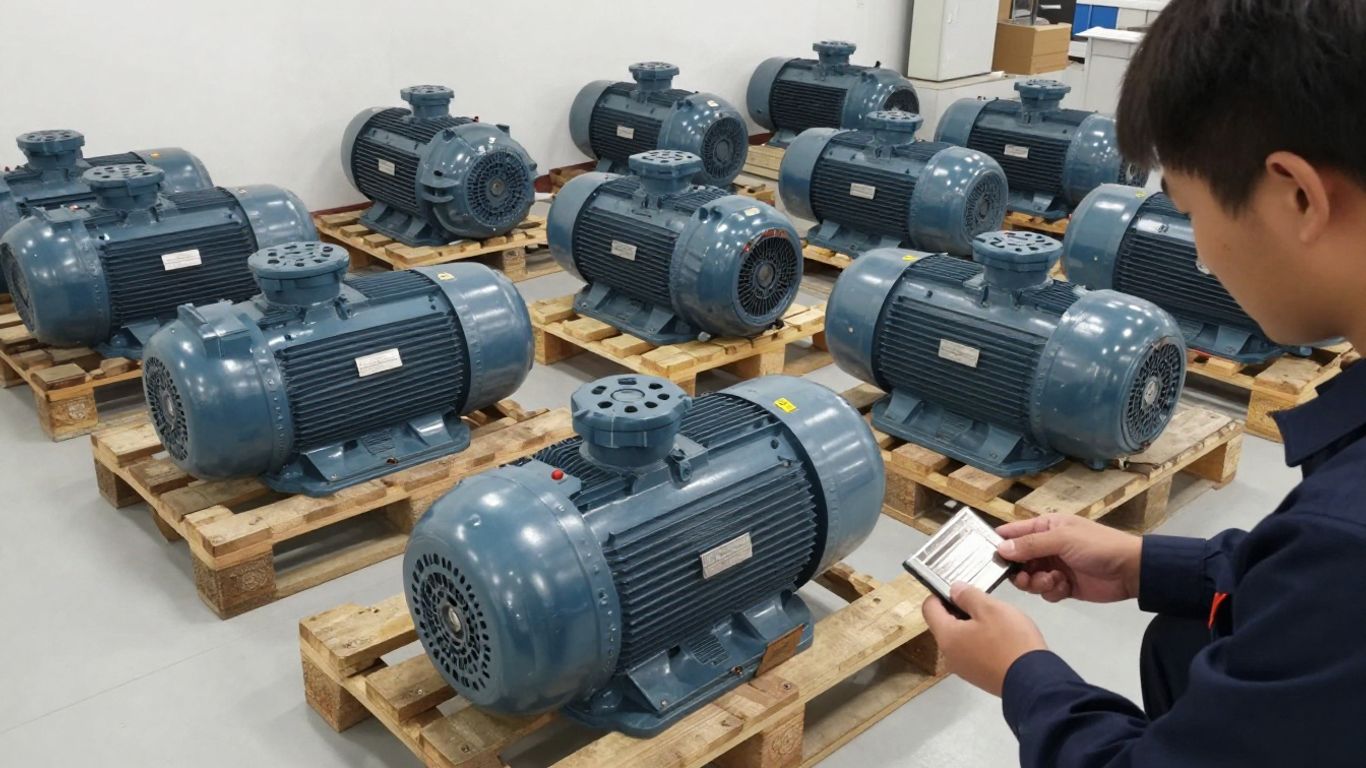
Finding the motor and finding transportation are related but separate tasks. Start with suppliers, distributors, repair shops, and service companies within a practical radius, then ask direct questions about physical inventory. Search results can be useful leads, but only a confirmed stock check tells you whether the motor can actually be released.
Keep the search focused on compatibility rather than choosing the first item that resembles the failed unit. A short list of acceptable alternatives gives the supplier room to help without inviting an unsafe substitution.
Checking local suppliers and distributors
Call suppliers directly when time matters. Give them the motor’s key identification details and ask whether the unit is on the premises, whether it is allocated to another customer, and when it can be packaged for pickup. Local availability can be more valuable than a lower advertised price several states away.
Some emergency-vehicle listings also demonstrate how immediate-delivery inventory is presented; in-stock emergency vehicles can be a useful example of checking actual unit availability rather than relying on a general product category. That example concerns vehicles, not industrial motors, so use it only as a reminder to distinguish stock from general marketing language.
Confirming inventory before booking transport
Do not book a carrier until the supplier confirms the motor is physically ready or gives a firm release time. Ask for the exact model, quantity, condition, location, packaging status, and name of the person releasing it. If a deposit or purchase order is required, settle that before the truck is dispatched.
A brief written confirmation prevents several common misunderstandings. It should state what is being collected, from where, during which hours, and under whose authority. If the supplier cannot confirm those points, continue calling other sources while keeping the first lead open.
Comparing new, refurbished, and replacement motors
A new motor may offer the clearest warranty path, but it is not always the fastest option. A refurbished or repaired unit may be available locally, while a replacement from another manufacturer may require careful technical approval. Compare the delivery time, condition, warranty, return terms, and compatibility rather than price alone.
The business impact also matters. A lower-cost motor that requires rewiring, a new base, or a delayed technician may not be the quickest route back to service. Ask whether the proposed unit is a direct replacement or needs adaptation before accepting the quote.
Verifying compatibility with your equipment
Check voltage, phase, horsepower, speed, frame, shaft diameter and length, mounting arrangement, enclosure, service factor, and environmental rating. Also compare the driven load and control system, since a motor can fit physically while still being unsuitable electrically or mechanically.
When uncertainty remains, send the nameplate photograph and equipment model to a qualified technician or supplier. Written approval is preferable to an assumption made under pressure. The GMP manufacturing guidance link is unrelated to motor selection, but it illustrates why documented specifications and controlled processes matter when an urgent replacement enters a working facility.
What information to provide when requesting delivery
A carrier can move only what the sender and recipient have clearly described. Missing information leads to revised quotes, wrong equipment, failed pickups, and vehicles that cannot reach the loading point. Prepare one concise request containing technical, location, timing, and contact details.
The goal is not paperwork for its own sake. Clear information lets the supplier select suitable packaging and lets the carrier assign the right vehicle before the clock starts.
Motor specifications and identification numbers
Provide the manufacturer, model, serial number, horsepower, voltage, phase, speed, frame, and approximate dimensions. Include the motor’s weight, lifting points, packaging condition, and whether it contains accessories or attached components. Photos of the nameplate and all sides of the unit are often more useful than a partial description.
If the motor is a substitute, identify the original unit and explain which specifications must remain unchanged. That gives the supplier a basis for checking equivalence instead of treating a broad product description as approval.
Pickup and delivery addresses
Give complete street addresses, business names, dock or gate numbers, and the best route for a commercial vehicle. Note whether the pickup is at a warehouse, repair shop, construction site, plant, or private property. A map pin alone may not identify the correct entrance.
Ask the sender to confirm the pickup address and the recipient to confirm the delivery address. This simple two-way check is especially valuable when a company has multiple facilities or when the motor is being released from a repair location.
Required delivery window and site access
State the latest acceptable arrival time and whether the delivery can occur earlier. Describe dock height, liftgate availability, forklift capacity, crane requirements, stairs, narrow roads, security gates, appointment rules, and any restrictions on vehicle size. These details affect both the quote and the carrier choice.
A receiving plan should name who will unload the motor and what happens if the truck arrives outside the stated window. If the site cannot receive the shipment, the carrier may need to wait, reroute, or return it.
Contact details for the sender and recipient
Provide names, mobile numbers, email addresses, and backup contacts for both ends of the journey. The sender should be able to confirm release, while the recipient should be reachable during the delivery window. Include the technician or purchasing contact if either may need to answer compatibility questions.
Keep everyone on one message thread when possible. A single current status reduces duplicate calls and makes it easier to document changes to the motor, route, timing, or handling instructions.
How emergency motor delivery is arranged
Once the motor and addresses are confirmed, the shipment can be matched to a transport method. The decision depends on weight, dimensions, urgency, loading equipment, and the number of transfers the motor can safely tolerate. A good arrangement is specific enough that each participant knows the next action.
The carrier should also receive the same handling instructions as the supplier and recipient. That continuity helps prevent a motor from being packaged one way, collected another way, and delivered without the equipment needed to unload it.
Choosing courier, freight, or dedicated transport
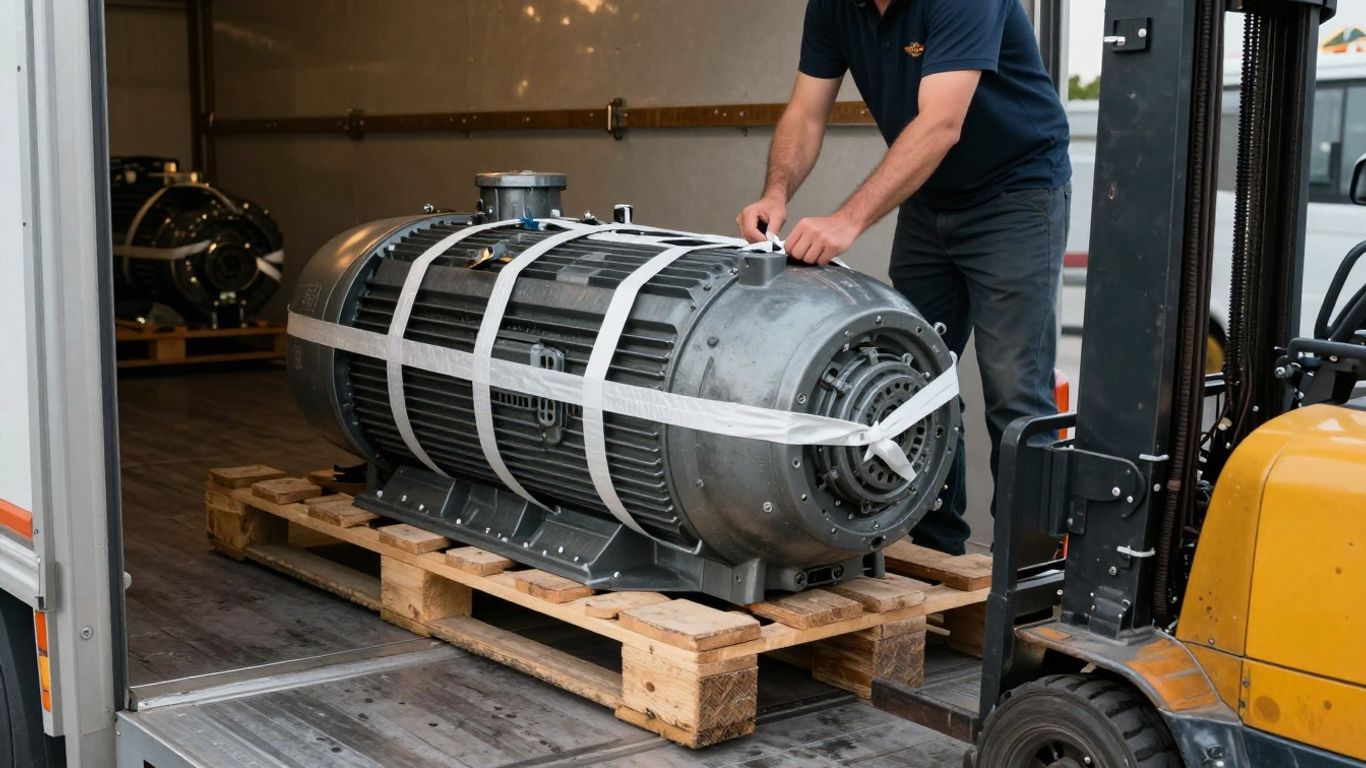
A courier may suit a smaller packaged motor that can travel through a local route. Freight is often appropriate for a palletized unit moving through a scheduled network. Dedicated transport can make sense when the motor is heavy, unusually shaped, highly time-sensitive, or vulnerable to multiple transfers.
Compare the promised window, number of handoffs, vehicle equipment, tracking, and loading responsibilities. The fastest-looking option is not necessarily the fastest if it requires a missed appointment or an unavailable forklift at the destination.
Selecting appropriate packaging and handling
Secure the motor against movement, moisture, impact, and contamination. Use a suitable pallet or crate, protect exposed shafts and connectors, and keep lifting points accessible when required. The packaging should match the motor’s weight and the handling expected during loading and unloading.
Ask who supplies the packaging and who accepts responsibility if it is inadequate. Photograph the packaged unit before pickup, including labels and visible condition. Those records help establish what was handed over and can reveal a problem before the truck leaves.
Coordinating pickup with the supplier
The supplier should have the purchase authorization, release reference, carrier details, and pickup window before the vehicle arrives. Confirm whether the driver needs identification, a bill of lading, a loading appointment, or special instructions at the gate. A motor that is sold but not staged can still cause a missed collection.
Use a short sequence of confirmations: supplier release, carrier arrival, loading complete, and departure. That sequence creates a practical audit trail without slowing the process down.
Tracking the shipment in real time
Tracking may show a vehicle location, milestone scans, or a driver’s status update. Ask what the tracking actually covers and who will receive alerts when the route changes. Location data is useful, but it does not replace a call when a delivery appointment or access issue is at risk.
Keep the receiving team informed as the shipment approaches. If traffic or weather changes the estimate, early notice may allow the site to keep a forklift, technician, or loading area available.
Costs that affect same-day motor delivery
The final price combines the motor, preparation, transport, and receiving requirements. A same-day quote can change when the supplier discovers the item needs crating or when the carrier learns that a liftgate is required. Ask for the assumptions behind every quote, not just the total.
A written breakdown makes it easier to compare alternatives. It also helps you decide whether a nearby refurbished motor or a next-day replacement provides better operational value.
Motor price and availability
Scarce inventory can raise the motor price, particularly when only one suitable unit is immediately available. A new, refurbished, repaired, or substitute motor may have different warranty and return terms. Confirm taxes, testing, accessories, and any core charge before approving the purchase.
Availability also has a labor component. A motor that can be released now may be more useful than one at a lower price that cannot be inspected or packaged until the next business day.
Distance, urgency, and transport method
Transport cost generally reflects the route, requested timing, vehicle type, and whether the shipment can share space with other freight. A direct vehicle may reduce transfers while increasing the charge. After receiving comparable quotes, weigh the price against the cost of extended downtime.
Do not describe an ordinary scheduled route as emergency service simply because it was requested urgently. Ask the carrier to state the service level and the conditions attached to its estimated delivery time.
Oversize, heavy-load, and special-handling fees
Heavy motors may require a liftgate, pallet jack, forklift, crane, team handling, or a vehicle with particular deck equipment. Oversize dimensions can affect routing and may require additional approvals. Special handling can also apply when the motor needs protection from moisture, vibration, or impact.
Give accurate measurements and weight at the start. A revised load description at pickup can result in a vehicle change, extra labor, or a delay that costs more than the original handling fee.
After-hours, weekend, and holiday charges
Evening, weekend, and holiday pickups often require special staffing or a dedicated carrier. Suppliers may also charge for emergency packaging, inspection, or release outside normal operating hours. Ask when the premium begins and whether both pickup and delivery fall outside standard hours.
For comparison, a last-minute service in another industry such as Resapass may use different pricing rules entirely; its hotel-focused information should not be treated as evidence about motor transport. The useful general lesson is to inspect cancellation, payment, and hidden-fee terms before committing.
How to avoid delays and delivery problems
Most preventable failures happen before the motor leaves the supplier. Incorrect dimensions, incomplete access instructions, missing paperwork, and an unreachable recipient can erase the advantage of an expedited booking. A quick pre-dispatch review is usually cheaper than fixing a failed delivery.
Treat the shipment as a coordinated handoff rather than a parcel disappearing into a network. The sender, carrier, and recipient should agree on what is being moved and what a successful delivery looks like.
Confirming measurements, weight, and packaging
Measure the packaged motor, not only the bare unit. Confirm gross weight, pallet dimensions, center of gravity if relevant, and whether the package can be lifted from the planned side. Check that the crate or pallet is stable and that loose parts are secured.
Share photographs with the carrier before dispatch. A carrier can then verify vehicle capacity and handling equipment instead of making a decision from an optimistic estimate.
Preparing the receiving location
Clear the route from the gate or dock to the unloading point. Reserve a forklift, crane, or qualified handling crew, and confirm that the equipment can manage the packaged weight. Make sure the recipient knows where the motor will be stored after unloading.
If the site has security or safety procedures, send them to the driver in advance. A delivery plan that works on paper may fail if the vehicle cannot enter, turn, park, or wait safely.
Checking insurance and liability coverage
Ask what liability and cargo coverage applies during pickup, transit, unloading, and temporary storage. Confirm declared value requirements, exclusions, claim deadlines, and whether the sender’s packaging affects coverage. Keep the invoice, condition photographs, packaging record, and delivery receipt together.
Insurance does not replace careful handling. Clarify who is responsible at each handoff and record damage on the delivery receipt before the driver leaves.
Planning for traffic, weather, and access restrictions
Traffic, storms, flooding, construction, weight limits, and local access rules can disrupt even a short route. Build a communication point into the plan so the carrier can report a problem before the delivery window is lost. Where possible, identify a safe alternate entrance or receiving location.
A state or local emergency may change roadway conditions or transport procedures. For example, North Carolina emergency guidance describes emergency measures related to a winter storm; it is context, not a promise that a particular route or shipment will remain available.
What to do when same-day delivery is unavailable
Same-day service is not always the safest or most realistic choice. If no compatible motor can be released, or if weather and access make transport uncertain, shift quickly to a backup plan. The aim is to restore useful operation, not simply to obtain a tracking number.
Document the decision and the next review time. That keeps the team moving while suppliers and carriers continue searching for an opening.
Evaluating local repair or replacement options
Ask whether the failed motor can be repaired locally, exchanged, or rebuilt within the required window. A repair may involve less installation work than a substitute, while a nearby replacement may avoid long-distance transport. Confirm testing, warranty, and expected completion before choosing.
For urgent residential plumbing rather than motor work, Black Mountain Plumbing describes same-day emergency repair and related services; it is included only as an example of how local emergency service availability may be presented. Its information does not establish anything about industrial motor repair.
Using temporary equipment to maintain operations
A rental motor, spare unit, bypass arrangement, or reduced-capacity operating mode may keep essential work moving. Review the temporary setup with a qualified technician and define its limits, inspection schedule, and removal date. Temporary equipment should not quietly become an unapproved permanent modification.
Prioritize the processes that protect safety, product quality, and essential output. Even partial operation can create time for a properly selected motor to arrive.
Expanding the delivery radius
If local stock is exhausted, widen the search to regional distributors, repair facilities, and authorized supply channels. Recheck compatibility at every new source because a farther supplier may offer a different model or condition. Include the added transport time and risk in the comparison.
Keep a running record of who was contacted, what was available, and when it could be released. That prevents repeated calls and makes the next choice faster.
Scheduling the fastest next-day alternative
When same-day delivery cannot be secured, book the earliest confirmed next-day service rather than waiting indefinitely for a speculative opening. Confirm the carrier cutoff, pickup appointment, handling method, and receiving plan before closing the request.
A next-day shipment can still be efficient when the motor is staged, the route is clear, and the site is ready. Use the intervening hours for disassembly, inspection, wiring preparation, and safe installation planning.
Conclusion
Reliable emergency motor delivery comes from matching a verified motor to a prepared route, suitable handling, and a receiving team that is ready when the shipment arrives. Confirm the technical details first, question every timing assumption, and keep a practical repair or next-day alternative available when same-day service cannot be secured.
Frequently Asked Questions
Can any motor be delivered the same day?
No. Same-day delivery depends on physical inventory, compatibility, packaging, carrier capacity, distance, cutoff times, and site access. Heavy or unusual motors may require equipment that is not available on short notice.
What should I send a supplier first?
Send the nameplate details, model and serial numbers, dimensions, weight, photographs, quantity, and the equipment application. Include the required delivery address and latest acceptable arrival time.
Is a refurbished motor suitable for an emergency replacement?
It can be, if its specifications, condition, testing, warranty, and installation requirements are acceptable for the equipment. Have a qualified person approve the substitution before purchase.
How do I choose between freight and dedicated transport?
Consider weight, size, urgency, number of handoffs, loading equipment, and the cost of downtime. Freight may suit a packaged standard load, while dedicated transport may be preferable for a heavy or highly time-sensitive motor.
Why can a confirmed motor still be delayed?
The unit may not be staged, the carrier may lack suitable equipment, or the pickup and delivery sites may have access restrictions. Traffic, weather, paperwork, and incorrect measurements can also disrupt the plan.
What happens if the motor arrives damaged?
Photograph the shipment and damage immediately, note the condition on the delivery receipt, and notify the sender and carrier according to the claim instructions. Keep packaging and supporting documents until the issue is resolved.
What is the best backup when same-day delivery fails?
Compare local repair, a tested replacement, temporary equipment, a wider supplier search, and the fastest confirmed next-day shipment. Choose the option that restores safe operation most quickly, not necessarily the one with the lowest purchase price.