
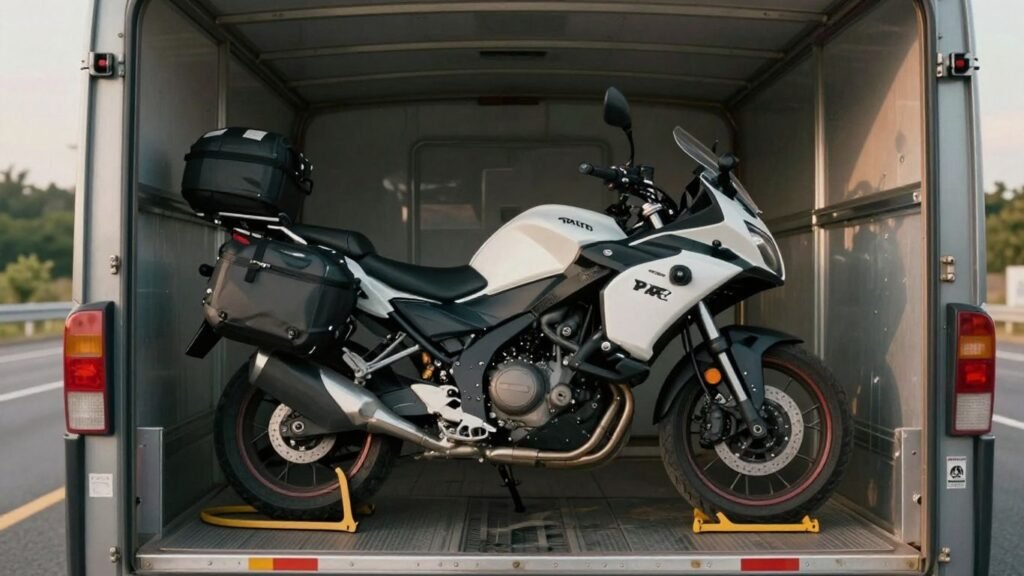
Key Takeaways
Express motor delivery is a faster, more closely coordinated form of motorcycle shipping, but speed should not replace careful planning.
- Confirm the pickup and arrival windows before booking.
- Compare open, enclosed, and specialized transport options.
- Document the motorcycle’s condition before it leaves.
- Check insurance, credentials, contract terms, and communication practices.
- Leave room for traffic, weather, and route-related delays.
What express motor delivery includes
Express motor delivery usually means prioritizing a shipment within a defined pickup and delivery window. The exact promise varies by carrier, route, and availability, so “express” should be treated as a service level to clarify rather than a universal guarantee. A good booking explains what is faster, what is included, and what remains subject to conditions on the road.
How express delivery differs from standard motorcycle shipping
Standard motorcycle shipping may be scheduled around a carrier’s existing route, while expedited transport gives the shipment a higher scheduling priority. That can reduce waiting time, but it does not make distance, traffic, inspections, or weather disappear. Ask whether the quote covers priority pickup, faster transit, or both, because those are separate parts of the journey.
The useful comparison is not simply “fast” versus “slow.” Look at the pickup window, expected transit range, delivery appointment process, and communication plan. A clear delivery window is usually more valuable than a vague promise of speed.
When expedited transport makes sense
Expedited service can be practical when a motorcycle is needed for a move, a sale, a scheduled event, or a narrow travel itinerary. It may also help when a dealer or repair facility has limited receiving hours. The extra cost is easier to justify when missing the delivery window would create storage fees, missed reservations, or an interrupted trip.
For international moves, early planning matters even more because documentation and cargo availability can affect timing. A resource on Motorcycle Express discusses planning, documentation, customs, and international motorcycle air freight; those issues are separate from domestic ground shipping but useful reminders that urgency still requires preparation.
Door-to-door, terminal-to-terminal, and dealer delivery options
Door-to-door service collects and delivers at addresses that the carrier can safely access. Terminal-to-terminal shipping may offer more flexibility on difficult residential streets, while dealer delivery can simplify handoff when a motorcycle is being purchased or serviced. Confirm whether the driver can reach the precise address or whether a nearby meeting point is required.
Before booking, write down who will release the motorcycle, who will receive it, and whether either location has loading restrictions. A short conversation at this stage can prevent a rushed driver from arriving at a locked gate or an unsuitable driveway.
Common motorcycles and vehicles covered by the service
Most ordinary street motorcycles can be transported when they are operational and properly prepared. Touring bikes, cruisers, sport motorcycles, scooters, and some non-running units may require different equipment or handling instructions. Oversized accessories, sidecars, trikes, and modified bikes should be disclosed before the quote is finalized.
Do not assume that a carrier’s motorcycle service automatically includes every recreational vehicle. Ask about dimensions, weight limits, disabled units, and special loading needs in writing. That detail protects both the price and the schedule.
How the express motor delivery process works
The process is easiest when it is treated as a chain of small confirmations rather than one large booking. The shipper provides accurate motorcycle and address details, the carrier confirms capacity, and both sides agree on timing and handoff requirements. Each step should leave a written record.
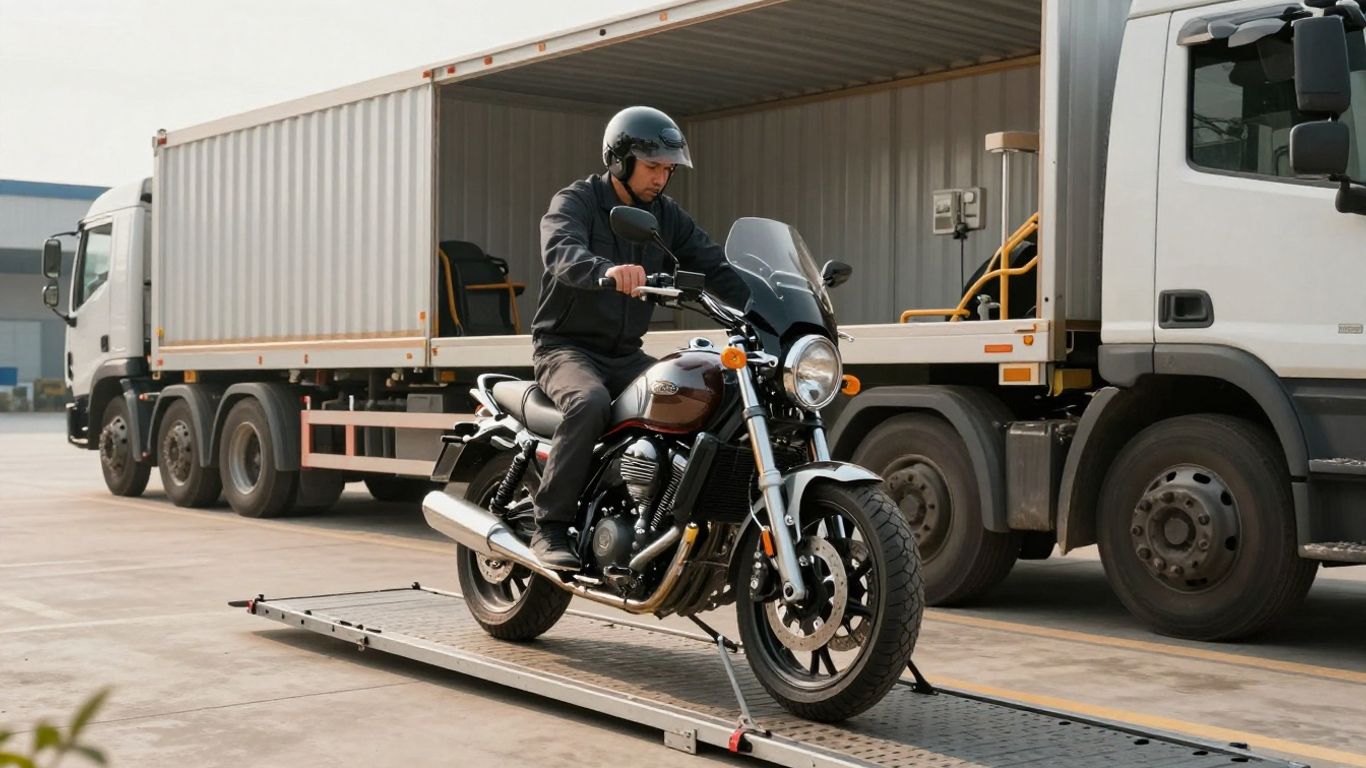
Requesting a quote and confirming availability
Start with the origin, destination, motorcycle type, running condition, preferred dates, and service level. An estimate based only on mileage can change once the carrier learns about a residential street, an inoperable motorcycle, or an enclosed transport request. Ask what assumptions are built into the quote.
Availability is especially important for an express shipment. A low price is not helpful if the carrier cannot actually meet the requested pickup window, so confirm the dates before treating the quote as a booking.
Booking pickup and selecting delivery dates
Once availability is confirmed, provide contact details for both locations and identify any timing constraints. A pickup date is often a window rather than an exact appointment, and the delivery date may depend on route conditions. If the motorcycle is going to a dealer or storage facility, verify its hours before selecting the appointment.
Keep the confirmation, payment record, and written service description together. If plans change, notify the carrier promptly rather than waiting until the driver is already en route.
Loading, securing, and transporting the motorcycle
At pickup, the motorcycle should be inspected and its condition recorded before loading. The carrier then uses suitable equipment to keep it upright and stable during transit. Owners should disclose alarms, unusual controls, disabled systems, and fragile parts before the motorcycle is moved.
For a sense of how a protective skid and soft straps may be used in motorcycle transport, see this door-to-door motorcycle shipping resource. Its details apply to that service description, not automatically to every carrier, so compare the actual equipment and coverage in your own agreement.
Coordinating final delivery and handoff
Near delivery, the driver and receiving person should confirm the meeting place, access conditions, and inspection process. A dealer may need a purchase order or release document, while a private recipient may simply need identification and the keys. Make sure the receiving person has authority to sign.
The handoff is complete only after the motorcycle is inspected and the delivery record is signed. If the recipient is unavailable, the shipment may need to wait at a safe location, which can affect both timing and cost.
What affects express motor delivery costs
Express pricing reflects more than miles on a map. Capacity, route difficulty, motorcycle dimensions, transport method, and timing all influence the final figure. A useful quote separates the base movement from optional protection and expedited service charges.
Distance, route, and delivery location
Longer routes generally require more fuel, driver time, and coordination, but mileage alone does not determine price. Rural origins, dense urban destinations, narrow roads, tolls, and limited carrier access can add complexity. A nearby public meeting point may be less expensive than a difficult residential pickup.
Give the carrier complete address information early. If the motorcycle is crossing a border or traveling internationally, customs and documentation may introduce additional steps that are not part of a simple domestic estimate.
Motorcycle size, weight, and condition
A lightweight, running motorcycle is usually simpler to load than a large touring bike, trike, or disabled unit. Non-running motorcycles may need a lift, ramp, winch, or extra labor. Cases, luggage, custom parts, and loose accessories can also change the dimensions used for planning.
Describe the motorcycle honestly, including modifications and damage that could affect loading. Surprises at pickup are a common reason an expedited schedule becomes less certain.
Expedited service fees and seasonal demand
A priority pickup or narrow delivery window can carry an additional fee because the carrier has less flexibility to combine the shipment with other work. Demand may also rise around relocations, riding seasons, holidays, and major events. Booking earlier can provide more choices, even when the service itself remains expedited.
Ask whether the price is fixed, estimated, or conditional on a particular pickup date. A transparent motorcycle quote, such as the Quick Quote system described by one shipping provider, can be a useful comparison point, but its terms should not be assumed to apply elsewhere.
Open, enclosed, and specialized transport pricing
Open transport is often the simpler option, while enclosed transport adds weather and road-debris protection. Specialized equipment may be necessary for a non-running motorcycle, unusual dimensions, or a high-value custom build. The right choice depends on the motorcycle, route, season, and acceptable level of exposure.
| Transport option | Common advantage | Cost considerations | Best question to ask |
|---|---|---|---|
| Open carrier | Usually simpler scheduling | Often the lower-priced option | How is the motorcycle covered and secured? |
| Enclosed carrier | More protection from weather and debris | Usually costs more | What equipment and inspection process are included? |
| Specialized handling | Suits disabled or unusual motorcycles | Labor and equipment may add cost | What loading requirements were included in the quote? |
The table is a starting framework, not a price list. Compare the service description, insurance terms, and timing commitment alongside the number on the estimate.
How to prepare a motorcycle for express shipping
Preparation reduces delays and gives both sides a reliable baseline for the handoff. The motorcycle should be accessible, documented, and ready for the carrier’s stated requirements. A few minutes of preparation can matter more when the schedule has little slack.
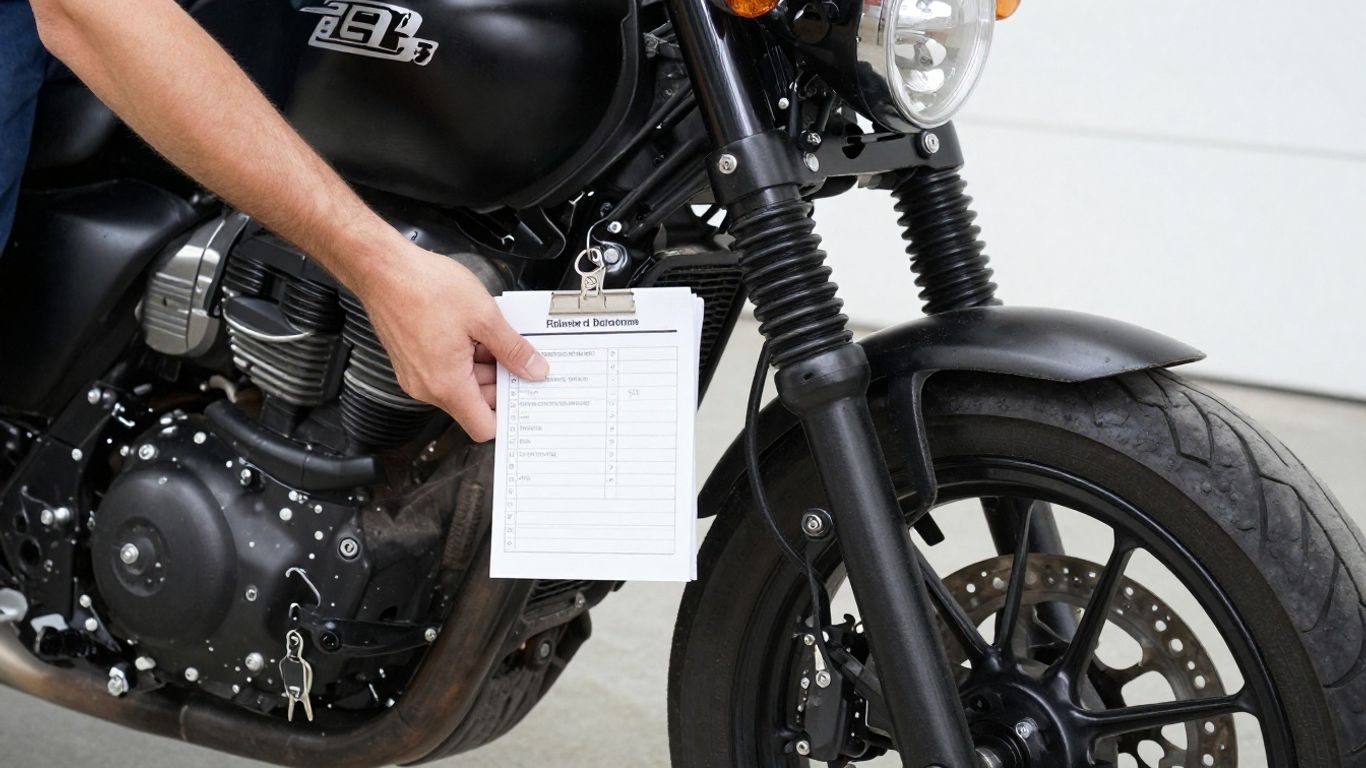
Cleaning the motorcycle and documenting its condition
Wash the motorcycle so existing scratches, dents, chips, and fluid leaks are visible. Photograph each side, the instruments, wheels, accessories, and any existing damage, and keep the images with the pickup paperwork. This creates a practical record for comparison at delivery.
Take the photographs shortly before pickup and preserve the original files. Notes about mileage and visible condition can add useful context without making the inspection unnecessarily complicated.
Removing accessories and securing loose components
Remove personal items from bags and compartments unless the contract specifically allows them. Detach or secure mirrors, antennas, windscreens, luggage, and other components that could shift or break. Alarms and specialized locks should be explained to the driver.
A short preparation checklist helps keep the work focused:
- Remove valuables and loose personal belongings.
- Secure or remove detachable accessories.
- Photograph controls, bodywork, wheels, and existing damage.
- Identify unusual switches, locks, or starting procedures.
After these steps, walk around the motorcycle once more and check that nothing can swing, rattle, or catch during loading. The goal is a clear, uncomplicated handoff.
Checking fuel, battery, tire, and fluid requirements
Follow the carrier’s instructions for fuel level, battery status, tire pressure, and fluid leaks. Requirements vary by equipment and transport method, so do not rely on a generic rule if the booking documents say otherwise. A non-running motorcycle should be identified before the truck arrives.
If the motorcycle has a charging system, immobilizer, or unusual battery cutoff, explain it in advance. The driver needs to know what is safe to operate and what should remain untouched.
Preparing keys, paperwork, and delivery instructions
Provide the necessary keys and keep a spare available when possible. Have the booking confirmation, identification, registration or ownership documents if requested, and any dealer release information ready. Delivery instructions should include gate codes, receiving hours, parking limitations, and an alternate contact.
A practical travel-planning habit is to keep supporting information together: even unrelated preparation guides such as international hotel planning illustrate why addresses, timing, and check-in details should be confirmed before arrival. For a motorcycle shipment, apply that same habit directly to the pickup and receiving locations.
How to choose a reliable express motor delivery company
A reliable provider should be clear about what it can schedule, what it insures, and what happens when conditions change. Speed is only one part of the service. The company’s written terms and communication habits often reveal more than a polished advertisement.
Verifying insurance, licensing, and carrier credentials
Ask for current insurance information and the relevant carrier or broker credentials for the route. Confirm what is covered, whether a deductible applies, and how claims are started. The person arranging the shipment should be able to explain whether it is the carrier, a broker, or another intermediary.
Do not accept “fully insured” as a complete answer. Request the actual limits, exclusions, and valuation process before paying for an expedited booking.
Comparing delivery time guarantees and service coverage
Compare the definitions behind phrases such as priority, express, same-day, and guaranteed delivery. Some services guarantee a pickup attempt, while others promise a delivery appointment or a defined transit range. Coverage may also vary by state, region, border, or type of road access.
A courier page such as Southern California motorcycle delivery describes immediate and same-day motorcycle courier work in a particular service area. That is a useful example of why geography and service scope must be checked rather than inferred from the word “express.”
Reviewing quotes, contracts, and cancellation policies
Read the quote for accessorial charges, payment timing, cancellation rules, storage, re-delivery, and changes to the motorcycle or addresses. Ask whether the express fee is refundable if the requested window cannot be met. Keep every revision in writing.
The cheapest estimate may not remain cheap after exclusions are added. For comparison, even a non-transport planning task such as office cleaning services can differ by frequency, access, and contract terms; shipping quotes deserve the same careful reading.
Evaluating customer reviews and communication standards
Reviews are most useful when they describe communication, condition at delivery, punctuality, and claim handling rather than offering only a star rating. Look for consistent patterns across several sources. Then test the company directly by asking a specific question about your motorcycle and route.
Notice whether the response is precise and timely. A provider that explains uncertainty honestly may be more dependable than one that promises an exact result without discussing constraints.
How to protect a motorcycle during expedited transport
Expedited movement does not change the basic physics of transport. The motorcycle still needs stable support, appropriate restraints, and careful handling at both ends. Protection starts with choosing a method that matches the motorcycle’s value, condition, and route.
Choosing between open and enclosed carriers
Open carriers can be suitable for many routine moves, particularly when cost and availability matter. Enclosed carriers provide additional shelter from weather and road debris and may be preferable for a restored, customized, or especially valuable motorcycle. Ask how the motorcycle is positioned relative to other cargo.
The decision should also account for season and distance. A short, dry move may present different concerns from a long route through heavy rain, snow, or construction zones.
Using wheel chocks, straps, and protective coverings
The motorcycle should be kept upright with suitable wheel support and secured using restraints that do not damage painted or delicate surfaces. Soft protective materials can help prevent contact marks, while coverings should be used in a way that does not trap moisture or interfere with inspection.
Ask the carrier to explain where restraints will be placed and whether the motorcycle will be moved after initial loading. Clear answers are more useful than assuming every truck uses the same setup.
Understanding inspection reports and damage claims
Review the pickup inspection with the driver and make sure existing damage is recorded accurately. At delivery, compare the motorcycle with that record before signing. Photograph anything that appears different, and follow the contract’s claim instructions promptly.
Do not attempt to resolve a visible issue only through a casual text message. Preserve the inspection report, photographs, delivery receipt, and relevant correspondence in one file.
Tracking shipments and handling delivery delays
Tracking may range from scheduled calls to electronic location updates, depending on the service. Ask how often updates are provided and who contacts you when the route changes. If a delay occurs, request a revised estimate and document any new delivery instructions.
A delay does not automatically mean the motorcycle was mishandled. Traffic, weather, mechanical problems, and access restrictions can all affect timing, but the provider should still communicate the change clearly.
How to plan a smooth express motorcycle delivery
The best express shipments are planned with a little breathing room. A narrow appointment can be necessary, but a schedule with no allowance for ordinary road problems is fragile. Build the plan around decisions you can control and make the remaining uncertainties visible.
Building realistic pickup and arrival windows
Use a pickup window that allows the motorcycle to be inspected and loaded without rushing. For delivery, schedule a receiving person who can wait through a reasonable appointment range. If the motorcycle is needed for an event, arrange arrival before the last possible day.
Confirm what “delivery date” means in the contract. It may refer to an appointment, an estimated arrival, or the end of a transit window.
Preparing for weather, traffic, and route restrictions
Check seasonal conditions, construction, major events, and access rules near both addresses. A carrier may need to use a nearby commercial location if a residential road is too narrow or restricted. Sharing those details early gives the dispatcher time to adjust the plan.
Do not schedule a flight, rental, or event around the most optimistic possible arrival without a fallback. A modest buffer is usually cheaper than rebuilding an entire itinerary.
Communicating with the driver and receiving location
Give the driver one primary contact and one backup contact, along with clear instructions for gates, parking, and building access. Tell the receiving location when to expect the motorcycle and what documents may be required. Keep the phone available during the pickup and delivery windows.
A well-organized technology review such as technology stack analysis is built around documented facts and clear narratives; shipment coordination benefits from the same simple discipline. Keep the facts, times, and changes in one accessible thread.
Inspecting the motorcycle before signing for delivery
Inspect the motorcycle in good light before accepting the delivery. Check bodywork, mirrors, levers, wheels, exhaust, luggage, controls, and odometer against the pickup report. If you see a discrepancy, record it on the delivery paperwork and take photographs before signing.
Ask the driver what the carrier’s process requires if damage is found. A careful inspection protects your position while the details are still fresh.
Conclusion
Express motor delivery can be a practical answer when timing matters, provided the service promise is defined and the motorcycle is prepared with care. Confirm availability, compare transport methods and coverage, document the condition, and leave room for ordinary travel delays. The result is a faster shipment that is also easier to manage.
Frequently Asked Questions
What does express motor delivery mean?
It generally means that a motorcycle shipment receives a priority schedule or a narrower pickup and delivery window than standard service. The exact commitment depends on the carrier, route, and written booking terms.
How quickly can a motorcycle be delivered?
Timing varies widely by distance, route, carrier availability, and whether the service is ground, enclosed, specialized, or international. Ask for a realistic transit range rather than relying on a general label.
Is expedited motorcycle shipping worth the extra cost?
It can be worthwhile when a missed delivery would disrupt a move, sale, event, repair, or travel plan. Compare the extra fee with the practical cost of waiting or arranging an alternative.
Should I choose open or enclosed motorcycle transport?
Open transport may suit routine moves, while enclosed transport offers more shelter from weather and road debris. The motorcycle’s value, condition, route, and season should guide the choice.
What should I remove before shipping a motorcycle?
Remove personal belongings and unsecured accessories unless the carrier specifically permits them. Follow the provider’s instructions for luggage, mirrors, alarms, battery settings, and fuel.
How do I document a motorcycle before pickup?
Clean the motorcycle, photograph every side and existing mark, note the mileage, and review the inspection report with the driver. Keep the photographs and paperwork until delivery is complete.
What should I do if the motorcycle arrives late or damaged?
Request a revised delivery estimate when a delay occurs and document all communication. If damage is visible, record it on the delivery paperwork, take photographs, and follow the carrier’s written claims procedure promptly.