
Key Takeaways
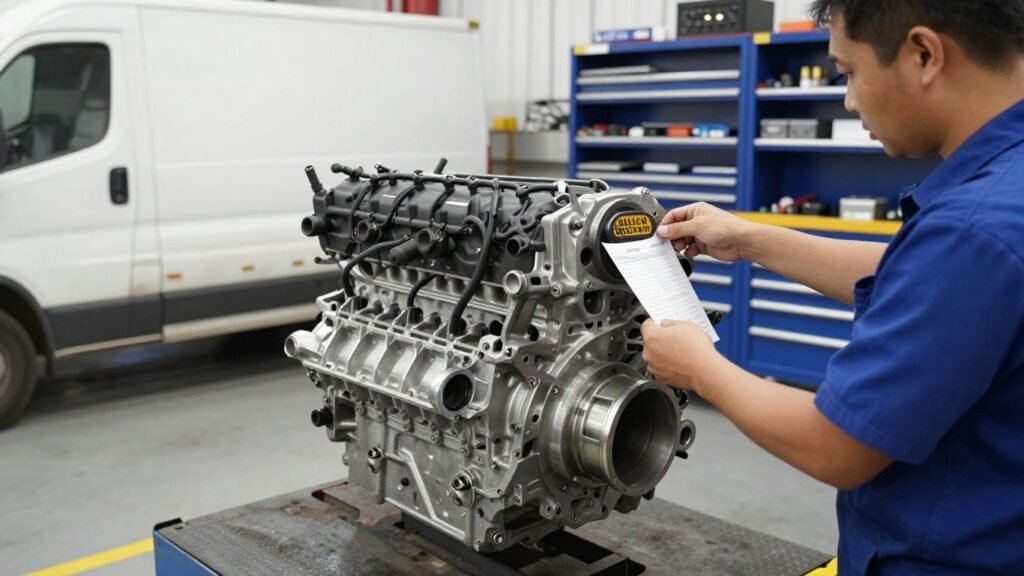
Finding an engine sourced within 24 hours is possible when the request is specific and the supplier can verify real inventory. Speed matters, but fitment, condition, landed cost, and written warranty terms matter just as much.
- Record the exact engine code, application, and identifying numbers before contacting suppliers.
- Ask for actual stock confirmation, current photographs, and a firm dispatch deadline.
- Compare the complete purchase cost, including freight, installation, parts, and possible core charges.
- Get fitment, condition, warranty, and return details in writing before paying.
- Inspect and document the engine as soon as it arrives, before installation begins.
Define the engine you need before you start searching
A rushed search becomes much slower when every supplier has to guess what engine will fit. Start with the vehicle or equipment identity, then narrow the request to the engine code and required configuration. The phrase “engine sourced within 24 hours” should describe a verified sourcing timetable, not merely a promise to begin looking. A few minutes spent preparing accurate information can prevent days of avoidable back-and-forth.
Identify the make, model, year, and engine code
Write down the manufacturer, model, model year, fuel type, displacement, transmission, and engine code if available. The engine code is usually more useful than a broad description such as “3.0-liter diesel,” because similar engines may use different sensors, mounts, emissions equipment, or control modules. Check the identification plate and the service records rather than relying only on memory.
If the code is hard to read, take a close photograph and send both the image and the vehicle identification number to the supplier. Ask the seller to confirm the code they are quoting; do not assume that a familiar model name guarantees a direct replacement.
Confirm the vehicle or equipment application
An engine that fits one vehicle may not be suitable for another application using the same basic block. Confirm whether the replacement is for a passenger vehicle, commercial truck, generator, agricultural machine, marine application, or other equipment. Note the drive layout, emissions configuration, accessory arrangement, and whether the original engine used a particular wiring harness or electronic control system.
For nonroad or stationary equipment, compliance may affect the acceptable replacement. A stationary-engine compliance guide can help you frame questions about engine category, emissions requirements, and operating conditions before you commit to a unit.
Choose between new, used, rebuilt, and remanufactured engines
The fastest option is not always the cheapest or safest. A used engine may be available quickly, while a rebuilt or remanufactured unit may offer more documented work but require additional lead time. A new engine can provide the clearest baseline, though availability and price may make it impractical for an urgent repair.
Ask what work was actually performed. “Inspected” can mean a visual check, while “rebuilt” may involve specific machining or replacement steps that should be listed on the quote. Match the type of engine to the equipment’s expected workload, the repair budget, and the consequences of another failure.
Gather serial numbers, photographs, and compatibility details
Prepare one compact information packet before you call. Include the engine plate, VIN or equipment serial number, photographs of the engine bay, and pictures of connectors, mounts, turbochargers, exhaust parts, and accessory brackets. Add the reason for replacement and any known symptoms, since overheating or contamination may affect which components should be reused.
This packet also makes supplier comparisons fairer. When every seller receives the same details, you can judge availability and price rather than spending each conversation correcting the original request.
Find suppliers that can source an engine within 24 hours
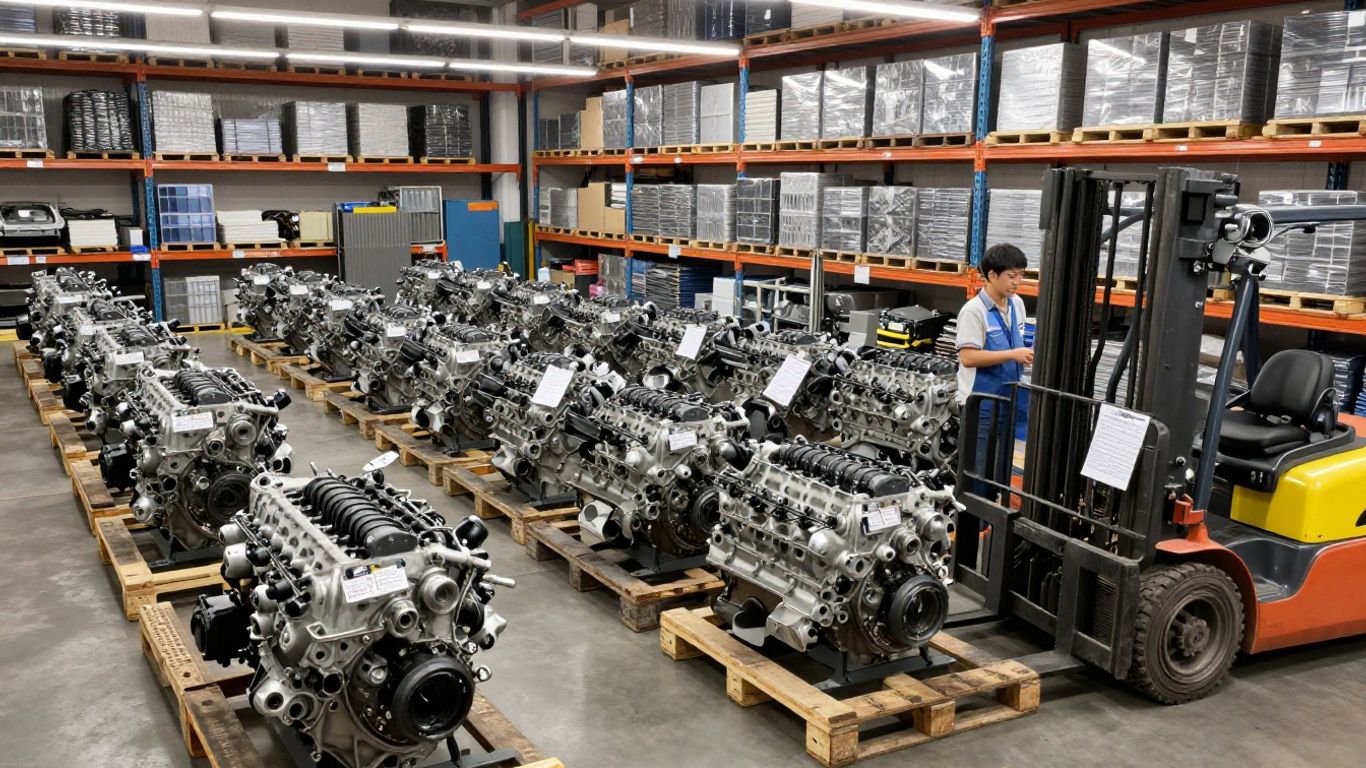
A 24-hour sourcing target depends on the supplier’s network, warehouse access, and ability to inspect a specific unit quickly. Contact several credible sources at once, but give each the same written specification. Do not confuse a searchable database listing with physical possession of the engine. The useful question is whether a named unit can be reserved, inspected, and dispatched by a stated time.
Search specialized engine dealers and salvage networks
Specialized dealers and established salvage networks often have better records for mileage, operating hours, donor vehicles, and testing than general classified listings. Search by engine code and application, then ask whether the listing is current. A supplier that can identify the donor vehicle and provide photographs of the exact unit gives you a stronger basis for a fast decision.
Use calls for urgent clarification, but follow up by email or message so the quoted specification and timing are recorded. That simple paper trail can expose contradictions between an advertisement and the seller’s actual inventory.
Contact local distributors with warehouse inventory
Local distributors may be able to confirm stock without waiting for a national transfer. Ask whether the engine is on site, at a partner warehouse, or still being removed from a vehicle. Also ask when it can be released to the freight carrier, since “available” sometimes means only that the supplier has located a possible source.
Local pickup can reduce handling time, but it still requires an inspection plan. Have your mechanic verify lifting equipment, pallet dimensions, loading access, and whether the unit will arrive with the accessories needed for installation.
Ask about nationwide sourcing and dealer-to-dealer transfers
A national network can widen the search when local inventory is thin. Ask how the transfer works, who will inspect the engine, which location will issue the invoice, and whether the quoted dispatch time begins when the unit is found or when payment clears. Those details reveal whether the network is coordinating a real unit or simply circulating a request.
The same habit used when comparing delivery services—such as checking Travel FX for rates, fees, and guaranteed next-day delivery terms—helps here: separate the headline promise from the conditions that make it possible. The analogy is about evaluating timing and charges, not about treating the services as interchangeable.
Compare availability claims with actual stock confirmation
Before approving payment, request the stock number, engine code, location, condition, and date-stamped photographs. Ask the supplier to confirm that the exact unit is still available and can be dispatched by the agreed deadline. If the seller will not identify the unit or provide any evidence of possession, treat the listing as unverified.
A quick comparison table can keep several replies from blending together. Record the details while they are fresh rather than trusting a vague memory of which seller offered what.
| Supplier response | What it confirms | What remains to verify |
|---|---|---|
| Exact stock number and photographs | A specific unit has been identified | Condition, included parts, and dispatch time |
| “Available to source” | The supplier believes a unit may be found | Whether it is reserved or physically located |
| Warehouse location and release date | The logistics path is clearer | Freight booking and loading arrangements |
| Written quote with expiry time | Price and terms are recorded | Fitment and warranty exclusions |
Use the table as a call script, not as a substitute for judgment. A low price on an unconfirmed unit is less useful than a slightly higher quote tied to a documented engine and a realistic shipping plan.
Verify fitment and engine condition quickly
Once a supplier identifies a possible engine, move from broad questions to evidence. Fitment is more than physical size: electronics, emissions equipment, accessories, and calibration may all affect installation. Condition is also more than mileage, especially when maintenance history is incomplete. Make the seller answer the same technical questions your mechanic would ask.
Match the engine code and key specifications
Compare the replacement code with the original and confirm displacement, fuel system, induction, power rating, rotation, mounting points, and emissions configuration. Ask whether the quoted unit includes the intake, exhaust manifold, turbocharger, injectors, sensors, starter, alternator, and wiring components. If the seller proposes a substitute code, request a written explanation of what must be swapped or reprogrammed.
Have the installer review the photographs before purchase. A technically compatible long block may still create a delay if the accessory layout or control system differs from the failed engine.
Check mileage, operating hours, and service history
For road vehicles, ask for mileage and donor-vehicle information. For generators, construction equipment, and other machinery, operating hours may be more meaningful than miles. Request maintenance records, oil-change history, evidence of overheating, and the reason the donor unit was removed when those records exist.
Treat missing history as a risk rather than automatically rejecting the engine. Price, warranty length, inspection evidence, and the cost of an alternative should all reflect that uncertainty.
Review compression tests, inspection reports, and photographs
A compression or cylinder test can provide useful evidence, but ask when it was performed and whether the results are for the exact engine being sold. Review photographs of the serial plate, cylinder head, oil pan, ports, and external surfaces for cracks, corrosion, impact damage, or signs of fluid contamination. If the seller offers a video, listen for abnormal noise and ask what has been removed before testing.
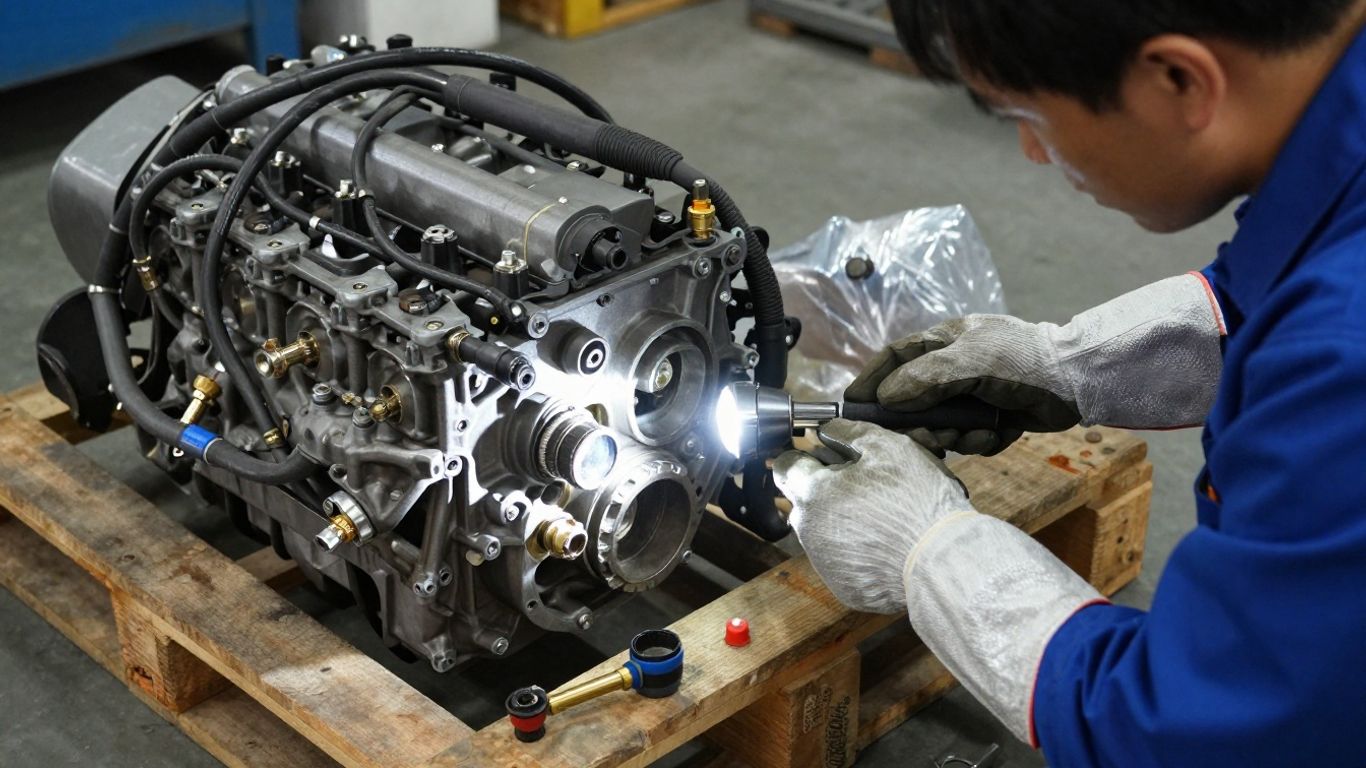
If a report uses unfamiliar terms, have a mechanic interpret it before you pay. A clear record of what was tested—and what was not—keeps a quick purchase from becoming an expensive assumption.
Confirm included components and required accessories
Ask for a line-by-line list of what is included with the engine. Some sellers provide a complete assembly, while others ship only a long block or bare replacement. Confirm whether the original accessories can be transferred and whether new seals, gaskets, sensors, belts, hoses, or mounts are recommended.
A useful pre-installation list usually includes the following:
- Engine assembly and identification plate
- Intake, exhaust, turbocharger, and fuel-system components
- Sensors, wiring, control modules, and compatible programming needs
- Mounts, brackets, starter, alternator, and other accessories
- New fluids, filters, seals, gaskets, and installation hardware
Review that list with the mechanic before finalizing the quote. Missing accessories may not invalidate the engine, but they can erase the time saved during sourcing.
Evaluate the total cost of an urgent engine purchase
The advertised engine price is only the starting point. Urgent orders can add inspection, dismantling, palletizing, freight, liftgate, storage, and expedited handling charges. Installation may also uncover worn parts that were not part of the original engine sale. Build the complete estimate before comparing suppliers, because the cheapest engine can become the most expensive delivered option.
Compare the engine price with sourcing and handling fees
Ask for the engine price separately from sourcing, inspection, removal, cleaning, palletizing, and administrative charges. Confirm whether taxes, deposits, and payment-processing fees are included. If a core charge applies, clarify the deadline and condition requirements for returning the old engine.
Keep optional services visible rather than allowing them to disappear inside a single total. A transparent quote lets you decide which handling steps are worth paying for when time is tight.
Calculate expedited shipping and delivery charges
Get the shipment’s approximate weight, dimensions, origin, destination, freight class, and delivery method. Ask whether the quote includes residential delivery, liftgate service, appointment scheduling, inside delivery, or storage if the carrier arrives before your facility is ready. “Ships today” does not necessarily mean “arrives tomorrow.”
When comparing delivery options, write down both the promised dispatch time and the estimated arrival window. The difference matters if a mechanic has already reserved a bay or if equipment downtime is costing money each day.
Budget for installation, fluids, seals, and replacement parts
Ask the installer for a separate labor estimate and a list of likely replacement items. Fluids, filters, gaskets, belts, hoses, mounts, wiring repairs, programming, and exhaust or emissions components can materially change the final bill. Also allow for diagnosis if the original failure may have damaged connected systems.
A realistic contingency budget is especially useful when the engine’s history is limited. It does not mean every extra part will be needed; it gives you room to handle ordinary installation findings without abandoning the repair halfway through.
Check the warranty, core charge, and return policy
Read the written warranty before payment, including its duration, covered parts, exclusions, labor provisions, testing requirements, and claim deadline. Confirm whether the warranty starts on purchase, shipment, or installation. A return policy may have separate rules for unopened, installed, defective, or incorrectly ordered units.
For a concrete example of why those distinctions matter, AutoPowerSource describes VIN-matched, compression-tested used engines, HD photos for written approval before shipping, and parts-only warranty coverage unless labor protection is purchased in writing. Treat those terms as that supplier’s stated policy, not as a standard for every engine seller.
Complete the purchase without unnecessary delays
Once the technical and financial questions are answered, speed comes from removing administrative uncertainty. Suppliers cannot dispatch an engine if they are still waiting for a billing address, tax form, payment authorization, or delivery contact. Prepare the information in advance and ask for one written confirmation that brings the agreement together.
Prepare payment, business, and shipping information
Have the buyer’s legal name, billing address, tax details, phone number, email, delivery address, and receiving hours ready. Confirm whether a commercial carrier needs a loading dock, forklift, liftgate, or appointment. If a company is paying, identify the person authorized to approve the purchase so the transaction does not pause internally.
Use a payment method that provides a clear record and verify the recipient before sending funds. A quick transaction is not worthwhile if the invoice cannot later be matched to the engine or supplier.
Request a written quote and availability confirmation
The quote should name the engine code, stock number, condition, included components, price, fees, taxes, warranty, core charge, return terms, and quote expiry. It should also state whether the unit is physically available and who is responsible for confirming fitment. Ask the supplier to correct any ambiguity before you approve it.
A written comparison is also useful when considering unrelated online purchases: Daily Fantasy Football explains how platform and contest choices depend on specific rules and terms. The same general discipline applies here—read the conditions behind the offer—but the engine decision must remain based on mechanical evidence.
Confirm the dispatch deadline and tracking process
Ask for the exact deadline by which the engine will be released to the carrier, not just the date the order will be entered. Confirm when tracking becomes available, whether the carrier will call ahead, and what happens if the first pickup is missed. Get a direct contact for exceptions rather than relying on an unanswered general inbox.
Tracking is most helpful when it is connected to an action plan. Give the mechanic the expected arrival window and update them if the carrier changes it, especially when the engine must be unloaded immediately.
Coordinate delivery access with your mechanic or installation facility
Before dispatch, verify the facility’s receiving hours, dock access, unloading equipment, storage limits, and preferred carrier appointment process. Make sure someone authorized to inspect the shipment will be present. If the engine is arriving on a pallet, confirm that the facility can move it safely without opening the crate in an unsuitable area.
Share the invoice, photographs, and expected contents with the installer. This allows them to spot a mismatch at delivery and prevents a damaged or incomplete shipment from being installed by mistake.
Protect your purchase after the engine arrives
The purchase is not finished when the freight reaches the shop. Inspection, documentation, and correct installation protect your ability to resolve a problem under the seller’s terms. Keep the packaging and shipping documents until the engine has been checked and accepted. Small details recorded on the day of delivery can become valuable evidence later.
Inspect the shipment for damage before signing
Look over the pallet, crate, straps, wrapping, oil pan, accessories, connectors, and exposed machined surfaces before signing the delivery receipt. Photograph dents, punctures, broken supports, fluid leaks, and visible contamination. If damage is present, record it on the carrier’s paperwork and ask the driver about the claims process.
Do not let a busy receiving area force an unqualified signature. If the carrier will not wait for a full inspection, note that the shipment is received subject to inspection where permitted and photograph its condition immediately.
Verify the engine against the invoice and specifications
Compare the serial plate, engine code, displacement, accessories, and included components with the written quote. Check that the photographs match the unit you received and that no part was substituted without approval. If the engine is not what was ordered, pause installation and contact the supplier before altering or dismantling it.
A second review by the mechanic is worthwhile, particularly where similar codes share a block but differ in electronics or emissions equipment. Do not install first and investigate later when a mismatch is visible at delivery.
Document defects or missing components immediately
Create a dated file containing delivery photographs, the signed receipt, invoice, inspection report, test results, messages, and a list of missing or damaged items. Notify the seller in writing as soon as a concern appears, following the warranty or return instructions. Describe the defect precisely and request the next step rather than relying on a phone call alone.
If the issue could affect safety or cause further damage, stop work until the supplier or a qualified technician responds. Keep removed packaging and damaged parts available for inspection or freight claims.
Follow break-in, installation, and warranty requirements
Use the installer’s checklist and the supplier’s written instructions for priming, fluids, filters, programming, torque settings, and break-in. Confirm whether the warranty requires professional installation, baseline tests, maintenance records, or prompt notification of a fault. Do not substitute a familiar procedure when the written terms specify something different.
For broader background, internal combustion engine basics explains the relationship between combustion, pistons, and crankshaft motion, while a diesel engine guide covers compression ignition and fuel injection. Those educational resources can clarify terminology, but they do not replace the engine maker’s installation instructions or the seller’s warranty conditions.
Conclusion
A fast engine purchase works best as a controlled process: identify the exact unit, verify that it is real and suitable, calculate the delivered cost, and put every important promise in writing. When the engine arrives, inspect it before installation and follow the documented warranty and break-in requirements. Speed is useful, but accurate information is what makes an engine sourced within 24 hours a practical repair rather than a rushed gamble.
Frequently Asked Questions
Can an engine really be sourced within 24 hours?
Yes, when a suitable unit is already in a supplier’s network or warehouse and the buyer provides complete identification details. “Sourced” may only mean located, so confirm inspection, reservation, and dispatch timing separately.
What information does a supplier need to find the right engine?
Provide the make, model, year, engine code, VIN or equipment serial number, fuel type, application, photographs, and any known accessory or emissions differences. More precise information generally produces fewer unsuitable quotes.
Is a used engine a reasonable urgent replacement?
It can be, particularly when the donor vehicle, mileage or operating hours, testing, photographs, and warranty are documented. The decision should account for installation risk and the cost of missing history.
How do I verify that an advertised engine is actually available?
Request a current stock number, exact engine photographs, physical location, condition details, and a written confirmation that the unit can be reserved. Ask when it will be released to the carrier, not only whether it is listed as available.
What should be included in the total purchase estimate?
Include the engine, sourcing and handling fees, freight, delivery services, taxes, installation, fluids, seals, filters, programming, likely replacement parts, core charges, and any return-related costs.
Should I inspect the engine before signing for delivery?
Yes. Check the pallet and engine for visible damage, photograph the condition, and record problems on the delivery paperwork where possible. Contact the seller promptly if anything is damaged, missing, or inconsistent with the invoice.
What warranty details deserve the most attention?
Check the coverage period, covered parts, labor rules, exclusions, claim deadline, installation requirements, return conditions, and whether the warranty begins at purchase, shipment, or installation. Ask for all terms in writing before payment.