

Key Takeaways
Fast engine sourcing Australia becomes much easier when the request is specific, the supplier is transparent, and the engine is checked before payment. A clear paper trail also makes installation and warranty discussions far less stressful.
- Define the engine, application, and compatibility requirements before contacting suppliers.
- Compare supplier type, stock location, condition, warranty terms, and delivery timing.
- Ask for inspection evidence, history, test results, and current photos.
- Calculate the full landed cost rather than comparing engine prices alone.
- Keep fitment, installation, warranty, and maintenance records together.
Define your engine sourcing requirements
The fastest purchase usually starts with the best-prepared brief. Before searching, gather the information that allows a supplier to identify a suitable engine without several rounds of follow-up. This is especially useful when the vehicle is off the road and every unanswered question adds another day. Treat the brief as a technical document, not a casual parts enquiry.
Identify the engine type and application
Start by describing what the engine will power and how it is used. A passenger vehicle, delivery truck, generator, excavator, and marine application can require very different specifications even when engine families appear similar. State whether you need a complete assembly, a long motor, a short motor, or specific internal components.
Include fuel type, aspiration, emissions configuration, transmission arrangement, and any application-specific accessories. If the engine is for a fleet or worksite, note the operating environment and expected duty cycle. These details help suppliers avoid offering a technically similar engine that is unsuitable in practice.
Confirm compatibility with the vehicle or equipment
Compatibility extends well beyond the engine code. Check mounting points, bellhousing pattern, wiring, sensors, exhaust layout, cooling connections, intake arrangement, and control modules. Some replacements may fit physically but still require additional programming, accessories, or component changes before commissioning.
Give the supplier the vehicle identification number or equipment model where available. Photographs of the engine bay, identification plate, connectors, and mounting areas can clarify issues that a written description misses. It is sensible to have the proposed fitment reviewed by the technician who will complete the installation.
Set performance, mileage, and condition requirements
Decide which compromises are acceptable before quotes arrive. You might prioritise low mileage, immediate availability, a tested used unit, a rebuilt engine, or a longer warranty. Put those priorities in writing, along with minimum power, torque, operating-hour, and condition requirements.
A cheaper engine with uncertain history may create more cost during installation and troubleshooting. Conversely, a higher-mileage unit with clear records and documented testing may be the more practical choice. Define your acceptance threshold before urgency turns a careful decision into a rushed one.
Prepare serial numbers, part numbers, and technical specifications
Collect every identifier you can find, including engine serial numbers, casting numbers, part numbers, chassis details, and manufacturer specifications. Record the source and date of each number, since a damaged plate or transposed digit can send a search in the wrong direction.
Attach clear photographs and list the quantity required, delivery suburb, preferred delivery date, and whether a core return is involved. A complete request lets suppliers search more accurately and makes competing quotations easier to compare.
Choose the right engine supplier in Australia
Supplier type affects access to stock, technical support, pricing, and accountability. A dealership may provide strong application knowledge, while a dismantler may offer a tested used unit at a different price point. Distributors and importers can broaden the search, but delivery and inspection arrangements need closer attention. Compare the process behind the quote, not just the number at the bottom.
Compare dealerships, dismantlers, distributors, and importers
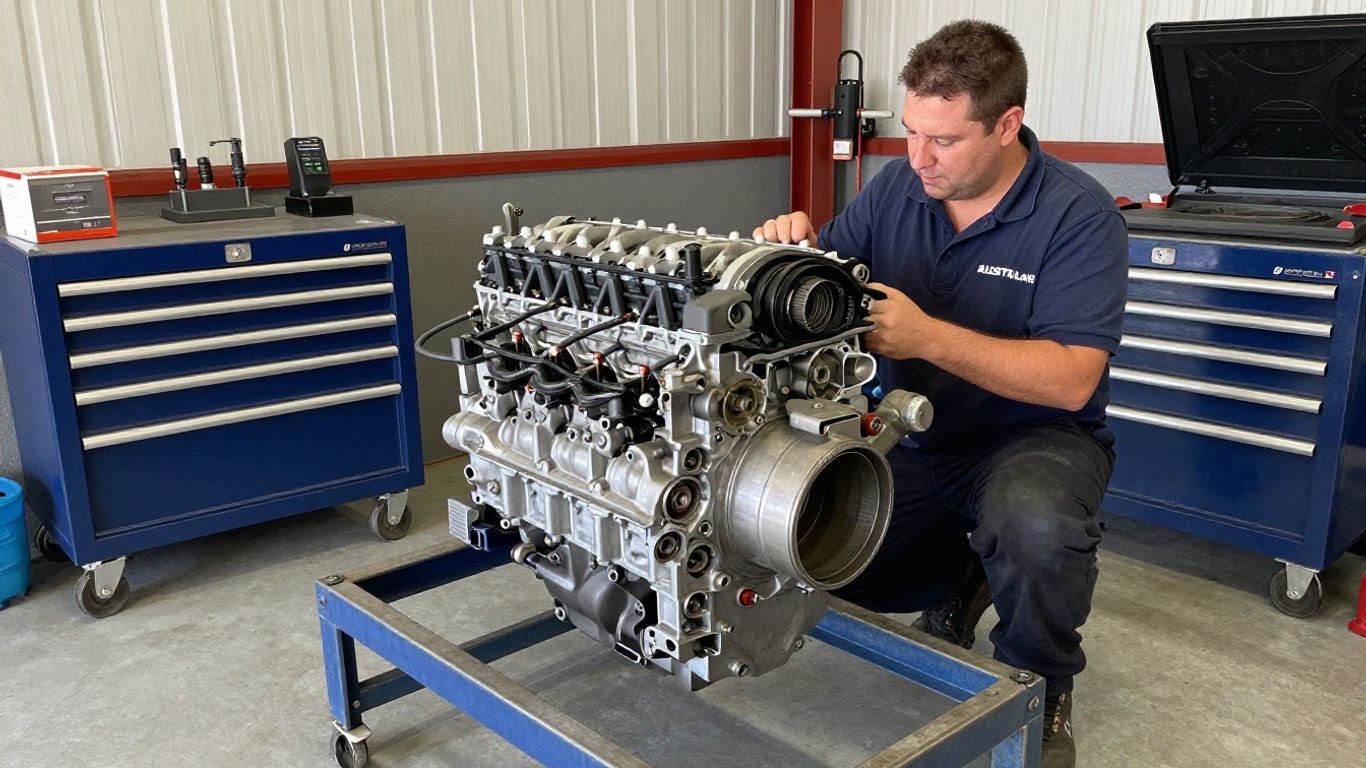
Ask what each supplier actually controls. A dismantler may hold the donor vehicle and its records; a distributor may coordinate stock across several warehouses; an importer may source a unit internationally and manage the additional freight steps. None is automatically the right choice for every job.
For trade buyers seeking assemblies and related components, APC Auto Parts Centre is described as a wholesale supplier serving workshops, dealerships, and parts stores, with engine assemblies and other engine components for all makes and models. That documented trade focus may suit a workshop that values consistent supply rather than a one-off retail transaction.
Assess supplier inventory and sourcing networks
Ask whether the engine is physically in stock, held by a partner, or still being sourced. Confirm its exact location, stock status, identification number, condition, and the date the information was last checked. A supplier with a broad network can be useful when the required unit is uncommon, but the search should remain traceable.
For difficult component searches, specialised parts procurement can include sourcing rare OEM parts and fit-for-purpose alternatives, along with delivery and inventory alignment. That kind of service is most relevant when the requirement extends beyond locating a standard replacement engine.
Check business credentials, reviews, and industry experience
Look for a registered business identity, clear contact details, written terms, and a history of supplying the engine or equipment category you need. Reviews are useful for spotting patterns around communication, dispatch, and warranty handling, but they should supplement direct questions rather than replace them.
Ask for references or examples of the supplier’s normal documentation. A credible business should be comfortable explaining what is included, what is excluded, and how it handles an engine that fails inspection or does not match the agreed specification.
Understand local availability versus imported stock
Local stock can reduce transit uncertainty, while imported stock may open access to engines that are scarce in Australia. Ask about customs clearance, port handling, quarantine-related requirements where relevant, and who carries the risk if the shipment is delayed or damaged.
A local quote is not automatically the lowest total cost, and an imported quote is not automatically poor value. Compare confirmed availability, evidence of condition, delivery milestones, and warranty enforceability alongside the purchase price.
Verify engine quality before you buy
A quick purchase still needs a disciplined inspection. Used and rebuilt engines vary widely, and a clean exterior tells you little about internal wear. Request evidence that matches the engine identification and the condition promised in the quotation. If the supplier cannot answer basic questions, treat that uncertainty as part of the price.
Review inspection reports and maintenance records
Read the inspection report closely rather than accepting a general statement such as “tested” or “good condition.” Look for the inspection date, engine identity, tests completed, readings obtained, faults found, and any components excluded from the assessment.
Maintenance records can reveal oil-service intervals, previous repairs, overheating events, and periods of heavy use. If records are incomplete, ask the supplier to state that clearly and adjust your risk assessment, warranty expectations, and price accordingly.
Confirm mileage, operating hours, and engine history
Vehicle mileage is not the same as engine mileage, particularly when an engine has been replaced. For industrial equipment, operating hours and duty cycle may matter more than distance. Ask how the figure was obtained and whether it is supported by service records, donor-vehicle information, or equipment logs.
Confirm whether the engine has been rebuilt, stored for a long period, exposed to water, or removed from a damaged vehicle. History does not automatically disqualify a unit, but it changes the checks and preparation required before installation.
Check compression, leaks, corrosion, and internal wear
Where practical, request compression or leak-down readings, oil-pressure information, cooling-system checks, and evidence of startup or running tests. Inspect for oil or coolant leaks, cracked housings, corrosion, damaged threads, worn pulleys, and contamination around fluid passages.
The technician should also consider components that may not be included with the engine, such as injectors, turbochargers, sensors, pumps, wiring, and accessories. A written list of included and excluded parts prevents an apparently inexpensive engine from becoming an incomplete installation package.
Request photos, videos, and test results for remote purchases
Remote purchasing requires more evidence because you cannot inspect the unit yourself. Ask for recent photographs showing the identification plate, major faces, ports, mounting points, and any damage. A short running video can help, but it should be paired with written test results and a clear statement of what the video does not prove.
Use the same checklist for every candidate so comparisons remain fair. Save the files with the quotation and engine number; this creates a useful record if the delivered unit differs from the one assessed.
Compare costs, warranties, and delivery timelines
The advertised engine price is only one part of the decision. Freight, handling, taxes, inspection, accessories, installation, fluids, programming, and possible return transport can materially change the final amount. Build the comparison before choosing the cheapest quotation, especially when the vehicle is already creating downtime.
Calculate the total landed cost
Ask each supplier for a written breakdown that separates the engine from related charges. This makes unusual fees easier to spot and gives the workshop a realistic installation budget. Include the cost of testing or machining if those tasks are required before fitment.
A simple comparison can use the following categories:
| Cost category | What to confirm | Why it matters |
|---|---|---|
| Engine unit | Assembly type, condition, and included parts | Prevents like-for-unlike comparisons |
| Freight and handling | Carrier, insurance, delivery point, and unloading | Heavy units can attract substantial charges |
| Preparation | Testing, cleaning, machining, or fluids | May be required before installation |
| Installation | Labour, seals, mounts, programming, and commissioning | Reveals the real project budget |
| Return exposure | Removal, freight, and administration terms | Shows the cost of a failed match |
Once these figures are visible, compare the likely total rather than the headline price. The result may favour a slightly more expensive local engine if it reduces uncertainty and avoids a second removal.
Compare warranty coverage and return conditions
Read the warranty in full, including its duration, covered components, exclusions, claim process, labour position, and evidence requirements. Some warranties may require professional installation, new fluids, specified filters, or documented testing before they become valid.
Confirm whether the warranty covers replacement parts, repair, refund, or only the engine itself. Also ask who pays freight when a claim is accepted and how quickly a decision is normally made. Written terms are more useful than a broad verbal assurance.
Account for freight, handling, and installation expenses
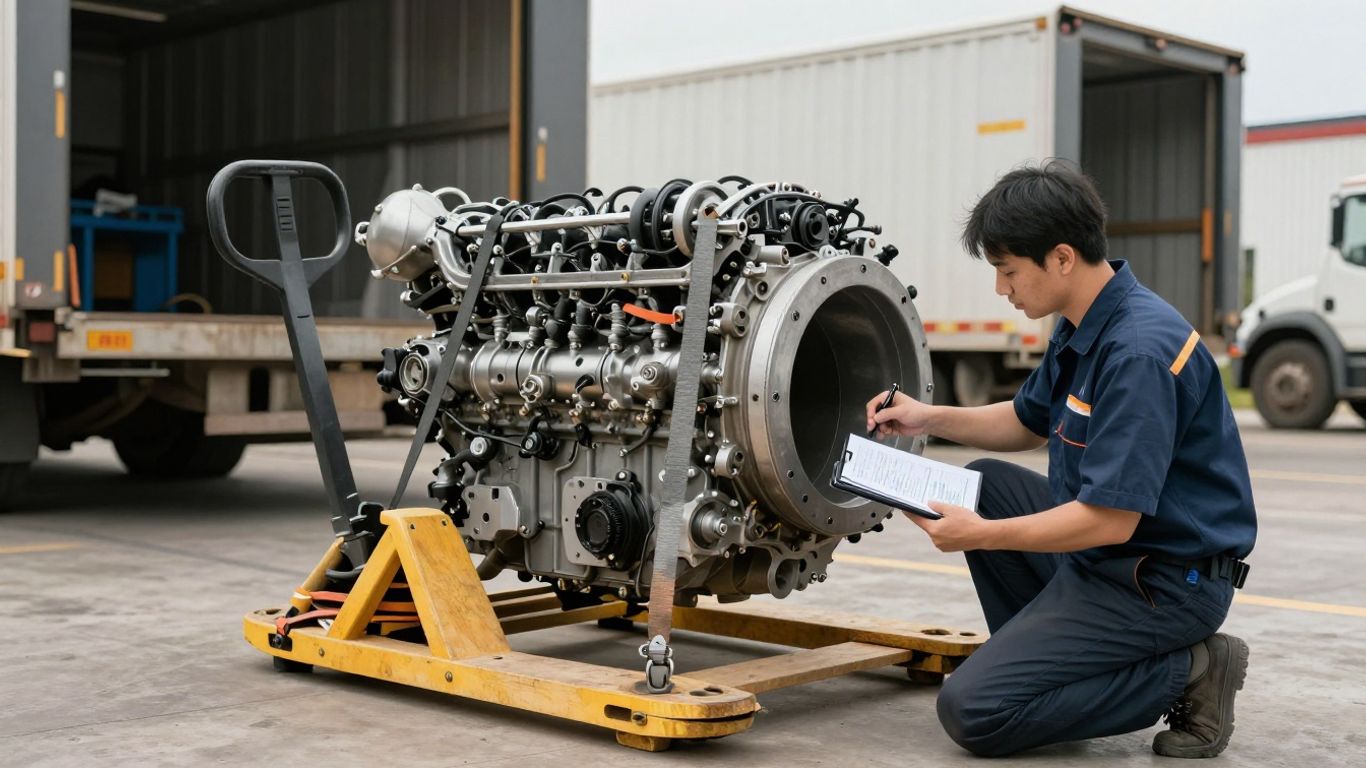
Heavy engines need suitable packaging, lifting equipment, and a delivery arrangement that matches the receiving site. Confirm whether the carrier delivers to a business address, whether tail-lift service is available, and who is responsible for unloading.
Installation may require new gaskets, seals, mounts, hoses, belts, filters, fluids, sensors, or programming. Ask the technician for a preliminary parts and labour estimate before authorising the purchase, then allow a reasonable contingency for faults discovered during removal.
Balance urgent delivery with price and engine condition
Urgency has a real cost, but paying more for the first available unit is not always the quickest path back to work. A poorly matched or undocumented engine can create delays that outweigh the original saving. Compare the promised dispatch date with the evidence of condition and the supplier’s ability to support a claim.
Set a decision deadline and identify the minimum acceptable evidence. This creates a controlled trade-off: you can choose speed when the risk is understood, rather than simply accepting the fastest quote.
Speed up the sourcing and purchasing process
Once the technical requirements are ready, the search can move quickly. Send the same brief to several suitable suppliers and ask them to respond against the same fields. This reduces clarification loops and produces comparable offers. It also makes it easier to identify a genuine stock match instead of a vague alternative.
Send a complete sourcing brief to suppliers
Put the engine code, application, compatibility information, condition target, quantity, location, and deadline in the first message. State whether you need the complete assembly, whether accessories are required, and what documents must accompany the quote.
Include photographs, serial numbers, delivery constraints, and the contact details of the installing workshop. A supplier can then answer with a clear yes, no, or qualified alternative instead of beginning a long exchange to establish the basics.
Request multiple quotes at the same time
Parallel enquiries are more efficient than waiting for one supplier to search and then starting again. Give each supplier a firm response format covering price, stock location, condition, test evidence, warranty, dispatch date, and freight.
For trade enquiries, APC Auto Parts Centre describes its supply as covering engine assemblies and other components for workshops, dealerships, and parts stores, with fast dispatch and Australia-wide delivery. Treat those details as the supplier’s stated service scope and still confirm availability for the exact engine you need.
Use stock alerts and supplier databases
Set alerts for the exact engine code and its accepted alternatives, but do not approve an alternative without technical review. Databases can surface candidates quickly, while a supplier’s own confirmation remains necessary for condition, location, and included components.
Keep a short comparison record with the date searched, source, stock status, and follow-up result. This avoids repeating the same enquiries and helps the team recognise when a previously unavailable unit becomes a realistic option.
Confirm payment, dispatch, and delivery arrangements
Before payment, confirm the invoice entity, payment terms, dispatch trigger, consignment details, delivery address, and contact person. Ask when photographs, test documents, and tracking information will be supplied. If a deposit is required, make sure the cancellation and refund terms are written down.
A final order check should match the engine identification, agreed condition, included parts, warranty, price, and delivery promise. That short pause often prevents a much longer correction later.
Manage installation and after-sales support
Sourcing ends with a delivered engine, but the project ends only when the equipment is operating correctly. Installation should be planned around the engine’s actual condition and the vehicle or machine’s existing systems. Good records connect the original quotation to the work completed and provide evidence if a warranty issue arises.
Check fitment and required replacement components
Before removing the old engine, compare the replacement against the vehicle or equipment specifications. Check mounts, bellhousing, wiring, sensors, intake and exhaust connections, cooling lines, fuel system interfaces, and control modules. Confirm which accessories transfer from the old engine and which are supplied with the replacement.
Ask the installer to identify seals, hoses, belts, filters, fluids, mounts, and other parts that should be renewed as a preventative measure. This is more efficient than discovering during installation that a low-cost ancillary component has stopped the entire job.
Plan removal, installation, and commissioning
Agree on the removal sequence, lifting requirements, workshop capacity, and expected commissioning checks. The plan should allow time for cleaning, inspection of the engine bay, fluid-system flushing where appropriate, and verification of electrical connections.
Commissioning can include checking fluid levels, leaks, oil pressure, temperature, fault codes, charging, and operating performance. Record readings and observations from the first run so they can be compared with the warranty requirements and future service information.
Confirm warranty requirements after installation
Review the warranty conditions before the first start, not after a fault appears. Confirm whether installation must be completed by a qualified workshop, whether specific consumables are mandatory, and which documents or photographs must be retained.
If a problem occurs, stop using the engine when continued operation could worsen the damage. Notify the supplier promptly, describe the symptoms accurately, and provide the requested identification, invoices, test results, and installation records.
Keep records for future maintenance and claims
Create one file for the purchase and installation. Include the quotation, invoice, engine serial number, inspection report, photographs, freight documents, warranty terms, parts used, commissioning readings, and service dates.
That file supports future maintenance and makes a claim easier to assess. It also helps the next technician understand what was replaced, which components were retained, and when the engine entered service.
Conclusion
Fast engine sourcing Australia is less about rushing every decision than removing avoidable uncertainty. A precise brief, credible evidence, transparent costs, and a planned installation give you a better chance of securing the right engine without turning a downtime problem into a larger repair project.
Frequently Asked Questions
How quickly can an engine be sourced in Australia?
Timing depends on the engine code, local stock, inspection requirements, freight route, and whether the unit is imported. A complete sourcing brief and parallel enquiries can shorten the search considerably.
What information should I send with an engine enquiry?
Provide the vehicle or equipment details, engine code, serial and part numbers, application, required condition, mileage or hours target, delivery location, deadline, and photographs of identification plates and connection points.
Is a used engine always cheaper than a rebuilt engine?
Not necessarily. The total cost depends on testing, included components, freight, installation preparation, warranty, and the likelihood of additional repairs. Compare the complete landed and installed cost.
How can I verify the mileage or operating hours?
Ask how the figure was recorded and request supporting service records, donor-vehicle details, equipment logs, or other documentation. Treat unsupported figures as estimates rather than confirmed history.
What should an engine warranty include?
Check the covered components, duration, exclusions, installation requirements, claim process, labour coverage, freight responsibility, and return conditions. Ask for the full written terms before payment.
Should I buy a local engine or import one?
Local stock may offer simpler inspection and faster delivery, while imported stock can provide access to scarce engines. Compare availability, documentation, freight, customs responsibilities, warranty enforceability, and total cost.
What records should I keep after installation?
Keep the invoice, engine identification, inspection evidence, warranty, freight documents, installation parts list, commissioning readings, photographs, and ongoing service records in one accessible file.