

Key Takeaways
A motor replacement can restore a vehicle’s service life, but only when the decision is based on evidence, cost, and operational need.
- Confirm severe motor failure with inspections and diagnostic data before authorizing major work.
- Compare new, remanufactured, used, and rebuilt options against the vehicle’s specifications.
- Budget for parts, labor, downtime, fluids, related components, and post-installation checks.
- Schedule the work around demand and prepare a substitute vehicle before the repair begins.
- Track performance after installation and use lifecycle data to improve future replacement decisions.
Determine when a fleet vehicle needs motor replacement
A fleet vehicle rarely announces motor failure with one isolated symptom. More often, oil consumption, loss of power, overheating, warning lights, and repeated repairs build into a pattern. The goal is to separate a repairable fault from damage that makes motor replacement the more sensible path. A careful decision protects both operating reliability and capital.
Warning signs of severe engine wear
Blue or white exhaust smoke, persistent knocking, low oil pressure, metal in the oil, and heavy oil consumption deserve prompt investigation. Coolant loss, repeated overheating, or coolant mixed with oil can point to internal damage, although each symptom still needs a proper diagnosis. A vehicle that starts poorly, misfires under load, or cannot maintain power on its normal route may also be approaching the limit of economical repair.
Do not treat a single dashboard warning as proof that the motor has failed. Record when the symptom occurs, whether it changes with temperature or load, and whether recent work could explain it. That history gives the technician a more useful starting point than a general report that the vehicle “feels wrong.”
Repair-versus-replacement decision points
The repair question should include more than the invoice for the immediate fix. Consider the motor’s condition, the vehicle’s remaining structural life, its maintenance history, and the consequences of another failure. Total operating cost matters because a cheaper repair can become expensive if it leads to repeated downtime or additional component damage.
A replacement becomes more attractive when a major repair would address only one part of a worn system. Conversely, a contained failure on a well-maintained vehicle with strong residual value may justify repair. Compare both paths using documented estimates, not assumptions about what the vehicle is worth.
How mileage, age, and duty cycle affect the decision
Mileage is useful, but it is not a verdict. Stop-start delivery work, towing, heavy payloads, dust, steep terrain, and long idle periods can place more stress on a motor than steady highway travel. Two vehicles with the same odometer reading may therefore have very different remaining service lives.
Age also affects hoses, seals, cooling systems, transmissions, electronics, and suspension. If several major systems are nearing replacement at once, installing a motor may simply postpone a broader fleet decision. A replacement timing guide can help managers weigh mileage and maintenance trends rather than relying on one threshold.
Using diagnostic data to confirm motor failure
Before approving replacement, request compression or leak-down testing where appropriate, oil-pressure readings, cooling-system checks, fault-code scans, and a visual inspection. The precise test mix depends on the vehicle and failure symptoms. Diagnostic results should identify the failed component and clarify whether the damage is internal, peripheral, or caused by another system.
A second technical opinion can be worthwhile when the estimate is large or the evidence is mixed. Keep the test results with the work order so the eventual replacement decision can be reviewed later. That record also improves future estimates for vehicles operated in similar conditions.
Compare motor replacement options for fleet vehicles
Once failure is confirmed, the next choice is what to install. New, remanufactured, used, and rebuilt motors differ in price, availability, expected condition, and warranty terms. The best option is the one that fits the vehicle and the fleet’s required service life, not automatically the option with the lowest purchase price.
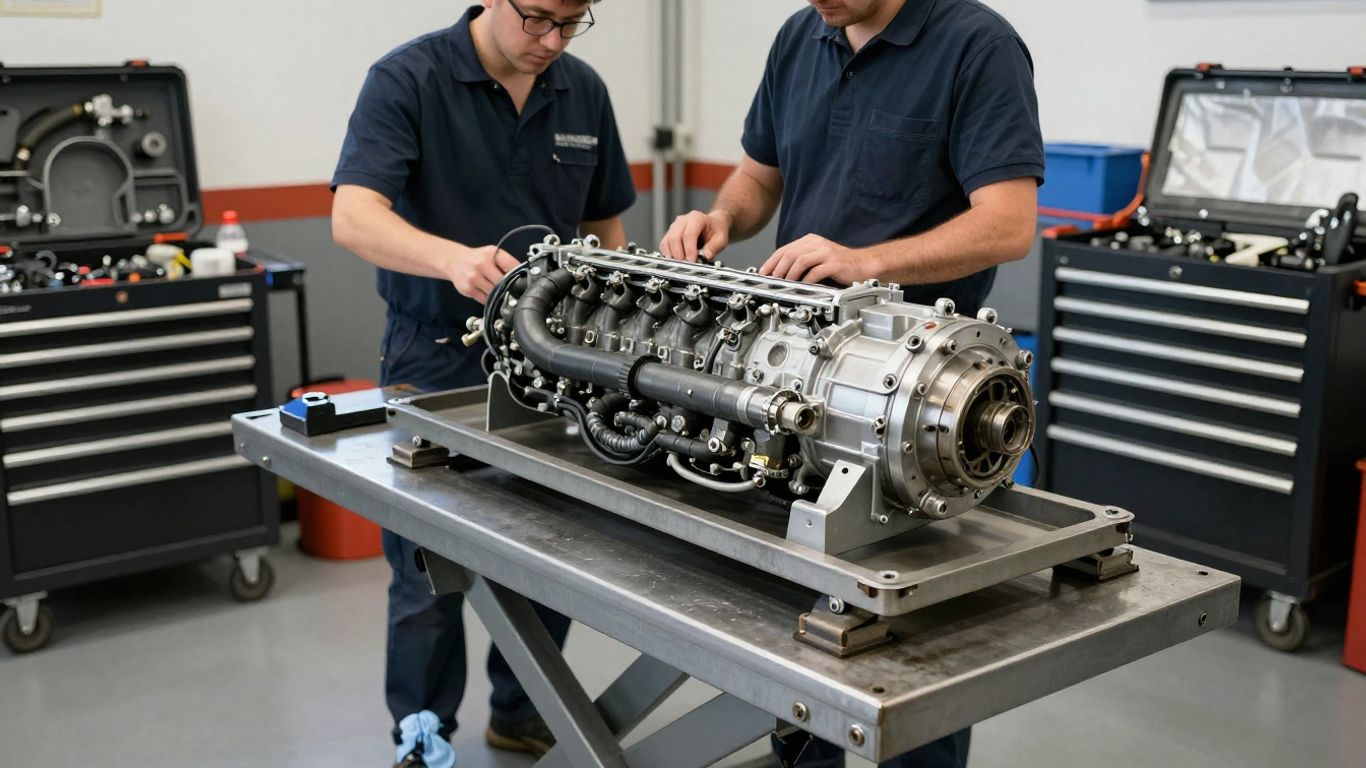
New, remanufactured, and used motors
A new motor may offer predictable condition and strong support, but it can be difficult to justify for an older vehicle. A remanufactured unit has been restored and tested according to the supplier’s process, so the buyer should ask what was replaced, what was measured, and what testing was completed. A used motor may cost less, though its history, storage conditions, and remaining life require closer scrutiny.
Ask for identification details, mileage or usage information where available, included accessories, and a written warranty. Compare like with like: a bare motor and a complete assembly are not equivalent purchases. Availability also matters when a vehicle is needed for daily work.
Matching the motor to the vehicle’s specifications
Verify the engine code, model year, fuel type, displacement, emissions configuration, transmission pairing, mounts, sensors, and required control modules. A motor that appears visually similar may still create calibration, wiring, or driveline problems. The vehicle identification number and original build information should be checked before ordering.
Include peripheral components in the compatibility review. Cooling, exhaust, fuel, intake, electrical, and accessory systems may need specific parts or updated fittings. A precise specification check reduces the risk of receiving a unit that cannot be installed without unplanned modifications.
Evaluating warranty coverage and supplier reliability
Read the warranty before comparing prices. Look for duration, mileage limits, covered parts, labor provisions, exclusions, installation requirements, claim procedures, and the treatment of consequential damage. A warranty has limited practical value if the fleet cannot obtain a timely response or if the required installation evidence is unclear.
Supplier reliability also includes accurate stock information, secure packaging, traceable part identification, and dependable freight arrangements. For a vehicle that supports a critical route, ask how quickly a problem would be assessed and what documentation would be needed. Those operational details belong in the purchasing decision.
When rebuilding an existing motor makes sense
Rebuilding can make sense when the motor has a serviceable core, the damage is well understood, and the vehicle itself has substantial remaining life. It may also preserve a known configuration when sourcing a direct replacement is difficult. The decision depends on machine-shop capability, parts availability, turnaround time, and the quality of the rebuild specification.
Obtain a written scope describing measurements, machining, replaced parts, testing, and warranty coverage. A rebuild should not be treated as an informal repair. If the core has extensive cracking, distortion, or widespread wear, a replacement unit may provide a clearer risk profile.
Calculate the total cost of fleet vehicle motor replacement
The purchase price is only one part of the fleet vehicle motor replacement equation. Labor, fluids, seals, ancillary parts, transport, diagnostics, taxes, and downtime can materially change the final figure. A useful estimate separates known costs from allowances for issues that may be discovered after removal.
Parts, labor, fluids, and related components
Request an itemized estimate that states whether the motor is supplied complete or as a long block. Confirm the labor hours and rate, along with charges for removal, installation, programming, testing, and disposal. Include filters, belts, hoses, gaskets, mounts, fluids, coolant, lubricants, and any one-time hardware recommended for the installation.
The following cost categories help prevent omissions during approval:
- Motor purchase or exchange-unit cost.
- Removal, installation, diagnostic, and programming labor.
- Fluids, filters, seals, belts, hoses, mounts, and related components.
- Freight, core charges, disposal, taxes, and contingency allowance.
After the estimate is itemized, ask which items are essential, which are preventative, and which depend on inspection findings. That distinction makes approval clearer and reduces surprise invoices without encouraging unsafe shortcuts.
Downtime and lost productivity costs
A vehicle off the road can affect deliveries, field appointments, crew allocation, and customer commitments. Calculate the cost of substitute transport, overtime, route changes, rental equipment, and delayed work where those costs apply. Even a modest daily impact becomes significant when the repair extends beyond the original estimate.
Downtime should be measured from removal through verified return to service, not merely from the day the vehicle enters the workshop. Parts delays and rework deserve attention because they can cost more operationally than the initial labor difference between two suppliers.
Comparing replacement costs with purchasing another vehicle
Compare the installed motor cost with the price of acquiring another suitable vehicle, including inspection, registration, financing, insurance, preparation, and the time needed to place it into service. The replacement vehicle may also carry unknown maintenance needs. On the other hand, a motor installation cannot correct an aging body, transmission, chassis, or safety system.
The comparison should include expected service life after the work and the vehicle’s role in the fleet. A reliable spare or specialist unit may justify repair when a replacement vehicle would be difficult to source. A heavily used general-purpose vehicle may warrant a broader replacement review.
Building a realistic replacement budget
Use the technician’s estimate as a base, then add a contingency that reflects the vehicle’s age and the uncertainty of hidden damage. Set a separate allowance for downtime and substitute capacity so the operational cost does not disappear from the budget. A strategic replacement plan can provide useful context when deciding whether this motor work fits the fleet’s wider lifecycle priorities.
Document assumptions, approval limits, and the point at which the project must be reassessed. This is especially useful when a removed motor reveals damaged wiring, mounts, cooling parts, or exhaust components that were not visible during the initial estimate.
Plan the replacement process with minimal downtime
Good planning begins before the vehicle reaches the workshop. Confirm the diagnosis, source the motor, reserve labor, and identify the tests required for release. The sequence should allow for delays without leaving dispatchers to solve a vehicle shortage at the last minute.

Scheduling work around fleet demand
Review route schedules, seasonal peaks, driver availability, and the number of spare vehicles before setting the installation date. A planned repair during a quieter operating window is usually less disruptive than an emergency failure during peak demand. Confirm the expected duration with the workshop and build in time for inspection and road testing.
Where several vehicles share similar motors, avoid scheduling too many units at once. Staggering work can preserve capacity and reveal problems with the first installation before the next vehicle is taken offline.
Preparing parts, tools, and technical documentation
The work order should identify the vehicle, motor specification, required components, diagnostic information, and acceptance criteria. Confirm that the workshop has the correct lifting equipment, torque information, service procedures, fluids, and programming access before disassembly begins.
Parts should be checked against the vehicle identification and inspected on arrival. Photographing the received unit and recording identifying numbers can help resolve a mismatch quickly. These small checks are less expensive than discovering a problem after the vehicle has been stripped.
Coordinating inspections and post-installation testing
Agree in advance on who will inspect the installation and what must be tested. The process may include fluid checks, leak inspection, fault-code scans, charging-system checks, cooling-system checks, idle assessment, and a controlled road test. The test should reflect the vehicle’s normal load and operating conditions where safe to do so.
Do not release the vehicle solely because it starts. The workshop should document findings, correct defects, and confirm that warning lights and operating readings are acceptable. A signed handover gives operations a clear record of what was checked.
Managing vehicle substitutions during repairs
Assign a substitute vehicle before the motor work begins, matching payload, equipment, route needs, and driver authorization. Record any changes to insurance, permits, telematics, or customer scheduling. Dispatchers should know the expected return date and the trigger for extending the substitute arrangement.
A replacement scheduling process can help organize vehicle age, usage, and maintenance history when planned work competes for limited fleet capacity. The practical value is greatest when maintenance planning and dispatch planning share the same information.
Protect vehicle performance after motor installation
Installation is not the finish line. The first operating period provides evidence that the motor, connected systems, and controls are working together as intended. A structured handover and early follow-up can catch small issues before they become another immobilizing failure.
Breaking in a new or remanufactured motor
Follow the motor supplier’s and vehicle manufacturer’s instructions for initial operation, fluid checks, load limits, and inspection intervals. Avoid assuming that every new or remanufactured motor follows the same break-in procedure. Drivers may need temporary instructions about speed, load, idling, or reporting unusual sounds.
Record the installation date, mileage, motor identification, fluids used, and any required early service. If the supplier specifies an inspection or fluid change after a defined operating period, schedule it before the vehicle returns to normal workload.
Updating maintenance and service records
Update the fleet record with the failure diagnosis, approval decision, supplier, warranty terms, installed motor details, labor, replaced components, and test results. Include photographs or diagnostic reports where they may support a warranty claim. Accurate records prevent the next technician from treating the replacement as if it were the original motor.
The record should also flag follow-up actions, such as checking mounts, cooling performance, or related accessories. A complete history improves resale assessment and helps managers compare the results of different replacement choices.
Monitoring fuel economy, temperature, and performance
Establish a short monitoring period with baseline readings from before the failure when available. Watch fuel use, coolant temperature, oil level, idle quality, acceleration, warning lights, and route-specific performance. A change does not automatically prove installation error, but it does justify investigation.
Use consistent measures across comparable routes and loads. Trends are more informative than one unusual fuel record or one driver impression. Escalate a developing pattern promptly while warranty evidence and workshop familiarity are still available.
Identifying early signs of installation problems
Fresh leaks, overheating, unusual vibration, recurring fault codes, smoke, poor starting, and unexplained loss of power should be reported quickly. So should changes in fluid level or a new smell after the vehicle reaches operating temperature. Early reporting can prevent secondary damage and make the cause easier to isolate.
Drivers should know whether to stop immediately, return to base, or continue cautiously for inspection. That instruction belongs in the handover rather than being left to individual judgment during a stressful event.
Manage safety, compliance, and operational risks
Motor replacement affects more than mechanical reliability. Emissions equipment, electronic controls, fluids, lifting operations, and roadworthiness requirements all need attention. The fleet manager should treat compliance and safe work practices as part of the project scope, not as paperwork after the vehicle is repaired.
Verifying emissions and regulatory requirements
Confirm that the replacement motor and associated emissions equipment meet the requirements that apply to the vehicle’s location, class, and intended use. Do not assume that a physically compatible motor is legally interchangeable. Retain identification, certification, and test records required by the relevant authority.
The workshop should also verify that warning systems and emissions-related controls function correctly after installation. If modifications are proposed, obtain technical and regulatory confirmation before work proceeds.
Handling fluids, components, and removed motors responsibly
Used oil, coolant, filters, batteries, contaminated parts, and removed motors should be stored, transported, and disposed of through appropriate channels. Spill control and labeling should be part of the workshop procedure. Reusable cores and warranty-return parts need clear identification so they are not discarded or mixed with unrelated components.
A written chain of custody is useful when parts have value or when disposal records may be required. It also gives the fleet a defensible account of how hazardous materials were handled.
Confirming compatibility with onboard systems
Modern vehicles may connect the motor to transmission controls, instrument displays, immobilizers, telematics, and other electronic systems. Confirm that required programming, relearning, calibration, and fault-code clearing are included in the installation plan. A mechanically sound motor can still leave the vehicle unsuitable for service if its control systems are not configured correctly.
Post-installation testing should include the functions that matter to the vehicle’s operation, not only engine starting. Record any software or calibration work so future technicians understand what was changed.
Training drivers to report performance issues
Drivers are often the first people to notice a new vibration, hesitation, smell, temperature change, or warning light. Give them a short handover covering the break-in requirements, dashboard warnings, fluid checks, and the correct reporting route. Encourage specific descriptions rather than vague labels such as “the motor is bad.”
A consistent reporting process helps maintenance teams compare symptoms across vehicles. It also reduces the chance that a minor concern will be ignored until the vehicle fails on route.
Build a long-term fleet motor replacement strategy
A single motor replacement should improve the next decision, not stand alone as an isolated expense. Track failure causes, repair totals, downtime, service conditions, and post-installation performance across vehicle classes. Over time, the fleet can replace guesswork with thresholds that reflect its actual operating environment.
Setting replacement thresholds by vehicle class
Passenger vehicles, light commercial vehicles, heavy trucks, and specialist units may need different thresholds. Consider annual mileage, payload, route severity, utilization, age, safety condition, repair frequency, and access to substitute capacity. A threshold can trigger a review rather than force an automatic replacement.
The review should ask whether the vehicle still fits the operation and whether the motor decision aligns with the rest of the asset. This avoids keeping a vehicle simply because one major component has recently been renewed.
Using lifecycle and total cost of ownership data
Track acquisition cost, maintenance, fuel, repairs, downtime, financing, resale value, and major component replacements across the vehicle’s life. A vehicle with low workshop spending may still be costly if it uses more fuel or creates frequent operational disruption. Likewise, a motor replacement may be sensible when it extends service life at a lower total cost than acquisition.
Use consistent definitions and time periods so comparisons remain meaningful. Review actual results against the original estimate after the vehicle returns to work, then adjust future budgets and thresholds.
Forecasting future motor replacement demand
Create a rolling forecast using vehicle age, mileage, duty cycle, maintenance history, known symptoms, and planned route changes. Group likely replacements by quarter and identify parts, workshop capacity, and cash-flow requirements early. The forecast should include uncertainty because failures do not arrive on schedule.
Review the forecast regularly with operations and finance. If several vehicles share a motor family or have similar service histories, a pattern may justify earlier sourcing and a coordinated procurement decision.
Connecting motor decisions to broader vehicle replacement plans
A motor replacement should be compared with the vehicle’s full lifecycle plan, including chassis condition, safety equipment, cabin condition, transmission, body, and resale prospects. Extending a vehicle can be sensible when the remaining systems are sound and demand is stable. It is less attractive when the motor is only the first of several major failures.
This broader view supports safer capital planning and reduces reactive decisions. It also gives fleet leaders a clearer explanation for why one vehicle receives a replacement motor while another is retired.
Conclusion
A well-planned motor replacement balances diagnosis, cost, downtime, compatibility, and the vehicle’s remaining useful life. By documenting the decision, coordinating the installation, monitoring early performance, and feeding results into lifecycle planning, fleet managers can protect uptime without treating every failure as either an emergency or an automatic reason to retire the vehicle.
Frequently Asked Questions
When should a fleet vehicle motor be replaced?
Replacement is worth considering when internal damage is confirmed, repair costs are disproportionate, failures are recurring, or the vehicle still has enough overall service life to justify the work. The decision should include downtime, related systems, and expected future use.
Is a remanufactured motor better than a used motor?
Neither is automatically better for every fleet. A remanufactured motor may offer a more defined restoration process and warranty, while a used motor may cost less. Compare condition, documentation, compatibility, availability, and warranty terms.
What should a motor replacement estimate include?
It should include the motor, labor, diagnostics, fluids, filters, seals, belts, hoses, mounts, freight, taxes, core charges, disposal, programming, testing, and a reasonable allowance for hidden damage.
How long does a fleet motor replacement take?
Time varies with vehicle design, motor availability, workshop capacity, parts requirements, and the complexity of testing. Ask for an installation estimate and separately allow time for diagnosis, shipping, inspection, and post-installation road testing.
Can a motor replacement improve fuel economy?
It can restore performance when the original motor was worn or malfunctioning, but fuel economy depends on the motor, vehicle configuration, route, load, driving, tires, and maintenance. Compare results under similar operating conditions.
What records should be kept after installation?
Keep the diagnosis, estimates, supplier details, motor identification, warranty, labor, replaced components, fluids, programming information, inspection results, and installation mileage. These records support warranty claims and future lifecycle decisions.
Should a fleet replace the vehicle instead of its motor?
Compare the installed replacement cost and expected service life with the full cost of acquiring another suitable vehicle. Include downtime, preparation, financing, insurance, safety condition, and the likelihood of other major repairs on the existing vehicle.