

Key Takeaways
Free car removal Australia services can be convenient, but “free” should always be confirmed before pickup. Prepare the vehicle, compare the written offer, and keep records once it has been collected.
- Confirm what the quoted price includes before booking.
- Remove belongings, documents, plates, and loose items where appropriate.
- Give accurate details about the car’s condition and access point.
- Check payment, towing, ownership, and cancellation terms in writing.
- Keep the receipt, transfer records, and provider details after removal.
What free car removal Australia services usually include
The basic arrangement is usually simple: a provider assesses an unwanted vehicle, offers a price or removal arrangement, and sends a truck to collect it. The exact terms vary by location, vehicle condition, and whether the car has salvage value. A quote that sounds attractive on the phone still needs to be checked for exclusions. For a useful overview of the usual sequence, see this car removal process guide.
Vehicle types commonly accepted
Many removal services consider cars, vans, utes, trucks, SUVs, and motorcycles, including vehicles that are old, damaged, incomplete, or no longer running. Acceptance is not the same as guaranteeing a particular price, however. Missing parts, severe damage, or difficult access may change the offer after inspection.
Areas and pickup locations covered
Coverage depends on the provider’s depot, drivers, and operating area. Pickup may be available from a driveway, private property, workshop, or another agreed location, but narrow lanes, underground garages, and unsafe roadside positions can require special planning. Give the full address and describe the access route before making an appointment.
When removal is genuinely free
Removal is genuinely free when the written arrangement says the provider will collect the vehicle without charging a separate towing or pickup fee. Often, the vehicle’s resale, salvage, or recycling value covers that cost. Ask whether the quote is fixed and whether any deduction applies if the car differs from the description.
Services that may involve additional charges
Extra charges can arise for unusual recovery work, locked steering, missing keys, restricted access, or a location outside the normal service area. Registration work, storage, and administrative tasks may also be treated separately. A clear provider should identify these possibilities before the truck arrives rather than presenting them as a surprise.
How to prepare your car for collection
Preparation reduces delays and protects your privacy. You do not need to make an unwanted car presentable, but you should make the vehicle and its access point safe to inspect. Accurate information saves time because the provider can send suitable equipment and confirm the quote more reliably.
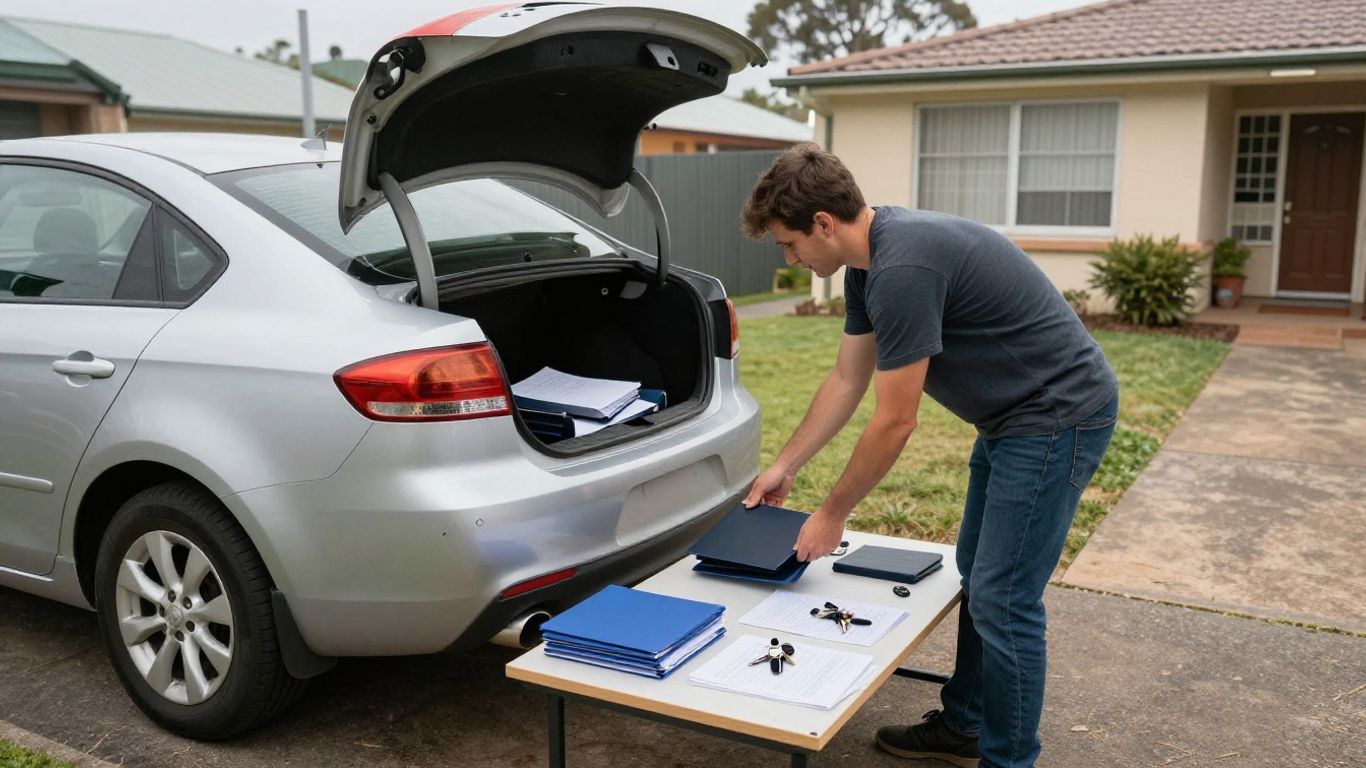
Remove personal belongings and documents
Search the cabin, boot, glove box, centre console, and door pockets for personal items. Remove toll tags, medication, paperwork, service records containing private information, and anything attached to the vehicle that you want to keep. If the car has a removable number plate or other item with legal significance, ask the relevant authority or provider what should happen before taking it off.
Gather ownership and identification records
Have identification and any ownership documents available, along with the keys if you have them. Registration details, a vehicle identification number, and proof of authority may help establish that the person arranging removal can sell or release the vehicle. Requirements differ, so ask what is needed rather than assuming an old registration paper is sufficient.
Check whether the car is safe to access
Look for broken glass, leaking fluids, unstable panels, exposed wiring, and soft or uneven ground around the car. Do not climb beneath a vehicle supported only by a jack, and keep children and animals away during loading. Tell the driver about hazards, obstacles, and whether the car can roll, steer, or be moved at all.
Share accurate vehicle details with the provider
Describe the make, model, year, location, running condition, missing parts, accident damage, and access restrictions honestly. Include whether the keys are present and whether the wheels are locked. These details help prevent a revised quote or a failed collection when the equipment does not match the vehicle.
How to compare car removal providers
Comparing providers is less about finding the biggest headline number and more about checking what that number means. Look for a legal business identity, a clear pickup arrangement, and a written payment promise. You can also use this car buyer information as a reference point for the kinds of details a removal service may publish, while verifying every claim directly.
Review licenses, policies, and business details
Check the business name, contact details, trading address, and relevant state requirements. Read privacy, cancellation, and disposal policies before sharing documents. A provider that avoids basic questions about its identity or refuses to confirm terms in writing deserves caution.
Compare quotes, payment terms, and pickup times
Obtain comparable quotes using the same vehicle information. Ask whether the amount is fixed, when payment is made, which payment method is used, and what happens if the inspection finds undisclosed damage. A quick pickup can be useful, but it should not pressure you into accepting unclear terms.
Check customer reviews and complaint patterns
Reviews are most useful when you look for repeated patterns rather than one enthusiastic or angry comment. Pay attention to reports about altered offers, missed appointments, hidden fees, aggressive staff, or delayed payments. Search for the business across more than one review source and give greater weight to specific, recent accounts.
Confirm whether towing and paperwork are included
Ask directly whether loading, towing, disposal, and standard collection paperwork are covered. Clarify who handles registration cancellation or notification and what evidence you will receive. A provider may buy the vehicle while leaving some government or finance-related responsibilities with you, so do not assume the sale completes every task.
A small comparison table can make differences easier to spot before you commit:
| Question | Provider A | Provider B | Provider C |
|---|---|---|---|
| Written fixed quote? | Yes or no | Yes or no | Yes or no |
| Towing included? | Yes or no | Yes or no | Yes or no |
| Payment timing clear? | Yes or no | Yes or no | Yes or no |
| Cancellation terms supplied? | Yes or no | Yes or no | Yes or no |
After filling it in, choose the arrangement you understand best, not simply the one with the highest initial figure.
What happens during the removal process
Most collections follow a predictable sequence, although the timing depends on traffic, location, and the vehicle’s condition. You first provide details and agree on the offer, then the driver checks the vehicle and loads it. Keeping communication clear at each stage makes disputes less likely.
Request a quote and schedule a pickup
Contact the provider with the car’s identifying details and a realistic description of its condition. Confirm the agreed amount, pickup address, arrival window, and contact person. If you are comparing options, do not treat a verbal estimate as final until the provider confirms the conditions attached to it.
Complete the vehicle inspection
The driver may compare the vehicle with the description, check its identity, and assess whether it can be loaded safely. Point out damage and access issues before loading begins. If the offer changes, ask for the reason and decide whether you still agree rather than feeling obliged to continue.
Handle keys, registration, and ownership transfer
Give only the keys and documents that are required for the agreed transaction. Record the vehicle identification details and follow the applicable state process for plates, registration, and disposal notification. If there is another owner, obtain their consent before the vehicle is released.
Arrange payment and towing
Payment should follow the terms you accepted, whether it is electronic or another agreed method. Watch the loading process from a safe distance and keep the driver’s or company’s details. If a tow operator asks for a new fee, pause and compare that request with the written agreement.
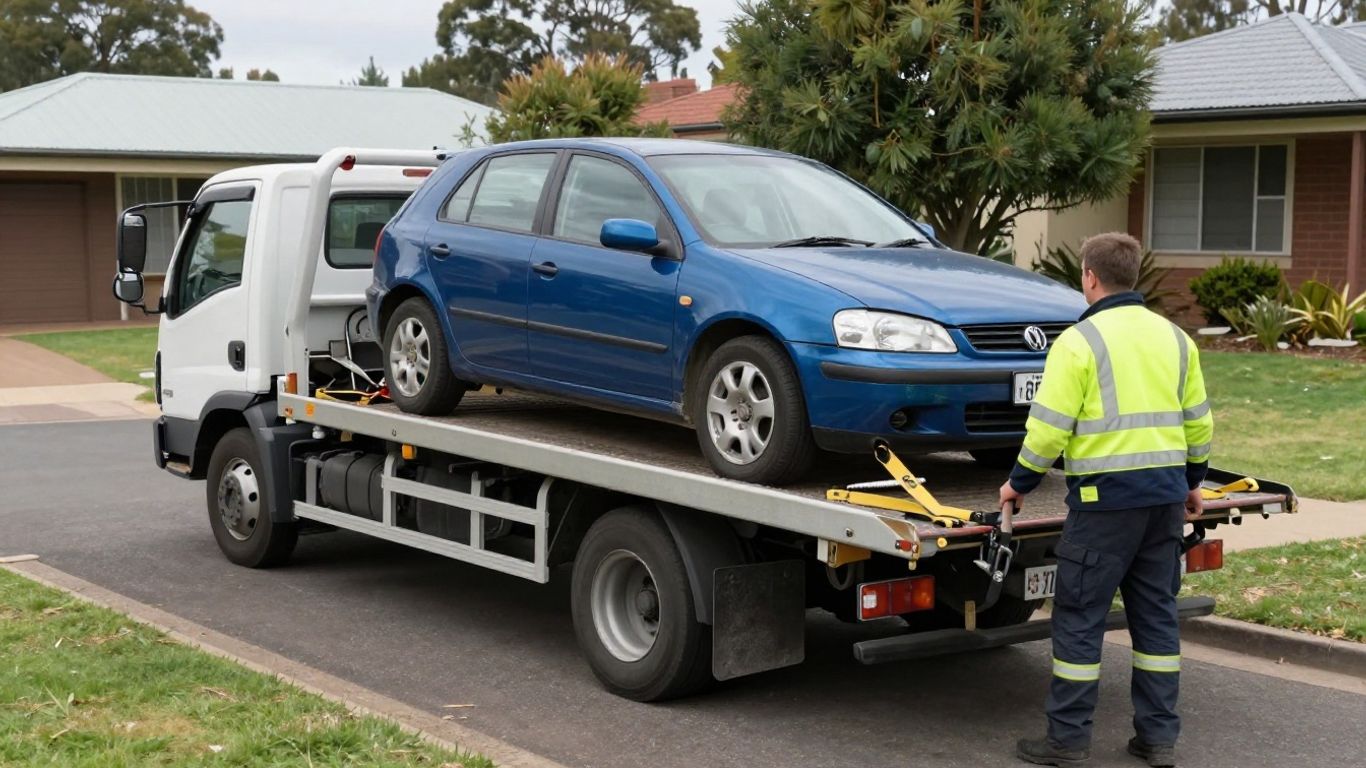
Keep records after the vehicle leaves
Save the quote, messages, receipt, payment confirmation, photographs, and any transfer or disposal document. These records establish what was agreed and when the vehicle left your possession. A short written follow-up confirming collection can be useful if a registration or ownership question appears later.
For a broader view of vehicle removal arrangements, cash-for-car options can help explain why condition, location, and collection timing often appear together in an offer, though you should still verify the terms of any specific service.
Special considerations for different vehicle conditions
A car’s condition affects equipment, safety, value, and paperwork. A non-running vehicle is not automatically unacceptable, but the provider needs to know what it can and cannot do. Photos of damage, wheels, access points, and fluid leaks can make the initial discussion more accurate.
Removing damaged or non-running cars
Tell the provider if the engine will not start, the wheels do not turn, the battery is missing, or the body is severely damaged. A winch, flatbed, or other recovery method may be needed. Never try to push a heavy or unstable car into a public road simply to make collection easier.
Handling unregistered or abandoned vehicles
An unregistered car may need different handling from a registered one, particularly if it is parked on public land. An abandoned vehicle can involve the property owner, local council, police, or another authority. Establish who has legal authority to arrange removal before handing over the keys.
Preparing scrap, flood-damaged, or burnt cars
Flood and fire damage can leave electrical, structural, and chemical hazards that are not visible at first glance. Tell the provider about water entry, smoke damage, fuel leaks, and any emergency response involvement. Do not start a damaged vehicle or remove hazardous components unless a qualified person says it is safe.
Managing cars under finance or joint ownership
A financier may have an interest in the vehicle even if you hold the keys and registration papers. Contact the lender before agreeing to a sale, and obtain written consent from every owner where required. A removal provider cannot necessarily resolve a finance balance or ownership dispute on your behalf.
How to avoid common car removal problems
Most problems begin with an assumption that was never written down. The safest approach is to slow the transaction enough to confirm price, identity, timing, and responsibility. A provider that answers plainly is easier to deal with than one that relies on urgency.
Recognize misleading “free” removal claims
Read the offer for words such as “up to,” “subject to inspection,” or “conditions apply.” Ask whether towing is included and whether the quoted amount can be reduced for ordinary issues already disclosed. “Free removal” may describe the truck service while the vehicle price is adjusted, so separate those two points.
Protect yourself from unclear payment promises
Confirm the exact amount and payment method before loading. Be cautious if payment is delayed without a clear reason, tied to an unrelated service, or changed after you have signed. Do not hand over valuable documents until you understand what you are accepting.
Avoid unsafe or unauthorized towing
Check that the person collecting the car is connected to the business you booked. Keep clear of straps, winches, ramps, and moving vehicles, and disclose hazards at the property. If the operator appears unqualified, asks you to direct dangerous loading, or cannot explain the arrangement, stop the collection.
Verify recycling and disposal practices
Ask what happens to the vehicle after removal and whether reusable parts, fluids, and scrap are handled through appropriate channels. A responsible service should be able to describe its disposal approach without vague promises. Responsible scrap recycling is a useful topic to consider when assessing what happens after pickup, especially for an old or heavily damaged car.
Know when to cancel the arrangement
You can reconsider when the price changes without explanation, fees appear late, ownership is disputed, or the collection becomes unsafe. Send a clear cancellation message and keep a copy. If the vehicle is already on public land or tied to registration, finance, or insurance issues, seek the relevant authority’s advice before arranging another pickup.
Conclusion
Free car removal Australia can be straightforward when the offer, towing terms, vehicle condition, and paperwork are clear from the start. Prepare carefully, compare the complete arrangement, and keep evidence of the transaction so the convenience does not create a problem later.
Frequently Asked Questions
Is free car removal really free?
It can be, but confirm that towing and collection are included and ask whether the quoted vehicle price is subject to inspection or deductions.
Can a non-running car be removed?
Usually, many providers consider non-running vehicles, but you must explain the condition so the correct loading equipment can be arranged.
What documents are needed for car removal?
Requirements vary, but identification, ownership evidence, registration details, and keys may be requested. Confirm the exact list before pickup.
Should I remove the number plates?
Do not remove plates automatically. Check the applicable state requirements and ask the provider what documentation or plate procedure applies to your vehicle.
Can I sell a car that is under finance?
A finance interest can restrict the sale or affect the amount available to you. Contact the lender and resolve its requirements before arranging removal.
What if the final offer is lower than the quote?
Ask why it changed and compare the explanation with the details you originally supplied. You can decline if the new terms are not acceptable.
What records should I keep after pickup?
Keep the quote, receipt, payment confirmation, messages, vehicle identification details, photographs, and any registration, disposal, or ownership documents.