

Key Takeaways
A low odometer reading is useful, but it is only one part of a sound replacement-engine decision.
- Confirm the engine code, generation, and vehicle compatibility before paying.
- Ask for compression, leak-down, oil-pressure, and cooling-system evidence.
- Treat service history and storage conditions as seriously as kilometres.
- Read warranty exclusions, return terms, core charges, and freight costs.
- Plan the installation carefully and keep detailed records afterward.
Understanding what low km tested engines are
Low km tested engines are used engines advertised with relatively low kilometres and accompanied by some form of condition check. The phrase sounds reassuring, but it does not describe one universal testing standard. A careful buyer needs to find out what was tested, when it was tested, and whether the documentation belongs to the exact engine being offered.
The best decisions come from comparing mileage with evidence, history, compatibility, and seller accountability. That broader approach is also useful when reading used-engine value guidance, because kilometres alone rarely explain how an engine has been treated.
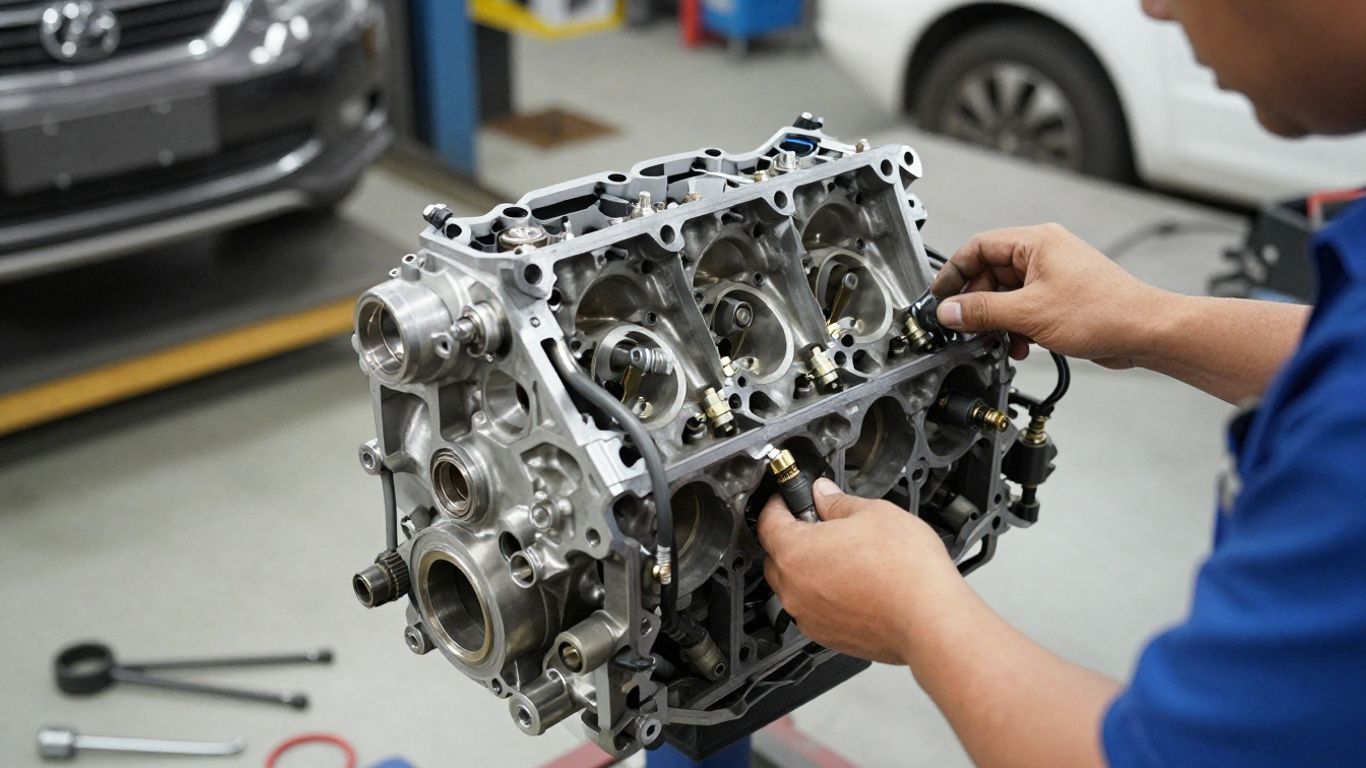
What “low km” means in the used-engine market
“Low km” is a relative description rather than a fixed threshold. An engine with 100,000 kilometres may be considered low mileage for one vehicle, while a much newer engine may be expected to have travelled far less. Ask the supplier to state the recorded kilometres, the source vehicle, and whether the figure is documented or estimated.
Mileage also says little about idle time, towing, short trips, dusty conditions, or long periods of storage. A vehicle that travelled fewer kilometres but missed oil changes may be a poorer choice than one with more kilometres and a consistent maintenance record.
How engine testing verifies condition
Testing should provide evidence about how the engine performs, not simply confirm that it turns over. Depending on the supplier and engine type, useful records may include compression readings, leak-down results, oil-pressure checks, cooling-system checks, and visual inspection notes.
Ask whether the engine was tested while warm or cold, what instruments were used, and whether the readings were recorded for each cylinder. A clear report is more valuable than a vague statement that an engine has been “checked.”
Why mileage alone does not guarantee quality
A low-mileage engine can still have corrosion, hardened seals, impact damage, poor storage history, or neglected fluids. Conversely, a higher-mileage engine may have been serviced consistently and removed from a vehicle with no internal failure. The sensible question is not whether the odometer is low, but whether the engine’s condition supports the price and intended use.
Fuel use and operating conditions also vary with the vehicle, transmission, load, and driving style. General background on fuel economy factors and powertrain energy losses can help explain why mileage is not a complete measure of mechanical stress.
The difference between tested, inspected, and refurbished engines
These terms should not be treated as interchangeable. Tested generally means specific checks were carried out. Inspected may refer mainly to visual examination and identification of obvious damage. Refurbished usually suggests that selected parts were repaired or replaced, but the exact work still needs to be listed.
Before ordering, ask for a written description of the work performed. A tested engine is not automatically rebuilt, and an inspected engine is not necessarily ready to install without replacing wear items.
Evaluating an engine’s condition
Condition evidence should form the centre of your comparison. Look for measurements, photographs, source information, and notes about damage rather than relying on a short sales description. The car parts supplier’s practical role is to make that information easier to compare, but the buyer should still read the details carefully.
A useful report should leave fewer unanswered questions after each page, not create new uncertainty. Keep the engine’s identification details beside the test documents so you can check that the paperwork refers to the same assembly.
Reviewing compression and leak-down test results
Compression testing can reveal differences between cylinders, while a leak-down test helps indicate whether pressure is escaping through valves, rings, or other areas. A single number is not enough; consistency across cylinders and the manufacturer’s specifications matter more than an impressive-looking isolated reading.
Ask for the readings rather than accepting “good compression” as a conclusion. If the test was performed under unusual conditions, ask how that may affect interpretation before treating the result as proof of long-term reliability.
Checking oil pressure, cooling, and electrical systems
Oil pressure provides useful information about lubrication-system performance, but it should be considered alongside oil condition, temperature, and engine speed. Cooling checks may reveal leaks, damaged housings, or signs that the engine has previously overheated. Electrical checks should clarify what was tested and which sensors or accessories are included.
The following records are especially useful when comparing two otherwise similar engines:
- Compression readings for every cylinder.
- Leak-down results and the stated test conditions.
- Oil-pressure readings at relevant temperatures and speeds.
- Cooling-system, leak, and electrical inspection notes.
These details do not eliminate risk, but they give a mechanic something concrete to assess before installation. They also make it easier to challenge an unclear answer while the seller can still investigate.
Identifying signs of wear, damage, or neglect
Look for oil sludge, damaged connectors, broken mounting points, missing covers, corrosion, cracked housings, and evidence of impact. External cleanliness is not proof of internal health, while a dirty exterior is not automatically a reason to reject an engine. Photographs should show the important areas rather than only the cleanest angle.
Ask where the engine came from and why it was removed. Accident damage may leave the engine intact, but a vehicle dismantled after overheating or lubrication failure deserves much closer scrutiny.
Comparing test documentation with the engine’s service history
A test report is a snapshot; service history provides the surrounding story. Compare the reported kilometres with invoices, maintenance intervals, vehicle records, and the source vehicle’s age. Mismatched dates or unexplained mileage changes do not always prove wrongdoing, but they should be resolved before payment.
When assessing any purchase, independent product reviews are most useful when they support, rather than replace, direct evidence about the particular item. The same principle applies here: general advice cannot substitute for the tested engine’s own documents.
Matching the engine to your vehicle
Compatibility errors can turn a seemingly good engine into an expensive installation problem. The engine must match more than the vehicle’s badge and model year. Generation, code, sensors, emissions equipment, wiring, transmission requirements, and regional specifications can all matter.
Write down the vehicle identification number, original engine code, transmission type, and build date before contacting a supplier. A precise request gives the seller a better chance of identifying a suitable assembly.
Confirming the engine code and generation
Engine families often have several versions that look similar but use different internal parts, mounts, electronics, or calibration. Confirm the complete engine code and compare it with the code fitted to your vehicle. Do not rely only on a photograph or a broad model description.
Ask whether the offered engine is an exact replacement or a compatible alternative requiring component transfers. If modifications are needed, obtain a written list and have a technician confirm that they are practical and lawful.
Checking compatibility with the transmission and ECU
The replacement must communicate correctly with the vehicle’s ECU and work with the transmission, immobiliser, throttle system, and wiring harness. Some engines may be mechanically similar yet require different sensors, control modules, or programming.
Before ordering, ask which original components must be transferred and whether any programming, coding, or adaptation is required. Compatibility should be confirmed in writing, especially when the engine comes from a different build year or market.
Comparing emissions equipment and regional specifications
Emissions hardware can vary between regions and model years. Catalytic converters, exhaust-gas systems, evaporative equipment, oxygen sensors, and control software may not be interchangeable. A replacement that physically fits may still fail inspection or create warning lights if its emissions configuration differs.
For specialist applications, consult the relevant rules rather than assuming that a road-legal configuration transfers automatically. Background on emissions requirements can help frame the question, although the vehicle manufacturer’s specifications and local regulations remain decisive.
Verifying included and transferable components
Clarify whether the listing includes the long block, intake and exhaust components, injectors, starter, alternator, sensors, wiring, manifolds, mounts, and accessories. “Complete engine” can mean different things to different sellers. The parts you must transfer may affect both the labour estimate and the final cost.
Use a written parts list before approving the purchase. It can prevent a late discovery that a critical bracket, sensor, or cover was never included.
Assessing sellers, warranties, and pricing
A trustworthy transaction depends on clear information before money changes hands. The seller should identify the engine, explain what was tested, state what is included, and provide terms that are easy to find. A low price is less attractive when the buyer must absorb unknown freight, missing components, or restrictive warranty conditions.
The car parts supplier’s value is not just the headline price; it is also the clarity of the matching process and the support around the purchase. Compare complete delivered costs, not isolated listing figures.
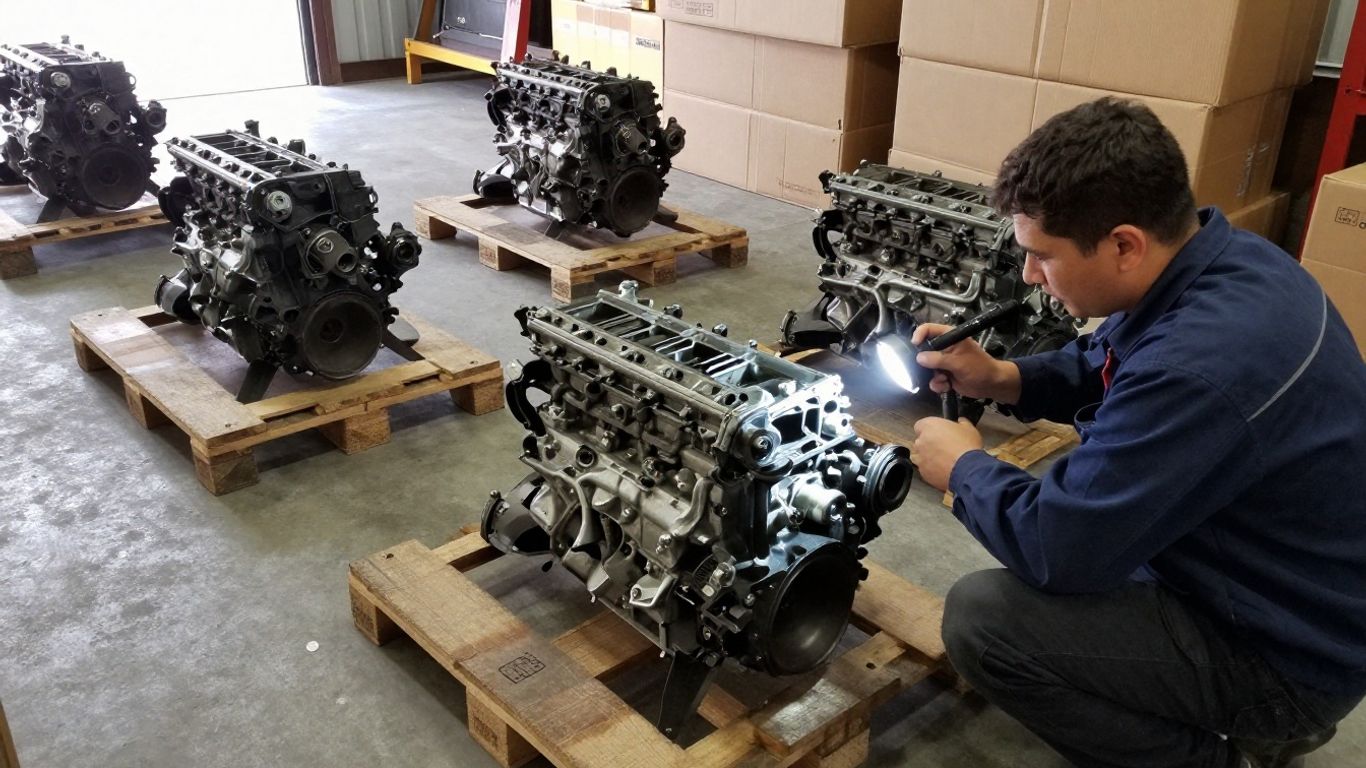
What a reputable engine supplier should disclose
Expect clear answers about recorded kilometres, source vehicle, engine code, test results, included parts, visible damage, storage, warranty, and dispatch timing. Photos should correspond to the actual engine or clearly identify when representative images are used.
Be cautious when a seller avoids basic identification questions or pushes for payment before confirming fitment. Written communication is useful because it preserves the details that shaped your decision.
Comparing warranty length, coverage, and exclusions
A warranty should state its duration, covered components, labour position, claim process, and exclusions. Many policies require professional installation, documented fluid changes, or approval before repairs begin. Those conditions are not necessarily unreasonable, but they must be understood before installation.
Read whether overheating, contamination, incorrect installation, racing, towing, or transferred accessories are excluded. A longer warranty is not automatically better if its coverage is narrow or its claims process is difficult.
Understanding core charges, shipping, and return policies
A core charge may be refundable when the old engine is returned in an acceptable condition. Confirm the deadline, packaging requirements, freight responsibility, and deductions for missing or damaged parts. Shipping also deserves attention: ask whether delivery is kerbside, whether a liftgate is available, and what happens if the engine arrives damaged.
For broader purchasing decisions, even a practical refinancing advice guide illustrates a useful habit: compare the full cost and the break-even point, not just the most attractive headline figure. Apply that same discipline to freight, installation, and warranty risk.
Recognizing low prices that may signal hidden risks
An unusually low price may reflect high kilometres, incomplete accessories, uncertain history, restricted warranty coverage, or a seller who expects the buyer to accept more risk. It may also be a legitimate clearance or surplus item, so price alone is not proof of a problem.
Ask what explains the difference and compare like with like. A slightly higher price for a documented, compatible engine with transparent terms can be cheaper than correcting a poor match after delivery.
Planning the purchase and installation
Good installation planning starts before the engine arrives. Confirm the vehicle diagnosis, the replacement specification, the workshop’s labour estimate, and the parts that should be renewed while access is easy. This reduces the chance of paying twice for avoidable disassembly.
The car parts supplier can help make the part-finding stage faster across Melbourne, Sydney, Brisbane, and nationwide, but the workshop remains responsible for confirming installation requirements and the vehicle’s underlying condition.
Questions to ask before ordering
Ask for the exact engine code, recorded kilometres, test documents, source vehicle, included parts, warranty terms, delivery estimate, return process, and compatibility confirmation. Also ask whether the old engine must be returned and whether the replacement is supplied drained of fluids.
A short written checklist is useful because phone conversations can leave important details unclear. If an answer changes between conversations, pause and request a definitive written explanation.
Preparing the vehicle for engine replacement
A replacement engine will not solve a separate cooling, fuel, electrical, transmission, or control-system fault. Have the technician investigate why the original engine failed and inspect connected systems before fitting the replacement. Otherwise, the same problem may damage the replacement.
Clean the engine bay where appropriate, check mounts and hoses, and confirm that the workshop has the correct tools and programming equipment. Preparation is usually less expensive than discovering a related fault after installation.
Deciding which seals, belts, and sensors to replace
Accessible wear items may be sensible to renew while the engine is out, especially when their age or condition is unknown. The decision should be based on the engine design, service schedule, visible condition, and manufacturer guidance rather than an automatic parts bundle.
Common discussion points include front and rear seals, gaskets, timing components, accessory belts, hoses, thermostat, filters, and sensors. Ask the technician to separate essential work from preventative work so you can make an informed budget choice.
Confirming professional installation requirements
Some warranties require installation by a qualified workshop, documented flushing, approved fluids, or specific start-up checks. Confirm those conditions before booking the job. Keep invoices, test results, photographs, and replaced-part records in one file.
If the engine arrives with damage or missing components, photograph the packaging and do not proceed with installation until the seller has advised you. Early evidence makes a transport or warranty discussion far easier.
Protecting the engine after installation
The first kilometres provide an opportunity to catch small problems before they become major failures. Follow the installer’s start-up procedure and the engine manufacturer’s service guidance. Avoid assuming that a used engine needs the same treatment as a fully rebuilt unit, because the correct break-in approach depends on what was supplied and what work was performed.
A calm, documented follow-up routine protects both the engine and your warranty position. It also gives the next owner a much clearer maintenance history.
Following the correct break-in procedure
Ask the installer whether any break-in procedure applies and how the vehicle should be driven during the initial period. Avoid unnecessary high loads, sustained extreme engine speeds, or heavy towing until the workshop confirms that the engine is ready for normal use. The correct procedure may differ by engine type and replacement condition.
If unusual noise, smoke, vibration, or warning lights appear, stop and contact the installer promptly rather than trying to complete a predetermined distance.
Using the recommended fluids and service intervals
Use the specified oil grade, coolant, filters, and other fluids. Check whether the engine arrived drained, preserved, or filled for testing, and do not assume that any fluid already present is suitable for road use. Follow the vehicle or engine manufacturer’s service interval unless the warranty requires something more specific.
Record the fluid specifications and dates. Small details such as the first oil change and filter part number can matter later when diagnosing a problem.
Monitoring leaks, temperatures, and warning lights
Inspect for leaks after the first heat cycle and again after the initial drives. Watch coolant temperature, oil level, charging voltage, unusual smells, and dashboard warnings. A warning light may indicate a sensor or wiring issue rather than internal engine damage, but it still deserves prompt diagnosis.
Do not keep driving an overheating or low-oil vehicle in the hope that the symptom will disappear. Early shutdown can prevent a manageable installation issue from becoming a second engine failure.
Keeping records for warranty and future resale value
Keep the purchase invoice, engine identification, test report, warranty terms, installation invoice, fluid receipts, and follow-up inspection notes. Store photographs of the engine on arrival and the completed installation. These records support a warranty claim and give a future buyer confidence in the replacement.
A well-documented engine is easier to maintain, easier to troubleshoot, and easier to value. Good records are one of the few protections that remain useful throughout the engine’s service life.
Conclusion
Choosing low km tested engines wisely means treating mileage as a starting point, not a guarantee. Verify condition with real test results, match the engine precisely to the vehicle, compare the full delivered cost, and plan installation and follow-up care with equal attention. A measured purchase can turn a stressful breakdown into a dependable repair.
Frequently Asked Questions
Are low km tested engines always better than higher-kilometre engines?
No. Lower kilometres can reduce expected wear, but maintenance history, storage, overheating, driving conditions, and test results are also important. A higher-kilometre engine with clear care records may be a better-supported choice.
What tests should a used replacement engine have?
Ask for the tests relevant to the engine, commonly compression, leak-down, oil pressure, cooling-system checks, leak inspection, and electrical or sensor checks. Request the actual readings and test conditions rather than a general statement that the engine was tested.
How can I confirm an engine will fit my vehicle?
Match the complete engine code, generation, build date, transmission, ECU, wiring, emissions equipment, and regional specification. Have the supplier and an experienced technician confirm compatibility in writing before ordering.
Does a tested engine come with all accessories?
Not necessarily. Listings may include only the long block or may exclude manifolds, sensors, wiring, starter, alternator, mounts, and other accessories. Request a detailed included-parts list before comparing prices.
What should an engine warranty cover?
Review the covered components, duration, labour terms, claim process, installation requirements, exclusions, and return conditions. Pay particular attention to rules about fluids, overheating, modifications, and approval before repairs.
Should seals and belts be replaced during installation?
Sometimes. Accessible wear items may be sensible to replace when their age or condition is uncertain, but the decision depends on the engine design, service history, manufacturer guidance, and the technician’s inspection.
What records should I keep after installation?
Keep the invoice, engine code, test documents, warranty, installation paperwork, fluid receipts, service dates, photographs, and any diagnostic reports. These records help with warranty claims, future repairs, and resale.